


What if the safest first move is to leave the wax alone? If hot wax lands on your skin, cool the burn before trying to remove anything. For candle wax burn on skin first aid, place the area under cool, gently running water for 20 minutes. Don’t use ice or pull at wax that’s stuck to tender skin.
Pain, redness, and uncertainty can feel alarming, especially if a blister appears or the wax has hardened over the burn. A careful first response helps protect the skin, while forcing wax off may cause further injury. This guide explains how to cool the area, handle stuck wax gently, and care for a minor burn afterward.
You’ll also learn which home remedies to avoid, how to protect the skin as it heals, and when a burn needs prompt medical attention. If the injury is deep, extensive, in a sensitive area, or showing signs of infection, getting professional care matters more than treating it at home.
Key Takeaways
- Learn the right cooling steps for candle wax burn on skin first aid, including why ice can make the injury worse.
- Find out how to deal with hardened wax without pulling, scrubbing, or further irritating burned skin.
- Recognize signs that a burn may need medical assessment, even if its severity is hard to judge at first.
- Learn how to protect the area during healing, including what to do if blisters appear.
- See how basic burn-care supplies may help with appropriate minor burns after cooling, without replacing medical care.
Candle Wax Burn on Skin: What to Do First
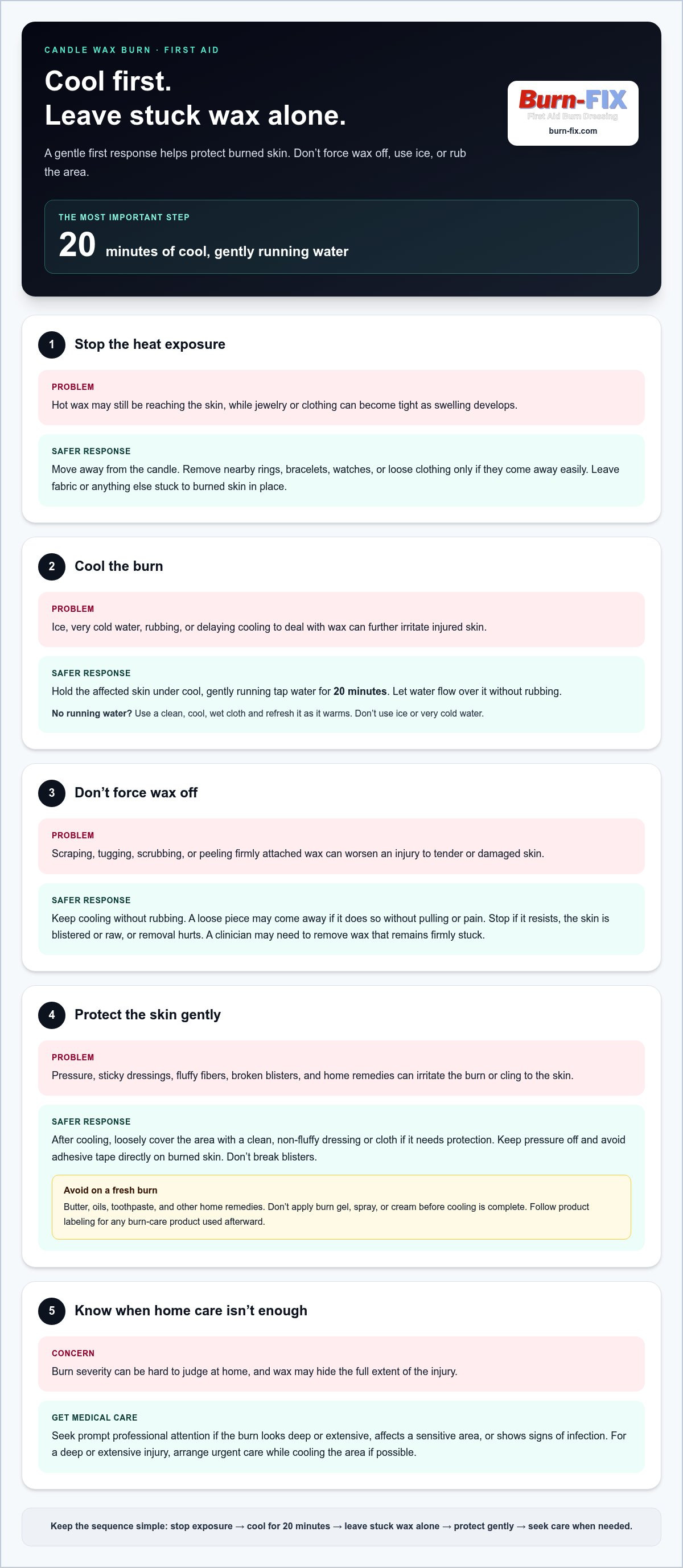
Act promptly, but handle the skin gently. Move away from the candle and stop any further contact with hot wax. Start cooling the affected area right away. Cooling is more important than trying to remove wax. For candle wax burn on skin first aid, don’t use ice, scrape the skin, or pull at wax that seems stuck.
Before cooling, remove nearby rings, bracelets, watches, or loose clothing if they come away easily. Swelling can make jewelry tight, so take it off early if you can do so without touching the burn. Don’t remove fabric or other material attached to burned skin. If the injury looks deep or extensive, arrange urgent medical care while cooling the area if possible.
- End the exposure. Step away from the candle and prevent additional hot wax from reaching the skin.
- Cool the burn. Hold the affected skin under cool running water for 20 minutes. Use a timer if it helps you keep track.
- Remove loose items. Take off nearby jewelry and loose clothing, but leave anything stuck to the burn in place.
- Protect the area. Once cooling is complete, avoid rubbing or applying home remedies. Further care depends on the burn’s appearance and severity.
How to cool a candle wax burn safely
Use cool, gently running tap water for 20 minutes. The American Red Cross recommends cooling a burn with clean, cool running water. Don’t use ice, which can further damage injured skin. If running water isn’t available, place a clean, cool, wet cloth over the area and keep it cool. Avoid very cold water, and don’t let cooling delay urgent medical care for a serious burn.
Cooling helps limit ongoing heat exposure and can ease discomfort. Let water flow over the burned skin rather than rubbing it with your fingers or a cloth. For general background on how burns are classified and can affect the body, see Burn (injury). Use first-aid guidance from qualified health organizations for treatment decisions.
What to do if candle wax sticks to skin
Don’t scrape, tug, or forcefully peel wax from a burn. Wax that’s firmly attached may be covering tender or damaged skin, and pulling it can worsen the injury. Keep cooling the area without rubbing. A clinician may need to remove material that remains firmly stuck.
Loose residue is different from wax bonded to injured skin. If a small piece comes away without pulling or causing pain, don’t scrub to remove what remains. Stop if it resists, if the skin is blistered or raw, or if removal increases pain. Let medical professionals assess firmly attached wax, especially when the burn looks deep, covers a large area, or affects a sensitive part of the body.
How to Give First Aid for a Candle Wax Burn Step by Step
Follow these steps in order and keep your touch gentle. The goals are to stop further heat exposure, cool the skin, and shield it without causing extra irritation. Don’t pause to apply a cream or gel before cooling is complete, and don’t let wax removal cause a second injury.
- End contact with the heat. Move away from the candle and prevent more hot wax from reaching the skin. Remove nearby jewelry or loose clothing if it comes away easily, but leave anything attached to the burn in place.
- Cool the affected skin. Hold it under cool running water for 20 minutes. If you can’t get to running water, use a clean, cool, wet cloth and refresh it as it warms. Don’t use ice or very cold water.
- Leave stuck wax alone. Don’t scrape, rub, or forcefully peel wax from injured skin. Loose residue may come away without pulling, but stop if it resists or removal causes pain.
- Check the skin without pressing it. Avoid squeezing, rubbing, or testing a blister. If the burn looks deep or extensive, seek medical care rather than trying to manage it at home.
- Cover only if needed. After cooling, loosely shield the area with a clean, non-fluffy dressing or cloth if it needs protection. Keep pressure off the burn, and follow the label directions for any burn-care dressing.
After cooling: protect the burn without irritating it
Handle the area with clean hands and keep contact light. A loose cover can help protect injured skin from friction or dirt, but don’t wrap it tightly or let fabric press against the burn. Avoid fluffy cotton or materials that shed fibers, since they can cling to the skin and be difficult to remove without irritation.
Skip butter, oils, toothpaste, and other home remedies on a fresh burn. They aren’t substitutes for cooling and may irritate the area or interfere with care. Don’t apply burn gel, spray, or cream before cooling. If you use a burn-care product afterward, follow its label and use it only for an appropriate minor burn.
What not to do when wax burns your skin
Don’t put ice on the injury, break blisters, or scrape off wax that’s firmly attached. Avoid adhesive tape or a sticky dressing directly on burned skin, because removing it can pull at the injury. Don’t rub the area with your hands or a cloth, even if it feels tempting to wipe away the wax.
MedlinePlus’ First Aid for Minor Burns advises cooling the burn, avoiding irritating substances, and protecting the area with a clean covering. Keep the sequence simple: stop exposure, cool first, handle the skin gently, then cover it if needed.
After cooling, suitable first-aid supplies can help protect an appropriate minor burn. Burn-Fix burn-care supplies are available at Burn-Fix. Follow product labeling. Supplies don’t replace cooling or medical care when it’s needed.
Is a Candle Wax Burn Minor, or Does It Need Medical Care?
A small area of redness and tenderness may be manageable with first aid, but burn severity isn’t always easy to judge at home. The skin can change over time, and wax may hide the full extent of an injury. Don’t rely on redness alone. Depth, location, size, sensation, and whether symptoms are worsening all matter. If you’re unsure, seek medical advice rather than trying to diagnose the burn yourself.
After cooling, look at the area without rubbing or pressing it. A burn that appears pale, white, brown, charred, leathery, or numb may be deep. Severe or increasing pain, spreading redness or swelling, and oozing also need attention. A burn larger than 3 inches, or one that covers a wide or difficult-to-assess area, should be medically assessed.
Signs that a candle wax burn needs prompt assessment
Get prompt medical advice for burns on the face, hands, feet, genitals, or over a major joint, even if the area seems small. These locations can be more complicated to protect and may affect important functions. A deep-looking burn, loss of sensation, severe pain, or an extensive injury also warrants professional assessment.
- Concerning appearance: Pale, white, brown, charred, leathery, or numb skin.
- Concerning changes: Increasing pain, redness, swelling, or oozing, or a fever.
- Higher-risk circumstances: A burn in a sensitive location, one larger than 3 inches, or an injury in a child or someone medically vulnerable.
Blisters can form with burns that need care, but they don’t reliably show the full depth of an injury. Don’t pop them or use them as a reason to self-diagnose. Seek medical advice if blistering is extensive, symptoms worsen, or you’re uncertain about the burn’s severity. For children and people with conditions that affect healing or sensation, it’s sensible to have a lower threshold for assessment.
When to seek emergency help
Call your local emergency number for a severe-looking burn, breathing difficulty, or signs of shock. Warning signs can include faintness, confusion, unusual weakness, pale or clammy skin, or rapid breathing. While waiting for help, keep the person safe and follow the emergency dispatcher’s instructions. Don’t delay emergency care to remove wax or apply a burn product.
The American Burn Association’s burn-care guidance identifies deep or extensive injuries and burns to sensitive areas as reasons for prompt medical evaluation. Minor redness without worsening symptoms is different, but appearance alone can’t rule out a serious burn. For candle wax burn on skin first aid, cooling is the first step, and professional assessment takes priority whenever warning signs appear.
Candle Wax Burn Aftercare: Blisters, Dressings, and Healing
After cooling the burn, keep an eye on the skin and protect it from friction. Mild redness and tenderness can occur, but note whether pain, redness, or swelling increases rather than settles. Burn depth and appearance can change, so don’t assume an injury is minor just because it looked small at first.
How to care for a blister after a wax burn
Leave blisters intact. They help cover the tender skin underneath, and popping one can increase the risk of infection. If clothing or movement rubs the area, cover it loosely with a clean, non-stick dressing. Avoid pressure, tight wrapping, and adhesive directly on burned or blistered skin.
If the area needs cleaning, wash gently with mild soap and clean water, then pat around it carefully rather than scrubbing. Avoid harsh substances and home remedies. A large, very painful, or damaged blister should be assessed by a medical professional, especially if the burn is in a sensitive location or you’re uncertain how deep it is.
For more context on blister care, a second-degree burn guide can explain why these injuries need gentle protection and monitoring. A blister’s appearance alone can’t tell you exactly how serious a burn is, so seek medical guidance if it’s extensive or worsening.
Monitoring the skin as it heals
Check the area regularly in good light without touching or pressing it. Look for changes such as redness spreading beyond the burn, increasing pain or swelling, drainage, or fever. These can signal a problem that needs medical advice. If the skin becomes numb, looks pale or charred, or symptoms worsen, don’t rely on home care alone.
Keep the burn clean and protected from rubbing. If you use a dressing, follow its label and any clinician’s instructions, and replace it as directed or if it becomes wet or soiled. Avoid pulling a stuck dressing away from injured skin. Get medical advice if it won’t lift gently. Don’t apply a gel or other product under a dressing unless its directions say to do so.
Healing varies with the burn’s depth, location, and the person’s health, so there isn’t one timeline that fits every injury. Notice changes and respond early. The American Academy of Dermatology recommends keeping minor burns protected and not popping blisters. Worsening pain, spreading redness, drainage, or fever calls for medical assessment.
Aftercare is a continuation of gentle protection, not a substitute for assessment when warning signs appear. Burn-Fix burn-care supplies can help you prepare for appropriate minor burns. See Burn-Fix burn-care supplies and follow each product’s label. These supplies don’t replace medical care when it’s needed.
Prepare for Minor Burns with the Right First-Aid Supplies
A small, organized first-aid kit can make it easier to protect a minor burn once it has been properly cooled. Keep supplies together where adults can find them, and make sure everyone knows that cooling and assessing the injury come before applying a product or dressing. A kit supports first aid, but it can’t determine how deep a burn is or replace professional or emergency care.
What to keep in a home burn first-aid kit
For minor first-aid situations, consider keeping clean, non-stick dressings, a clean cloth, and appropriate burn-care supplies in an easy-to-reach place. Avoid putting fluffy materials directly on an injury, since fibers can cling to damaged skin. Store items in their original packaging so directions and warnings remain available, and check that packaging is intact before use.
Preparation also means knowing where to find clean, cool running water and how to get help if an injury appears serious. A broader home burn-kit guide can help you consider useful supplies and their place in a household kit. For a kitchen-focused setup, a kitchen safety first-aid kit guide can help you plan for common household accidents without confusing supplies with treatment.
- Clean coverings: Keep non-stick dressings or clean cloths available to protect an appropriate minor burn.
- Burn-care supplies: Choose products intended for burn first aid, and keep each item’s packaging and directions.
- Accessible instructions: Store product directions where they can be read quickly, and make sure household members know where the kit is kept.
Using burn-care products responsibly
Choose a product only after cooling and making a basic assessment of the injury. Hydrogel burn products, including Burn-Fix hydrogel spray and gel, may be useful supplies for appropriate minor first-aid situations when used according to their labels. Don’t apply a product before cooling the burn, and don’t use one if doing so would delay needed medical assessment or emergency care.
Read the packaging before use, follow the stated directions, and pay attention to any warnings about when the product is appropriate. Use a dressing as directed, without putting pressure on injured skin. If a burn looks deep or extensive, is in a sensitive location, or is worsening, prioritize medical care instead of trying to manage it with supplies from a home kit.
Keep burn supplies as one part of household preparedness, alongside a clear plan for getting help. A well-stocked kit can make it easier to cover an appropriate minor injury after cooling, but it isn’t a substitute for first aid or professional evaluation. Burn-Fix offers burn-care supplies intended for first-aid use; follow each product’s label.
Good candle wax burn on skin first aid starts with safe cooling. The right supplies can help protect the skin afterward when the injury is minor and home care is appropriate.
Make Burn Preparedness Part of Your Routine
A little preparation can make it easier to respond calmly if hot wax or another household hazard causes a burn. Choose a clear place for first-aid supplies, keep product instructions with them, and make sure the people at home know when to seek medical help instead of relying on home care.
Burn-Fix offers hydrogel spray, gel packets, dressings, and a burn kit for first-aid use. These are supplies for appropriate minor burns, not a replacement for cooling the skin or getting medical care when needed. Use each product only as its label directs. A simple plan, paired with sound candle wax burn on skin first aid, can help you feel more prepared without guessing in the moment.
Keep Burn-Fix burn-care supplies on hand as part of your household preparation. With clear instructions and appropriate supplies close at hand, you can take the next step with greater confidence.
Frequently Asked Questions
Can candle wax burns cause permanent scars?
Yes, a candle wax burn can leave a permanent scar, particularly if the injury is deep or becomes infected, though a superficial burn may heal without one. It can be hard to judge depth at first, so watch for changes rather than assuming the mark is minor. Avoid picking at healing skin, and once the skin has closed, protect it from strong sun. Ask a clinician about burns that look deep or are slow to improve.
What happens if candle wax gets on a blistered burn?
Wax on a blistered burn can stick to fragile skin and damage it if you try to pull or scrape it away. Don’t pop the blister or rub the wax off. If wax is still hot, cool the affected area gently, taking care not to press on the blister. Leave firmly attached wax for medical professionals to assess, and seek care if the blister is large, very painful, or the injury is worsening.
Can a candle wax burn become infected?
Yes. Damaged or blistered skin can become infected, especially if a blister is opened or the area is repeatedly touched with unclean hands. Watch for redness that spreads, increasing pain or swelling, pus or other drainage, or fever. Keep the area clean and avoid picking at it. If these signs appear, seek medical advice rather than trying to treat a possible infection with leftover creams or ointments.
Should I use aloe vera on a candle wax burn?
Aloe vera may be used on a minor burn after it has been cooled, but it shouldn’t delay cooling or medical assessment. Choose a simple product intended for skin, and stop using it if it stings or causes irritation. Don’t apply it over a blister or open skin unless a clinician advises you to. Avoid aloe as a substitute for care if the burn looks deep, extensive, or is getting worse.
What should I do if candle wax burns a child?
Cool the child’s burn promptly and keep them comfortable, but arrange medical advice if the injury is extensive, blistering, on the face, hands, feet, or a joint, or if you’re unsure how serious it is. Children may not describe pain clearly, so watch their behavior and the skin’s appearance. For candle wax burn on skin first aid, don’t use ice or pull wax from injured skin.
Can candle wax burns damage skin even after the wax cools?
Yes. Wax cooling doesn’t mean the skin is unharmed; heat already transferred to the tissue can continue to affect the injury after contact ends. Redness, pain, or blistering may become more noticeable later, so reassess the area instead of judging it only in the first moments. If it becomes increasingly painful, numb, pale, or charred, seek medical assessment rather than relying on how it looked initially.
What should I do if hot wax gets in your eye?
Hot wax in the eye needs urgent medical attention. Immediately flush the eye with clean, lukewarm running water, holding the eyelids open gently and letting water flow across the eye. Don’t rub, scrape, or try to peel wax from the eye or eyelids, and don’t apply ointments. Remove contact lenses only if they come out easily during rinsing. Continue flushing while arranging emergency medical care.


