


A pressure-cooker steam blast can cause a serious burn in seconds, so the first priority isn’t choosing a cream or dressing. If someone is hurt, it’s understandable to feel frightened and unsure what to do. The right pressure cooker steam blast burn treatment starts by checking for immediate danger, including burns to the face or eyes, trouble breathing, or a large or deep injury. Cool the burn promptly with cool running water while arranging urgent help when needed.
This guide explains what to do first, how long to cool the area, and which warning signs call for emergency care. You’ll also learn how to protect the burn, what to avoid, and when products intended for minor burns may be appropriate. Burn gels and dressings can support care for some minor burns, but they don’t replace emergency assessment when an injury may be severe or extensive.
Key Takeaways
- After a pressure-cooker blast, move away from the cooker and call 911 for breathing trouble, collapse, or a serious face or eye injury.
- Pressure cooker steam blast burn treatment starts with cooling the burn under cool running water, not with ice or household remedies.
- Burn depth can be difficult to judge at home. Know which warning signs call for emergency help or prompt medical advice.
- Protect the cooled area and avoid actions that could worsen the injury while arranging appropriate care.
- For suitable minor burns, Burn-Fix spray, gel, dressings, and kits are first-aid options, not substitutes for emergency evaluation.
Pressure Cooker Steam Blast Burns: Why the First Minutes Matter
Call 911 now if the person has trouble breathing, collapses, or has a serious burn involving the face or eyes. Move everyone away from the cooker. Don’t approach a continuing leak or try to release more steam. A pressure-cooker blast can expose someone to escaping steam, splashed hot liquid, hot food, or a combination of these. Even if the skin looks only red at first, the injury may be deeper or more extensive than it appears.
Start with safety and urgency, not a burn product. Steam transfers heat quickly to exposed skin, and a blast can affect areas that are difficult to assess, including the eyes, mouth, and breathing passages. Prompt action can help limit further harm while you decide whether emergency help is needed. The Pressure Cooking Overview explains the general process of cooking under pressure, but an injury calls for practical triage, not appliance troubleshooting.
How a pressure cooker can cause a steam scald
A steam scald is a thermal burn caused by hot water vapor contacting the body; a dry-heat burn results from direct contact with a flame or hot surface. Escaping pressurized steam transfers heat to the skin. A burst or spill may also splash hot liquid or scatter hot food, causing burns on contact. These exposures can happen together, so a small visible patch may not show the full extent of the injury.
Which exposures make a blast more urgent?
Get urgent medical evaluation for burns to the face, eyes, or mouth, or for suspected injury to the breathing passages. Trouble breathing, hoarseness, coughing after steam exposure, or swelling around the mouth or throat can signal a dangerous injury. Call 911 for breathing trouble. Also seek prompt professional assessment for a large or deep burn, a burn that circles an arm, leg, or another body part, or one that is blistering rapidly. Don’t wait for the skin to change further before seeking help.
Burn depth can be hard to judge at home and may become clearer as the injury evolves. Skin that looks pale, white, charred, leathery, or numb is especially concerning, but appearance alone can’t reliably rule out a serious burn. If you’re unsure, seek timely medical advice rather than relying on a visual check.
Use extra caution with children. A burn that seems limited in an adult may affect a child differently, and a child may not be able to describe pain or other symptoms clearly. Contact a medical professional promptly for advice about a child’s pressure-cooker burn, particularly if it blisters, affects a sensitive area, or covers more than a small patch. Pressure cooker steam blast burn treatment should begin with assessing the exposure and getting urgent help when warning signs are present, not guessing at the burn’s severity.
Recognizing Pressure Cooker Burn Severity Without Delaying Care
Don’t rely on a quick look to decide a burn is minor. Skin can look less damaged at first, and the burn’s depth may become clearer over time. Pain also isn’t a dependable measure of severity: a serious area may feel numb if nerves have been damaged. If breathing is difficult, the person collapses, or the burn involves the face or eyes, call 911 or seek emergency care immediately instead of continuing to assess the injury at home.
For other burns, contact a medical professional promptly if the injury is extensive, blistering, worsening, or difficult to assess. As a practical guide, a burn larger than about 3 inches, or one that appears deep, merits professional assessment. This is not a diagnosis checklist. Color, blistering, pain, and visible size can’t reliably show how deeply heat has injured tissue, whether damage extends beneath the surface, or whether the burn will worsen. Reassuring-looking skin does not rule out a serious injury.
Signs of a potentially deep or extensive burn
Redness and tenderness can occur with a more limited scald, while blistering, marked swelling, spreading redness, or severe pain warrant prompt clinical advice. These signs don’t establish burn depth on their own. White, dark, charred, leathery, or numb skin is more concerning and needs urgent professional evaluation, even if the area isn’t very painful.
Consider where the burn is as well as how it looks. A burn that circles an arm, leg, finger, or another body part can tighten as swelling develops and needs prompt assessment. Burns over a major joint, such as the elbow or knee, also deserve timely medical attention because swelling and injury there may affect movement. Don’t wait for a blister to grow or pain to become severe before seeking advice.
Face, eyes, and breathing passages need special attention
Steam can affect the eyes, mouth, or airway without leaving an obvious mark on the skin. Treat breathing difficulty, hoarseness, persistent coughing, or soot around the nose or mouth after a blast as emergency warning signs. Call 911 for breathing problems or signs of airway involvement. If steam may have entered the mouth or been inhaled, get urgent medical evaluation even if the face looks uninjured.
Eye exposure, eye pain, or any change in vision also calls for urgent evaluation. Don’t rub the eye or wait for visible redness or swelling before getting care. For a child, use a cautious approach and seek timely medical advice, since a child may have trouble describing symptoms and the extent of a burn can be difficult to assess.
Think of pressure cooker steam blast burn treatment as a sequence: recognize urgent warning signs, get appropriate care, and only then consider products intended for minor burns. Once a serious injury has been ruled out, minor burn first-aid supplies can support preparation for appropriate minor scald care.
Cool Water, Ice, or Burn Gel: Which Response Comes First?
Cool running water comes first. Once the person is safely away from the cooker, place the burned area under cool, clean running water as soon as possible. Continue for at least 20 minutes. Cooling draws heat away from the skin; applying a gel or dressing first can distract from this essential step. If the injury appears severe or emergency help is needed, don’t let cooling delay a 911 call or medical care.
Cool running water: The first choice for cooling a burn. Use cool, not cold, water for at least 20 minutes.
Ice or extreme cold: Avoid it. Ice can further injure burned skin and isn’t a safe substitute for running water.
Household remedies: Don’t use butter, oils, toothpaste, egg whites, or similar remedies. They don’t cool the burn properly and may trap heat or contaminate the injury.
Burn-care products: Consider them only after cooling, for an appropriate minor burn. They don’t replace emergency evaluation.
Why cool running water is the first cooling choice
Use a gentle flow of cool, clean tap water over the burned skin for at least 20 minutes, starting as soon as it’s safe. If clothing is stuck to the burn, don’t pull it away; cool the area around it. Keep the rest of the person warm, especially a child, and don’t immerse someone who is severely injured or becoming chilled.
Cooling should happen alongside urgent action, not instead of it. Have someone call 911 for emergency warning signs while another person helps cool the burn, if it’s safe to do so. Don’t postpone transport to finish cooling when emergency care is needed.
When hydrogel products may fit minor-burn care
After immediate cooling, a hydrogel spray, burn gel, or gel dressing may be an option for a suitable minor scald. Follow the product label. Don’t use a topical product on a severe, extensive, deep, facial, eye, or possible airway injury as a substitute for professional assessment. The guide to treating second-degree burns at home provides more context for minor-burn care.
For a pressure-cooker blast, follow this order: get clear of the hazard, arrange emergency help if warning signs are present, cool the burn, then consider whether minor-burn products are appropriate. A soothing product may support care after cooling, but it can’t determine burn depth or rule out a hidden injury. Pressure cooker steam blast burn treatment begins with water and careful triage, not a gel.
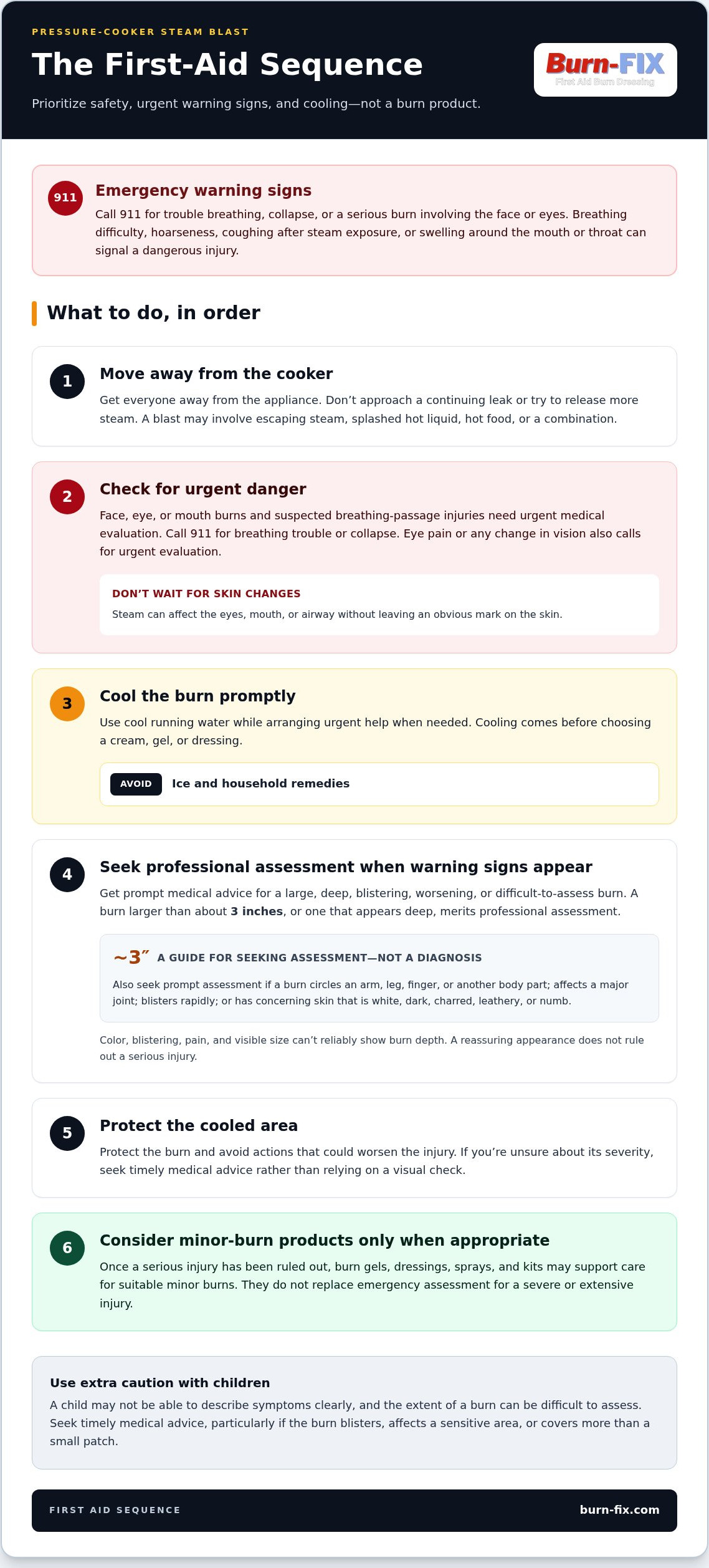
Pressure Cooker Steam Burn: Step-by-Step First Aid
Act in order, but don’t let home first aid delay emergency care. If possible, ask someone nearby to call for help while you care for the injured person. After a pressure-cooker blast, make sure the cooker is no longer putting anyone at risk, then focus on the person, not the appliance.
- Make the scene safe. Move away from the cooker and any escaping steam. Don’t touch hot surfaces, move the cooker, or try to release more steam. Keep others clear so no one else is burned.
- Call for help when needed. Have a helper call 911 for breathing difficulty, collapse or loss of consciousness, a serious face or eye injury, or a severe or extensive burn. Don’t wait to see whether symptoms improve.
- Cool the burn. If it’s safe, hold the burned skin under cool, clean running water for at least 20 minutes. Keep the rest of the person warm, and don’t postpone emergency care or transport to complete cooling.
- Remove nearby constricting items. Take off rings, watches, bracelets, or loose clothing near the burn before swelling develops, as long as they aren’t stuck. Never pull away material stuck to the skin.
- Protect the area. After cooling, loosely cover the burn with a clean, non-fluffy dressing or clean cloth while arranging care. Don’t wrap it tightly or place adhesive directly on the injured skin.
The immediate response: safety, emergency help, and cooling
Stay calm and speak reassuringly. If the person is breathing normally and alert, help them sit or lie in a safe place while the burn cools. If breathing is difficult or consciousness is affected, call 911 immediately and follow the dispatcher’s instructions. For serious burns involving the face or eyes, or any burn that looks deep or extensive, seek emergency care without delay. Don’t search for burn products or supplies before calling for help.
Protecting the burn while arranging care
After cooling, a loose, clean covering can shield the burn from rubbing and dirt during transport or while awaiting medical advice. Leave blisters intact; don’t puncture or peel them. Avoid butter, oils, toothpaste, and ice, which can interfere with safe care or further injure skin. For broader preparation, the home kitchen safety first-aid guide covers supplies to keep accessible before an accident happens.
Burn gels, sprays, and dressings are options only for appropriate minor burns after cooling. They don’t replace assessment of a serious injury. Burn-Fix burn care options include supplies for minor-burn first aid.
After First Aid: Medical Care and Burn-Fix Options for Minor Burns
First aid doesn’t replace an assessment when a pressure-cooker burn may be serious. Seek emergency care for a severe, extensive, or possibly deep burn, or one involving the face, eyes, mouth, or airway. Breathing difficulty or collapse calls for 911. If you’re unsure how serious the injury is, get medical advice instead of relying on a gel, spray, or dressing to determine its depth.
After immediate cooling and triage, the next step depends on the injury. A clinician can assess concerning burns and advise on appropriate care. For a minor scald, follow any clinician’s instructions and the product label. Don’t apply a product in a way that delays needed medical evaluation, and don’t treat a burn-care item as a substitute for emergency care.
When professional evaluation is the safer next step
Get urgent help for breathing problems, hoarseness, persistent coughing after steam exposure, eye injury or vision changes, or a burn that looks extensive or deep. Prompt clinical advice is also sensible if pain worsens, swelling increases, or you can’t tell how serious the burn is. Be especially cautious with children and burns affecting sensitive areas; don’t wait for symptoms to become more obvious.
Choosing burn-care supplies for minor scalds
For appropriate minor burns, Burn-Fix offers hydrogel burn spray, individual burn gel packets, burn gel dressings, and a burn kit. These products are designed for first- and second-degree burns, sunburns, and scalds. Choose a suitable option only after cooling and follow its label. If a clinician has given different instructions, follow their guidance.
A home burn kit keeps burn-care supplies together, making them easier to locate during a minor first-aid situation. It can support preparation, but it can’t assess an injury or replace emergency care. The emergency burn kit checklist can help you think through household readiness before an accident happens.
With pressure cooker steam blast burn treatment, match the next step to the injury: emergency evaluation for serious warning signs, clinical advice when severity is uncertain, and labeled first-aid products only for appropriate minor burns. Keep supplies accessible, but never delay urgent care to find or apply them.
Burn-Fix burn-care products include options intended to support care for suitable minor burns, not replace assessment or treatment for a severe, extensive, deep, facial, eye, or airway injury.
Be Ready for a Calmer Next Step
A sudden burn can leave everyone shaken. Once the injured person is receiving the right care, note what happened and what first aid was given. That information can help a clinician understand the exposure and guide what happens next. If you’re still uncertain about the injury, choose medical advice over judging its seriousness by appearance alone.
Planning ahead can make a future kitchen emergency feel less chaotic. Keep suitable first-aid supplies together and make sure household members know where to find them. For appropriate minor burns and scalds, Burn-Fix offers doctor-recommended hydrogel spray, gel packets, dressings, and a burn kit intended for first- and second-degree burns. These supplies support minor-burn first aid; they don’t replace emergency assessment or care.
Use what you’ve learned about pressure cooker steam blast burn treatment to make a simple plan before you need it. Keep suitable supplies accessible, and remember that seeking help when something feels concerning is a safe, sensible choice.
Frequently Asked Questions
Can pressure cooker steam burn the face or lungs?
Yes. Escaping steam can burn facial skin and eyes, or injure the breathing passages even if no skin mark is visible. Call 911 for breathing difficulty or another life-threatening sign. Hoarseness, persistent coughing, soot near the mouth or nose, eye pain, or vision changes after a blast need urgent medical attention. If steam may have entered the mouth or airway, don’t wait for a visible burn to appear.
Should I remove clothing after a pressure cooker burn?
Remove loose clothing and jewelry near the burn if they come off easily and it’s safe. Rings, watches, and tight sleeves can become harder to remove if swelling develops. Don’t pull fabric stuck to burned skin, and don’t risk touching clothing that’s hot or smoldering. Move away from the cooker first. If the person is seriously hurt, call for emergency help rather than spending time removing items.
How long should you run cool water over a pressure cooker burn?
Run cool, clean water over the burn for at least 20 minutes, as soon as possible and within the first 3 hours after injury. Keep the water cool, not icy, and don’t use ice. If the person needs emergency care, cooling must not hold up the call, evaluation, or transport. A second person can help with cooling while someone else calls for help.
Can I put burn gel on a pressure cooker steam burn?
Sometimes, for an appropriate minor burn, after cooling and checking that urgent medical care isn’t needed. Follow the product label and any clinician’s directions. Don’t use gel to manage a deep, extensive, facial, eye, or possible airway injury at home, and don’t let applying it delay emergency help. Pressure cooker steam blast burn treatment should be guided by the injury’s warning signs, not the availability of a topical product.
What should I do if a pressure cooker burn forms blisters?
Leave blisters intact; don’t pop, drain, or peel them, because the skin helps protect the area. If one breaks by itself, gently clean the spot with water; an antibiotic ointment may be used before covering, unless a clinician advises otherwise. Seek medical advice if the burn is large, worsening, very painful, or on a sensitive area. Blisters alone can’t show how serious the whole injury is.
Can a pressure cooker burn get worse after the initial injury?
Yes. Swelling, pain, blistering, and skin color can change after the initial exposure, so an early look may not tell the full story. For example, a red patch may blister later, or swelling may make a ring or watch feel tight. Remove constricting jewelry early if it’s safe. Seek medical advice if symptoms worsen or you’re uncertain, and treat breathing or eye symptoms as urgent.
When should I call 911 for a pressure cooker burn?
Call 911 for trouble breathing, loss of consciousness, a serious eye injury, or another life-threatening emergency. Burns that appear deep or extensive, or affect the face, eyes, or breathing passages, need urgent professional evaluation. Don’t try to decide burn depth from appearance alone. If the person is stable but you’re concerned about the injury’s size, location, or worsening symptoms, seek prompt medical advice rather than relying on a home product.


