


What should you do when a soldering iron touches your finger: reach for ice, or put it under running water? A soldering iron burn on fingers can hurt immediately, and it isn’t always easy to judge how deep the injury is. Start by cooling the burn under cool, gently running water for 10 to 20 minutes. Don’t use ice, which can worsen tissue damage.
A blister can be alarming, and numbness or difficulty moving your finger may raise concern. Take those signs seriously, especially because burns on the hand need medical attention. The right next step depends on the burn’s appearance, location, and effect on finger movement.
This guide explains what to do right away, how to protect the finger, and which warning signs call for urgent medical evaluation. You’ll also learn how to care for a blister without popping it, keep the area covered as it heals, and reduce the chance of another workbench burn. Once immediate first aid and escalation needs are addressed, we’ll explain where a hydrogel burn-care product may fit for a suitable minor burn.
Key Takeaways
- For a soldering iron burn on fingers, stop work and cool the area under cool running water for 10 to 20 minutes.
- Remove nearby rings if they come off easily, then cover the burn loosely with a clean, non-stick dressing.
- Burns on the hand need careful attention. Seek urgent medical evaluation for numbness, limited movement, a deep-looking injury, or concerning color changes.
- Don’t pop blisters or use ice. Watch for changes that may signal the burn needs medical care.
- Hydrogel burn-care products may be an optional addition for suitable minor burns, not a substitute for first aid or medical evaluation.
Soldering iron burn on fingers: why a brief touch can still hurt
Move away from the hot iron and give your injured finger your full attention. Set the tool down safely, then look at the area without pressing or rubbing it. A contact thermal burn happens when heat transfers directly from a hot surface, such as a soldering iron tip, into the skin. Even a brief touch can injure a small patch of tissue.
A soldering iron burn on fingers can be unsettling because the mark may be tiny while the pain feels sharp or intense. The injury’s appearance and discomfort are useful clues, but neither one alone tells you how deep the burn is. First consider what may affect the injury, then notice how the finger looks and functions.
Why a soldering iron can cause a focused contact burn
The tip transfers heat at the exact point where it touches, so the injured area may follow its small contact shape. A quick brush and a longer touch expose skin differently, but timing alone can’t predict the outcome. Temperature, contact area, pressure, the skin’s response, and other factors all matter. This is a type of thermal burn, meaning heat has damaged skin tissue.
Because the contact is concentrated, a burn can look like a small dot or narrow line rather than a broad patch. Don’t assume the injury is harmless because the mark is small. Skin can react differently from one person to another, and changes may become clearer over time. Pay attention to the whole finger, not only the spot that touched the iron.
What to notice before deciding what to do next
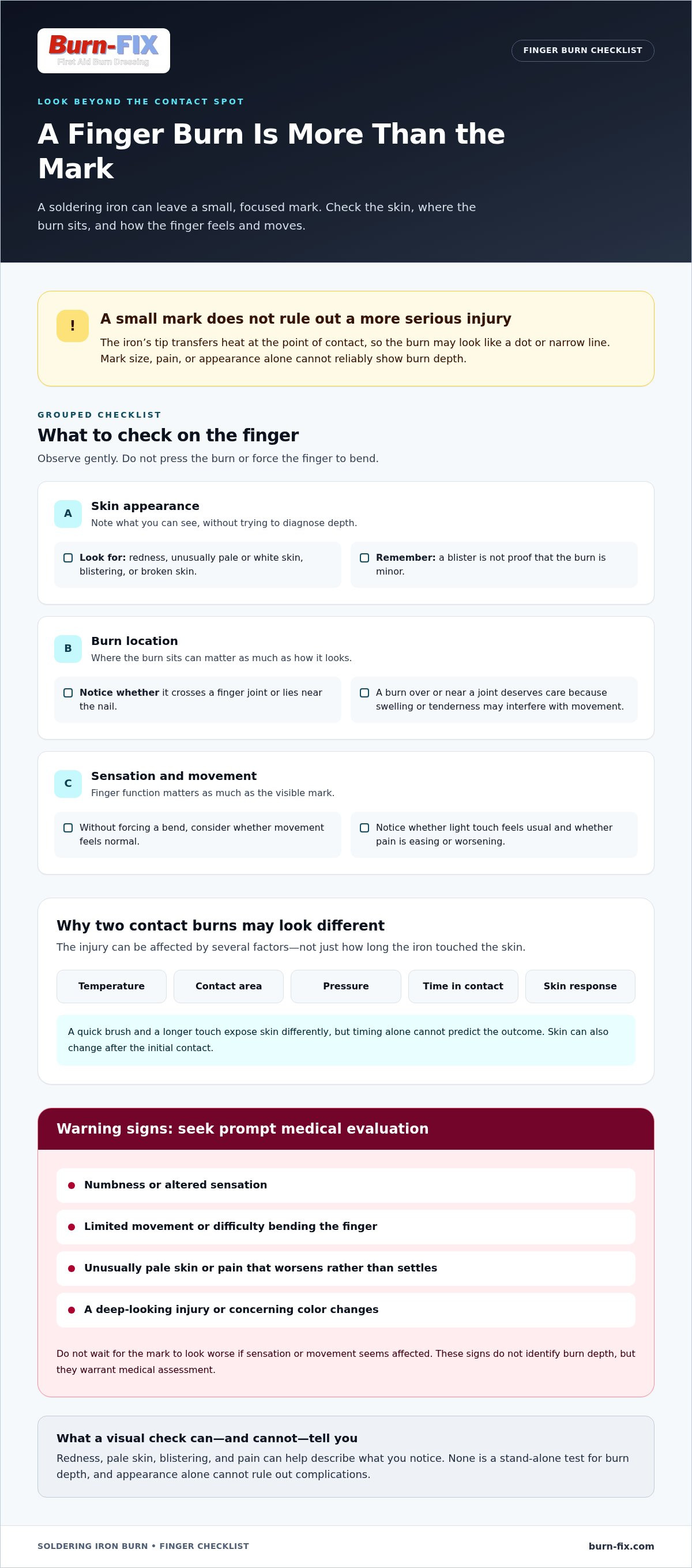
Look for redness, pale or unusually white skin, blistering, or broken skin. Notice where the burn sits, including whether it crosses a finger joint or lies near the nail. Without forcing the finger to bend, consider whether movement feels normal and whether you can sense light touch as usual. Note whether pain is easing, worsening, or accompanied by numbness.
These observations can help you describe the injury and notice whether finger function may be affected, but they can’t diagnose burn depth. A small red area may still need attention because of its location or symptoms, while a dramatic-looking mark doesn’t reveal the full extent on its own. Burn appearance alone can’t reliably establish depth or rule out complications. If sensation or movement seems altered, treat that as important information rather than trying to classify the burn yourself.
How soldering iron burns affect finger skin and function
A finger burn can affect more than the patch of skin that touched the iron. Fingers provide fine sensation and help you bend, grip, type, and handle small objects, so changes in feeling or movement deserve attention. A sore spot may make everyday tasks uncomfortable. Swelling or an injury near a joint can make bending harder. Don’t force the finger to move to test it.
Burns can affect the surface layers of skin or extend deeper into tissue. A superficial injury may look different from a deeper one, but you can’t reliably classify a burn at home. Blisters can form, and a small contact area doesn’t necessarily mean the injury is minor. The skin’s response may also change after the initial contact, so assess how the finger feels and works as well as how it looks.
Can you tell how deep a finger burn is by looking?
No single visual clue can confirm burn depth. Redness, pale skin, blistering, or the size of a blister may help describe what you see, but none works as a stand-alone test. Pain level isn’t definitive either, and appearance can change. Avoid trying to diagnose the burn’s degree yourself. Seek professional assessment if sensation or function is affected.
Pay particular attention to unusual paleness, numbness, pain that worsens rather than settles, or difficulty bending the finger. These signs don’t tell you exactly what tissue is involved, but they are reasons to get medical advice promptly. A burn over or near a joint also deserves care because swelling or tenderness may interfere with movement.
Why a blister or numb fingertip deserves attention
A blister is one possible skin response to a burn, not proof that the injury is minor. Leave it intact. Breaking the skin can increase the chance of infection. If it opens on its own, protect the area and follow reliable minor burn aftercare guidance. Avoid picking at loose skin or pressing the blister to see what is underneath.
Numbness needs special attention. It isn’t reassuring simply because the area hurts less: altered sensation can make it harder to notice pressure, heat, or further injury. Compare the affected finger gently with an uninjured one, without touching the burn itself, and note whether normal movement and feeling seem different. Don’t delay evaluation to see if numbness passes.
Finger function and sensation matter as much as the mark: numbness or impaired movement is a reason to seek medical assessment. If the burn appears suitable for minor-burn care after you’ve considered warning signs, hydrogel burn-care supplies can be a convenient addition to a first-aid kit when used according to label directions. They don’t replace medical evaluation when symptoms are concerning.
When a soldering iron burn on a finger needs medical care
Getting a burn assessed is a safety decision, not a reason to panic. Because it’s on the hand, a soldering iron burn on fingers deserves careful attention, especially if it affects sensation or movement. Don’t judge severity by a small mark or wait for it to “look worse” if the finger feels numb, looks unusually pale, or won’t bend normally. Arrange prompt medical evaluation when these warning signs appear.
Warning signs that should not be managed by guesswork
Seek urgent medical evaluation if the skin looks deep, leathery, charred, or white, brown, or black; if sensation is reduced; or if pain or swelling is worsening. A burn that limits finger movement also needs prompt assessment. These signs can’t tell you exactly how deep the injury is, but they make home guesswork unsafe.
- Loss of sensation: Numbness or an unusual change in feeling is a warning sign, not proof that the injury is painless or harmless.
- Restricted movement: Difficulty bending or straightening the finger may affect function and needs medical attention.
- Concerning appearance: Deep-looking, leathery, charred, or unusually pale skin warrants prompt assessment.
- Worsening symptoms: Increasing pain, swelling, or a rapidly changing appearance should raise concern.
If the injury seems severe or is worsening quickly, contact emergency services. Don’t delay urgent help to try a burn-care product or see whether the finger improves on its own. If you’re unsure whether a warning sign is present, getting professional guidance is safer than attempting to diagnose the burn at home.
When a small burn may still need professional advice
Small doesn’t always mean simple. A burn crossing a finger joint may interfere with bending, while one that encircles the finger can cause concern as swelling develops. Burns involving multiple fingers also deserve prompt assessment, since pain or swelling across several digits may affect grip and everyday hand use.
The right care decision can also depend on symptoms and personal health history. If you have a condition that affects healing or sensation, or you’re uncertain about the injury, seek professional advice rather than relying on appearance alone. Burns on the hand warrant medical attention, and suspected deeper injury should be assessed promptly.
While arranging care, keep the finger protected and avoid tight coverings or rings that could become constrictive if swelling increases. Don’t pop blisters or apply a product instead of seeking evaluation when sensation, movement, or skin appearance is concerning. The goal is to get help before a potentially serious finger injury further affects function.
Immediate steps after a soldering iron burn
Act calmly and in order. If a soldering iron burn on fingers happens, stop working, set the iron down somewhere stable, and focus on the injured hand. Prompt cooling helps limit ongoing heat injury. If the burn looks deep, sensation is altered, or finger movement is restricted, arrange urgent medical evaluation. Don’t postpone care to finish these steps or apply a product.
- Stop and make the area safe. Move away from the hot iron and any freshly soldered parts. Don’t touch them to check whether they’ve cooled.
- Remove nearby jewelry if it comes off easily. Rings can become tight if the finger swells. Don’t pull at anything stuck to burned skin.
- Cool the burn. Hold it under cool, gently running water for 10 to 20 minutes, as soon as you can. The research guidance says cooling is most helpful when started promptly, ideally within three hours of the injury.
- Protect the area. After cooling, cover it loosely with a clean, non-fluffy dressing or sterile non-stick covering.
- Reassess and get help if needed. Check for changes in sensation, appearance, pain, or movement. Seek medical care for concerning signs rather than relying on home treatment.
Cool the burn safely and promptly
Use cool running water, not ice or iced water. Extreme cold can injure burned skin further, so don’t press an ice cube or very cold pack against the finger. Avoid butter, oils, and other greasy substances, which can trap heat. Don’t let the search for a special supply delay cooling. Use clean, cool running water as your first choice.
Protect the finger after cooling
Choose a clean, non-fluffy covering that won’t shed fibers into the wound. Keep it loose so it doesn’t squeeze the finger, especially if swelling develops. Avoid putting adhesive directly over burned skin or an intact blister. Secure the covering around the uninjured area instead. Don’t pop blisters or rub or scrub the burn.
For a suitable minor burn, a hydrogel spray, gel, or dressing may be an optional part of first-aid care. Follow the product’s label directions, and don’t use it instead of evaluation if the burn appears deep or affects sensation or movement. If you’re preparing a workbench first-aid kit, explore Burn-Fix burn-care supplies as an option to keep on hand. Medical care comes first whenever warning signs are present.
After first aid: protect your finger and prevent another soldering burn
Once immediate first aid is complete, keep the finger clean, covered as advised, and protected from knocks or friction. Follow any instructions from a healthcare professional, and check the area regularly rather than assuming it’s healing because the original mark was small. A dressing should stay secure without squeezing the finger. Change it according to professional advice or the product directions.
Monitor healing and know when to seek reassessment
Seek medical advice if pain worsens, redness spreads, discharge appears, you develop a fever, or finger movement becomes reduced. These changes can signal a problem that needs assessment. Don’t try to manage them by simply adding more gel or tightening a dressing. For broader guidance on caring for a suitable burn, see at-home care for second-degree burns, while following any specific professional advice for your injury.
Return to soldering only when you can grip tools securely, feel the finger normally enough for the task, and focus without the injury interfering. If pain or reduced movement makes your grip uncertain, pause. Continuing before you can handle the iron safely could expose the healing area to another bump or burn.
Make the soldering workbench safer before restarting
A few deliberate habits can reduce accidental contact, though no setup removes all risk. Put the iron in a stable stand between tasks, clear loose parts and clutter from the work area, and plan where your hands will go before reaching for a component. Keep the hot tip pointed away from your fingers and avoid reaching across it. Let freshly soldered joints cool before handling them.
Keep burn-care supplies easy to reach, but don’t place them beside the hot tool or where they obstruct your work. A home emergency burn kit checklist can help you think through what to keep available. Store supplies where you can find them quickly, but don’t let access to a kit delay urgent medical evaluation.
Choose a suitable burn-care supply for minor injuries
Burn-Fix hydrogel spray, gel packets, and burn gel dressings are designed for first- and second-degree burns. They may be a convenient optional addition to a first-aid kit for a suitable minor burn, but they aren’t a substitute for medical care when the injury looks deep or symptoms are concerning. Read and follow the product label, and seek professional assessment if you’re unsure whether the burn is minor.
For an optional first-aid-kit addition, explore Burn-Fix burn-care supplies. Keep prevention and careful monitoring at the center of your plan: a prepared bench can lower the chance of another accident, while prompt attention to changing symptoms helps you respond if healing doesn’t go as expected.
Make burn readiness part of your next work session
A soldering iron burn on fingers can interrupt a project in an instant, but a thoughtful next step can help you return to the bench with greater confidence. Before your next session, place first-aid supplies within reach and decide when you’ll stop working if your hand feels sore or less steady than usual. A little preparation makes it easier to respond without rushing.
For suitable minor burns, hydrogel spray, gel packets, and burn gel dressings can be useful additions to a first-aid kit. Follow product directions, and don’t let any supply delay professional care if symptoms concern you. Be prepared while giving your finger the attention it needs.
Explore Burn-Fix burn-care supplies and choose an option to keep with your first-aid essentials. With a little preparation, you can focus on careful work and have a calmer path forward if an accident happens.
Frequently Asked Questions
Should I remove a ring after burning my finger with a soldering iron?
Yes, remove a ring promptly if it slides off easily, before swelling makes it tight. Don’t force it over swollen or injured skin, since pulling can cause more pain or damage. As swelling changes, a ring can constrict the finger. Seek urgent medical help if jewelry is stuck, swelling is significant, or the finger becomes numb, unusually pale, cool, or otherwise seems to have impaired circulation.
Can I put aloe vera, toothpaste, or butter on a soldering iron burn?
Don’t use toothpaste or butter on a fresh burn. Household substances aren’t first aid and may interfere with cleaning or assessment. Aloe also shouldn’t be applied to damaged or blistered skin unless a healthcare professional advises it. First cool the burn with running water and protect it with a clean, loose covering. If pain is worsening, skin is broken, or finger function changes, seek medical advice.
What should I do if the soldering iron burn breaks open?
Rinse the area gently with clean water, but don’t scrub it or pull away skin that remains attached. Cover it loosely with a clean dressing to protect the exposed area. A broken blister doesn’t show how deep the burn is, so keep monitoring it. Get medical advice for a substantial open wound, worsening pain, signs of infection, or any change in sensation or finger movement.
How can I tell if a soldering iron burn is infected?
Increasing redness, warmth, swelling, worsening pain, pus or other drainage, and fever can be warning signs that need prompt medical advice. One symptom alone doesn’t confirm infection, since irritation and normal healing changes can overlap. Notice whether symptoms are spreading or becoming more uncomfortable. Seek urgent evaluation if changes progress rapidly, you feel seriously unwell, or moving the finger becomes increasingly difficult.
Can I use a hydrogel burn spray on a soldering iron burn?
Possibly, if the burn is suitable for the product and you follow its label directions. Burn-Fix describes its hydrogel products for first- and second-degree burns, but that doesn’t make them right for every injury. Cool the burn first, and don’t let spray delay care if the injury looks deep, feels numb, is worsening, or limits movement. If you’re unsure about suitability, seek medical advice.
When can I start soldering again after burning a finger?
There’s no single return-to-work timeline that suits every burn. Resume only when you can grip tools securely, feel the finger well enough to handle hot equipment safely, and follow any advice from a healthcare professional. Stop if pain, limited movement, or a dressing interferes with tool control. Before restarting, make sure the iron has a stable stand and your work area gives your hands clear space.


