


Imagine the kitchen on a busy Tuesday evening. A pot slips, a child reaches for a hot tray, and suddenly the air is filled with a sharp cry of pain. In that frantic panic moment, most parents instinctively reach for the ice tray or butter, unaware that these common home remedies can actually trap heat and deepen the tissue damage. Having a dedicated emergency burn kit for home isn't just about being organized. It's about having the professional tools required to neutralize heat instantly, shielding your family from the trauma of blisters and long-term scarring before you even have to call for help.
We understand that the safety of your household is your highest priority, and the fear of a permanent injury can be overwhelming when you're unprepared. You deserve a first-aid system that works as fast as a burn spreads. This guide will teach you exactly what your household needs to stop burn pain in its tracks and promote rapid skin recovery. We will walk through the essential 2026 safety checklist, from moisture-retaining hydrogel dressings to no-touch cooling sprays, ensuring you have a clear, expert-backed plan to handle any minor kitchen scald or household burn with total confidence.
Key Takeaways
- Discover why traditional first aid supplies often fail during a burn and how to stop "thermal progression" before it causes deep tissue damage.
- Identify the essential supplies for your emergency burn kit for home, including the specialized hydrogel dressings that 2026 safety standards demand.
- Learn the critical difference between heat-trapping ointments and hydrogels that act as a "heat sink" to actively pull energy away from the skin.
- Master the strategic placement of your supplies in high-risk "Kitchen" and "Grill" zones to ensure you can react instantly during a crisis.
- Gain a clear, step-by-step system for providing professional-grade relief that prevents painful blisters and permanent scarring.
Why a Standard First Aid Kit Fails in a Burn Emergency
Most homes keep a plastic box filled with adhesive strips and antiseptic wipes in a bathroom cupboard. While these are excellent for scraped knees, they are dangerously inadequate for heat-related injuries. A general kit treats the surface, but a burn is a dynamic, evolving injury that requires specialized intervention to stop it from getting worse. Speed is your best ally. When you have a dedicated emergency burn kit for home, you aren't digging through a cluttered drawer during a "panic moment" while your skin continues to suffer.
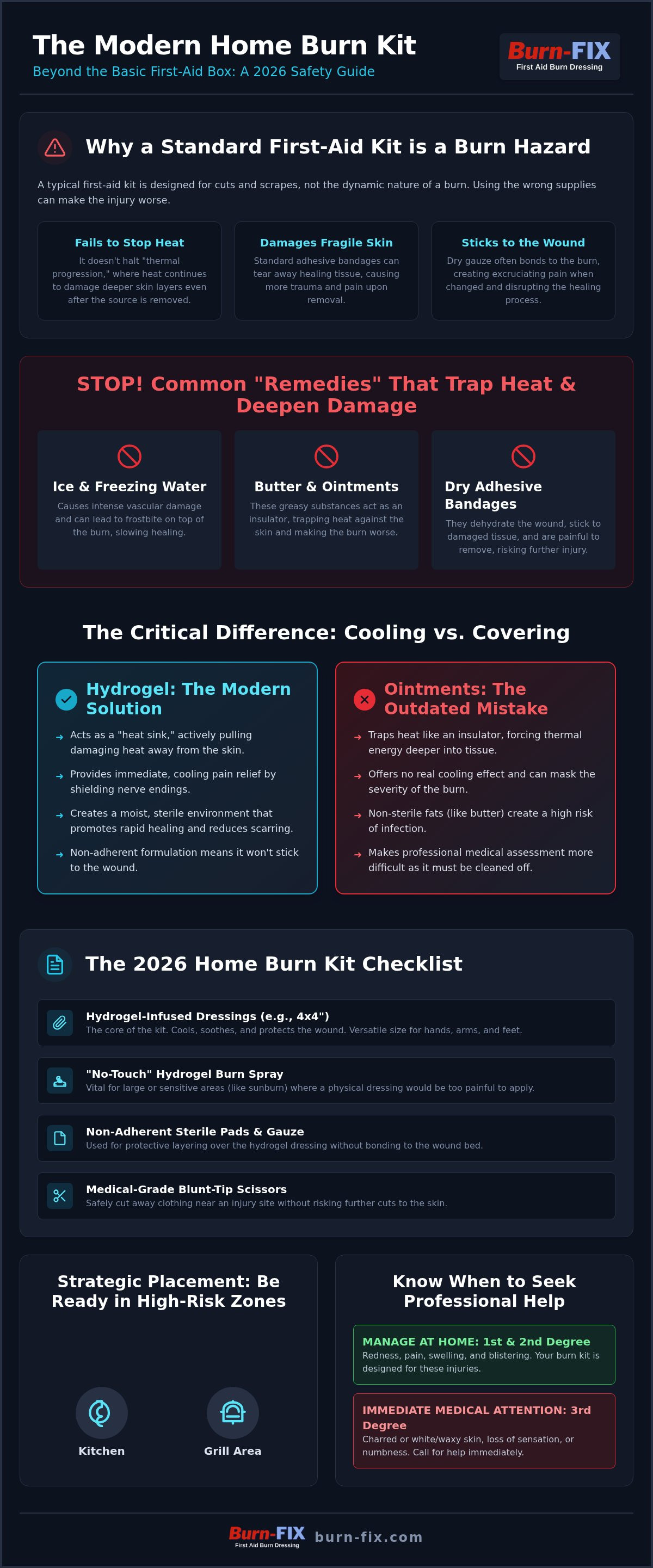
Thermal progression is the continued movement of heat through skin layers after the initial contact. If you don't neutralize this energy immediately, the damage penetrates deeper into the dermis even after you've pulled your hand away from the stove. Traditional adhesive bandages are a nightmare for this type of injury. The adhesive can tear away fragile tissue, while dry gauze often bonds to the wound bed. This creates excruciating pain and fresh trauma when you try to remove the dressing later.
Don't reach for the freezer when an accident happens. Using ice or freezing water causes intense vascular damage and can actually result in frostbite on top of your burn. It's a shock to the system that narrows blood vessels and slows the healing process. Instead, you need a system that pulls heat away gently and consistently.
The Role of Moisture in Burn Recovery
Dehydration is the enemy of healing. When a burn dries out, the wound bed becomes brittle, leading to deeper tissue death and increased scarring. Actively cooling a burn with hydrogel is different than just covering it; it creates a moist, breathable environment that promotes faster epithelialization. This moisture-rich barrier shields exposed nerve endings, providing the instant relief your family needs while protecting the site from external contaminants.
First-Degree vs. Second-Degree Home Care
Identifying the severity of the injury dictates your next move. First-degree burns show as red, painful skin, similar to a mild sunburn. Second-degree burns involve painful blistering and deeper swelling. Scalds from boiling liquids often cover larger surface areas quickly, whereas contact burns from hot metal tend to be localized but intense. Your emergency burn kit for home is designed to manage these first and second-degree incidents effectively. However, any injury involving charred skin, white patches, or a loss of sensation requires immediate professional medical attention.
The 2026 Home Burn Kit Checklist: Essential Supplies
Building an emergency burn kit for home requires a shift from "basic patching" to "active cooling." You need tools that do more than just cover a wound. The 2026 safety standard prioritizes medical-grade supplies that neutralize heat on contact. This prevents the injury from worsening while you wait for further care. A well-stocked kit ensures that every family member has access to immediate comfort, regardless of the burn's location or size.
- Primary Cooling Agent: Hydrogel-infused dressings. The 4x4 size is the industry standard for versatility, fitting perfectly over hands, arms, or feet.
- No-Touch Relief: Hydrogel burn spray. This is vital for sensitive areas or large surface injuries where physical contact is too painful.
- Protective Layering: Non-adherent sterile pads and conforming gauze rolls. These protect the wound without bonding to the damaged skin.
- Support Tools: Medical-grade blunt-tip scissors. These allow you to cut clothing away from an injury site safely without risking further cuts.
- Fixation: Breathable medical tape. This secures your dressings while allowing the skin to "breathe," reducing the risk of irritation.
Why Hydrogel is the Non-Negotiable Core
Hydrogel works through a specific physical process called a "heat sink." It draws thermal energy away from the damaged skin and into the gel, effectively stopping the burn from progressing deeper into your tissue. Using sterile, single-use packets is vital. They prevent cross-contamination and ensure the gel remains moist and effective until the moment it's needed. For areas too sensitive to touch, such as the face or a large sunburn, a burn relief spray provides immediate pain management without the need for physical contact. This "no-touch" application is often the kindest way to treat a frightened child.
Secondary Support Items for Your Kit
A complete kit also includes the small details that make a difference under pressure. Disposable gloves are essential to maintain a sterile field, especially when treating others. You should also stock small 3.5g packets of hydrogel for minor finger burns or grease splashes that don't require a full 4x4 dressing. Finally, include a simple, waterproof instruction card. When adrenaline is high and you're in a "panic moment," having a clear, step-by-step guide ensures you follow the correct protocol without hesitation. If you want to ensure your family is fully prepared, the BurnFix Burn Kit provides these professional-grade essentials in one organized, easy-to-use system.
Hydrogel vs. Ointments: Which Belongs in Your Kit?
Stop the pain by avoiding the "heat trap" of common household ointments. Many people instinctively reach for butter or oil-based salves during a crisis, but these substances actually insulate the injury. They lock thermal energy into the skin, which can deepen the damage over time. In contrast, hydrogel acts as a "heat sink" by actively pulling energy away from the tissue. This is why specialized dressings are the most critical component of an emergency burn kit for home. They don't just coat the wound; they neutralize the source of the discomfort.
Timing is everything when it comes to recovery. Use hydrogel for the first 24 to 48 hours to manage the acute phase of the injury and stop thermal progression. Ointments have their place, but only during the later stages of healing once the heat has been fully dissipated and the skin needs a moisture barrier to prevent cracking. Another critical benefit of hydrogel is "painless removal." Because the gel doesn't dry out or bond to the wound, dressings slide off easily. This prevents the trauma of re-opening a healing wound during bandage changes, which is especially important for young children.
The Science of Hydrogel Composition
Hydrogel is composed of approximately 90% water, making it incredibly effective at rehydrating parched skin cells instantly. It's gentle enough for infants and those with sensitive skin because it contains no harsh chemicals or irritants. The sensory experience is transformative. Within seconds of application, the feeling of "burning" shifts to a soothing "cooling" sensation. This rapid transition helps calm a distressed family member and reduces the physiological stress of the injury.
Common Household Items to Avoid
Protect your family by debunking dangerous household myths. Toothpaste, vinegar, and egg whites have no place on a fresh wound. These items are non-sterile and often lead to painful infections or complicate the cleaning process at the hospital. Hydrogel provides an occlusive barrier that protects nerves while cooling the site. By relying on the professional tools in your emergency burn kit for home, you prioritize safety over folklore and ensure the wound remains clean and primed for rapid recovery.
Strategic Placement: Where to Store Your Burn Supplies
Location dictates your reaction time. Even the most advanced emergency burn kit for home is useless if it's buried behind heavy boxes in a garage or locked in a high cabinet during a crisis. You need a "zone-based" approach to safety that places professional-grade relief exactly where accidents are most likely to occur. By mapping your home's high-risk areas, you ensure that the transition from pain to comfort begins the moment an injury happens.
The "Kitchen Zone" is your first priority. Statistics from fire safety organizations indicate that approximately 70% of home burns occur in the cooking area, where boiling liquids and hot surfaces are constant hazards. Store your primary kit at eye level in a pantry or a dedicated first-aid cupboard. It shouldn't be hidden; it should be the first thing you see when you open the door. Avoid storing supplies directly above the stove, as the rising heat can degrade the integrity of the hydrogel over time.
Your "Outdoor/Grill Zone" requires equal attention. Grease splashes and charcoal accidents happen in seconds, and running back into the house with a painful injury increases the risk of further accidents. Keep a secondary kit or a set of hydrogel dressings near the patio door or in a weather-protected outdoor kitchen drawer. For those who love road trips or camping, a portable car kit is essential. Campfire embers and engine heat are unpredictable, so having a reliable burn kit in your vehicle ensures you're never far from professional-grade care.
The 5-Minute Rule: Speed of Response
The first five minutes after a burn determine the severity of the long-term scar. Immediate application of cooling agents like hydrogel stops the heat from traveling deeper into your skin layers. If every family member, including babysitters and older children, knows the exact location of the kit, you can neutralize the injury before permanent damage sets in. Using small hydrogel packets in your car's glove box provides this same "no-touch" pain relief when you're miles away from a traditional medicine cabinet.
Maintaining Your Emergency Supplies
Readiness requires regular maintenance. Sterile gels and sprays have expiration dates that you should check every six months to ensure the formula remains effective. If you use a single dressing for a minor scald, restock it immediately. It's better to have a full kit you don't need than a half-empty one during a major incident. Always keep your supplies in a cool, dry place. Extreme temperatures can break down the moisture-retaining technology of the gel, so avoid keeping your car kit in direct sunlight or a trunk that reaches high temperatures in the summer.
The Burn-Fix Solution: Professional Care for the Home
Choosing the right emergency burn kit for home means moving beyond generic bandages and embracing clinical-grade technology. While standard first aid supplies focus on simple wound coverage, the BurnFix Burn Kit is a curated selection designed to neutralize heat and stop pain instantly. This specialized system brings professional-grade hydrogel technology into your kitchen, ensuring that your family has access to the same quality of care used by first responders. It's a comprehensive approach that transforms a moment of panic into a controlled, effective response.
The core of this protection lies in the Burn-FIX 4x4 First Aid Burn Gel Dressing. These large, sterile pads provide full-coverage protection for significant kitchen scalds or contact burns, drawing heat away from the skin while maintaining a moist environment for recovery. For smaller, everyday accidents like grease splashes or a hot curling iron touch, the BurnFix Burn Gel - 3.5g Per Packet offers portable, rapid relief. These individual packets are perfect for treating localized injuries without wasting a full dressing, making them a practical addition to any household safety net.
Trusted by Professionals, Designed for Families
Burn-Fix bridges the gap between clinical settings and the home environment. These doctor-recommended formulas are safe for all ages, providing parents with peace of mind during high-stress situations. The brand operates with a sense of "calm urgency," focusing on products that work as fast as the pain starts. Families who have used Burn-Fix report a dramatic shift from distress to comfort within seconds of application. By choosing a specialist brand, you're opting for a veteran solution that has been tested in real-world scenarios, ensuring that your first-aid response is both gentle and authoritative.
Building Your Complete Safety Net
A single spray or dressing is rarely enough for a busy household. A multi-pack approach ensures you're prepared for multiple incidents or larger injuries that require more than one application. To ensure your home is fully protected, your final checklist should include a variety of hydrogel sizes, no-touch sprays, and non-adherent wraps. This layered system provides the flexibility to treat anything from a minor finger singe to a large-scale liquid scald with total confidence. You can protect your family today with a complete BurnFix Burn Kit and ensure that when the "panic moment" arrives, you have the professional tools needed to prevent permanent skin damage.
Secure Your Family's Comfort and Safety
Preparation is the bridge between a minor accident and a lasting injury. By moving beyond standard bandages and embracing the science of hydrogel, you've taken the most important step in neutralizing heat and stopping the pain of household burns. Remember that strategic placement in your high-risk zones and the rejection of heat-trapping home remedies are critical to preventing blisters and deep tissue damage. Having a dedicated emergency burn kit for home ensures that you're never caught off guard when a crisis occurs.
It's time to provide your household with the same level of care used by first responders and medical professionals nationwide. You can equip your home with the professional-grade BurnFix Burn Kit to access doctor-recommended technology for first and second-degree burns. This advanced hydrogel system offers instant pain relief and moisture retention, shielding your loved ones from trauma during the most stressful moments. You have the knowledge and the tools to handle any scald or contact burn with total confidence. Stay safe, stay prepared, and keep your family protected.
Frequently Asked Questions
What should be in a home burn kit?
A comprehensive emergency burn kit for home should include several specialized items to handle heat-related injuries effectively:
- Hydrogel-infused dressings (specifically 4x4 sizes)
- No-touch hydrogel burn spray
- Sterile non-adherent gauze and medical tape
- Blunt-tip medical scissors
These items form the core of a professional response. You need supplies that actively pull heat away rather than just covering the wound. Having a variety of sizes ensures you can treat everything from a small finger splash to a larger scald with expert care.
Can I use ice if I don’t have a burn kit?
No, you should never use ice or freezing water on a burn. Extreme cold constricts blood vessels and can cause further tissue damage or even frostbite on top of the existing injury. If you don't have hydrogel available, use cool, running tap water for at least 20 minutes. This is a temporary measure until you can apply a proper cooling agent that neutralizes heat without damaging the skin's delicate vascular structure.
How long do hydrogel burn dressings last?
Hydrogel dressings are designed for single use and typically provide effective cooling for several hours. Once applied, the gel works as a heat sink to pull energy away from the skin. You should generally change the dressing every 12 to 24 hours depending on the severity of the burn and the level of moisture remaining in the pad. Always check the individual product packaging for specific safety standards to ensure the wound bed stays hydrated.
Is hydrogel safe for use on children and infants?
Yes, doctor-recommended hydrogel is safe for all ages, including infants and young children. The formula is non-toxic and water-based, providing a gentle cooling sensation that helps calm a distressed child instantly. Because it doesn't contain harsh chemicals or medications, it's the ideal first-aid solution for sensitive skin. It protects exposed nerve endings and stops the "burning" feeling without the risk of systemic side effects found in some prescription ointments or lidocaine-based products.
When should I use a burn spray versus a gel dressing?
Use a no-touch burn spray for sensitive areas, large surface sunburns, or minor splashes where physical contact is too painful. It provides immediate relief without the need to rub the skin. For deeper or more localized injuries, a hydrogel dressing is superior because it provides a thick, protective barrier and holds moisture against the wound bed for an extended period. Both items are essential components of a complete emergency burn kit for home to handle different scenarios.
How often should I replace the items in my emergency burn kit?
You should inspect your kit every six months and replace any items that have reached their expiration date. Sterile hydrogel products have a specific shelf life that ensures the gel remains moist and the formula stays effective. If you use a dressing or a packet of gel, restock it immediately. Maintaining a fully equipped kit is the only way to ensure you're prepared for a crisis. Check the seals on all sterile packets to prevent drying.
Can I use these products on a sunburn?
Absolutely, hydrogel sprays and dressings are excellent for managing the heat and pain of a severe sunburn. A spray is often the most comfortable choice for large areas like the back or shoulders because it cools the skin without requiring painful rubbing. The hydrogel rehydrates the parched dermis and creates a protective barrier that helps prevent the peeling and itching often associated with sun damage. It's a professional way to transition from pain to comfort.
What is the first thing to do for a kitchen grease burn?
The immediate priority is to stop the burning process by removing any hot clothing and applying a cooling agent. Grease holds heat longer than water, so you must neutralize that energy quickly to prevent deep tissue damage. Apply a hydrogel dressing or spray immediately to pull the heat out. If the grease has caused the skin to char or if the area is larger than your palm, seek professional medical help after the initial cooling.


