


You reach for the edge of the bandage, your heart racing as you anticipate the sharp, tearing sensation of gauze stuck to raw skin. It is a moment of pure anxiety that every burn victim knows too well. You aren't just worried about the pain; you're terrified of tearing away the delicate new skin your body worked so hard to knit back together. For years, the standard advice was to just "be brave" during dressing changes, but the reality is that traditional gauze often acts more like a trap than a treatment. Choosing the right non-stick burn dressings is the difference between a traumatic recovery and a calm, healing process.
You deserve a recovery that focuses on comfort and speed, not dread. We understand that the confusion between regular gauze and specialized burn pads only adds to the stress of an injury. This guide will show you how to identify the most effective, ouchless solutions available in 2026 to ensure your skin stays protected and your blisters remain intact. We will break down the crucial differences between standard medical pads and advanced hydrogel technology, helping you transform your home first-aid kit into a professional-grade recovery station. From understanding moisture-retention to mastering the art of the painless swap, you're about to gain the clarity needed to manage burns with confidence and care.
Key Takeaways
- Learn how to identify the "adhesion trap" where drying wound fluid glues traditional gauze to your skin, causing unnecessary trauma.
- Compare the moisture-retaining benefits of hydrogel against standard non-stick burn dressings to ensure constant cooling and protection.
- Determine whether a hydrogel spray or a 4x4 sterile dressing is the right tool for your specific injury size and location.
- Follow a professional step-by-step guide to applying and removing bandages that eliminates the fear of tearing new skin or popping blisters.
- Explore why high-water-content dressings are essential for extracting heat and accelerating the transition from pain to comfort.
Why Traditional Bandages Stick to Burns and How to Avoid It
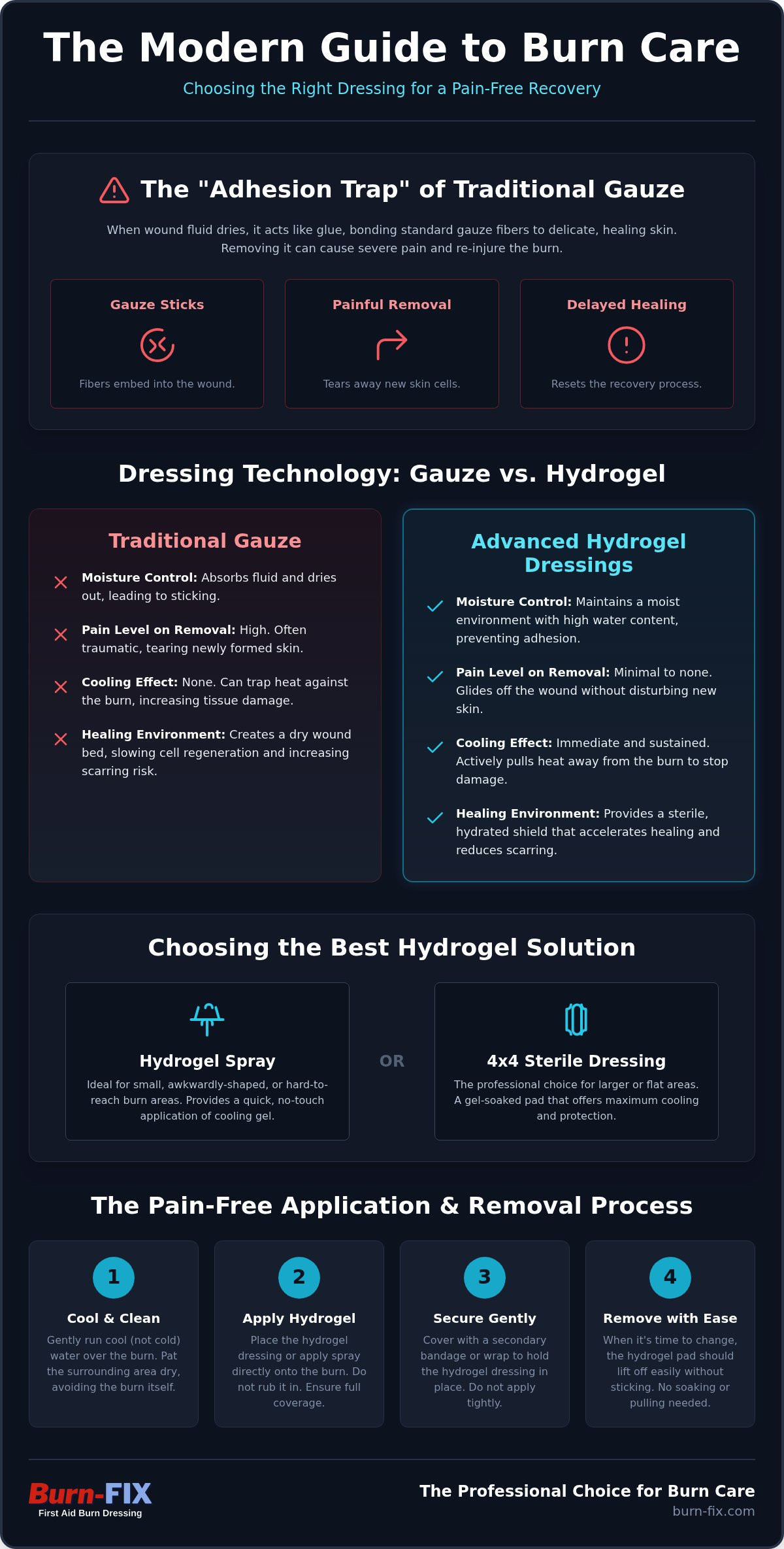
Immediate relief is your priority when a burn occurs. However, the wrong choice in your first-aid kit can lead to a painful setback during the first dressing change. Standard gauze is designed to absorb fluid, but in a burn, this absorption creates a mechanical bond. Wound exudate, the natural fluid your body sends to the injury site, acts like a biological glue as it evaporates. It seeps into the woven fibers of the gauze and hardens; this locks the bandage to your raw skin and creates what specialists call the "adhesion trap."
The sensory impact of a sticking bandage is profound. It turns a moment of recovery into a crisis of anxiety. You want the wound covered, but you dread the removal process. This fear often disrupts the "calm urgency" needed for effective home care. Unlike simple cuts that benefit from a dry scab, burns require a different approach to prevent cell death. If the wound bed dries out, the exposed cells perish, which slows healing and increases discomfort. Non-stick burn dressings are occlusive or semi-occlusive barriers that maintain a consistent moisture level to protect the dermis.
The Risk of Secondary Trauma During Dressing Changes
Removing a stuck bandage doesn't just hurt. When a dressing sticks, removal tears away newly forming epithelial cells. These are the delicate building blocks of your new skin. This mechanical trauma resets the healing clock and significantly increases your risk of permanent scarring. Dry gauze is the wrong choice for a weeping second-degree burn. The high volume of fluid in these injuries makes the bond between skin and fiber even stronger, leading to significant tissue damage during removal. Using non-stick burn dressings ensures that you don't compromise your body's natural repair process.
The Role of Moisture in Pain-Free Healing
Moisture is the secret to ouchless recovery. A saturated wound bed ensures the dressing never physically bonds to your skin, allowing the pad to glide away effortlessly. A high-quality medical dressing for burns uses advanced technology to provide an instant cooling effect. This cooling pulls heat away from the tissue to stop the burning process immediately. By maintaining a moist environment, you create a sterile shield that blocks external stressors while keeping the area hydrated. This environment is essential for preventing infection and ensuring the transition from injury to comfort is as smooth as possible.
The Science of Non-Stick Technology: Gauze vs. Hydrogel
Understanding the technology behind your first-aid supplies can change the trajectory of your recovery. Most drugstores stock "non-adherent" gauze, which uses a coating of petrolatum or a thin plastic film to prevent sticking. While these work for minor scrapes, they often fail when faced with the high fluid levels of a burn. As the wound weeps, the coating can wear thin, allowing the underlying fibers to bond with the skin. This is where non-stick burn dressings like hydrogels offer a superior alternative by creating a permanent moisture barrier that never dries out. Choosing between various non-stick burn dressings requires an understanding of how they interact with your skin's biology.
Hydrogel is a water-based matrix that stays wet while allowing the wound to breathe. It is the preferred choice for a sterile burn dressing 4x4 because it prioritizes heat extraction. Unlike dry materials that trap heat against the dermis, hydrogel actively transfers thermal energy away from the skin. This physical exchange provides immediate relief and prevents the burn from deepening into lower tissue layers. Using modern burn dressings ensures that the cooling process continues long after the initial injury, protecting the area from further damage.
How Hydrogel Dressings Create a Protective Shield
The physical structure of a hydrogel dressing is designed for maximum comfort. It consists of a moisture-rich gel suspended on a soft, non-woven base, creating a cooling cushion over the injury. This mimics the soothing properties of cool running water without the risk of maceration, which occurs when skin softens and breaks down from over-exposure to liquid. These dressings are gentle and hypoallergenic. They are perfectly safe for the sensitive skin of children and the elderly, providing a protective barrier that feels like a second skin while neutralizing pain.
Comparing Breathability and Protection
A dressing must be occlusive enough to block bacteria but breathable enough to allow gas exchange. Hydrogel achieves this balance, acting as a sterile shield while letting the wound respire. Many of these gel pads are transparent, which allows you to monitor the healing progress without disturbing the site. A high-quality hydrogel can absorb several times its weight in wound fluid while remaining completely non-stick. This high absorption capacity ensures the area stays clean and hydrated without the bandage fusing to the injury. For reliable, professional-grade protection, you can browse specialized hydrogel solutions that prioritize your comfort.
Choosing the Best Non-Stick Dressing for Your Injury
Selecting the right treatment depends on the severity and location of the heat damage. While all non-stick burn dressings aim to reduce pain, their effectiveness varies based on whether you're treating a flat surface like your forearm or a high-movement area like a knuckle. You need a solution that stays in place without restricting your mobility or losing its cooling properties. For outdoor enthusiasts or backyard chefs, having first aid for grill burns supplies ready in your kit ensures that high-heat injuries are neutralized before they can cause deep tissue damage.
When you evaluate "ouchless" claims on packaging, look for specific technical terms. "Non-adherent" is a broad category, but "Hydrogel" signifies a water-based matrix specifically designed for thermal injuries. A spray is ideal for immediate relief on hard-to-reach areas or large, superficial zones. In contrast, a physical dressing provides a sustained moisture barrier that is essential for long-term recovery. Choosing high-quality non-stick burn dressings means looking past the marketing and focusing on sterile, moisture-rich components that won't fuse with your skin.
First-Degree vs. Second-Degree Burn Needs
The depth of your injury dictates the level of protection required. First-degree burns, such as common sunburns or brief contact with steam, primarily cause redness and heat. These benefit most from cooling sprays and light gels that pull heat away without needing a heavy cover. Second-degree burns are more complex because they involve blisters and broken skin. These require a sterile, moisture-retaining pad to prevent the wound from drying out and sticking. If a burn is larger than three inches or covers a major joint, it's time to seek professional medical attention rather than relying solely on home care.
Dressing Sizes and Formats
Format determines how effectively you can manage an injury on the fly. The 4x4 sterile pad is the most versatile option for household accidents, providing enough surface area to overlap the burn edges for total protection. For on-the-go kits, travel-sized gel packets offer a compact way to apply immediate relief until a full dressing can be used. Be cautious with "island dressings" that feature built-in adhesive borders. While convenient, the adhesive can irritate the sensitive skin surrounding a fresh burn. It is often safer to use a dedicated gel pad held in place with loose medical wrap to ensure no sticky residue touches the affected area.
Step-by-Step: How to Apply and Remove Dressings Without Pain
Your first step toward a pain-free recovery begins with proper preparation. Clean the affected area with cool, running water for at least twenty minutes. Don't use ice or freezing water. Extreme cold can restrict blood flow and cause further tissue damage. Once the area is prepared, open your sterile package carefully. Center the hydrogel pad over the injury, ensuring you don't touch the side that contacts the wound. This maintains a sterile environment and prevents contamination. Secure the pad with a loose gauze wrap. Avoid tight adhesive tape; burns often swell, and a tight wrap can restrict blood flow and increase discomfort. Most hydrogel-based non-stick burn dressings should be changed every 24 hours to maintain optimal moisture levels.
The "Painless Removal" Protocol
Removing a dressing shouldn't feel like a second injury. If the material feels resistant, use the lukewarm water soak technique. Gently pour room-temperature water or saline over the bandage until it is fully saturated. This re-hydrates any dried exudate and breaks the bond between the fiber and the skin. When you're ready to remove it, pull the dressing parallel to the skin rather than lifting it straight up. This reduces the tension on the wound bed and protects new epithelial cells. During the change, look for a healthy pink color. If you notice a foul odor, green discharge, or spreading redness, consult a healthcare professional immediately.
Post-Dressing Care
Recovery continues even between changes. You can apply a burn relief spray to keep the area cool and hydrated while the wound is exposed. This provides a bridge of comfort until the next sterile pad is applied. Avoid the common mistake of applying butter, grease, or heavy ointments. These substances trap heat and can actually worsen the burn depth. Once the skin is no longer weeping and a new layer has formed, protect it from direct sunlight to minimize long-term scarring. You can stock up on professional-grade Burn-Fix supplies to ensure you're always prepared for ouchless removal.
Why Burn-Fix Hydrogel Dressings are the Professional Choice
Professional burn care requires more than just a protective cover; it requires a tool that actively manages thermal energy. The Burn-Fix difference lies in our high-water-content hydrogel, which is engineered for maximum heat extraction. While generic bulk options often lack the moisture density needed for deep cooling, our formula pulls heat away from the skin instantly. This rapid transfer of energy stops the burning process in its tracks, preventing a superficial injury from becoming a more serious concern. It is this commitment to specialized technology that makes our non-stick burn dressings a staple in both high-pressure commercial kitchens and busy family homes in 2026.
Our Burn-FIX 4x4 First Aid Burn Gel Dressing is doctor-recommended for its ability to provide immediate pain relief while maintaining a sterile environment. Having these supplies ready in high-risk areas, like the kitchen or near the backyard grill, allows you to respond with confidence. For those who want a comprehensive emergency response, our BurnFix Burn Kit offers a complete range of professional-grade tools. These kits ensure you have the right size and format available for any situation, from a small finger burn to a larger area on the forearm.
Designed for "Calm Urgency"
Crisis moments demand simplicity. We've designed our easy-open packaging specifically for when your hands are shaking or you are managing intense pain. You don't have to struggle with difficult seals while trying to help a loved one. Each dressing maintains strict sterile integrity that meets professional dermatological standards, ensuring your safety from the moment of application. The sensory relief is immediate. As soon as the gel touches a throbbing burn, the cooling sensation neutralizes the "stinging" feeling, allowing the transition from distress to comfort to begin right away.
A Family-Safe Solution
Safety for all ages is at the core of our formulation. Our hydrogel is gentle enough for children’s sensitive skin, providing an effective barrier without the use of harsh chemicals or irritants. This makes it the ideal choice for parents who want the same level of care used by first responders. Using non-stick burn dressings from a specialist brand gives you the peace of mind that you are using a veteran solution tested in real-world scenarios. Don't wait for an accident to happen. Equip your home with Burn-Fix Hydrogel Dressings today to ensure your family has the professional-grade protection they deserve.
Take Control of Your Healing Journey
Painless healing is within your reach. By choosing high-quality non-stick burn dressings, you move past the "adhesion trap" that turns traditional bandages into painful obstacles. You now understand that moisture is the absolute key to protecting new skin cells; hydrogel technology offers a cooling relief that dry gauze simply cannot match. This knowledge empowers you to handle minor crises with the calm authority of a seasoned specialist.
Your first-aid kit is the first line of defense for your family's safety. Using doctor-recommended solutions for 1st and 2nd-degree burns ensures that every dressing change is a step toward resolution rather than a repeat of the initial trauma. With moisture-retaining technology and instant pain relief, you can prioritize comfort from the very first second. Ensure a painless recovery with Burn-Fix Hydrogel Dressings and give your skin the expert care it needs to heal beautifully. You're ready to manage injuries with confidence, compassion, and professional-grade tools.
Frequently Asked Questions
Can I use a regular Band-Aid on a burn?
Regular adhesive bandages are generally not recommended for burns. The central pad is typically made of dry gauze that can bond with the wound as it weeps fluid. This leads to painful removal and potential skin tearing. For thermal injuries, you need specialized non-stick burn dressings that maintain a moist environment. Using a standard bandage on a second-degree burn can trap heat and disrupt the delicate healing of new skin cells.
What is the difference between non-adherent and non-stick?
Non-adherent usually refers to gauze coated with a thin film or petrolatum to reduce sticking. However, "non-stick" in the context of advanced burn care often implies hydrogel technology. While non-adherent pads can still dry out and fuse to a weeping wound, hydrogel non-stick burn dressings remain saturated. This ensures that the dressing never physically bonds to the dermis, allowing for a completely ouchless transition during every single bandage change.
How long should I leave a non-stick dressing on a burn?
You should typically change a hydrogel dressing every 24 hours. This frequency ensures the wound remains sterile and the gel stays fully hydrated to continue extracting heat. If the dressing becomes heavily saturated with fluid or starts to feel dry, you may need to change it sooner. Regular monitoring allows you to check for signs of healing while maintaining the protective moisture barrier essential for recovering tissue.
Will a hydrogel dressing stop my burn from blistering?
Hydrogel dressings help minimize blistering by instantly cooling the tissue and stopping the burning process. While they can't always prevent a blister that has already begun to form deep in the dermis, they protect the skin from further heat damage. By extracting thermal energy rapidly, these dressings reduce the overall severity of the injury. Keeping the area hydrated also prevents the skin from becoming brittle and prone to breaking.
What should I do if my bandage is stuck to the burn?
Stop pulling immediately and use the lukewarm water soak technique. Gently pour room-temperature water or sterile saline over the bandage until the fibers are completely saturated. This process re-hydrates the dried wound fluid that is acting like glue. Wait a few minutes for the bond to loosen, then slowly peel the dressing away parallel to the skin. This method prevents secondary trauma and protects newly formed epithelial cells.
Are non-stick dressings safe for children?
Professional-grade hydrogel dressings are safe and highly recommended for children. Their formula is gentle on sensitive skin and provides immediate sensory relief from the throbbing pain of a burn. Because children have thinner skin, they are more susceptible to deep tissue damage. Using a cooling, ouchless dressing helps manage the injury quickly while reducing the anxiety and trauma often associated with painful traditional bandage changes.
Can I use non-stick dressings on a sunburn?
Hydrogel dressings and sprays are excellent for localized, severe sunburns that feel hot to the touch. While a spray is more convenient for large areas like the back, a 4x4 hydrogel pad provides intensive cooling for hot spots on the shoulders or face. These dressings pull the trapped heat out of the skin and provide a moisture-rich barrier that prevents peeling and promotes a faster, more comfortable recovery process.
How do I know if my burn is infected under the dressing?
Look for specific warning signs during your daily dressing change. While some clear fluid is normal, a foul odor, green or yellow discharge, or spreading redness are indicators of infection. You should also monitor for increased swelling or a fever. If the pain intensifies significantly after the initial cooling phase, it's important to consult a healthcare professional. Maintaining a sterile environment with fresh dressings is your best defense against these complications.


