


Road rash isn’t just a scrape; it can be a friction burn, too. Effective treatment for road rash and other heat-related friction burns starts with gently rinsing away grit, cooling the area with running water, and protecting it with a clean dressing. Superficial road rash usually heals in 2 weeks, while deeper injuries can take longer.
The sting, raw skin, and worry about infection can make even a small slide feel alarming. Gentle care matters: remove debris without further irritating the wound, and protect the damaged skin as it heals.
Learn how to distinguish a friction burn from chafing or heat rash, clean and cover an injury, and recognize signs that call for medical attention. You’ll also learn what healing can look like over time, so you can care for the area with greater confidence.
Key Takeaways
- Road rash is a friction burn as well as an abrasion, so assess its depth and check whether grit or debris is embedded.
- Gently rinse the area with lukewarm water, remove loose debris, and pat it dry; avoid ice, hydrogen peroxide, and iodine.
- Superficial road rash usually heals in about 2 weeks, while deeper injuries can take longer and may need medical care.
- Watch for worsening pain, spreading redness, oozing, a foul smell, or fever, and seek medical attention if these signs appear.
What is a friction burn, and how do you treat it?
A road rash heat friction burn treatment plan starts with the depth of the skin damage. Clean minor injuries gently, but seek medical care for extensive wounds, embedded debris, or signs of infection.
Friction Burn Causes and Affected Areas
A friction burn happens when skin moves quickly across a rough surface, generating heat while scraping the skin. Unlike a thermal burn from a hot pan or liquid, it can combine heat damage with an abrasion.
Falls on asphalt, concrete, carpet, or a treadmill commonly affect the knees, elbows, palms, and forearms. Repeated rubbing from clothing, seams, straps, or skin can cause chafing. Heat rash develops when blocked sweat ducts trap sweat beneath the skin. Identifying the irritation helps guide appropriate care and avoids treating a rash like an open wound.
Road Rash Requiring Urgent Care
Seek urgent assessment for deep or extensive road rash, embedded debris, or a wound with separated edges that may need closure. A burn more than 3 inches wide may need medical attention, according to Cleveland Clinic. This road rash heat friction burn treatment decision matters because a scrape can conceal deeper damage.
Potentially deep injuries to the head, face, ears, hands, feet, groin, or buttocks need emergency medical attention. Signs of infection include spreading redness, increasing pain, unusual color changes, fluid or pus, a foul smell, or fever. Cleveland Clinic advises emergency attention if road rash shows signs of infection. Don’t mistake worsening symptoms for ordinary healing.
Tetanus Booster After Road Rash
A tetanus booster may be appropriate after road rash, depending on the wound and your vaccination history. Tell a healthcare professional when the injury happened and when you last received a tetanus vaccination, if you know.
Road rash can involve dirty pavement or gravel, so mention any debris and whether the wound has been cleaned. If you’re unsure of your vaccination history, say so when seeking care. Tetanus prophylaxis should be considered after road rash. A healthcare professional can assess the wound and your vaccination record to determine the next step.
Gently cleaning and drying a friction burn
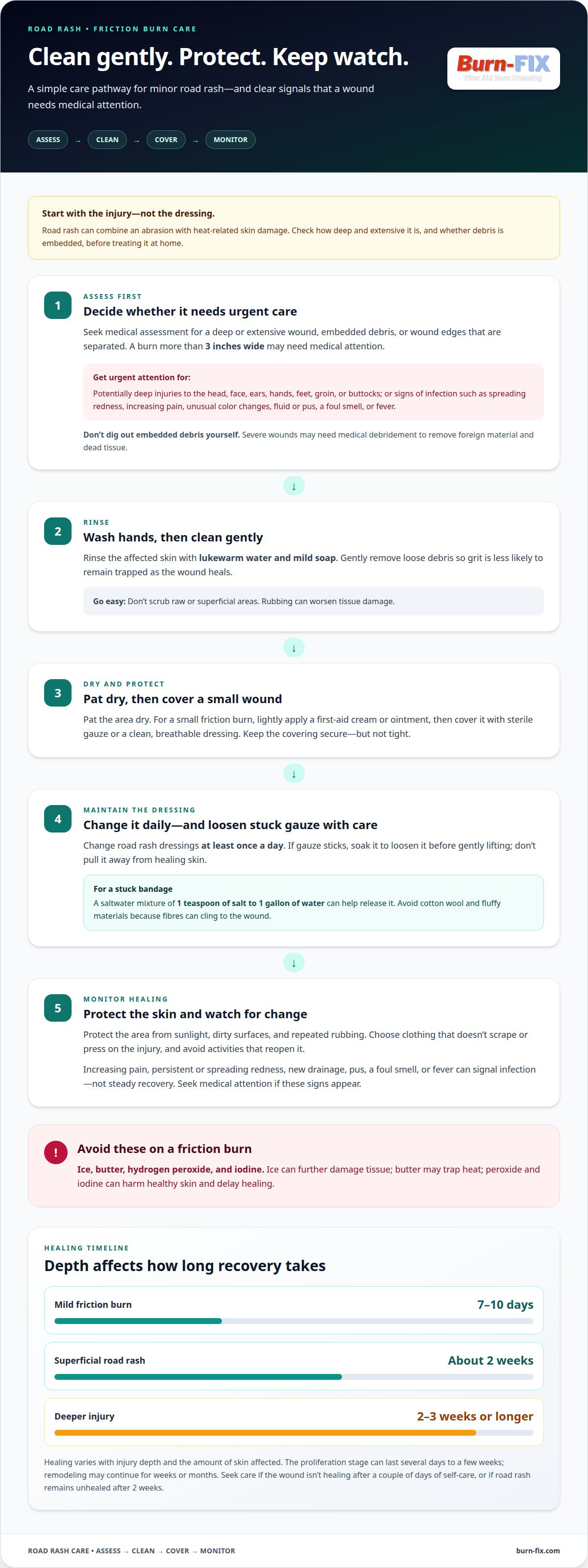
Clean the wound gently, since grit left on an abrasion can become trapped as the surface heals. Wash your hands first, then rinse the affected skin with lukewarm water and mild soap. Carefully remove loose debris, but don’t scrub raw or superficial areas, as rubbing can worsen tissue damage.
For a small friction burn, lightly apply a first-aid cream or ointment, then cover it with sterile gauze or a clean, breathable dressing. An antibiotic ointment may help reduce infection risk. The Burn-Fix 4x4 First Aid Burn Gel Dressing is a dressing option for a cleaned burn. Keep the covering secure but not tight, and change road rash dressings at least once a day.
If gauze sticks, don’t pull it away from healing skin. Soak the dressing to loosen it, then lift it gently. A saltwater mixture of 1 teaspoon of salt to 1 gallon of water can help release a stuck bandage. Avoid cotton wool and fluffy materials, because fibres can cling to the wound.
Avoid ice, butter, hydrogen peroxide, and iodine. Ice can damage tissue further; butter may trap heat, while peroxide and iodine can harm healthy skin and delay healing. These products can make an injury harder to manage, even if they seem cooling or cleansing at first.
For chafed skin, use a gentle routine: wash the area, pat it dry, and apply a barrier ointment or protective cream. Loose clothing can reduce further rubbing while the skin recovers. Severe friction burns or wounds with embedded debris may need medical debridement, which removes foreign material and dead tissue. Don’t try to dig out embedded debris yourself. Deeper injury can make removal more difficult and increase the risk of further damage.
Friction burn healing timelines
Healing time depends mainly on burn depth and how much skin is affected. Superficial road rash often heals sooner than deeper damage.
Superficial Road Rash Recovery
Superficial road rash usually heals in 2 weeks, while mild friction burns often heal within 7 to 10 days. These timelines help set expectations, but depth matters: a deeper injury may take 2 to 3 weeks or longer.
Protect healing skin from sunlight, dirty surfaces, and repeated rubbing. Choose clothing that doesn’t scrape or press on the affected area, and avoid activities that reopen it. If the wound doesn’t seem to be healing after a couple of days of self-care, seek medical care. A road rash wound still unhealed after 2 weeks should be examined by a doctor.
Stages of Friction Burn Healing
Friction burn recovery includes a proliferation stage, which can last several days to a few weeks, followed by remodeling that may continue for weeks or months. Timing varies with injury depth and the amount of skin affected.
Monitor the wound’s appearance and discomfort as it heals. Increasing pain, persistent redness, or new drainage can indicate infection rather than steady recovery. Pay particular attention to a large area or deeper burn, since deeper road rash can take weeks or more to heal. Protect the skin from further injury during recovery, including friction from clothing or contact with dirty surfaces.
Healing and Scarring
Scarring partly depends on how deeply a friction burn damages the skin. Superficial road rash usually doesn’t leave a thick, raised scar, but deeper injuries can scar as the skin remodels.
Remodeling may continue for weeks or months after the wound begins healing, so changes in the scar can take time. Protect the area from repeated rubbing and sunlight throughout recovery. If scarring becomes dramatic or affects appearance or function, scar revision may be an option. Seek medical attention for signs of infection or if the injury remains unhealed after 2 weeks.
Road rash as a friction burn
Road rash is a friction burn caused by direct contact with pavement or gravel. The same fall can scrape away the skin’s surface and generate heat through friction, combining an abrasion with burn damage. Hot asphalt or concrete can make road rash more severe. This overlap matters: a wound that looks like a scrape may also affect deeper tissue, and the type of friction alone doesn’t reveal its full depth.
Assess the damaged skin, not just the pain. A first-degree friction burn affects the epidermis and usually looks red and tender without blisters. A second-degree burn can reach the dermis and appear shiny or wet; blisters may develop later. A third-degree burn can extend through every skin layer and damage tissue underneath. Deep friction burns may damage nerves, so little or no pain doesn’t rule out a serious injury.
Location and extent also shape the next step. Road rash on an elbow or knee can cross a joint, where movement may pull at damaged skin. A potentially deep burn on the head, face, ears, hands, feet, groin, or buttocks needs emergency medical attention. Full-thickness injuries need expert care, while partial-thickness road rash larger than the injured person’s hand also warrants medical attention. Keep any covering clean and loose; a tight bandage can add pressure to tender tissue.
Prevention means reducing skin contact with abrasive surfaces. Knee and elbow pads can help during biking, skating, or sports involving falls; gloves and long sleeves add protection. Children may also benefit from fitted protective gear during wheeled activities. After a fall, check for other injuries as well as road rash, since a scrape doesn’t explain every symptom. For a practical addition to a home first-aid kit, explore burn-care supplies for minor burn first aid.
Burn-Fix: BurnFix Hydrogel Burn Spray - 120ml
BurnFix Hydrogel Burn Spray - 120ml is a hydrogel option for minor first- and second-degree burns, including superficial friction burns. Burn-Fix hydrogel burn-care products are designed to provide cooling and help retain moisture, supporting comfort as the skin heals.
Use burn-care products only when the injury is appropriate for home first aid. Deep or extensive road rash, embedded debris, and signs of infection need medical attention; a spray isn’t a substitute for urgent care. For a wound that needs covering, the Burn-FIX 4x4 First Aid Burn Gel Dressing is another burn-care option.
Choose the Burn-Fix product that fits your first-aid needs, and follow its package directions. Contact Burn-Fix for questions about its burn-care products.
Make your next step a prepared one
A practical approach to road rash, heat, and friction burn treatment starts with choosing care that fits the injury, rather than reaching for whatever is nearby. Keep first-aid supplies organized, and replace used items so they’re ready for a future scrape or minor burn. Burn-Fix offers the BurnFix Burn Kit to keep burn-care supplies together at home or on the go.
For questions about Burn-Fix products, contact Burn-Fix for help. If an injury is deep, extensive, or showing signs of infection, prioritize medical attention rather than relying on first-aid products alone.
Being prepared can make a stressful moment easier to handle. Consider what belongs in your first-aid kit so you can respond calmly when it matters.
Frequently Asked Questions
What are friction burns, and how are they different from other burns?
Friction burns happen when skin rubs against a moving, rough surface, as in a fall on pavement. A thermal burn comes from heat exposure, such as contact with a hot pan; friction injuries can combine heat with scraped or missing skin. Injury depth varies. This FAQ provides general information only, not medical advice, diagnosis, or treatment.
What questions should I ask my doctor?
Ask whether the injury is superficial or deeper, whether embedded debris needs removal, and how to protect the area during daily activities. If the wound is near a joint, ask how to limit pulling when you bend or move. Also discuss tetanus vaccination if your status is uncertain. Burn-Fix products are used at your own risk; Burn-Fix isn’t liable for adverse effects or consequences.
What is road rash?
Road rash is skin damage caused by sliding against pavement or gravel, often after a bike, skateboard, or motorcycle fall. It can combine an abrasion with a friction burn, and hot asphalt may add heat injury. For example, scraped knees can hide deeper damage beneath the visible surface, so consider the wound’s depth and location, not just how much skin looks raw.
How do I treat a road rash friction burn at home step by step?
For a minor injury, wash your hands, gently rinse the wound with lukewarm water, lift away loose grit, pat it dry, apply first-aid ointment, then cover it with a clean dressing. Avoid ice, butter, hydrogen peroxide, and iodine. Burn-Fix products haven’t been evaluated by the FDA and aren’t intended to diagnose, treat, cure, or prevent disease. Use only as directed on the label; don’t exceed the recommended dose unless instructed by a healthcare provider. Don’t use the product if you have known allergies or sensitivities to its ingredients.
How do I clean road rash without damaging skin?
Use a gentle stream of lukewarm water rather than scrubbing the raw surface. Loosen visible dirt with clean fingers or sterile gauze, but don’t dig at particles embedded in the wound. Pat nearby skin dry with a clean cloth, avoiding cotton wool or fluffy materials that can leave fibers behind. If grit remains embedded or cleaning causes severe pain, seek medical care for assessment.
How long does road rash take to heal by depth and size?
Superficial road rash usually heals in about 2 weeks, while mild friction burns can heal within 7 to 10 days. Deeper friction burns may take 2 to 3 weeks or longer; deeper road rash can take weeks or more. Larger wounds and greater depth can extend recovery. Seek care if healing stalls, the wound worsens, or infection signs appear.


