


A small hot-drink spill can leave more than a brief flush of redness. A hot mug burn on a toddler’s lap is a scald, meaning a burn caused by hot liquid or steam; cool the area under running water for at least 20 minutes, even if up to three hours have passed.
It’s understandable to focus on how painful the burn looks right now, but healing time also depends on how deeply the skin is injured. A first-degree burn usually heals in about a week, while a deeper burn may take 2-4 weeks. This guide explains how to recognize a scald, what to know about healing timelines, and when a child’s burn needs medical attention. It also shares practical ways to keep hot drinks and other scald hazards out of a toddler’s reach, so you can respond calmly now and reduce the risk of another spill.
Key Takeaways
- Use lidded cups and keep hot drinks well beyond a toddler’s reach to lower spill risk.
- Recognize that a scald comes from hot liquid or steam, and that redness, pain, and blistering can signal different burn depths.
- Healing time depends on how deeply the skin is affected; watch for changes as the burn recovers.
- Know which warning signs call for prompt medical attention, and keep the burn protected while it heals.
1. Keeping hot drinks out of children's reach
Hot coffee, tea, and soup can scald a toddler’s lap in a spill. Scalds come from hot liquids or steam, and they are the most common burn type affecting young children. Use a travel mug or another lidded cup around toddlers, as Seattle Children’s advises. Set drinks well beyond a child’s reach, not on a low table or the edge of a counter. Keep young children out of the kitchen while cooking, and move hot liquids away from their play areas.
Keep burn-prevention habits consistent as children grow. Cook on back burners and turn pot handles inward, away from the stove’s edge. Keep children clear of the cooking area when carrying a hot pan or drink. For example, ask an older child to wait at the table while an adult serves hot soup. A toddler-sized mug can also help avoid serving a drink in an adult cup that may be too hot.
Act promptly if a spill happens. A hot mug burn on a toddler’s lap can cause scarring or infection, especially if it is serious and does not receive appropriate medical care. Cool the burn with running water and seek medical attention for concerning signs. Do not rely on home care alone.
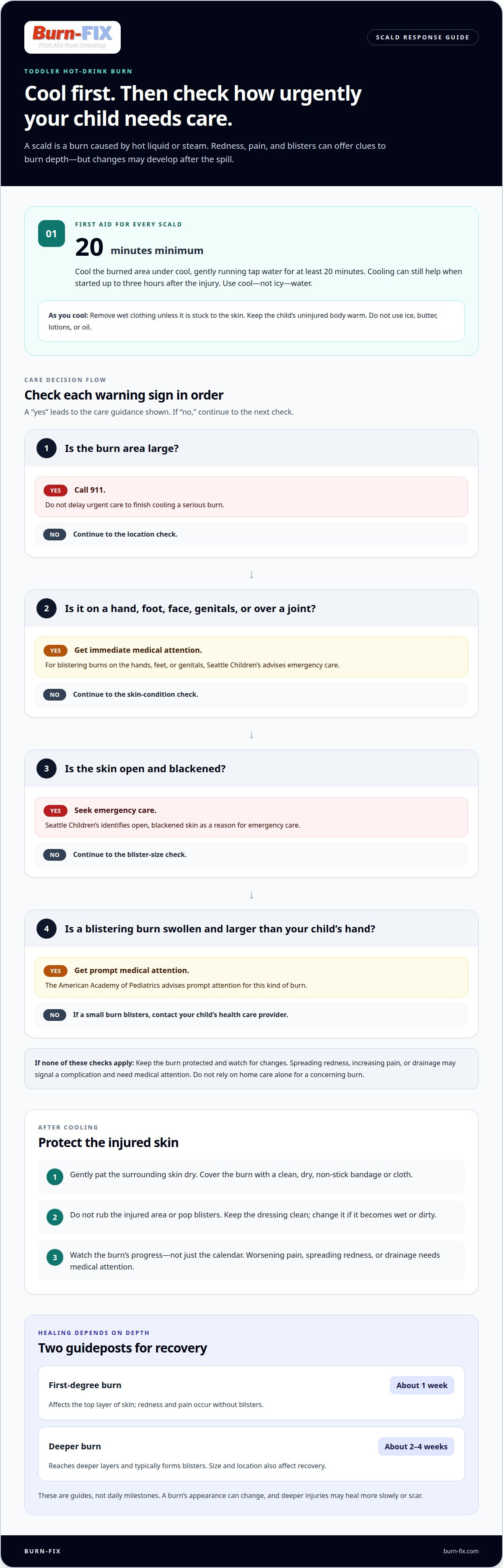
Burn size and location matter. The American Academy of Pediatrics recommends immediate medical attention for burns on a child’s hand, foot, face, genitals, or over a joint. It also recommends prompt attention for a blistering burn that is swollen and larger than the child’s hand. Seattle Children’s advises emergency care for blistering burns on the hands, feet, or genitals, or burns that leave skin open and blackened. Call 911 if the burn area is large, according to Seattle Children’s.
While arranging care, keep the child away from hot liquids and cooking surfaces. Watch for changes in the burn. Redness, blisters, or open skin can indicate why professional assessment matters. Prompt, appropriate care can help reduce the risk of complications such as infection and scarring.
2. What is a scald burn?
A scald is a burn caused by hot liquid or steam. A spilled mug can leave a toddler’s skin red, painful, or blistered. A first-degree burn affects the top layer of skin, causing redness and pain without blisters. A second-degree burn reaches deeper layers and typically forms blisters. Appearance can offer clues about a burn’s depth, but changes may develop after the spill.
Start first aid by cooling the burned area under cool tap water. Seattle Children’s recommends running water for 10 to 20 minutes. Remove clothing over the scald, including wet clothing, unless it sticks to the skin. Don’t use ice, butter, lotions, or oil, according to Seattle Children’s. These can harm the skin or interfere with care. Keep the child warm while cooling the injured area.
Pain from a superficial or mild partial-thickness burn may last about two days. As the skin heals, it may peel like sunburn, often after about a week. Don’t pop blisters; cover them to protect the delicate skin. If a small burn blisters, Seattle Children’s advises calling the child’s health care provider. Appropriate care matters because burns can lead to infection or scarring.
Prevent another scald by serving hot food and drinks out of a toddler’s reach. Stir microwaved food thoroughly, then open its container away from the child so steam can escape. Keep the child back while pouring hot soup or draining pasta. For older children, explain that steam and freshly heated food can burn even when a dish looks cool.
After cooling, cover the burn with a clean, dry, non-stick bandage or cloth, as Seattle Children’s advises. For a minor open burn, a bandage helps shield the tender area. A burn gel dressing may be a useful first-aid option for minor burns.
3. How long does it take for a burn to heal?
Cooling comes first. Hold the burned area under cool, running tap water for at least 20 minutes. This can help even when started up to three hours after the injury. Cool water removes heat from the skin; it should feel cool, not icy. Keep the stream gentle, especially over tender or blistered skin. Don’t use ice, which can further injure burned tissue.
For a toddler with a lap scald, expose the affected skin carefully so water reaches the entire area. Remove wet clothing, but don’t pull fabric that sticks to the burn. Keep the child’s uninjured body warm while cooling the injury. If the burn covers a large area, call 911, according to Seattle Children’s. Don’t delay urgent care to finish cooling a serious burn.
Cooling time and healing time are different. A first-degree burn usually heals in about a week. A deeper burn may take 2-4 weeks, depending on its size and other factors. Redness and pain can remain while skin repairs itself, so judge healing by the burn’s depth and progress, not by the minutes spent under water. Blisters, open skin, or worsening symptoms need careful attention.
After cooling, gently pat the surrounding skin dry and cover the burn with a clean, dry, non-stick dressing or cloth. Don’t rub the injured area or break blisters. Keep the dressing clean as the skin heals, and watch for spreading redness, increasing pain, or drainage. These changes may signal a complication and need medical attention. A small red mark may fade, while a deeper injury can heal more slowly and may scar. Burn size, depth, and location all affect recovery, so a serious-looking scald needs prompt assessment, not home care alone.
4. Burn healing timelines
Healing time depends most on burn depth, then on its size and location. A first-degree burn usually heals in about a week. A deeper burn may take 2-4 weeks, depending on its size and other factors. These timelines are guides, not daily milestones. A toddler’s lap may look red early, while blistering or open skin signals a deeper injury that needs careful attention.
Track the burn’s condition, not just the calendar. Note whether pain eases, blisters appear, or redness spreads. A mild burn may peel like sunburn as it heals, while a deeper one can stay tender longer. Seek medical advice if pain worsens or the skin opens. Without appropriate care, burns can lead to scarring, loss of function, or infection.
Protect the area throughout healing. Keep the burn bandaged until the pain is gone and the skin has fully healed. Change a child’s dressing several times a day, or sooner if it becomes wet or dirty. Don’t pop blisters or pull away attached skin. If the burn is open, watch for increasing redness, swelling, or drainage. These changes can indicate infection and warrant prompt attention.
Once the skin has completely healed, apply sunscreen before your child goes outdoors. Newly healed skin can be vulnerable to sun exposure, and protecting it may help minimize scarring. Continue checking the area as it recovers; a closed surface and fading discomfort are useful signs of progress. If a burn looks deep, covers a large area, or affects a sensitive location, seek urgent care rather than waiting for a timeline to pass. A burn emergency needs attention based on its severity, not the number of days elapsed.
For practical home preparedness, explore burn first-aid supplies so appropriate dressings are available when a minor injury occurs.
Burn-Fix
Burn-Fix offers hydrogel burn-care products for first- and second-degree burns, including scalds. After cooling the injury with running water, a dressing, spray, or gel can be part of home first aid. Burn-Fix also offers a burn kit to keep supplies ready at home.
Use these products as part of first aid, not as a substitute for urgent medical care. A large or deep burn, open skin, or a burn in a sensitive location needs prompt medical attention. For a minor spill, cool the area first, then use burn-care products only as directed on the label.
If you’d like to learn more about Burn-Fix burn-care options, contact Burn-Fix.
Make a safer routine part of everyday life
Once the immediate worry passes, turn the experience into a simple household habit. Choose a stable place for hot drinks, away from toddler play and seating areas. Before lifting a child or sitting on the couch, put the mug out of reach. Ask every caregiver, including grandparents and babysitters, to follow the same routine so a change in who is holding the cup doesn’t create a new risk.
If a hot mug burn on a toddler’s lap has happened, briefly note how the skin changes and what care was given. This can help you explain the injury clearly if medical advice is needed. Keep burn-care supplies in a consistent, easy-to-find place, but treat serious burns as an urgent medical issue, not something to manage with home products alone.
For questions about burn-care options for your household, get in touch with Burn-Fix. A steady routine can help your family feel more prepared.
Frequently Asked Questions
What is a scald burn?
A scald burn is caused by hot liquid or steam, such as spilled tea or soup. Its depth can range from redness and soreness to blistering or open skin. A child’s skin may change as the injury develops, so note any changes after the spill. If the area is open, darkened, or deeply damaged, seek medical attention rather than relying on appearance alone.
How long does it take for a burn to heal?
A first-degree burn usually heals in about a week, while a deeper burn may take 2-4 weeks. Size and depth influence the timeline, and a toddler’s lap can be difficult to assess by sight alone. Track whether discomfort is easing and the skin is closing. Increasing pain, new open areas, or spreading redness are reasons to seek medical advice instead of waiting for the expected healing period.
Should you use burn creams for babies and children?
Don’t put butter, oil, or lotion on a fresh burn; Seattle Children’s advises against these. Cool the skin first, then protect it with a clean covering. Burn-Fix products have not been evaluated by the FDA and aren’t intended to diagnose, treat, cure, or prevent disease. This information isn’t medical advice, diagnosis, or treatment. Use products only as labeled; don’t exceed the recommended dose unless a healthcare provider instructs you. Avoid ingredients that cause known allergies or sensitivities. Use products at your own risk; Burn-Fix isn’t liable for adverse effects.
What should I do immediately for a hot drink burn on a toddler's lap?
Move the toddler away from the hot drink, then cool the burned skin under cool running water. Remove wet clothing gently, but don’t pull fabric stuck to the skin. Keep the child warm while cooling the injury. If the burn is large, call 911, as Seattle Children’s advises. Blistering, open skin, or a burn on a sensitive area also needs prompt medical attention.
How long should you cool a toddler's burn under running water?
Cool the area with running tap water for at least 20 minutes. Starting within 10 minutes is best, but cooling can still help up to three hours after the burn. Keep the water cool, not icy, and let it flow gently across the injured skin. Don’t use ice or delay emergency care for a serious or extensive burn while cooling it.
Should you remove clothing or a diaper from a toddler's scald burn?
Remove clothing wet with hot liquid so it doesn’t continue heating the skin, as Seattle Children’s advises. If fabric or a diaper is stuck to the burn, don’t pull it away; doing so can damage injured skin. Cool the exposed area with running water, and seek medical help for a large, blistering, or open burn. Keep the child warm while the affected skin cools.


