


Cool the burn before you reach for a dressing. If barbecue coals burn your foot, hold the area under cool water for 15 to 20 minutes. Burns involving the feet should receive medical care, so arrange to have the injury assessed.
A hot, painful foot burn can be alarming, and it’s natural to want to cover it quickly. First, cool the burn to help you take the next steps calmly and avoid disturbing injured skin.
This guide explains how to cool, gently clean, and cover the burn, what to do if a blister forms, and which signs may point to infection or an injury that needs extra care. You’ll also learn why a foot burn deserves attention even when the affected area looks small.
Key Takeaways
- Cool the burn under cool water for 15 to 20 minutes before moving on to cleaning and covering it.
- Have a burn involving the foot receive medical care, even if the injured area looks small.
- Leave blisters intact, since puncturing one can increase the risk of infection.
- Learn which burn size and depth call for urgent medical attention, and how to protect the area while you seek care.
Burn blisters and infection risk
A tetanus shot may be needed if your vaccination history is incomplete or uncertain. A healthcare professional can review your record and assess the burn to determine whether you need one.
- Leave every blister intact. A blister forms a cover over damaged skin. Don’t puncture, squeeze, or peel it, even if it catches against footwear. Opening it can make the wound more vulnerable to germs and increase infection risk. If hot barbecue coals burn your foot and a blister forms, protect it from rubbing while arranging medical care.
- Keep the area clean and protected. Wash your hands before touching nearby skin or a dressing. If the blister breaks on its own, don’t pull away attached skin. Cover the area with a clean dressing and avoid letting dirty hands, socks, or debris touch the exposed surface. A clean cover helps shield the wound while you seek care.
- Watch for changes instead of probing the wound. Don’t test a blister by pressing it or lifting its edge. Check the surrounding skin when changing the dressing, and note any worsening appearance or discomfort. If you’re concerned about possible infection, or the burn is getting worse, seek medical care rather than trying to treat the change by puncturing the blister.
- Take burn size seriously. A barbecue burn larger than three inches in diameter may require emergency medical care. For example, compare the widest part of the affected area with a ruler without pressing it. Don’t let a blister’s small size reassure you if the surrounding burn is larger.
- Get medical care for deep burns. A burn extending through to muscle or bone is described as a fourth-degree burn and requires medical care. Don’t attempt to judge depth by touching or cleaning the wound. If muscle or bone is visible, treat that as an urgent reason to get help.
Burns on feet and other sensitive areas
Act promptly if you burn your foot: burns involving the feet should receive medical care. The steps below explain when to seek urgent attention and why a burn’s appearance alone can’t establish its severity.
-
Seeking Emergency Medical Care
Arrange medical care for any barbecue-coal burn on your foot, even if it looks small. A burn larger than three inches in diameter may require emergency medical care. An injury extending through to muscle or bone is described as a fourth-degree burn and requires medical care. Don’t delay care to measure a painful wound precisely. Use its visible size as a prompt, not a reason to postpone help.
While arranging care, protect the injured area from pressure and avoid walking on it if that worsens discomfort. Don’t peel away skin or probe the burn to judge its depth. If the wound is extensive or appears to reach deeper tissue, treat it as urgent and seek emergency medical attention.
-
Identifying Burn Degree
Use visible changes as clues, not as a diagnosis. First-, second-, and third-degree burns describe increasing depth of skin injury, but redness, blisters, color changes, and pain can’t reliably classify a foot burn at home. The surface can also conceal a deeper injury, so don’t press or scrape it to test what lies underneath.
Instead, note what you can see without touching the wound, such as blistering or unusual skin color, and share those details with a healthcare professional. A burn that looks pale, dark, or unusually deep needs prompt assessment. Don’t assume that a lack of strong pain means the injury is minor. Appearance and sensation alone can’t determine its degree.
-
Estimating Healing Time
Ask a healthcare professional to assess the burn rather than relying on a fixed healing estimate. Healing time depends chiefly on how deeply the skin is injured and how large an area is affected. A foot burn can also be hard to protect from pressure and movement, which may affect comfort during healing.
Follow the care instructions you receive, and watch for changes rather than judging recovery by the calendar. If the wound worsens or you’re concerned about infection, seek medical care. Don’t return to normal footwear or activity just because the surface looks better. Comfort, skin condition, and professional advice all matter.
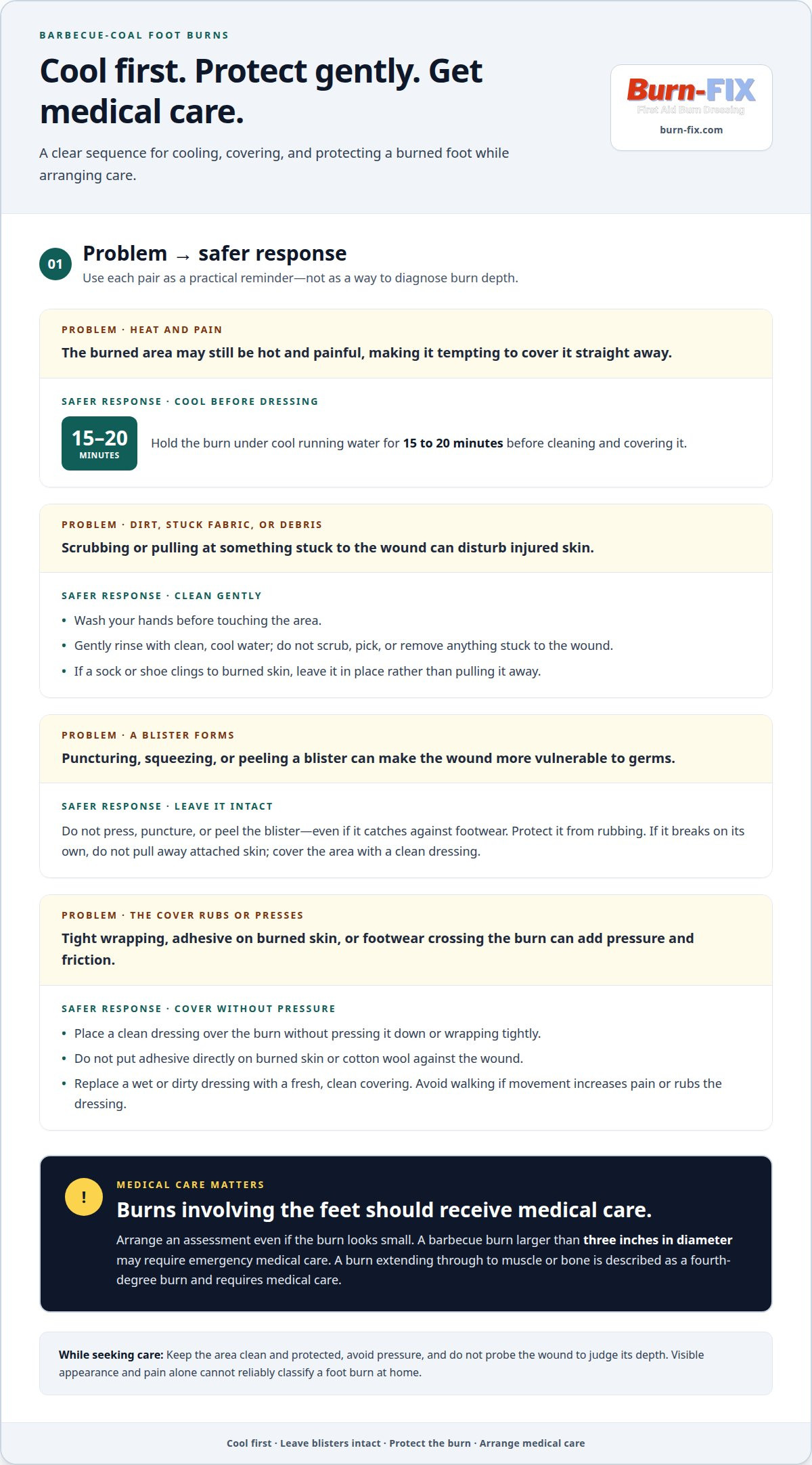
Cleaning and covering burns
At home, keep the cooled burn clean and covered while arranging medical care. Burns involving the feet should receive medical attention. Handle the area gently, and don’t scrub or put pressure on injured skin.
-
Cleaning the Burn
Wash your hands before touching the area. After cooling, gently rinse the burn with clean, cool water to remove loose dirt. Don’t scrub, pick at the skin, or try to remove anything stuck to the wound. If a sock or shoe clings to burned skin, leave it in place rather than pulling it away.
Pat the surrounding skin dry with a clean cloth, avoiding friction across the burn. Keep your foot supported so you can handle the area with minimal movement. A barbecue-coal injury can look small on the surface, so don’t let cleaning delay medical care.
-
Covering the Burn
Place a clean dressing over the burn without pressing it down. Choose a covering that protects the injured area without leaving loose fibers on the skin. Don’t wrap it tightly around your foot. A snug wrap can press on the wound and cause discomfort.
Keep the dressing clean and dry while arranging care. If it gets wet or dirty, gently replace it with a fresh, clean covering. Don’t put adhesive directly on burned skin or place cotton wool against the wound. These steps help limit contact with dirt and friction from footwear.
- Keep pressure off the injured area. Remove footwear only if it comes away easily and doesn’t touch or pull burned skin. Avoid walking when movement increases pain or rubs the dressing. For example, a sandal strap crossing the burn can irritate it, so don’t force footwear back onto the injured foot.
- Watch the wound while you seek care. Leave blisters intact, and don’t peel loose skin or add household products to the burn. If the dressing sticks, don’t pull it away from the wound. A clinician can assess the injury and advise how to continue cleaning and covering it.
Cooling a barbecue burn
Start cooling immediately: hold the burned area under cool running water for 15 to 20 minutes. This is the first priority after moving away from the hot coals.
- Begin with cool running water. Place the burned part of the foot under a gentle stream, and start timing. Keep the water cool, not painfully cold. Continue for the full 15 to 20 minutes, even if the skin feels more comfortable sooner. A quick splash may soothe briefly, but it doesn’t replace sustained cooling.
- Keep water reaching the injured area. Position the foot so water flows over the burn without rubbing the skin. If the burn crosses the top or side of the foot, adjust the angle to cool each affected surface. Don’t scrub away soot or debris during this step. Focus on cooling first, then move on to cleaning and covering.
- Make cooling practical and steady. Sit somewhere safe, support the foot, and let another person help manage the tap if needed. A timer can help track the full 15 to 20 minutes when pain makes it difficult to focus. Keep the foot still rather than walking between the sink and other tasks.
- Get care after cooling. Burns involving the feet should receive medical care, so don’t treat cooling as the end of care. Once the water step is complete, protect the burn and arrange medical assessment. If the burn is larger than three inches in diameter, it may require emergency medical care. Keep home burn first-aid supplies ready so you can cover an injury after cooling.
Burn-Fix
Burn-Fix offers hydrogel burn-care products for first- and second-degree burns, including burns caused by hot coals. After cooling a foot burn and arranging medical care, you can use its spray, gel, dressings, or kit as part of home burn care. The products are designed to provide cooling and retain moisture, but they don’t replace cool-water first aid or medical assessment for a foot burn.
Choose the product format that suits your first-aid supplies: options include Burn-Fix Hydrogel Burn Spray - 120ml, Burn-Fix 4x4 First Aid Burn Gel Dressing, Burn-Fix Burn Kit, and Burn-Fix Burn Gel - 3.5g Per Packet. Keep burn care products available before a barbecue injury happens, so supplies are ready when needed.
For a burn-care product question, contact Burn-Fix.
Be Ready for the Next Cookout
Plan for burn care when setting up the grill. Before cooking begins, choose an accessible place for first-aid supplies and decide who can help if someone gets hurt. A simple plan can make it easier to focus on the injured person instead of searching cupboards or moving through a busy cooking area.
If barbecue coals burn your foot, prioritize care for the injury, then consider which supplies can support home burn care. Burn-Fix offers products for first- and second-degree burns, including hydrogel spray, gel dressings, and a burn kit. These products don’t replace medical assessment when a foot burn needs care.
For help choosing burn-care supplies for your first-aid kit, send Burn-Fix your question. A little preparation now can help you feel more ready to handle an unexpected burn and return to cookouts with greater confidence.
Frequently Asked Questions
What should you do immediately after stepping on hot barbecue coals?
Move away from the grill and cool the injured area under cool running water for 15 to 20 minutes. Remove a shoe or sock only if it lifts away easily; don’t pull fabric stuck to burned skin. Burns involving the feet should receive medical care, so arrange an assessment after cooling, especially if the wound looks extensive or deep.
Should you put ice, butter, or ointment on a coal burn?
No. Use cool running water rather than ice, butter, or ointment as the first response. Don’t rub or press burned skin while cooling it. Once cooled, protect the area from dirt and friction with a clean covering, and seek medical care because the burn is on your foot.
Why are burns on the feet considered higher risk?
Burns involving the feet should receive medical care. Walking, socks, and shoes can also put pressure on or rub an injured area, making it difficult to protect. For example, a shoe edge may press against a burn on the top of your foot. Don’t force footwear over the wound, and have the injury assessed.
How should you cover and protect a foot burn while it heals?
Cover the cooled burn with a clean dressing that rests lightly over the area. Avoid tight wrapping, adhesive on burned skin, and coverings that shed fibers onto the wound. Keep footwear from rubbing the injury. If a sock or shoe sticks, don’t pull it free. Gently replace a dirty or wet dressing, and follow medical care instructions.
What are signs of infection or complications after a foot burn?
Possible warning signs include worsening redness or swelling, increasing pain, unusual warmth, or drainage. Don’t pop a blister or diagnose an infection by appearance alone. Seek medical care if the wound worsens or concerning changes develop. This information is for general informational purposes only and does not constitute medical advice, diagnosis, or treatment. Burn-Fix products are not intended to diagnose, treat, cure, or prevent any disease.


