


If a torch flame slips and burns skin, first aid starts by moving away from the heat and cooling the burn under clean, cool running water for 5-20 minutes. For a torch flame slip burn, don’t use ice; cool water helps soothe the injury without exposing the skin to extreme cold. Get urgent medical help for a severe burn or one affecting a child’s face, hands, feet, or a large area.
A burn can be frightening, especially when it happens to a child or infant, and it’s natural to want to act quickly. The safest first steps are straightforward: stop the burning, cool the skin, and recognize when the injury needs medical care.
This guide explains what a burn is, how to cool a minor burn, and how to help protect someone from shock while arranging care when needed. You’ll also learn how to adapt first aid for children and infants, and which signs mean it’s time to seek urgent help.
Key Takeaways
- Cool a thermal burn with clean, cool running water, and avoid ice so you don’t worsen skin damage.
- Learn how burn depth, size, location, and blistering help determine when home first aid isn’t enough.
- Recognize practical steps that can help protect someone from shock while urgent care is arranged.
- Adapt your response for a child or infant, and see when a burn gel dressing may be useful after cooling.
Cooling a burn with running water
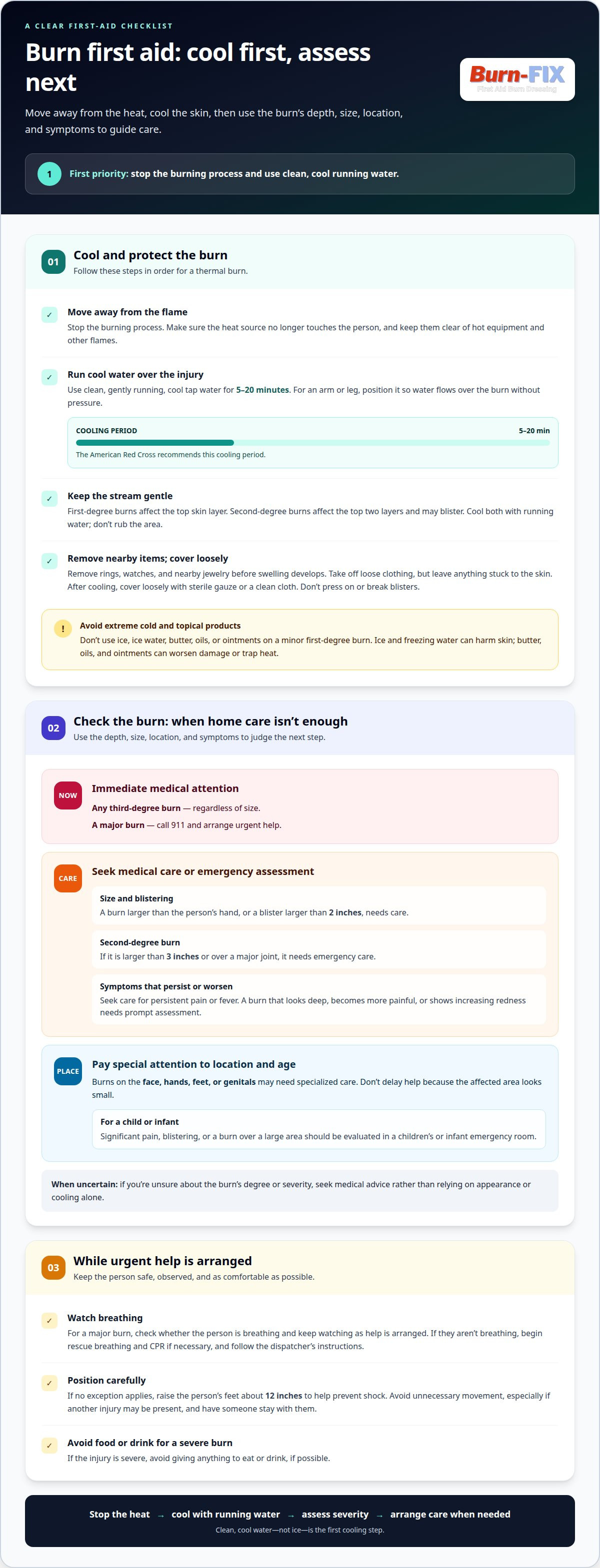
For a thermal burn, cool the injury under clean, cool running water for 5-20 minutes. The American Red Cross recommends this cooling period; don’t substitute ice or freezing water. This torch flame slip burn first aid sequence starts by moving away from the heat.
- Move away from the torch flame and stop the burning process. Make sure the heat source no longer touches the person before treating the skin. Keep the person clear of hot equipment and other flames.
- Hold the burned area under gently running, cool tap water for 5-20 minutes. If the burn is on an arm or leg, position it so water flows over the injury without pressure.
- Use cool water for first-degree burns, which affect the top layer of skin. Cooling can ease discomfort; avoid ice water, which can harm the skin. This is a key step in torch flame slip burn first aid.
- Cool second-degree burns the same way, using cool running water. These burns affect the top two layers of skin and may blister, so keep the stream gentle and don’t rub the area.
- Remove rings, watches, and nearby jewelry before swelling develops. Take off loose clothing near the burn, but don’t pull away anything stuck to the injured skin.
- After cooling, cover the area loosely with sterile gauze or a clean cloth. Don’t press on blisters or break them, since they protect healing skin.
- For a minor first-degree burn, don’t apply ice, butter, oils, or ointments. The American Burn Association advises against these because they can worsen damage or trap heat. Get medical care for a burn deeper than superficial, a large or serious injury, or a burn on a sensitive area. If you’re unsure about its degree, seek medical advice rather than relying on cooling alone.
First-degree and minor second-degree burns
Use the burn’s depth, size, location, and symptoms to guide your next steps. For a first-degree burn on the face, hands, feet, or a joint, cool the skin, then seek medical advice if the injury is deeper than superficial or its severity is unclear.
-
Give Immediate First Aid for Minor Burns
After cooling, protect a small first-degree burn or minor second-degree burn with a loose, clean covering. A first-degree burn affects the top skin layer; a second-degree burn affects the top two layers and may blister. Don’t break blisters. Remove nearby jewelry before swelling develops, but leave anything stuck to the skin in place.
Protect the area from pressure and friction. Separate burned fingers or toes with dry, sterile, non-adhesive dressings. Monitor pain, redness, swelling, and oozing; worsening symptoms can signal infection. The American Burn Association says most small first-degree burns and minor second-degree burns without blistering can be treated at home.
-
Recognize When Burns Need Medical Care
Seek care if a burn is larger than the person’s hand, or if a blister exceeds two inches. A second-degree burn larger than 3 inches or over a major joint needs emergency care. The American Burn Association also advises medical care when pain persists or fever develops.
Get immediate medical attention for any third-degree burn, regardless of size. Don’t soak it or apply ointments or butter. A burn that looks deep, becomes more painful, or shows increasing redness needs prompt assessment. If you’re unsure of the burn’s degree, contact a healthcare provider rather than judging by appearance alone.
-
Consider Age and Burn Location
Arrange prompt assessment if a child or infant has significant pain, blistering, or a burn over a large area. These injuries should be evaluated in a children’s or infant emergency room. For older adults, pay close attention to burn depth, location, and changing symptoms, since an injury that looks minor may still need medical attention.
Take burns on the face, hands, feet, or genitals seriously; the American Burn Association identifies these locations as potentially needing specialized care. A burn crossing a major joint can limit movement, and a second-degree burn there requires emergency care. Don’t delay getting help because the affected area looks small.
Preventing shock
After a burn, stay calm and focus on breathing, warmth, and urgent care. These steps can help protect the person while you arrange appropriate medical attention.
- Call 911 for a major burn. Check whether the person is breathing. If they aren’t, begin rescue breathing and CPR if necessary. Keep watching their breathing as help is arranged, and follow the dispatcher’s instructions.
- Position the person carefully. If no exception applies, raise their feet about 12 inches to help prevent shock. Avoid unnecessary movement, especially if another injury may be present. Keep the person as comfortable as possible while someone stays with them.
- Don’t offer food or drink for a severe burn. If the injury is severe, avoid giving anything to eat or drink, if possible. For a less serious burn, the American Burn Association advises drinking fluids, especially electrolyte drinks if signs of dehydration appear.
- Use pain relief only for a minor burn. The American Burn Association lists acetaminophen or ibuprofen as over-the-counter options. Follow the medicine label and consider the person’s age and health. Don’t let pain relief delay care for a serious injury.
- Reduce kitchen burn risks before cooking. At a grill, wear short sleeves or roll sleeves up, and use long-handled barbecue tools. Keep loose clothing away from flames, and place hot cookware where it won’t be knocked over.
- Lower common household burn risks. Keep the home water heater below 120°F to help prevent hot-water burns. For children or older adults, the American Red Cross recommends setting water temperature between 100°F and 115°F. Test bath water before anyone steps in.
Once the person is safe, keep watching for changes and seek urgent care for a major burn. Protect a clean, loosely covered minor burn from pressure and friction as it heals.
Burn first aid for children and infants
For torch flame slip burn first aid involving a child or infant, act promptly, keep them calm, and assess the injury’s depth, location, and symptoms.
- Stop the heat source and cool the burn. Move the child away from the torch or other flame, then use the cooling steps described above. Cooling comes before creams or coverings. Keep the child warm elsewhere, since a wet, cooled area can make them uncomfortable.
- Remove loose clothing and jewelry near the injury. Take off items that could press against swelling, but don’t pull away material stuck to burned skin. After cooling, cover the area loosely with sterile gauze or a clean cloth. Avoid tight bandages and pressure on blisters.
- Keep ice, butter, oils, and ointments off the burn. The American Burn Association advises against ice because it can worsen damage. Butter, oils, and ointments can trap heat. Don’t pop blisters or apply over-the-counter remedies before assessing the injury.
- Arrange an emergency assessment for concerning symptoms. A child or infant with significant pain, blistering, or a burn covering a large area should be assessed in a children’s or infant emergency room. Burns on the face, hands, feet, or genitals may need specialized care.
- Call 911 for a major burn or urgent danger. Third-degree burns need immediate medical attention, regardless of size. Don’t soak a suspected third-degree burn or cover it with ointment or butter. If the child has trouble breathing, treat it as an emergency.
- Watch for changes and seek help if unsure. Contact a healthcare provider when you can’t judge the burn’s severity. Monitor the child’s pain and the skin for increasing redness, swelling, or oozing. Those changes can point to infection and need prompt medical attention.
For torch flame slip burn first aid at home, keep age-appropriate supplies accessible, while remembering that serious burns need urgent medical care. A prepared kit can help you respond calmly when a minor injury occurs.
Burn-Fix: Burn-FIX 4x4 First Aid Burn Gel Dressing
The Burn-Fix 4x4 First Aid Burn Gel Dressing offers a cooling, moisture-retaining option for first- and second-degree burns after you’ve cooled the injury. Burn-Fix designs its hydrogel dressings to support pain relief and healing, and its products are suitable for children and adults. Use a dressing for a minor burn only; it doesn’t replace urgent medical care for a deep, large, or otherwise serious injury.
Keep it in a home first-aid kit so burn-care supplies are close at hand. For a minor flame burn, first stop the heat source and cool the skin with running water, then use appropriate burn care. Contact Burn-Fix if you have questions about the Burn-Fix 4x4 First Aid Burn Gel Dressing.
Build confidence before the next spark
A torch flame can slip in an instant, so make preparedness part of how your household handles cooking, hobbies, or outdoor activities. Agree on who will help, where first-aid supplies are kept, and how someone can call for emergency assistance. A simple torch flame slip burn first aid plan can make those first moments less chaotic, especially when children are nearby.
For a home burn-care kit, Burn-Fix offers the BurnFix Hydrogel Burn Spray - 120ml and BurnFix Burn Kit. Keep supplies accessible, and remember that burn products don’t replace emergency care for serious injuries. Choose the option that suits your household’s preparedness needs.
For questions about Burn-Fix burn-care products, contact Burn-Fix. A little preparation can help you respond calmly and support the people who count on you.
Frequently Asked Questions
What is a Burn?
A burn is an injury to the skin or other tissue caused by heat, flame, hot liquid, chemicals, electricity, or sunlight. Its depth helps determine the response: a first-degree burn affects the top skin layer, while a second-degree burn reaches the top two layers and may blister. Chemical and electrical burns can cause hidden internal damage, even when the skin appears less affected.
What should you do immediately for a first-degree torch flame burn?
Move away from the flame, stop the heat source, and cool the affected skin with clean, cool running water. The American Burn Association advises against applying ice, butter, oils, or ointments to burns. Remove nearby jewelry before swelling begins, but don’t pull off clothing stuck to the skin. If the injury is on the face or over a joint, consider its location when deciding whether care is needed.
How long should a minor flame burn be cooled under cool running water?
Cool a thermal burn under clean, cool running water for 5-20 minutes, as recommended by the American Red Cross. A timer can help you keep track while supporting the injured area beneath a gentle stream. Cool water is appropriate; ice water can damage skin. If the burn covers a large area or appears deep, arrange medical care rather than relying on cooling alone.
How should you clean, cover, and care for a minor flame burn?
After cooling, leave blisters intact and cover the burn loosely with sterile gauze or a clean cloth. Don’t scrub the area or use material that sticks to the skin. Keep pressure and friction off the injury. Watch for increasing pain, redness, swelling, or oozing, which may indicate infection and warrant prompt medical attention. Seek care if pain persists or a fever develops.
What pain relief is safe for a minor first-degree burn?
For minor burns, the American Burn Association lists acetaminophen or ibuprofen as over-the-counter pain relievers. Choose medicine appropriate for the person’s age and follow its label; don’t give a child an adult dose. This information is for general informational purposes only and doesn’t constitute medical advice, diagnosis, or treatment. Burn products aren’t intended to diagnose, treat, cure, or prevent any disease.
How can you tell whether a burn is first-degree or more serious?
A first-degree burn affects the top skin layer; a second-degree burn affects the top two layers and may blister. The American Red Cross says burns deeper than superficial require medical care. The American Burn Association advises care for burns larger than a hand, and third-degree burns need immediate medical attention regardless of size. Burn depth can be hard to judge, so seek help if severity is uncertain.


