


Cool a waffle maker burn on your hand under cool running water for 10 to 20 minutes, then cover it loosely with a clean, non-stick dressing. Don’t use ice or break blisters. Because burns on the hands should be assessed at urgent care or an emergency room, arrange medical care as you begin first aid.
A blister can signal a second-degree burn, which affects the skin’s second layer and may take 1–2 weeks to heal. It’s understandable to focus on the immediate sting, but recognizing the burn’s depth and protecting the area can help you choose what to do next.
This guide explains how to cool and cover a waffle maker burn on your hand, care for it as it heals, and recognize symptoms that need prompt attention. You’ll also learn what second-degree burns can look and feel like, how healing time may vary, and when a hand burn needs urgent medical assessment.
Key Takeaways
- Protect the burn with a loose, clean dressing and avoid anything that could stick to or irritate the skin.
- Blistering, pain, and redness can help indicate burn depth; a second-degree burn affects the skin’s second layer and may take longer to heal.
- Keep the area clean, avoid popping blisters, and watch for worsening pain, swelling, redness, or discharge.
- Hand burns deserve careful attention. Learn which signs call for urgent medical care and when to call 911.
Cooling a burn with running water
Move your hand away from the waffle iron immediately. Place the burned skin under cool running water. For a hot-pan burn, begin with room-temperature water for 60 seconds, then continue cooling for 10 to 20 minutes.
Watch for pus, redness, warmth, swelling, or increasing pain, which can signal infection. Seek emergency medical care if these signs appear. Burns on the hands should also be assessed at urgent care or an emergency room.
- Stop the contact burn first. Move away from the hot waffle maker, and keep the injured hand clear of the appliance while you reach the sink.
- Use running tap water over the burned skin. Let it flow gently across the injury, rather than scrubbing or rubbing the area with your fingers.
- Keep the water cool, not icy. A minor burn can be cooled with water slightly colder than room temperature; avoid ice and very cold water initially.
- Continue cooling for 10 to 20 minutes. Steady running water helps draw heat away from the skin, even if the burn looks small or redness seems mild.
- Don’t stop after a quick splash. A waffle maker’s hot surface can leave heat in the skin, so keep the hand under running water for the full cooling period.
- Look at the skin after cooling. Redness and pain may occur with a minor burn, while blisters can indicate a deeper injury needing careful attention.
- Arrange assessment for a hand burn, especially if blisters develop or pain worsens. If pus, warmth, swelling, or spreading redness appears, seek emergency medical care.
Should You Cover a Burn While It Heals?
Yes. A loose dressing helps keep a burn clean and may reduce discomfort while the skin heals.
- Clean the cooled burn gently with mild soap and cool water. Don’t scrub, and avoid harsh substances that could irritate damaged skin.
- Wash the area once or twice a day, then pat it dry. A clean, dry surface makes it easier to apply a dressing without rubbing tender skin.
- Use a thin layer of petroleum jelly to help keep the burned skin hydrated. Avoid butter or toothpaste, which can trap heat and introduce bacteria.
- Cover the injury with a loose, anti-stick dressing during the first few days. Keep it secure without wrapping tightly, especially if swelling develops.
- Check the skin whenever you change the dressing. If it sticks, don’t pull it away forcefully; avoid breaking blisters or scraping the surface.
Clean and Cover the Burn
Gently wash the burned area with mild soap and cool water, then pat it dry with a clean cloth. Apply a thin layer of petroleum jelly to help retain moisture, and cover the skin with a loose, nonstick dressing. Avoid scrubbing, harsh substances, and tight wrapping, which can irritate the injury or press against swelling.
Protect the Burn During Healing
Keep the dressing loose for the first few days to shield the skin from dirt and debris. Change your approach if the covering becomes uncomfortable or presses against swelling, and avoid pulling a dressing that sticks to the burn. For a dressing option, consider the Burn-FIX 4x4 First Aid Burn Gel Dressing.
Check the area each time you clean it for changes such as increasing redness, warmth, or discharge. A dressing protects the surface, but it doesn’t replace medical assessment if the burn worsens or concerning signs develop.
Second-degree burn symptoms and healing time
Consider the burn’s symptoms, since the affected skin layer can help indicate its severity.
First-degree burns often heal on their own. A second-degree burn typically takes 1–2 weeks, while older adults may heal more slowly.
Recognize Second-Degree Burn Symptoms
- Look for blisters, redness, swelling, and pain. A second-degree burn affects the dermis, the second layer of skin, while a first-degree burn affects only the outer layer. These symptoms can help you recognize a deeper injury, but appearance alone can’t confirm its degree.
- Compare changes over time instead of judging the burn once. Note whether blisters appear, redness spreads, or pain increases. Don’t break a blister, since the damaged skin needs protection. A waffle iron can cause a contact burn, so take new or worsening symptoms seriously.
- Use symptoms as a prompt for timely assessment, not as a substitute for it. A blistering hand burn deserves particular attention because it affects a sensitive area. If symptoms worsen or a larger blister develops, seek assessment from a health care professional.
Understand Minor Hand Burn Healing Time
- Use the burn’s likely degree to understand the healing window. A first-degree burn often heals within a week, while second-degree burns typically take 1–2 weeks. These timelines differ because a second-degree burn affects the dermis, not only the outer skin.
- Track healing through changes in symptoms, such as pain, redness, and swelling. Older adults may heal more slowly, which can increase the risk of a burn becoming more severe. Don’t assume a burn is healing normally if symptoms worsen or a larger blister forms.
- Allow for a slower recovery when the burn has second-degree symptoms. Keep observing the skin as it heals, and seek medical assessment if changes concern you. For a hand injury, early attention matters because the burn’s location can affect how carefully it should be assessed.
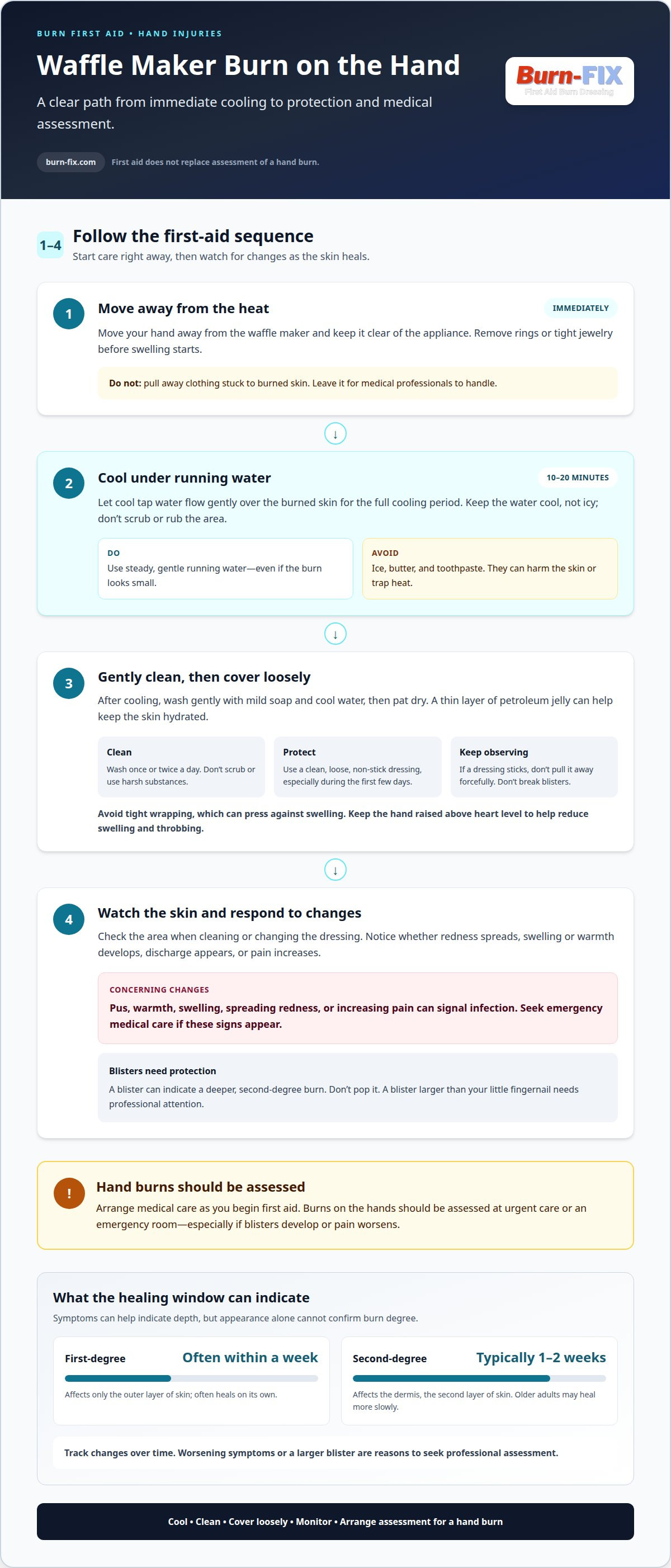
How to treat a burn from a waffle maker on the hand
- Move away from the hot appliance and remove rings or tight jewelry before swelling starts. Don’t pull away clothing stuck to burned skin; leave it for medical professionals to handle.
- Cool the injury under cool running water for 10 to 20 minutes. Don’t apply ice, butter, or toothpaste, which can harm the skin or trap heat.
- Gently clean the cooled area with mild soap and water, then pat it dry. Avoid scrubbing, and don’t break blisters. A blister larger than your little fingernail needs professional attention.
- Cover the burn loosely with a clean, non-stick dressing. Keep the hand raised above heart level to help reduce swelling and throbbing. Avoid tight wraps that press on the burned area.
- For pain, over-the-counter options include acetaminophen or ibuprofen. Follow the package label’s dosage directions, and don’t exceed them. These medicines can ease discomfort while you protect the skin.
- Arrange assessment at urgent care or an emergency room for a hand burn. Seek prompt care if the burn is deep, covers a large area, involves the eyes, nose, or mouth, or comes with another injury. Worsening symptoms or a larger blister also need professional assessment.
- Watch for possible infection, including pus, redness, warmth, swelling, or increasing pain. If any appear, seek emergency medical care rather than relying on home care alone.
- Call 911 for emergency medical help for major burns, according to the National 911 Program. Major burns need urgent attention, not home treatment; keep the person safe while emergency help is on the way.
For a home first-aid supply that supports burn care, explore burn-care first-aid options.
Burn-Fix
Burn-Fix offers burn-care supplies for first aid after a minor waffle maker burn on your hand. The range includes hydrogel spray, burn gel, gel dressings, and a burn kit for home first-aid preparation. These hydrogel products provide cooling and retain moisture for first- and second-degree burns.
After cooling the injury, choose an appropriate burn-care item and use it only as directed on the label. A dressing can help protect the affected area, but supplies don’t replace medical assessment, especially for a hand burn or worsening symptoms. Seek emergency help for major burns.
Contact Burn-Fix if you’d like help with its burn-care products.
Make your next kitchen moment safer
A burn can make an ordinary cooking task feel unsettling. Once the immediate injury is addressed, take time to regain confidence before using the waffle maker again. Pausing before handling a hot appliance can help you notice its heated surfaces and plan how to move it safely.
If a waffle maker burn on your hand has left you unsure about your first-aid supplies, take a simple next step: keep suitable burn-care items easy to find and follow their label directions when needed. Burn-Fix offers home first-aid options, including spray, gel, dressings, and a kit.
Contact Burn-Fix for help choosing burn-care supplies. With a little preparation and a clear plan, you can return to cooking with greater confidence.
Frequently Asked Questions
How long should you cool a hand burn under running water?
For a waffle maker burn on your hand, cool the area under cool, gently running tap water for 20 minutes, as soon as possible. Remove rings, bracelets, or a watch before swelling makes them tight. Don’t use ice or iced water. If anything is stuck to the skin, don’t pull it off; cool around it and seek medical help. Keep the rest of the person warm.
How can you tell if a hand burn is first, second, or third degree?
First-degree burns affect the surface of the skin and usually appear red, dry, and sore without blisters. Second-degree burns reach deeper skin and often blister, swell, or look wet. Third-degree burns may look white, brown, charred, or leathery and can feel numb. Appearance alone can’t reliably show burn depth. This information is for general informational purposes only and does not constitute medical advice, diagnosis, or treatment. The products are not intended to diagnose, treat, cure, or prevent any disease.
When should you seek urgent medical care for a hand burn?
Seek urgent care if a hand burn looks deep, crosses a joint, circles a finger or hand, causes numbness, or limits movement. Chemical and electrical burns also need prompt assessment. Call emergency services for breathing difficulty or fainting. We are not liable for any adverse effects or consequences resulting from the use of our products. By purchasing and using our products, you agree to use them at your own risk.
Should you pop blisters from a waffle maker burn?
Don’t pop or peel an intact blister; the unbroken skin helps shield the tender area. Protect it with a clean, loose, nonstick dressing, and avoid pressure from gripping or cooking. If a blister breaks on its own, rinse it gently with clean water, leave attached skin in place, and cover it. Get medical advice if redness, warmth, swelling, drainage, or pain increases.
What pain relief and dressings are safe for a minor hand burn?
For pain, consider acetaminophen or ibuprofen if you can normally take them, following package directions. Cover cooled skin with a sterile, nonstick dressing, secured loosely. Burn‑FIX 4×4 Burn Gel Dressing offers cooling relief; protective gloves are suggested because the gel is acidic. Use the product only as directed on the label. Do not exceed the recommended dose unless instructed by a healthcare provider.
Can you use ice, butter, or toothpaste on a burn?
No. Ice can injure skin further, while butter and toothpaste may irritate the skin or trap heat. Use cool running water instead. Burn-Fix products have not been evaluated by the FDA. If you have any known allergies or sensitivities to any ingredients, do not use the product. This FAQ doesn’t replace an in-person assessment when a burn is severe or worsening.


