


Ice isn’t the right first aid for a hot baking sheet burn on your wrist. Hold the area under cool running water for 20 minutes, remove nearby jewelry before swelling starts, then cover the burn loosely with a clean, non-stick dressing. If the skin looks deep, white, charred, or numb, seek emergency care.
A hot baking sheet burn on your wrist can throb and redden quickly, and it’s natural to want to reach for something soothing. Start with gentle care: cool the skin, protect it, and avoid products that can trap heat or irritate the injury. This guide explains how to cover a mild burn, what to avoid, and which options may ease discomfort. You’ll also learn the warning signs that mean a wrist burn needs medical attention.
Key Takeaways
- Cool the wrist under cool running water for 20 minutes, and remove nearby jewelry before swelling begins.
- Protect the burn with a loose, clean, non-stick dressing; avoid ice, butter, oil, and toothpaste, and don’t pop blisters.
- Learn which gentle pain-relief options may help and how to avoid irritating the injured skin.
- Recognize signs of a serious burn. For a major burn, call 911 for emergency medical help, according to the National 911 Program.
Burn coverings and products to avoid
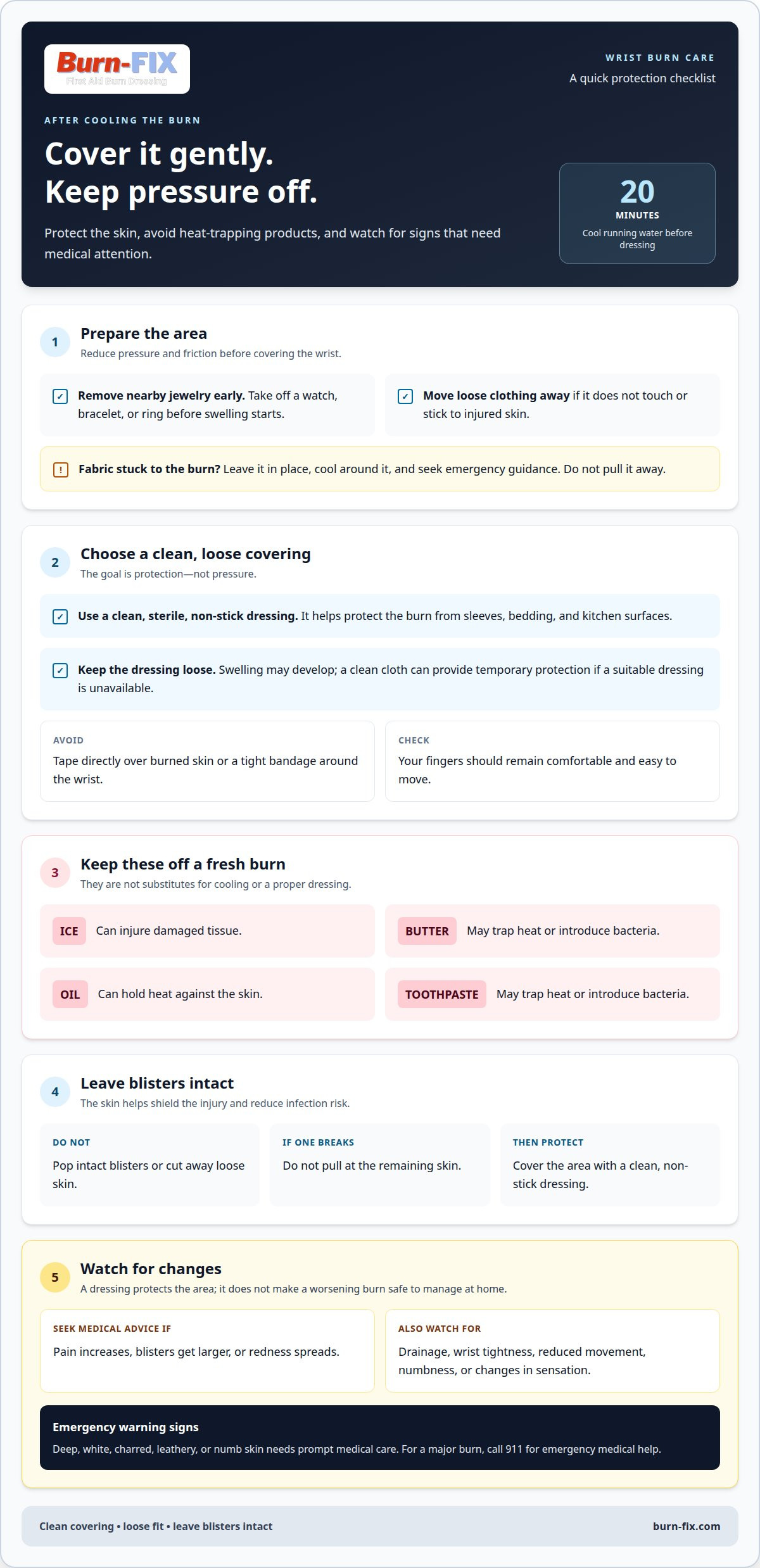
- After cooling the wrist, cover the burn loosely with a sterile, non-stick dressing. This protects the skin from rubbing against sleeves, bedding, or kitchen surfaces. Keep the dressing loose rather than tight, since swelling may develop. A clean cloth can provide temporary protection if a suitable dressing isn’t available.
- Skip ice, butter, oil, and toothpaste on a fresh burn. Ice can injure damaged tissue, while butter and toothpaste may trap heat or introduce bacteria. Oils can also hold heat against the skin. These kitchen or bathroom items don’t replace a proper dressing, even if they seem soothing at first.
- Should you pop blisters from a baking sheet burn? No. Leave intact blisters unbroken: the skin helps shield the injury and reduce infection risk. Don’t cut away loose skin, either. If a blister breaks on its own, avoid pulling at the remaining skin and cover the area with a clean, non-stick dressing.
- Remove a watch, bracelet, or ring near the burn before swelling starts. Take off loose clothing around the wrist if it doesn’t touch or stick to injured skin. If fabric is stuck to the burn, leave it in place, cool around it, and seek emergency guidance rather than pulling it away.
- Keep the covering loose enough to avoid pressure and friction when you bend your wrist. Don’t wrap tape directly over burned skin or wind a tight bandage around the wrist. A snug wrap can press on swollen tissue and worsen discomfort. Check that your fingers remain comfortable and easy to move.
- Use a clean covering to protect exposed skin, especially before clothing could brush against it. If the burn becomes more painful, develops larger blisters, or shows spreading redness or drainage, seek medical advice. A dressing protects the area, but it doesn’t make a worsening burn safe to manage at home.
Cooling a burn with running water
- Move away from the hot baking sheet and start cooling your wrist promptly. For a hot baking sheet burn on your wrist, use cool, gently flowing tap water. Don’t wait for redness or pain to intensify. Early cooling helps limit heat exposure and ease the hot, sharp sensation.
- Keep the injured area under running water for 20 minutes. The American Burn Association advises cool, not cold, running water for 10-20 minutes. Follow the 20-minute approach when possible. A steady stream cools the injury without exposing sensitive skin to extreme cold.
- Use water that feels cool, not icy. Don’t put ice or an ice pack directly on burned skin, since extreme cold can cause additional tissue injury. Avoid freezing water, too. Let the faucet stream gently over the affected area without rubbing.
- If you couldn’t start cooling immediately, begin as soon as you can. Cooling should ideally start within three hours of the injury. If the hot baking sheet burn on your wrist has a wider affected patch, let water flow across the entire area. Don’t scrub or peel away anything stuck to the skin.
- Keep the rest of your body warm while cooling your wrist. Sit near the sink and place a dry towel over your shoulders, away from the burn. This helps you stay comfortable during the 20-minute period without putting heat or pressure on the injured skin.
- After cooling, lift your wrist from the stream and let excess water run off. Don’t rub it dry. Once cooling is complete, protect the area with a loose, clean dressing. A burn-care dressing is one option for protecting the skin.
Warning signs that require emergency care
- A burn around the wrist can limit movement or circulation, especially if it circles the wrist and swelling develops. Check for tightness, reduced movement, numbness, or changes in sensation. Seek prompt medical care if these appear.
- Call 911 for emergency medical help for major burns, according to the National 911 Program. Also call 911 if a burn is large, deep, white, charred, leathery, or numb, or if the person collapses, has trouble breathing, or seems seriously ill.
- Get medical evaluation for a burn larger than about 3 inches across or bigger than the injured person’s palm. A burn crossing the wrist joint, affecting hand function, or involving the hand also needs professional care. Chemical and electrical burns require evaluation, even when they look small.
- Look closely at the skin’s color and texture. White, brown, black, leathery, or waxy areas can signal a deeper injury. Numbness instead of pain is another warning sign. Don’t judge severity by pain alone: deeper damage can affect sensation.
- Arrange prompt medical evaluation if symptoms worsen during healing. Watch for spreading redness, increasing warmth or swelling, worsening pain, pus or thick drainage, fever, foul odor, or red streaks. Reduced wrist movement or new changes in sensation also need attention.
- Ask a healthcare professional about a burn that seems concerning, even without emergency symptoms. Deeper burns can take weeks to heal and carry greater infection risk. Contact burns can also cause scarring that may need long-term care. Follow-up matters if the mark remains raised, tight, painful, or limits wrist movement.
Burn ointments and pain relief
- Choose pain relief carefully. Ibuprofen, naproxen sodium, or acetaminophen may help ease burn pain. Follow the product label and use only medicine appropriate for the person taking it. These medicines can reduce discomfort, but they don’t cool the injury or replace a protective dressing.
- A gentle moisturizer, aloe vera gel, or another pain-relief gel may provide temporary comfort for a minor burn. Apply only after cooling, and follow the product’s directions. Stop if it stings or irritates the skin. Avoid rubbing; a tender wrist needs a light touch.
- Keep the difference clear: a soothing gel may ease discomfort, while an ointment isn’t automatically suitable for every burn. Don’t layer several creams or gels over the same area. A clean, non-stick dressing can protect the skin without adding products that may irritate it.
- Don’t use home remedies such as butter or oil for pain relief. They can hold heat against the skin, and butter may introduce bacteria. Toothpaste isn’t a burn treatment either. A cooling sensation from a household product doesn’t mean it’s helping the injury heal.
- Raise the burned hand above heart level when practical. For example, rest your forearm on pillows while seated. Elevation can help reduce swelling and throbbing discomfort. Support the wrist without pressing a pillow edge or tight wrap against burned skin.
- Seek medical evaluation for a deep or worsening burn rather than relying on home ointments. Moderate to severe contact burns may need prescription ointments or dressings, pain relief, or other treatment. Increasing pain, larger blisters, or signs of infection also call for medical attention.
- Use pain relief as support, not as proof that the burn is minor. A deep burn can feel numb instead of painful. If the wrist looks white, charred, or leathery, or feels numb, seek emergency care even if discomfort seems limited.
Burn-Fix
Burn-Fix offers hydrogel burn-care products for minor first- and second-degree burns, including burns from hot baking sheets. After cooling the wrist and ruling out warning signs that need medical care, a hydrogel spray, gel, or dressing can provide a cooling, moisture-retaining layer for home first aid. The range includes Burn-Fix Hydrogel Burn Spray - 120ml, Burn-Fix 4x4 First Aid Burn Gel Dressing, Burn-Fix Burn Kit, and Burn-Fix Burn Gel - 3.5g Per Packet.
Choose burn-care products for mild injuries, not as a substitute for emergency evaluation of a deep, extensive, or numb burn. If you’re unsure whether a wrist burn is minor, seek medical care rather than relying on a product alone. For help choosing among Burn-Fix’s burn-care options, contact Burn-Fix.
Make recovery part of your next step
A hot baking sheet burn on your wrist can interrupt everyday tasks, from dressing to cooking. Give the skin room to recover, and ease back into activities according to how the wrist feels. Avoid friction or pressure on the affected area as you return to normal routines.
Use this experience to make burn care easier to reach next time. Keeping suitable first-aid supplies together can help you respond calmly when a kitchen mishap happens. For guidance about Burn-Fix burn-care options, contact Burn-Fix for support.
Take recovery one careful step at a time, and let comfort guide your return to daily activities.
Frequently Asked Questions
How do you care for a mild burn at home?
For a small, superficial burn, cool the skin, protect it from rubbing, and leave blisters intact. Keep the area clean and watch for changes such as spreading redness or worsening pain. This information is for general informational purposes only and does not constitute medical advice, diagnosis, or treatment. Burn-Fix products are not intended to diagnose, treat, cure, or prevent any disease, and have not been evaluated by the FDA.
How do you know if a burn is healing normally?
A minor burn should gradually feel less painful and look less red as it heals. A first-degree burn often heals within a week without scarring, while deeper burns can take longer. Seek medical evaluation if redness spreads, drainage develops, fever appears, pain worsens, or wrist movement becomes limited. These changes may signal infection or a more serious injury.
What are the most common household burns?
Contact with hot stovetops, ovens, and pans commonly causes household burns. Scalds from hot liquids and steam are another kitchen hazard, while hot cooking oil can cling to skin. Severity depends partly on the heat source and how long it touches the skin. Keep hot cookware and liquids away from children, and clear work areas before carrying them.
What should you do after a burn?
Move away from the heat source and cool the injured skin with cool running water. Remove nearby jewelry or loose clothing before swelling makes removal difficult, but don’t pull away anything stuck to the burn. Protect the area from friction and monitor it as it heals. Get medical help for a deep, extensive, or worsening injury, or if signs of infection appear.
What should you do immediately after burning your wrist on a hot baking sheet?
Move your wrist away from the baking sheet and start cooling the skin under running water. Remove a nearby watch or bracelet before swelling develops, provided it isn’t stuck to the skin. Don’t apply ice or household remedies. Once cooled, protect the area from rubbing, and seek care if the burn circles the wrist, looks deep, or affects movement or sensation.
How long should you cool a wrist burn under running water?
Cool the wrist under cool running water for 20 minutes. Start as soon as possible; cooling can still be useful when begun within three hours of the injury. Keep the water cool rather than icy, and don’t rub the burned skin. If a full 20 minutes isn’t possible at first, begin cooling promptly and continue when you can.


