


A hot wax drip burn on your foot can be painful, even if the affected area looks small. Treat it carefully, and don’t assume it behaves exactly like a boiling-water scald.
The difference matters: hot wax may stay in contact with the skin, while boiling water flows away. How the burn happened can affect what you notice and how you respond. It’s understandable to want clear guidance before deciding what to do next.
This article explains how a wax burn compares with a boiling-water burn, what to consider when assessing the injury, and when burn-care products may fit into basic first aid. It also clarifies what U.S. “hot goods” rules address, so you can distinguish consumer-goods regulations from burn-care guidance.
Key Takeaways
- Learn why hot wax and boiling water can affect skin differently, and what that means for cooling the burn.
- Find out why pulling wax that’s stuck to injured skin can cause further harm.
- Recognize signs that a foot burn may need prompt medical attention, including changes that could suggest infection.
- Understand where burn-care products may support first aid and when they aren’t a substitute for medical care.
How long should you cool a wax burn under running water?
Start cooling the affected foot promptly under cool, gently running tap water. Keep water moving over the burned skin while it feels hot or painful; there is no wax-specific timed duration. The amount of wax, how long it touched the skin, and the size of the affected area can all influence how a hot wax drip burn on the foot feels. Focus on cooling the skin, not melting or scrubbing off wax.
Remove a shoe or sock only if it comes away easily and isn’t stuck to the burn. Position the foot so water reaches the injured area without pushing wax across nearby skin. If wax is attached, leave it in place and cool around it. If the water pressure hurts, adjust the stream and let cool water flow gently over the area.
Use cool tap water, not ice or icy water. Ice can injure already damaged skin, while standing water may warm over time. A gentle stream keeps fresh, cool water moving over the foot. Don’t apply butter, oil, or greasy cream during this initial cooling step, as these can make the skin harder to assess.
As the skin cools, pay attention to changes in heat and pain rather than relying on a timer. If the area remains intensely painful, looks seriously damaged, or the burn covers a concerning part of the foot, seek medical care instead of delaying for more home treatment. After cooling, protect the area from rubbing and avoid walking on a painful burn when possible. Next, handle any attached wax without pulling at injured skin.
Keep the cooling step focused on the foot, and do not use boiling water on injured skin. Separately, under the Fair Labor Standards Act (FLSA), the hot goods provisions are found in Sections 15(a)(1) and 12(a). This legal reference is distinct from burn-care guidance and does not change the need to cool the injury gently.
A recipe calls for 3 1/2 ounces of boiling water. It recommends pre-warming the mug by filling it with boiling water and letting it sit for a few minutes before pouring the water out. That preparation concerns a mug, not the burned area; keep hot water away from the foot.
Should you remove wax stuck to burned skin?
No. If wax is stuck to burned skin, don’t pull, scrape, or peel it away. Wax can cling to the skin, and tugging may pull at injured tissue. Wax across a toe crease or the ball of the foot can be especially difficult to lift without pressure. Leave firmly attached wax in place rather than trying to remove it by force.
After cooling the burn, avoid tools or home remedies that could disturb the area. Don’t use tweezers, a fingernail, a knife, or a rough cloth to loosen wax. Don’t heat it with a hair dryer or apply oils, solvents, or other substances to dissolve it. These methods add rubbing, heat, or chemicals to injured skin.
If a small edge comes away on its own while you rinse, don’t pull at the remaining wax. Let unattached material wash away, and leave anything that resists. For example, wax still bonded near a toenail or beneath the foot should stay untouched. Keep footwear and socks from rubbing against the wax or burned area.
Attached wax can make a burn harder to assess. A healthcare professional can examine the skin and decide how to handle the wax without unnecessary pulling. Seek medical advice if the wax covers a sizable area, the skin looks deeply damaged, or pain makes walking difficult. These concerns matter on the foot, where standing and shoes can irritate the injured area. Until it has been assessed, protect it from friction and don’t test whether the wax will peel away.
Separately, the rules for a federal court order blocking shipment of hot goods distinguish wage violations from child labor violations. For minimum wage or overtime violations, the Department of Labor must show that affected workers were employed within 90 days before the employer removed the goods from the establishment. For a child labor violation, it must show that the violation occurred within 30 days before the employer removed the goods from the establishment where it occurred. The timing test therefore depends on the type of violation.
When should a foot burn from hot wax be treated by a doctor?
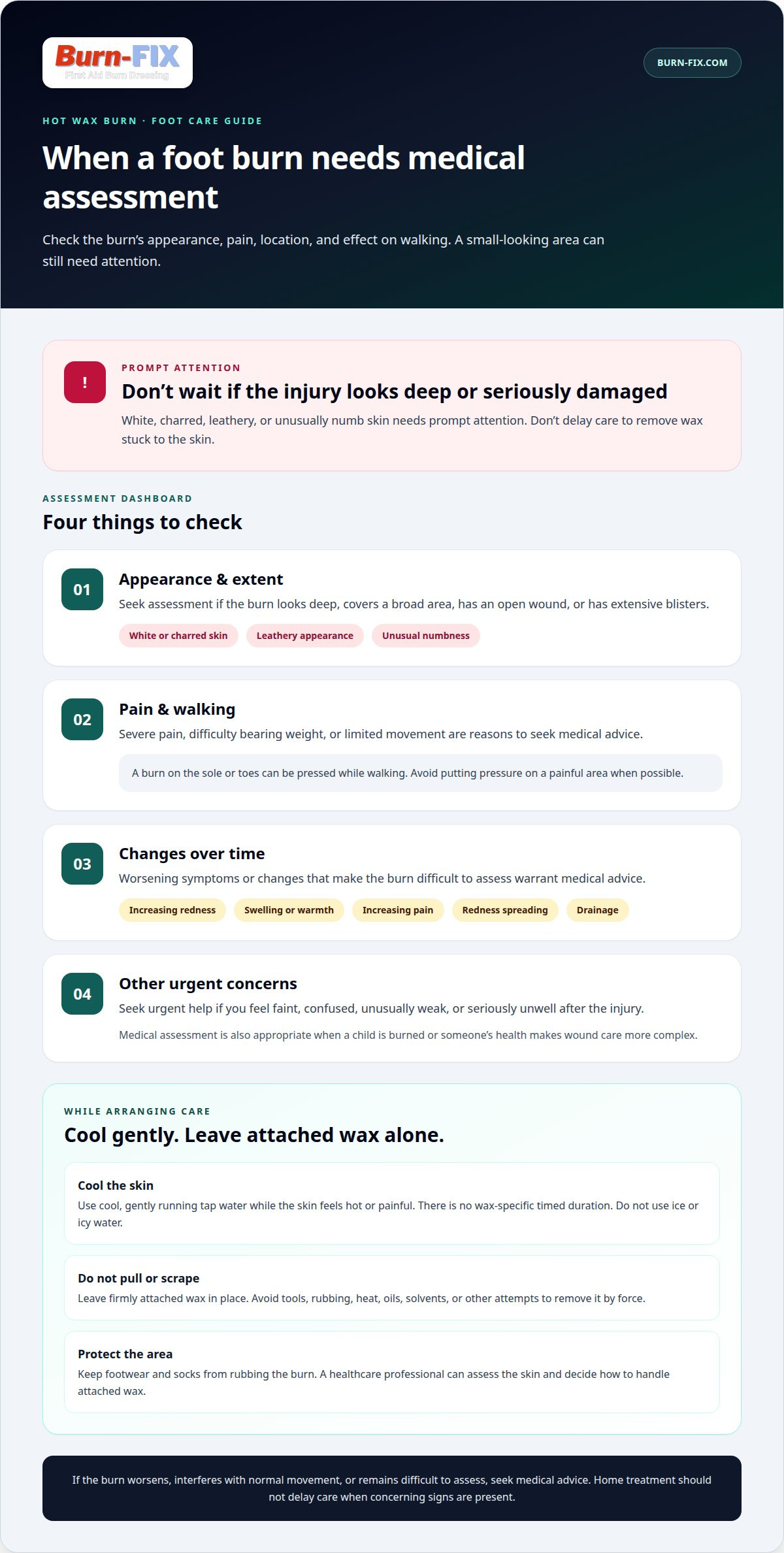
Arrange medical assessment if the burn looks deep, covers a broad area, or causes severe pain. Skin that appears white, charred, leathery, or unusually numb needs prompt attention. Even a small-looking patch may need care if it crosses a toe joint or affects how you stand. Wax can also hide the skin and make the burn’s depth harder to judge.
Get help promptly if blisters are extensive, the wound is open, or swelling makes shoes difficult to wear. A burn on the sole or toes can be pressed repeatedly while walking, aggravating the area. If you can’t bear weight comfortably or movement is limited, avoid putting pressure on the foot and seek medical advice.
Some situations call for emergency care rather than waiting for a routine appointment. Seek urgent help if you feel faint, confused, unusually weak, or seriously unwell after the injury. Act quickly, too, if the burn covers more than a small patch or appears to affect deeper tissue. Don’t delay care to remove wax stuck to the skin.
Medical assessment is also appropriate when the burn involves a child or someone whose health makes wound care more complex. A clinician can examine the area, consider its depth and location, and advise how to protect it as it heals. Tell them when and how the burn happened, whether the skin has changed, and whether any wax remains attached.
If you’re unsure whether a foot burn needs professional attention, consider its appearance, pain, location, and effect on walking. A burn that worsens, interferes with normal movement, or remains difficult to assess warrants medical advice. Keep pressure and rubbing off the area while arranging care. Don’t let home treatment delay an assessment when concerning signs are present.
What are the signs of a serious or infected wax burn
Look for changes in the skin and how the foot feels. Increasing redness, swelling, warmth, or pain needs attention, especially if redness spreads beyond the original area. New or worsening discomfort differs from tenderness that is gradually easing. Swelling around the toes or a blister that makes walking difficult also warrants prompt assessment.
Drainage can be another warning sign. Pus, cloudy fluid, an unpleasant smell, or red streaks extending from the burn can indicate a problem that needs medical care. Clear fluid from a blister does not by itself establish infection, but a blister that breaks, leaks, or is surrounded by spreading redness should be assessed. Don’t squeeze blisters or pick at loose skin.
Pay attention to your overall condition as well as the burn. Fever, chills, or unusual weakness alongside a worsening wound calls for prompt medical attention. A foot burn that looks pale, waxy, leathery, or charred, or feels numb rather than sore, may be serious even without drainage. Wax can make skin changes harder to see, so don’t dismiss pain or swelling based on appearance alone.
Track the burn’s appearance as it heals. Notice whether redness stays close to the wound, swelling increases, and pain improves or worsens during ordinary movement. For example, increasing tenderness around a toe or new drainage from a blister warrants professional assessment. Seek urgent care for rapidly spreading redness, red streaks, fever, or a severe-looking wound. Avoid pressure and rubbing, and don’t wait for several warning signs to appear before seeking help.
Burn-Fix
Burn-Fix offers burn-care products for home first-aid needs, including hydrogel spray, gel, dressings, and a burn kit. These options are designed to cool and support care for first- and second-degree burns, scalds, and sunburn.
After cooling a wax burn, a suitable burn-care product may help soothe the area and protect it during basic first aid. Follow the product directions, and don’t use it to delay medical attention for a deep-looking, worsening, or possibly infected burn. A product isn’t a substitute for professional care when the foot needs assessment.
If you have questions about Burn-Fix burn-care products, contact Burn-Fix for more information.
Choose your next step with confidence
A hot wax drip burn on your foot can affect comfort beyond the initial sting, so let the skin’s progress guide your next step. If the area changes or makes everyday movement harder, seek medical care rather than relying on a first-aid product alone. For less serious burns, having suitable burn-care supplies ready can make home first aid more manageable.
Burn-Fix offers options including Burn-Fix Hydrogel Burn Spray - 120ml, the Burn-Fix 4x4 First Aid Burn Gel Dressing, and Burn-Fix Burn Kit. Choose a product that fits your first-aid needs, and follow its directions. These supplies support burn care; they don’t replace medical assessment when the injury needs professional attention.
For information about these burn-care options, contact Burn-Fix. Take the next step calmly, and give your foot the care and attention it needs.
Frequently Asked Questions
What should you do immediately after a hot wax burn on the foot?
Cool the burned area under gently running cool tap water, and don’t pull off wax that clings to the skin. Remove footwear only if it comes away easily. Once the foot is cool, protect it from rubbing and note any changes in appearance or pain. For a hot wax drip burn on the foot, seek medical care if the injury looks deep or affects walking.
What should you do if hot wax burns a child’s foot?
Begin cooling the child’s foot with gently running cool tap water, and keep the child settled while you assess the injury. Don’t peel away attached wax or let the child walk on a painful area. Arrange medical assessment if the burn looks deep, affects movement, or is difficult to assess. This information is general and isn’t medical advice, diagnosis, or treatment; products aren’t intended to diagnose, treat, cure, or prevent disease.


