


Hot cooking oil can burn before you have time to react. If a frying pan grease mist burn lands on your forearms, cool the skin under cool running tap water for 20 minutes, as the American Red Cross advises. Remove rings, watches, or loose clothing near the burn if they come away easily, but don’t pull anything stuck to the skin.
A frying pan grease mist burn on forearms can sting and redden the skin, especially when oil splashes across several spots. Cool the affected skin with cool running tap water, then cover it loosely with a clean dressing. Avoid ice, butter, and popping blisters, which can worsen the injury. This guide also explains warning signs that call for urgent medical attention, so you can respond calmly and recognize when first aid is not enough.
Key Takeaways
- Skip butter, toothpaste, and popping blisters; these common reactions can interfere with safe burn care.
- Learn why hot oil droplets can injure forearm skin and what to look for as you assess the burn.
- Use a loose, clean dressing to protect the area, and replace it if it becomes wet or dirty.
- Recognize warning signs that mean a burn needs urgent medical attention rather than home care alone.
Burn myths about blisters, butter, toothpaste, and cold water
- Leave blisters intact. Don’t pierce, squeeze, or peel a blister caused by a grease splash on your forearm. The blister roof helps protect fragile skin underneath, and breaking it can raise the risk of infection. If it opens on its own, don’t pull away attached skin. Keep the area clean and protect it with a loose, clean dressing, rather than pressing adhesive onto the blister.
- Keep butter off the burn. Butter doesn’t cool burned skin. It can trap heat and may carry bacteria. Skip cooking oils, too, even if they’re within reach in the kitchen. Toothpaste isn’t a burn-cooling treatment either. Don’t apply butter, toothpaste, or other kitchen substances. Instead, cool the area with running tap water, then cover it loosely with clean, dry gauze or a bandage.
- Choose cool tap water, not ice. Ice may feel soothing at first, but ice and ice water can further injure burned skin. Don’t press an ice cube or frozen pack against an oil splash. Use cool tap water instead. If both forearms are affected, cool each area without rubbing or scrubbing the skin. Remove a nearby ring or watch before swelling makes it difficult.
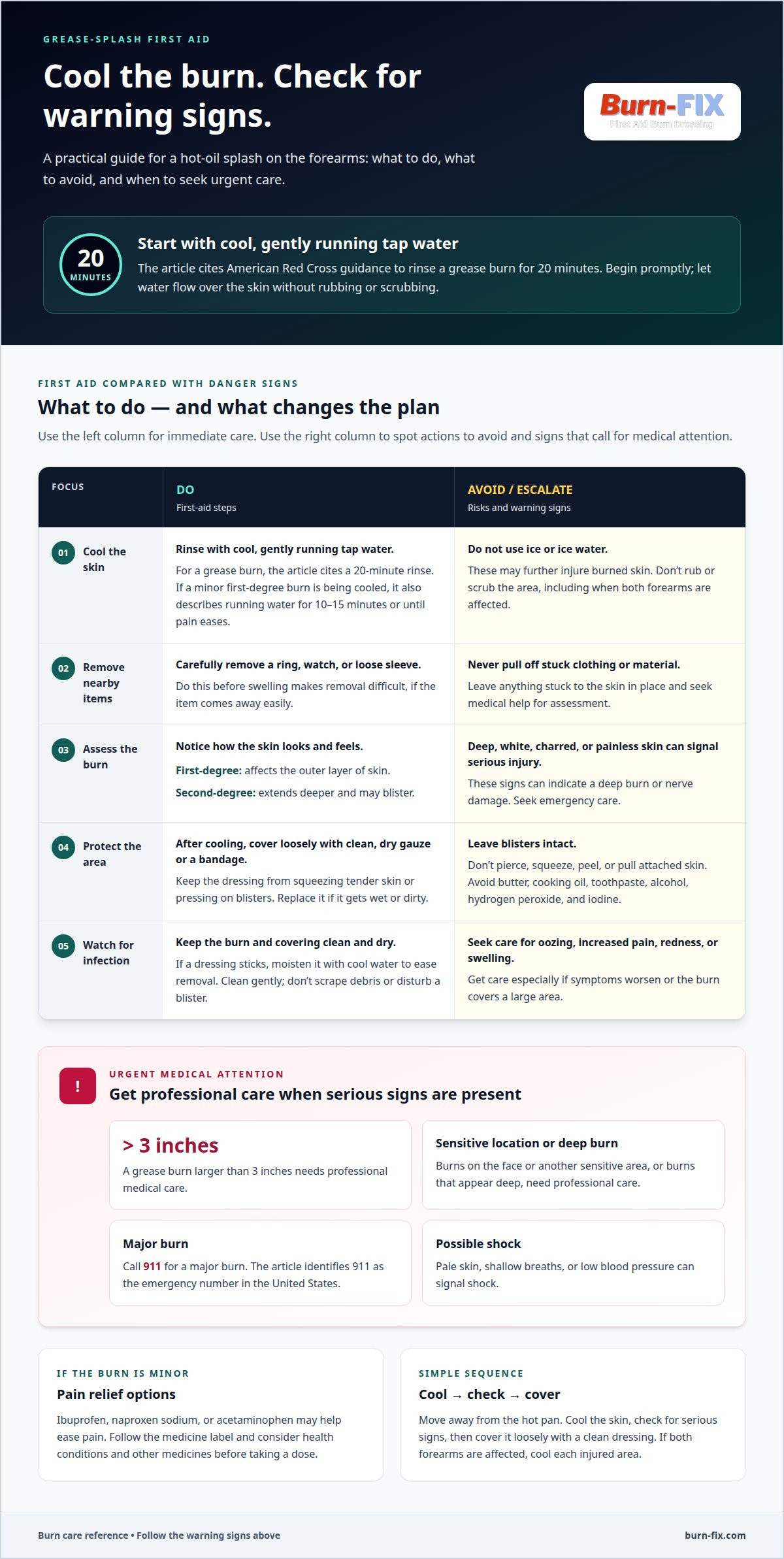
- Protect the skin after cooling. If needed, gently pat the skin around the burn, but don’t rub a blister or apply pressure. Cover the area with clean, dry gauze or a bandage, keeping it loose so it doesn’t squeeze tender skin. Replace the covering if it gets wet or dirty. Don’t apply alcohol, hydrogen peroxide, or iodine, which can damage fragile skin cells and slow healing.
With a grease burn, resist the urge to pop a blister, since doing so can increase infection risk. Don’t use a pin or squeeze it, even if it looks tense. Butter is not a safer way to cool the skin: it can retain heat and may carry bacteria. Leave it off the injured area.
Large burn blisters are best removed because they rarely remain intact on their own. That does not mean peeling or cutting one yourself; protect the skin and avoid disturbing it.
Cooling a grease burn with tap water
- Start cooling promptly. Move away from the hot pan and hold the burned forearm under cool, gently running tap water. According to the American Red Cross, rinse a grease burn with cool tap water for 20 minutes. Don’t use ice or ice water, which can further injure burned skin. Let water flow over the area without scrubbing or rubbing.
- Remove nearby items carefully. Take off a ring, watch, or loose sleeve near the burn before swelling makes removal difficult. If clothing sticks to the skin, don’t pull or peel it away. Keep cooling the exposed area, and leave stuck material in place for medical professionals.
- Notice how the skin looks and feels. A first-degree burn affects the outer layer of skin. A second-degree burn extends deeper and may blister. A burn that extends beyond the outer layer may need professional care. Deep, white, charred, or painless skin can signal a serious injury or nerve damage, so seek emergency care.
- Get urgent help for serious signs. A grease burn larger than 3 inches, one on the face or another sensitive area, or one that appears deep needs professional medical care. For a major burn, call 911; the U.S. Department of Transportation’s National 911 Program identifies 911 as the emergency number in the United States. Pale skin, shallow breaths, or low blood pressure can signal shock.
- Choose pain relief cautiously. For a minor burn, ibuprofen, naproxen sodium, or acetaminophen may help ease pain. Follow the medicine label, and consider your health conditions and other medicines before taking a dose.
- Finish cooling before covering. After rinsing the area with running water, cover it loosely with a clean dressing. If a frying-pan grease mist burn affects both forearms, cool each injured area and watch for worsening symptoms or spreading damage.
For a first-degree burn, start cooling it with running water as soon as possible after the injury. When the burn is minor, cool the area with running water for 10 to 15 minutes or until the pain eases. Begin the rinse promptly, then continue running water over the burn for that period or until the pain eases.
Keeping burn dressings clean and dry
After cooling the burn, clean it gently and protect it with a loose, dry covering. Check the skin and dressing each time you change the covering.
-
Cleaning the burn safely
Gently clean the burn with cool water and mild, fragrance-free soap. Use clean hands, and don’t scrub or rub tender skin. Rinse away the soap carefully, then pat the surrounding skin dry with a clean cloth. Avoid alcohol, hydrogen peroxide, and iodine, which can damage fragile skin cells and slow healing. If debris remains or cleaning causes marked pain, stop instead of scraping the area.
-
Preventing infection and recognizing signs
Cover the cleaned burn loosely with clean, dry gauze or a bandage, and replace the dressing if it gets wet or dirty. Make sure the covering doesn’t press against blisters or stick to injured skin. Watch for oozing, increased pain, redness, or swelling. These signs may indicate infection and warrant care from a health care provider, especially if symptoms worsen or the burn covers a large area.
- Keep the dressing dry. When washing your hands or doing other tasks, avoid splashing water onto the covering. If water or sweat dampens the gauze, change it rather than leaving moisture against the burn. A wet dressing can soil the injured area and no longer provides a clean protective layer. Use fresh, dry material each time you cover the skin.
- Change dressings gently. Lift the bandage slowly instead of pulling sharply at tender skin. If it sticks, moisten it with cool water to ease removal. Don’t tear away attached skin or disturb a blister. After changing the dressing, check for new oozing, spreading redness, or worsening swelling. Seek care if these changes appear or pain increases.
How cooking oil and grease cause burns
- Understand how a splash reaches skin. Hot oil can spatter from a frying pan, particularly when moisture meets heated grease. Stirring quickly, adding a wet ingredient, or placing food in the pan can send droplets outward. When droplets land on bare forearms, they transfer heat directly to the skin. Several small splashes can create a wider, uneven injury.
- Recognize why oil contact matters. Cooking oil can cling to skin rather than run off like water. This contact may prolong heat transfer, so even a small-looking splash can sting or redden the skin. Don’t judge severity by the size of one spot alone. Consider the full affected area, the depth of the injury, and changes such as blistering.
- Reduce another splash while you step away. If it’s safe, turn off the burner, then move away from the pan. Don’t reach across hot grease or carry the pan while oil is splattering. When you cook again, keep your forearms back as you stir and add ingredients gently. Dry wet ingredients before adding them, since surface moisture can trigger spattering.
- Allow healing time based on burn depth. A first-degree burn often heals within one week without scarring. Second-degree burns can take weeks to heal, while deeper injuries need medical care. Monitor the skin as it heals. Worsening pain, larger blisters, oozing, increased redness, or swelling warrant care from a health care provider.
- Prepare for safer first aid. Keep clean gauze and burn-care supplies where you can reach them without approaching a hot pan. If you’re preparing a home kit, choose burn-care supplies alongside ordinary first-aid essentials. The key is responding to the skin, not the pan: cool the injury, protect it, and seek urgent help for severe signs.
Burn-Fix
Burn-Fix sells burn-care supplies for home first-aid kits and minor burns, including spray, gel, dressings, and a burn kit. After cooling a grease splash and assessing the injury, these products offer a practical option for first- and second-degree burns. Burn-Fix hydrogel products provide instant cooling relief and help keep skin moist.
Choose the form that suits your first-aid needs: a spray for applying product across an area, gel for a small spot, or a dressing to cover the burn. Follow the product directions, and keep the area protected with a clean dressing. Burn products aren’t a substitute for urgent medical care when a burn is deep, extensive, or showing serious warning signs.
For questions about Burn-Fix burn-care products, contact Burn-Fix.
Feel prepared for your next meal
Recovering from a frying pan grease mist burn on your forearms can be a chance to make your kitchen routine feel more manageable. Before cooking again, consider what caused the oil to splatter, such as wet ingredients or reaching across a hot pan. Adjusting how you prepare ingredients and stir can help you feel more in control without letting one painful moment define your time in the kitchen.
Keep burn-care supplies somewhere accessible but away from the stove and hot cookware. If you’re choosing supplies for home, consider what fits your household’s first-aid needs. For a burn that needs urgent medical attention, prioritize professional care rather than relying on home products. For questions about burn-care options, contact Burn-Fix. A little preparation can help you return to cooking with greater confidence.
Frequently Asked Questions
When should a grease burn be cooled with running water and for how long?
Start cooling as soon as possible after the splash, once you’re safely away from the hot pan. The American Red Cross recommends rinsing a grease burn with cool tap water for 20 minutes. Use a gentle flow, not a forceful spray, and avoid ice. If the burn looks severe, arrange urgent medical care while someone continues helping safely.
Should you use ice, butter, or ointment on a hot oil burn?
No. Ice can further injure burned skin, while butter may trap heat and carry bacteria. Avoid toothpaste and other kitchen remedies, too. Don’t apply an ointment or other product unless its directions say it’s appropriate for the burn. If you’ve already applied a remedy, gently rinse it away with cool water instead of scrubbing tender skin.


