


Scalding bath water can cause a severe burn in a child in seconds: water at 140°F can do so in five seconds, while water at 120°F can cause a severe burn in about five minutes. A scalding bath water burn response should start by moving away from the hot water and cooling the burn with cool running water. The American Red Cross recommends cooling it for 20 minutes.
A hot bath may seem harmless, but a child’s skin can be injured quickly, and older adults can also be at risk. Acting promptly helps limit further heat damage, while the burn’s size, location, and appearance help determine whether home care is appropriate or urgent medical attention is needed.
Here, you’ll learn how water temperature affects burn severity, what to do first, and how to cover the area and manage pain safely. You’ll also find practical ways to reduce scald risk around the bath, so you can respond calmly and protect vulnerable family members.
Key Takeaways
- Recognize warning signs that call for urgent medical attention, including burns that are large, deep, or affect sensitive areas.
- Cool a scald promptly with cool running water, and avoid ice, butter, or creams that can worsen the injury.
- Protect the burn with a loose, clean, non-stick covering, and leave blisters intact.
- Understand why hotter water and longer exposure raise burn severity, and use safer bath-temperature habits to reduce risk.
What causes Hot water burns?
Scalds happen when hot water or another heated liquid contacts the skin. The burn’s appearance, location, and size can help guide a safe response.
Causes of Scald Burns
A scald is a burn caused by a wet heat source, such as hot water or steam. Bath water can injure skin during filling, washing, or accidental contact with a hot tap. Children and older adults may be especially vulnerable, so even a brief exposure deserves attention. The water’s temperature and the length of contact both affect tissue damage.
Scalds from Hot Liquids
Hot liquids can cause scalds when they spill, splash, or stay against the skin. Bath water, hot drinks, and cooking liquids are common sources. Wet clothing can hold heat against the body, so remove it gently unless it sticks to the burn. The affected area and changes in the skin can help show whether urgent care is needed.
Seek emergency help for a burn larger than the person’s hand or one affecting the face, hands, feet, genitals, or a major joint. Get help if the skin looks white or charred, skin has been lost, or there are more than a few small blisters. Blisters on a baby or older adult also warrant urgent attention. These signs may indicate a deeper injury.
Mild burns may heal in around 14 days, while deep or severe burns can take months or even years. Prevention starts before bathing: set the water heater no higher than 120°F, test bath water with your wrist or elbow, and never leave a small child unattended. Anti-scald devices on faucets and showerheads can help limit unsafe water temperatures.
How to Treat Hot Water Burn Safely?
Cool a hot-water burn promptly before covering it. Use cool running tap water, not ice, and keep the person warm while you act.
Cooling a Burn with Running Water
Cooling a burn means holding the injured skin under gently running tap water. The American Red Cross recommends cooling a burn with cold running water for 20 minutes as soon as possible after the injury. Prompt cooling helps limit continued heat exposure, which matters because hot water can keep damaging tissue after contact ends.
Move the person away from the bath or tap, then run cool water over the burn. Remove wet clothing or nearby jewelry if it comes away easily, but don’t pull anything stuck to the skin. If the area cannot fit under a faucet, gently pour cool water over it. Avoid ice and very cold water.
Preventing Hypothermia During Cooling
Cool the burned skin while keeping the rest of the person warm and dry. This matters especially for children and people with larger burns, since prolonged cooling can chill the body. Expose only the injured area and cover unaffected skin with a dry towel or blanket.
Keep the person out of a cold bath or shower, and watch for shivering or unusual coldness. If they become chilled, warm unaffected areas while continuing safe care for the burn. Don’t wrap the injury tightly or put a heating pad on burned skin. Seek emergency help if the person seems seriously unwell.
After cooling, assess the injury calmly. A large or deep burn, or one affecting a sensitive area, needs urgent medical attention. Running water is immediate first aid, not a substitute for care when a burn looks serious. Keep the person warm while arranging help, and don’t apply creams or butter during initial cooling. For a broad burn, cover unaffected skin while help is arranged.
Covering the burn and managing pain
After cooling, protect the skin with a loose, clean covering. Avoid friction, tight wrapping, and popping blisters, which can increase discomfort and infection risk.
Removing Clothing and Covering the Burn
Remove wet or tight clothing near the burn if it comes away easily, but never pull fabric stuck to skin. This reduces contact with hot, damp material without tearing injured tissue. Once the area is clear, cover it loosely with clean, non-stick cloth or gauze. A gentle covering shields sensitive skin from rubbing while avoiding pressure on the injury.
Leave blisters intact. They form a natural barrier against infection, so don’t puncture or peel them. Avoid butter, creams, and household remedies on the burn. If clothing or a dressing sticks, don’t force it off; further skin damage can make the injury harder to assess and care for.
Managing Burn Pain
Managing pain means protecting the area and watching whether discomfort settles after first aid. A clean, loose covering can reduce contact with clothing or other surfaces. Don’t give aspirin to children under 16 years of age for burn pain. If pain continues after a couple of hours, seek medical advice rather than adding unverified treatments.
When helping a child, explain each movement before touching the burn and avoid pressure on blisters. Calm handling can make assessment and covering the area easier. Get medical help promptly if pain worsens or the burn looks serious.
Check the skin around the dressing for increasing redness, swelling, or discharge, which can signal infection. Check burn dressings regularly for signs of infection and follow medical advice about when to change them. Follow medical instructions for a treated burn, especially if it is deep, large, or located on the face, hands, feet, genitals, or a major joint. These locations need professional assessment, not just a home covering.
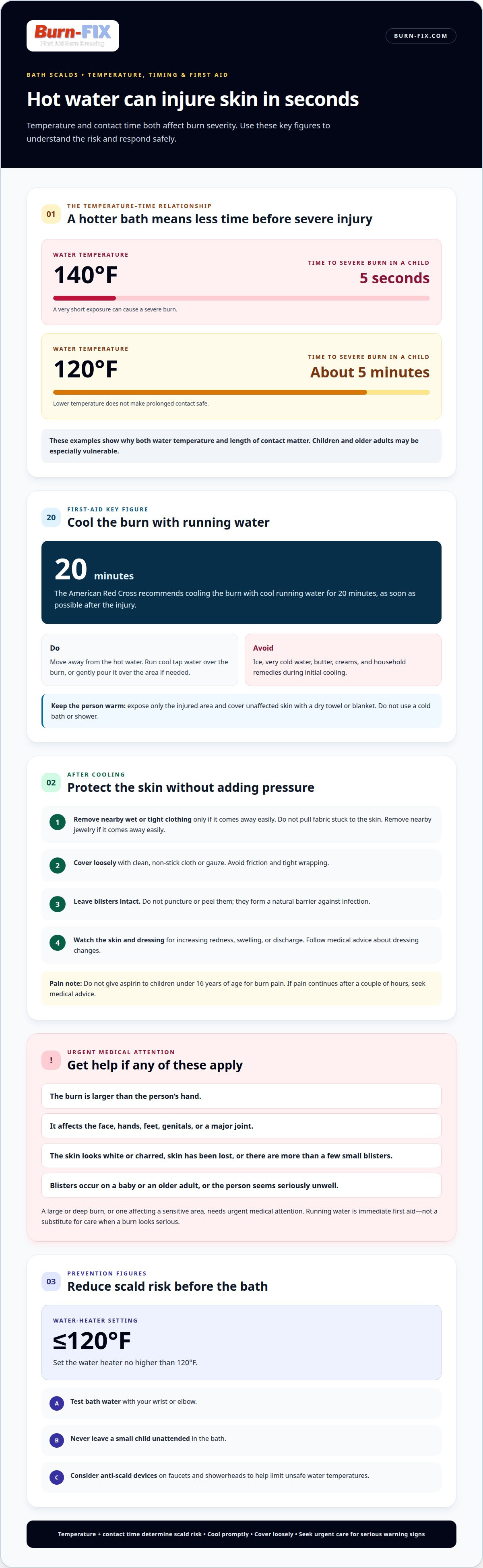
Water temperature and burn severity
Water temperature affects how quickly heat damages skin, and contact time determines how long heat transfers. Both influence the depth of a bath scald.
Scald Causes and Severity
A scald’s severity depends on water temperature and how long it touches the skin. Understanding the scalding bath water burn response means considering both factors, not temperature alone. Water at 140°F can cause a severe burn in a child in five seconds. At 120°F, a severe burn can take about five minutes. These examples show how quickly hot water can injure skin.
Burn Severity Categories
Burn categories describe injury depth, from first-degree to superficial second-degree and third-degree burns. Knowing the categories can help explain likely healing needs, although appearance alone can’t reliably establish depth. First-degree burns usually heal within 3 to 7 days; superficial second-degree burns usually heal within 2 to 3 weeks. Third-degree burns can take several months to heal.
Heat can damage skin at lower temperatures too. Skin exposed to 44°C (111°F) or higher can be damaged by heat transfer. A bath thermometer helps assess water temperature before bathing. Lowering the temperature reduces the heat available to injure skin, while limiting contact time reduces exposure.
Temperature figures indicate risk, but cannot predict the severity for every person. The area affected, exposure time, and skin changes all matter. Red, painful skin differs from a burn with blisters, skin loss, or a white or charred appearance. These signs may need medical assessment.
Recovery also varies by depth. Minor burns normally heal in around 14 days and leave little scarring, while deep or severe burns may take months or even years. A scalding bath water burn response should prioritize the injury’s appearance and location, not a healing estimate. Seek urgent help for a large or deep burn, or one affecting the face, hands, feet, genitals, or a major joint.
Burn-Fix
After immediate cooling, Burn-Fix offers hydrogel burn-care products for minor scalds and other first- and second-degree burns. The range includes spray, gel, dressings, and a burn kit for household first-aid supplies. The hydrogel provides cooling and retains moisture. For a burn dressing, protective gloves are suggested when handling it because the gel is acidic.
For a mild scald, use these products as part of first aid after cooling the burn, and follow the product directions. They aren’t a substitute for urgent medical attention when a burn is large, deep, or affects a sensitive area. If you’d like help choosing among Burn-Fix’s burn-care offerings, contact Burn-Fix.
Make Your Next Step Preparation
Preparation can make a stressful moment easier to manage. Keep first-aid supplies together and make sure adults in the household know where they are. Families with young children can agree on who stays within reach during bath time and who responds if hot water causes an injury. A clear plan helps everyone act calmly.
Thinking through a scalding bath water burn response can help you recognize when home first aid is not enough. Base urgent-care decisions on the burn’s appearance, location, and extent, not on a product alone. Burn-Fix sells burn-care supplies for household preparedness and minor scalds.
If you’re ready to make burn care part of your family’s first-aid plan, contact Burn-Fix for help. A prepared, steady response can help you take the next step with greater confidence.
Frequently Asked Questions
What are the risks of scalding injuries?
Scalds can damage skin, cause blisters, and leave lasting effects, especially when the injury is deep or extensive. Children and older adults are particularly vulnerable to hot water burns. A burn affecting the face, hands, feet, genitals, or a major joint needs urgent attention. White or charred skin, skin loss, or more than a few small blisters are also warning signs.
What to do if a burn still hurts after 2 hours?
Seek medical advice if burn pain continues after a couple of hours. Persistent pain can mean the injury needs assessment, particularly if the burn is worsening or has blisters, skin loss, or unusual coloring. Keep the area protected and avoid applying household remedies while arranging advice. A large burn or one involving a sensitive area warrants urgent attention rather than waiting for pain to settle.
What should you do immediately after a scald burn from bath water?
Move the person away from the hot water, then cool the injured skin under running water. Keep unaffected areas warm, especially if the person is a child or the burn is broad. Don’t delay urgent help for a burn that looks white or charred, affects a sensitive area, or is larger than the person’s hand.
How long should a bath water scald be cooled under cool running water?
Cool the burn under running water for 20 minutes as soon as possible after the injury, according to the American Red Cross. Use cool water, not ice or very cold water. If the burn is on an arm or hand, position it comfortably under the tap; keep the rest of the person warm while cooling the affected skin.
Should you remove clothing or jewelry near a scald burn?
Remove wet or tight clothing if it comes away easily, but don’t pull fabric stuck to the skin. Don’t tug or force jewelry that touches the burn. If a ring or other item slides off without disturbing the injury, removing it may prevent pressure if swelling develops. Prioritize cooling and seek urgent help for burns involving the hands or other sensitive areas.
What should you avoid putting on a scald burn, such as ice, butter, or creams?
Avoid ice, butter, and creams; they can worsen the injury or interfere with safe care. Use cool running water for initial cooling, then protect the area with a clean, non-stick covering. This information is for general informational purposes only and isn’t medical advice, diagnosis, or treatment. Burn-Fix products aren’t intended to diagnose, treat, cure, or prevent any disease.


