


A hot cocoa spill burn on a baby’s skin is a scald, caused by hot liquid; cool the burned area under cool running water for at least 20 minutes. Move the baby away from the spill and remove hot, wet clothing unless it’s stuck to the skin. A quick, calm response matters.
Seeing a baby hurt is frightening, especially when an everyday drink is the cause. Babies and young children are particularly vulnerable because hot liquids can quickly injure delicate skin, and a spill can spread over a small body.
This guide explains burns and scalds, why young children face greater risk, and how cool running water can help cool injured skin. It also covers how hot cocoa, microwaved foods, and baby bottles can create burn hazards, so you can respond promptly and reduce risks at home.
Key Takeaways
- Learn how burns and scalds differ, and recognize the skin changes that can signal a deeper injury.
- Spot why young children are especially vulnerable, then make hot drinks and foods harder for little hands to reach.
- Understand how cool running water helps limit burn injury and what to avoid putting on freshly burned skin.
- See how hot cocoa spills and microwave hot spots can cause burns, including when warming a baby’s bottle.
1. What are burns and scalds?
Burns damage tissue through heat, chemicals, electricity, sunlight, or radiation. Scalds are burns caused by hot liquids or steam, such as spilled cocoa. A first-degree burn affects only the epidermis, the outer skin layer. Skin may look red and feel painful, much like sunburn. A second-degree burn affects the epidermis and dermis, the top two layers. It can look moist and develop painful blisters. A third-degree burn damages the epidermis, dermis, and subcutaneous tissue. Skin may appear black, white, bright red, or leathery.
In the kitchen, keep hot drinks and food well away from table and counter edges. Seattle Children’s also advises keeping hot drinks away from edges. Set a mug down before picking up a toddler, and never carry a child while holding a hot liquid. Use oven mitts when handling hot food or drinks. A screw-on or spill-proof travel mug lid can help prevent spills on the go. Before cooking, move toddlers and preschoolers away from the stove and other hot surfaces.
For babies, create a safe place away from cooking and hot drinks. Seattle Children’s advises not holding a baby while cooking or handling something hot. Put the baby down before carrying a steaming bowl, kettle, or cup of cocoa. Keep hot liquids out of a child’s reach, including when serving drinks at a table. Since a small spill can spread across clothing, move hot cups away before settling a baby nearby.
Bathroom water needs care, too. Seattle Children’s advises setting the water heater to 120°F or lower, or between low and medium. Seattle Children’s also advises using anti-scald devices that stop water from flowing when it’s hotter than 120°F. For young children’s baths, aim for a water temperature of 37°C to 38°C and test it before placing the child in the tub. Stay within reach and never leave a child unattended in the bath.
2. Why young children are more vulnerable to burns
Young children may not recognize danger or move away from a spill quickly. Children under five face the greatest risk of scalds. Hot liquid can soak clothing and stay against the skin, continuing to transfer heat to the tissue. A drink tipped from a table can spread across a child’s lap, arm, or chest before an adult can react.
Busy family routines can add risk. Between 4 pm and 7 pm, distractions around meals may make it easier to overlook a hot drink or cooking pot. Keep hot beverages and cooking pots attended, and don’t pick up a child while holding hot liquid. Seattle Children’s advises calling 911 if a child has a large burn. This is urgent, especially if the injured area is extensive or the child seems seriously affected.
After cooling a burn, cover it with a clean, dry, non-stick bandage or cloth, as Seattle Children’s advises. Keep the child warm while cooling only the burned skin. Avoid wrapping the whole child in wet fabric, which can make them cold. If clothing is stuck to the injured area, don’t pull it away, as this could cause further friction.
Certain burn locations and changes to the skin need prompt medical assessment. Seattle Children’s advises taking a child to the emergency room for burns on the hands, feet, or genitals that blister, or for burns that leave the skin open and blackened. Contact the child’s health care provider if a small burn develops blisters, according to Seattle Children’s. A burn crossing a joint can affect movement, so pay attention to the wrists and fingers as well as the face and trunk.
Bathroom and shower routines also require close supervision, since children may not be able to judge water temperature or move away quickly. Keep hot drinks out of children’s reach during meals and play, and clear cups before lifting or settling a child nearby. Caregiver attention matters especially when several tasks compete at once.
3. Cooling a burn with running water
If hot cocoa spills on a baby’s skin, move the baby away from the hot liquid and start cooling the burned area immediately. Hold the affected skin under cool running tap water for at least 20 minutes. Remove wet clothing unless it’s stuck to the skin.
Cool water helps draw heat away from injured tissue, which can limit ongoing damage and ease pain. Let cool water flow gently over the burn rather than using ice or very cold water. Cool running water can still help for up to three hours after a burn, so start as soon as possible, even if the spill happened earlier.
While cooling the injury, keep the baby warm and expose only the burned skin. Seattle Children’s advises removing clothing over a scald, including wet clothing, because hot fabric can continue to burn the skin. If material sticks to the injury, don’t pull it off. Cool around it and leave it in place. Avoid ice, butter, lotions, or oil, which can further irritate a fresh burn or interfere with care.
Once the cooling period is complete, protect the area from rubbing. Seattle Children’s advises covering a scald with a dry, clean, non-stick bandage or cloth. Keep the cover loose, and don’t press on blisters or open skin. If the burn is large, Seattle Children’s advises calling 911. A doctor should assess a baby’s burn that is deep, extensive, or on a sensitive area, even after cooling.
Don’t delay cooling while looking for a dressing or other supplies. If cocoa soaks a sleeve, for example, begin running water while gently removing the wet fabric, but stop if it’s stuck. Prompt cooling is the first practical step, whether the spill happens during feeding, cooking, or a family meal.
4. Burn risks from hot cocoa and microwaved foods
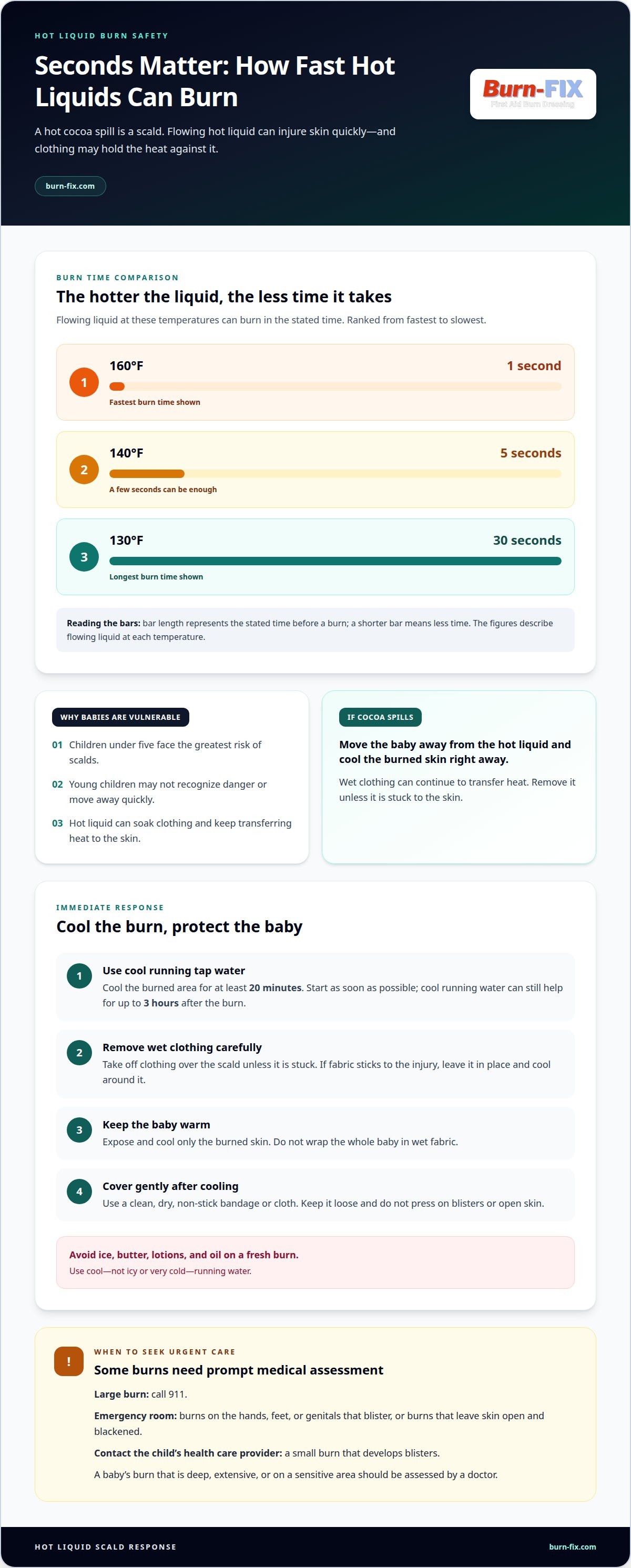
A hot cocoa spill can burn quickly because hot liquid transfers heat directly to skin. Flowing liquid at 130 degrees can burn in 30 seconds; at 140 degrees, in five seconds; and at 160 degrees, in one second. A drink on clothing can keep hot liquid against the skin, so act promptly if a spill happens. The same risk applies to other hot drinks and foods served within a baby’s reach.
Microwaves create a different hazard: uneven heating. Seattle Children’s advises warming baby bottles in warm water rather than a microwave, because microwave hot spots can scald a baby’s mouth. Even if the bottle feels comfortable on the outside, its contents may heat unevenly. Warm it in water instead, then allow it to cool before feeding. Steam is another danger: steam inside a microwave popcorn bag can reach 180 degrees. Open hot packages carefully, away from a child’s face and hands.
If cocoa spills onto a baby, move the child away from the cup and remove hot, wet clothing unless it’s stuck to the skin. Cool the burned area with running water. Don’t apply butter, oil, or ice. Blisters, open skin, or a burn on a sensitive area call for prompt medical attention; a doctor can assess the injury’s depth and location. Redness alone may not show how serious the tissue injury is.
Reduce spill risks by placing hot drinks well away from table edges and keeping cups out of a baby’s reach. Use a travel mug with a screw-on lid when carrying cocoa, and set it down before lifting a child. After microwaving food or warming a bottle, stir or gently mix where appropriate, then let it cool before serving. Steam can burn, too: let food stand, open containers carefully, and keep children clear while handling them.
Burn-Fix: BurnFix Hydrogel Burn Spray - 120ml
BurnFix Hydrogel Burn Spray - 120ml offers cooling, moisture-retaining care for minor first- and second-degree burns and scalds. After cooling a burn with running water, it can be part of your home first-aid supplies for a small scald from hot cocoa. Burn-Fix describes its hydrogel products as suitable for children and adults.
A spray can be a practical way to apply hydrogel without pressing a dressing onto a tender area. Follow the product label, and don’t let burn-care supplies delay urgent medical attention for a large, deep, or otherwise serious burn. A doctor should assess concerning injuries, particularly in a baby.
For burn-care supplies suited to your household, contact Burn-Fix to learn more.
Build confidence for the next step
A hot cocoa spill burn on a baby’s skin can leave caregivers shaken, but having a clear plan helps you act deliberately. Keep burn-care supplies together and easy to find, and make sure every caregiver knows where they are. Burn-FIX 4x4 First Aid Burn Gel Dressing and BurnFix Burn Kit can be part of that preparation.
For an active injury, prioritize cooling the burn and seeking medical care when needed. Burn-care products can be part of a home first-aid kit, but they don’t replace urgent assessment for a serious burn. Choosing supplies ahead of time means you won’t have to search through cupboards while caring for a distressed child.
If you’d like to explore Burn-Fix burn-care products for your household, contact Burn-Fix for support. A little preparation can make it easier to respond calmly and focus on your baby.
Frequently Asked Questions
What are burns and scalds?
Burns are tissue injuries caused by heat, chemicals, electricity, or sunlight. Scalds are burns caused by hot liquids or steam. Touching a hot pan, for example, can cause a burn, while spilled cocoa or steam from a bowl can scald skin. The cause and appearance of the skin can help indicate how serious an injury may be.
What is a scald burn?
A scald burn happens when hot liquid or steam injures the skin. A tipped cup of tea, splashed soup, or escaping steam from a covered dish can cause one. Hot liquid may soak into clothing and stay against the body, extending contact with the heat. After a spill, check for wet clothing and move the child away from the hot source.
How can burns be prevented?
Reduce everyday risks by placing mugs and hot meals away from table edges, and turn stove handles inward. Don’t carry a child while holding a hot drink. For bottles, Seattle Children’s advises warming them in warm water rather than in a microwave, which can create scalding hot spots. Check bath water before placing a child in the tub, and stay nearby.
How do I treat a burn?
Cool the injured skin under cool running water for at least 20 minutes, then protect it with a clean, non-stick covering. Don’t use ice, butter, oil, or lotions on a fresh burn, and don’t break blisters. Remove jewelry near the injury before swelling develops, but don’t pull away anything stuck to the skin. Seek medical care for a deep, large, or concerning burn.
Should I put a burn cream from the pharmacy on my child’s burn?
Avoid applying lotions or creams to a fresh burn; Seattle Children’s advises against lotions. Burn-Fix products haven’t been evaluated by the FDA. Product information is general, not medical advice, diagnosis, or treatment; products aren’t intended to diagnose, treat, cure, or prevent disease. Use only as labeled, don’t exceed the recommended dose unless instructed by a healthcare provider, and avoid use with known ingredient allergies or sensitivities.
Should I put my child’s burn under cool water or take them straight to the hospital?
Start cooling the burn under cool running water while arranging urgent care if the injury is severe. Cooling can help even if some time has passed, and shouldn’t be delayed while you prepare to leave. Call 911 for a large burn, as Seattle Children’s advises. Seek emergency care for burns with open or blackened skin, or blisters on the hands, feet, or genitals.


