


Cool the burn first; aloe vera comes afterward. For home remedies for minor burns, run cool, not icy, water over the area, then consider aloe vera lotion to soothe the skin, an over-the-counter pain reliever used according to its label, and a clean, loose covering. If a blister forms, leave it intact because it helps protect the skin from infection.
Even a small burn can sting, throb, and feel alarming, especially when a blister appears. The right first-aid steps can ease discomfort and protect fragile skin, but ice, butter, toothpaste, and oil can make things worse.
Here, you’ll learn how to cool and clean a minor burn, use aloe vera and pain relief thoughtfully, and care for a blister without popping it. You’ll also learn when a burn needs urgent medical attention instead of home care.
Key Takeaways
- Leave burn blisters unpopped and protect the area with a clean covering to help shield fragile skin.
- For a small first-degree burn, gentle cleansing and a suitable dressing can support comfortable home care.
- Use over-the-counter pain relief only as directed on its label, and avoid aspirin for burn pain.
- Aloe vera lotion may soothe minor burns; watch for signs that the injury needs medical attention.
Blister care
Blisters can develop after a burn, leaving the skin especially vulnerable. Keep the blister intact, cover it gently, and watch for changes.
- Wash your hands before touching the burned area. Clean hands help reduce the chance of introducing germs while you inspect or cover a blister. If the burn is being treated at home, handle the skin gently and avoid rubbing, squeezing, or pressing the raised area.
-
Keep Blisters Intact
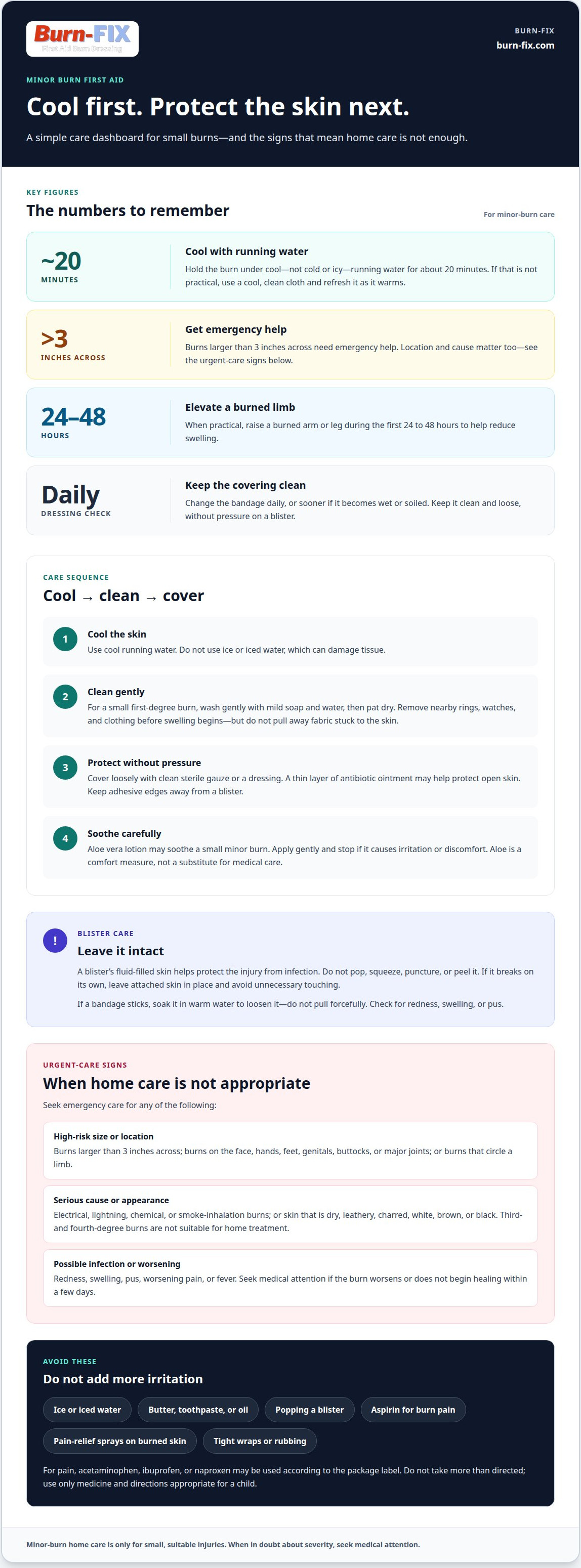
Leave each burn blister unpopped. The fluid-filled skin forms a protective barrier that helps guard the injury against infection, so puncturing or peeling it removes that protection. Check the blister without pressing it, and don’t use a needle, scissors, or fingernails to release fluid.
If a blister breaks on its own, don’t pull away attached skin. Avoid touching the exposed area unnecessarily, since damaged burned skin is easier to contaminate than intact skin.
-
Protect Blisters With a Covering
Cover the burn loosely with a clean, sterile dressing or gauze. A gentle covering can protect the blister from friction, dirt, and accidental knocks without adding pressure. Keep adhesive edges away from the blister so removing the dressing won’t tug at fragile skin.
Check that the covering sits comfortably and stays clean. If the burn is on a hand or another area that moves often, keep the dressing loose enough to avoid squeezing the blister.
- Change the burn bandage daily, and replace it sooner if it gets wet or soiled. A damp or dirty covering offers less protection, so use a fresh dressing if it becomes contaminated. Keep the replacement clean, and handle the area carefully each time you change it.
- If a bandage sticks to the burn, soak it in warm water to help loosen it. Don’t pull it away forcefully, as this can tear delicate skin or open a blister. After removal, check for redness, swelling, or pus, which can signal infection and require medical attention.
What Home Remedies Can Help Treat Minor Burns?
For a small burn, cool the skin first, then assess its depth and location. Home remedies for minor burns can include gentle cleansing and a loose covering, but worsening redness, swelling, or pus may signal infection.
-
Cool the Burn With Running Water
Hold the burned area under cool, not cold, running water for about 20 minutes. This helps lower the skin’s temperature and ease discomfort. Don’t use ice or iced water, which can damage tissue. If running water isn’t practical, place a cool, clean cloth over the area and refresh it as it warms.
-
Assess Burn Severity and Emergency Signs
Check the burn’s appearance, size, and location before choosing home treatment. A first-degree burn affects only the outer skin layer; a second-degree burn reaches deeper and may blister. Burns larger than 3 inches across need emergency help. Seek emergency care for burns on the face, hands, feet, genitals, buttocks, or major joints, and for burns that circle a limb.
Also treat electrical, lightning, chemical, or smoke-inhalation burns as emergencies. Dry, leathery, charred, or white, brown, or black skin needs urgent care. Third- and fourth-degree burns aren’t suitable for home treatment.
- Remove rings, watches, and nearby clothing before swelling begins, but don’t pull away fabric stuck to the skin. For a small first-degree burn, wash gently with mild soap and water, then pat dry. A thin layer of antibiotic ointment can help protect open skin; cover it loosely with sterile gauze. Aloe vera lotion may soothe a small burn. These home remedies for minor burns aren’t appropriate for severe injuries.
- Keep the wound covered with a clean dressing, and watch for redness, swelling, pus, worsening pain, or fever. These changes can point to infection or another complication. If the burn worsens or doesn’t begin healing within a few days, seek medical attention. For a suitable small burn, a first aid burn gel dressing can provide a protective covering.
Over-the-counter pain relief
To ease pain and protect a minor burn, cool it with water, then use an over-the-counter pain reliever as directed. Keep the area loosely covered and avoid friction, since rubbing can irritate burned skin and blisters.
- Choose acetaminophen, ibuprofen, or naproxen for burn pain, following the package label. These over-the-counter medicines can help reduce discomfort while the skin heals. Check the label each time, and don’t take more than directed. For a child, use only medicine and directions appropriate for that child.
- Avoid aspirin for burn pain because it can worsen bleeding in the injured area. Don’t spray pain-relief products onto burned skin, as they can trap heat. For a tender spot, a cool, damp cloth can provide soothing relief without adding pressure.
- Reduce rubbing around the injury. Keep clothing loose near the burn, and don’t pull fabric stuck to burned skin. A clean, loose covering can shield the area from accidental contact; avoid tight wraps that press against tender skin or a forming blister.
- Raise a burned arm or leg when practical. Keeping the limb elevated during the first 24 to 48 hours can help reduce swelling, which may add to soreness. Rest the injured area comfortably, but avoid placing ice or iced water directly against the skin.
- Pay attention to pain that continues or worsens. Seek medical attention if pain persists or a fever develops, rather than relying on repeated doses of pain medicine. A burn that becomes more painful, grows swollen, or shows pus also needs medical assessment, as these changes can indicate complications.
Aloe vera for soothing minor burns
- After cooling a minor burn, consider aloe vera lotion for soothing. Lotion containing aloe vera or cocoa butter may ease discomfort and prevent dryness as burned skin heals. Use this approach only for a small, minor injury, not a severe burn or deep wound. Aloe is a comfort measure, not a substitute for needed medical care.
- Apply the lotion gently to the affected skin. Use a light touch, and stop if it causes irritation or discomfort. Aloe vera may support healing through anti-inflammatory effects, improved circulation, and inhibition of bacterial growth. These properties don’t make aloe a treatment for infection, so keep watching the burn for changes.
- Keep the burn moist without layering on unnecessary products. If skin is open, follow appropriate wound-care instructions for antibiotic ointment and a sterile dressing. Don’t assume aloe lotion belongs under every ointment or dressing; follow product directions. For a first-degree burn, moisturizing lotion may soothe dryness, while a blistered injury needs careful protection.
- Use pain relief for discomfort, not as a substitute for skin care. Acetaminophen or ibuprofen may help when taken according to label directions. A cool compress can ease swelling, while aloe lotion may soothe surface irritation. Avoid ice, butter, and toothpaste, which can aggravate a burn instead of supporting healing.
- Reassess the burn as it heals. Worsening redness, swelling, pus, persistent pain, or fever can signal complications and call for medical attention. Aloe is intended for soothing small minor burns, not burns that look severe or affect sensitive areas. For a dedicated burn-care option, explore burn-care products suited to first-aid needs.
Burn-Fix: Burn-Fix Hydrogel Burn Spray - 120ml
Burn-Fix Hydrogel Burn Spray - 120ml is a hydrogel option for first-aid burn care. Its moisture-retaining formula provides instant cooling and is designed for fast pain relief and healing for first- and second-degree burns, sunburns, and scalds. It’s doctor-recommended and suitable for children and adults.
Consider it among your home first-aid supplies for minor burns that can be cared for at home using effective home remedies for minor burns. Cool the burn first, then use the spray according to its product directions. A severe burn or an injury requiring emergency care needs medical attention, not home treatment alone.
For burn-care supplies and product details, visit Burn-Fix online.
Make burn care easier to prepare for
Burns can happen during ordinary moments, so a little preparation can make the next step clearer. Keep suitable first-aid supplies together and easy to reach, then follow product directions when caring for a minor injury. This lets you focus on the person who needs help instead of searching for supplies.
Choose supplies that fit the care you expect to provide at home. Burn-Fix offers BurnFix Hydrogel Burn Spray - 120ml, Burn-FIX 4x4 First Aid Burn Gel Dressing, and BurnFix Burn Kit. These options can help organize your approach to home remedies for minor burns, alongside careful blister protection and appropriate pain relief.
For questions about Burn-Fix burn-care products, contact Burn-Fix for help. Keep your first-aid plan simple, and take the next step with confidence.
Frequently Asked Questions
What should you do immediately for a minor burn?
Move away from the heat source, then cool the affected skin under cool running water. Remove nearby rings, watches, or loose clothing before swelling makes them difficult to remove, but leave fabric stuck to the burn in place. Once the area is cool, assess its size, depth, and location before deciding whether home care is appropriate.
How long should you cool a minor burn under running water?
Run cool, not cold or icy, water over the burn for about 20 minutes. If the injury is on the face or another area that’s hard to place under a tap, use a clean, cool, wet cloth instead. Refresh the cloth as it warms, and don’t apply ice to numb the skin.
How do you tell whether a burn is minor or needs medical care?
A small, superficial burn with redness and soreness may be suitable for home care. Get emergency help for burns larger than 3 inches across, those on the face, hands, feet, genitals, buttocks, or major joints, and injuries caused by electricity, chemicals, lightning, or smoke inhalation. Leathery, charred, or rapidly swelling skin also needs urgent attention.
How should you clean and cover a minor burn at home?
Wash your hands first, then gently clean a small burn with mild soap and water. Pat it dry with clean gauze or cloth rather than rubbing. Cover it loosely with sterile gauze or a clean dressing, keeping adhesive away from fragile skin. If fabric or a bandage sticks, don’t yank it off; loosen it gently with warm water.
Are aloe vera or petroleum jelly safe for minor burns?
Aloe vera lotion may soothe a small, minor burn and help prevent dryness as the skin heals. Petroleum jelly can be used on a non-stick dressing for a small burn, rather than rubbed roughly into delicate skin. Don’t put lotion or ointment on a severe burn or use it instead of medical care when the injury needs urgent assessment.
Should you use ice, butter, toothpaste, or egg whites on a burn?
No. Avoid ice, butter, toothpaste, and oil, which can harm or irritate burned skin; don’t apply egg whites either. Use clean, cool running water instead. This information is for general informational purposes only and does not constitute medical advice, diagnosis, or treatment. Burn-Fix products have not been evaluated by the FDA and are not intended to diagnose, treat, cure, or prevent any disease.


