


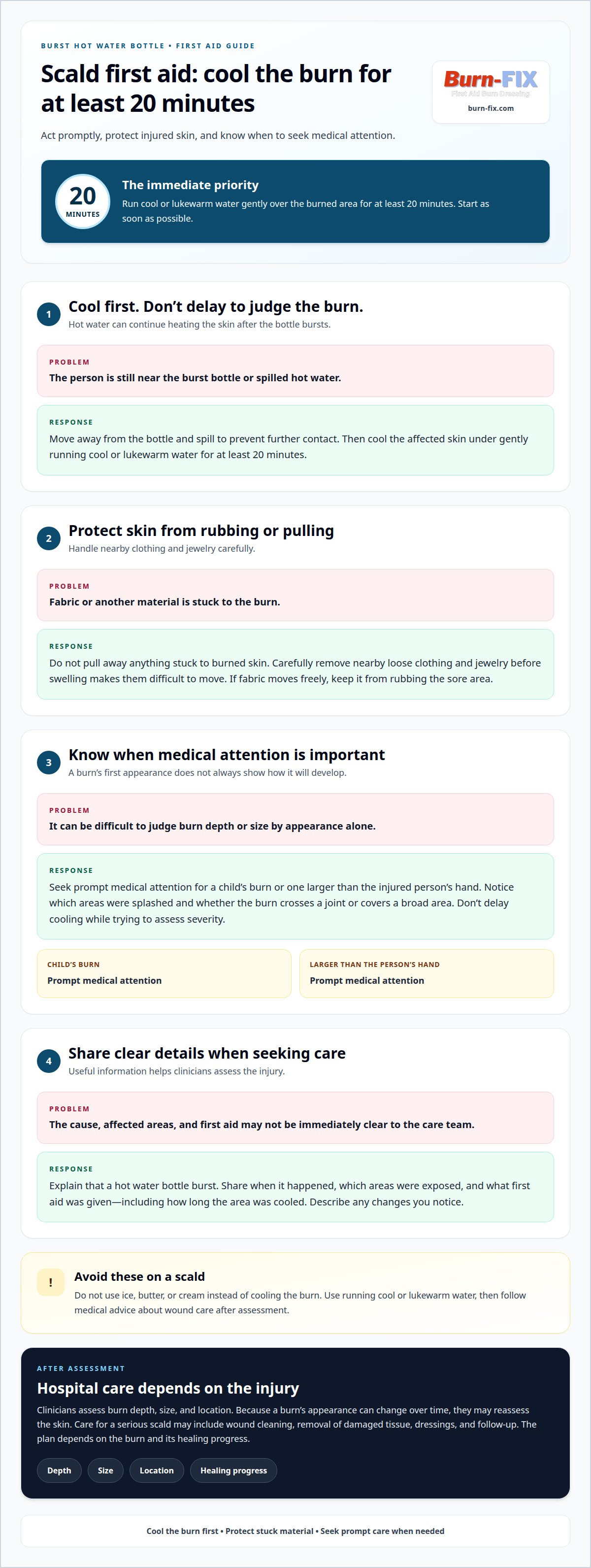
A scald from an exploded hot water bottle should be cooled under running cool or lukewarm water for at least 20 minutes. Seek prompt medical attention for a child’s burn or one larger than the injured person’s hand. These early steps help protect the injured skin while you decide what care is needed.
A burst hot water bottle can spill scalding water onto skin, causing a painful injury that may need more than first aid. It’s understandable to want to know what to do next. This article explains how hospitals assess and care for these scalds, what reported admission figures can tell you, and what to do immediately after a bottle bursts. You’ll also learn which signs make medical care important, so you can respond calmly and protect the injured skin.
Key Takeaways
- Cool a scald under running cool or lukewarm water for at least 20 minutes, and avoid pulling away anything stuck to the skin.
- Get prompt medical attention for a child’s burn or a burn larger than the injured person’s hand; hospital care can include wound cleaning and dressing changes.
- Hot water bottles can cause scalds if they burst, leak, or touch skin directly, so check for wear and avoid overfilling.
- The reported figure of up to 200 serious-burn admissions each year applies to Australia, not the United States.
Medical assessment and hospital treatment
At hospital, clinicians assess a scald’s depth, size, and location to determine the care needed. Explain when the hot water bottle burst, which areas were exposed, and what first aid was given. These details help the team understand the injury. Because a burn’s appearance can change over time, clinicians may reassess the skin rather than rely only on its first appearance.
Burn severity ranges from superficial damage to deep injury affecting more layers of skin. Karen O’Brien suffered third-degree burns when her bottle burst in March 2024, and hospital staff removed damaged skin. Bree Schulz sustained third-degree burns on her back and second-degree burns on her arms. These examples show why clinicians consider both burn depth and the affected area when planning care.
Care for a serious scald may include cleaning the wound, removing damaged tissue, applying dressings, and arranging follow-up. One reported patient attended hospital every two to three days for wound cleaning and dressing changes over the following two weeks. The treatment plan depends on the burn’s depth, size, location, and healing progress, so care varies from person to person.
Should I use ice, butter, or burn cream on a scald? No. Don’t use ice, butter, or cream instead of cooling the burn. Run cool or lukewarm water over it, then follow medical advice about wound care after assessment.
Should I remove clothing or jewelry near a hot-water-bottle burn? Carefully remove nearby jewelry and loose clothing before swelling makes them difficult to move. Don’t pull away anything stuck to burned skin. Seek prompt medical attention for a child’s burn or one larger than the injured person’s hand.
Scald injuries from a burst hot water bottle
A burst hot water bottle can release hot water onto skin, while a leak can hold heat against one area. Burns can also occur when a bottle touches bare skin directly. Karen O’Brien, aged 52, was scalded when her bottle burst in March 2024. She said it was probably about seven years old, showing why a bottle’s age and condition deserve attention.
Hot water bottles may rupture because of wear, damage, overfilling, or boiling water. RoSPA advises checking bottles regularly for wear and tear and not using one for more than two years, because rubber can deteriorate. The ACCC advises against boiling water and recommends checking for cracks or wear that could cause bursting or leaking. Stop using a damaged bottle rather than relying on a quick visual fix.
Manufacturing marks can help identify a bottle’s age. On most hot water bottles, a daisy wheel on the neck or body indicates the month and year of manufacture. The flower’s petals can represent months, while dots represent weeks. For example, three dots in the first petal indicate production toward the end of January that year.
Reported injuries range from surface scalds to deep burns. Bree Schulz was 21 when her bottle burst in early June 2019, causing third-degree burns on her back and second-degree burns on her arms. Her son was eight months old at the time. Schulz said she faced weeks, if not months, of rehabilitation, illustrating how injuries can affect daily life after the initial burn.
Long-term effects can include scarring and changes in skin color. Karen O’Brien said her burns left a large thigh scar and permanent skin discolouration. The bottle’s condition, the area exposed, and the burn’s depth all affect the injury. Check the manufacturing mark and inspect for wear before use; replace an old or damaged bottle rather than risk a leak or rupture.
What should I do immediately after a scald from an exploded hot water bottle?
Act promptly: hot water can continue heating skin after the bottle bursts. Move away from the bottle and start cooling the burned area under running cool or lukewarm water. Medical staff advised cooling a burn for at least 20 minutes. A report described one person cooling her burns under a shower for about 10 minutes, but the reported medical advice was longer.
- Cool the burn. Use running cool or lukewarm water for at least 20 minutes. Keep the water gentle and let it flow over the affected skin.
- Protect stuck material. Don’t try to remove clothing or other material stuck to the burn. Pulling it away can disturb injured skin.
- Notice the affected area. Check which parts of the body were splashed and whether the burn crosses a joint or covers a broad area. This helps explain the injury clearly when seeking care.
- Get medical help when needed. Seek prompt medical attention for a child’s burn or a burn larger than the injured person’s hand.
If hot water runs beneath clothing, cool the exposed burn without tugging at fabric that clings to the skin. If fabric moves freely, keep it from rubbing the sore area as you cool it. Move the person away from the burst bottle and spilled hot water to prevent further contact and injury.
After cooling, explain that the injury came from a burst hot water bottle. Note when it happened, where the hot water landed, and how long you cooled the area. If a child is burned, stay with them and seek prompt medical attention. For a burn larger than the person’s hand, arrange medical assessment rather than relying on its appearance alone.
Cooling is the immediate priority; medical assessment can follow. Don’t delay first aid while trying to judge the burn’s depth. A scald’s appearance can change, so describe any changes and explain that it was caused by a hot water bottle when seeking medical care.
How long should a hot-water-bottle scald be cooled under running water?
Cool the burn under running cool or lukewarm water for a minimum of 20 minutes. Medical staff gave this duration as advice for burn cooling. Start as soon as possible, and keep the water flowing gently over the affected skin. A report described a person cooling hot-water-bottle burns in a shower for about 10 minutes immediately after the bottle split. That account is shorter than the 20-minute advice, so don’t treat it as the full cooling period.
Use a clock or phone timer to track the 20 minutes. Pain or the skin’s appearance can’t tell you reliably how long cooling has lasted. If the scald covers more than one area, direct the running water over each affected part. Keep the person positioned safely, especially if the burn is on their back, arm, or another area that’s difficult to reach.
- Begin cooling: Place the burned area under cool or lukewarm running water.
- Track time: Continue for at least 20 minutes, using a timer if needed.
- Protect the skin: Don’t pull off clothing or other material stuck to the burn while cooling.
If water access is limited, prioritize getting the affected skin under running water as soon as you can. For example, a shower can help cool a burn across the back, while a tap may reach a smaller area. Avoid substituting a brief rinse for the stated 20-minute minimum. After cooling, seek prompt medical attention for a child’s burn or one larger than the injured person’s hand.
Keep basic burn-care supplies available for the next step after cooling. Explore burn first-aid supplies to prepare your home kit, while remembering that supplies don’t replace medical assessment when a burn needs care.
Burn-Fix: BurnFix Hydrogel Burn Spray - 120ml
Burn-Fix Hydrogel Burn Spray - 120ml is a burn-care option for minor first- and second-degree scalds after cooling. Its hydrogel is designed to provide a cooling, moisture-retaining layer that helps soothe burned skin. Use burn-care products as directed, and don’t let them delay medical attention for a child’s burn, a burn larger than the person’s hand, or a serious injury.
Burn-Fix also offers the Burn-Fix 4x4 First Aid Burn Gel Dressing, Burn-Fix Burn Kit, and Burn-Fix Burn Gel - 3.5g Per Packet. These options support home first-aid preparation for scalds and other minor burns. For severe or deep burns, seek medical care rather than relying on a home burn product.
Visit Burn-Fix to explore its burn-care options.
Make your next step a prepared one
A scald from an exploded hot water bottle can leave you shaken. It helps to decide in advance where your first-aid supplies are kept and how you’ll respond. Keep supplies easy to find, and make sure everyone at home knows the first step to take. A clear plan can reduce hesitation when someone needs help.
For an injury that needs medical attention, prioritize care from a qualified medical professional. For minor burn-care preparation, choose supplies suited to your household and keep their instructions accessible. The right next step depends on the burn and the person affected, so don’t let a home product replace medical assessment when it’s needed.
If you’d like to explore Burn-Fix’s burn-care options, contact Burn-Fix for support. A little preparation today can help you respond calmly and confidently if an accident happens.
Frequently Asked Questions
When should I call 911 for a hot-water-bottle burn?
Call 911 if the person is unresponsive, struggling to breathe, or otherwise experiencing an immediate life-threatening emergency. Stay with them and tell the dispatcher that hot water caused the burn. If the person is responsive and stable but needs burn assessment, seek prompt medical attention. A child’s burn or one larger than the injured person’s hand needs prompt medical attention, even if the person seems calm.
Which hot water bottle burns need urgent medical care?
Arrange prompt medical assessment for a burn on a child or one larger than the injured person’s hand. Also seek urgent help if the burn appears deep, affects a sensitive area, or covers a broad area. Explain that the injury came from a burst or leaking bottle, describe where the water landed, and mention any first aid already given.
How do I tell whether a scald is superficial, partial-thickness, or deep?
Burn depth describes how far skin damage extends: superficial burns affect the outer layer, partial-thickness burns extend further, and deep burns damage deeper tissue. Color, blistering, and pain can offer clues, but they can’t reliably establish depth at home. A scald may change in appearance after the spill, so have a healthcare professional assess a concerning wound.
How should I cover and care for a hot-water-bottle burn at home?
After cooling, protect the area from rubbing with a clean, loose covering. Don’t burst blisters or pull away stuck fabric. If using a Burn-Fix product, follow its label and don’t use it if you have a known allergy or sensitivity to any ingredient. Burn-Fix products have not been evaluated by the FDA and aren’t intended to diagnose, treat, cure, or prevent any disease.
What are signs of burn infection or complications to watch for?
Watch for worsening pain, spreading redness, increased warmth or swelling, discharge, or fever after a burn. These changes may signal a complication and call for prompt medical advice, especially if the wound is getting worse rather than settling. Note when the change began and whether it affects the burned area or the person’s overall condition, then share those details with a healthcare professional.
How can I prevent hot water bottles from bursting or leaking?
Before filling a hot water bottle, inspect it for cracks, leaks, or worn rubber, and stop using it if damaged. RoSPA advises regular checks for wear and replacing bottles after no more than two years; it also recommends buying from reputable retailers. The ACCC advises against boiling water. Follow the bottle’s instructions, avoid overfilling, and use a cover to prevent direct skin contact.
Product and information notice: This content is for general informational purposes only; it isn’t medical advice, diagnosis, or treatment. Burn-Fix products haven’t been evaluated by the FDA and aren’t intended to diagnose, treat, cure, or prevent disease. Use products only as directed on the label. Don’t exceed the recommended dose unless instructed by a healthcare provider. Burn-Fix isn’t liable for adverse effects or consequences from product use; purchasing and using products means accepting that risk.


