


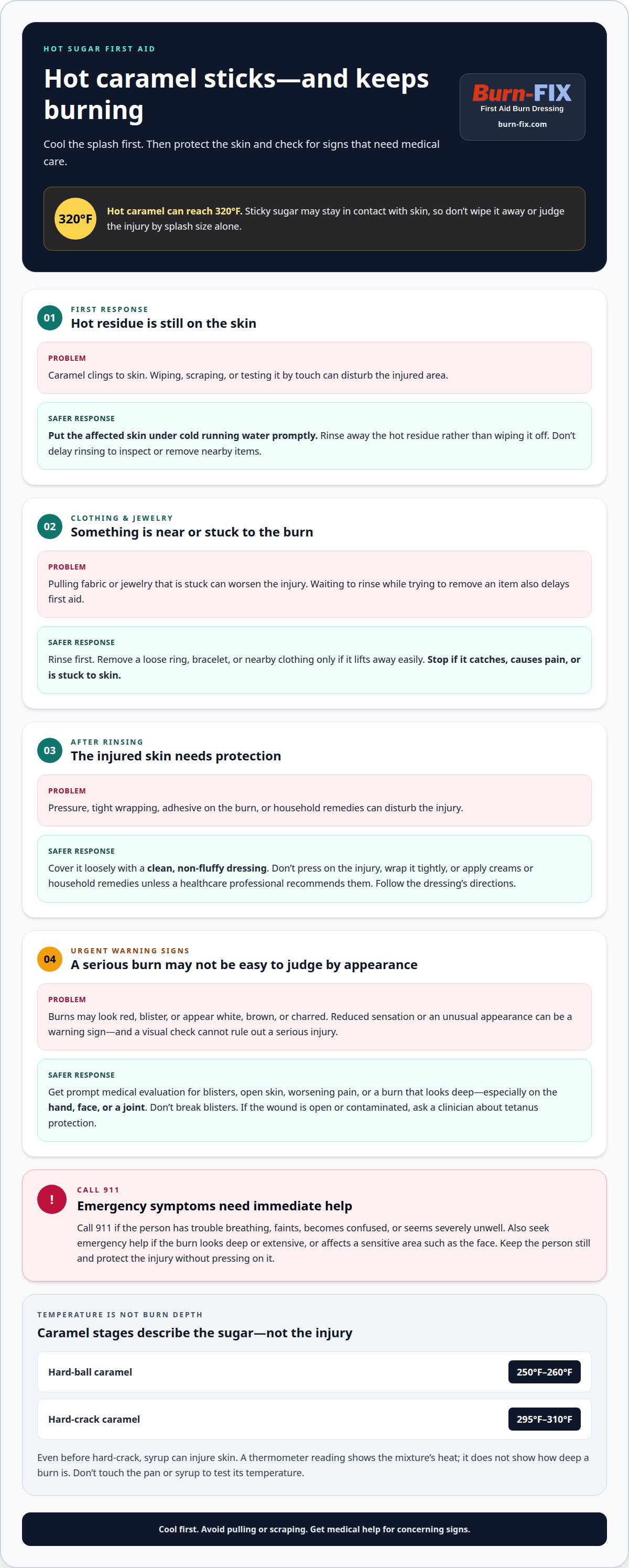
Hot caramel can cling to skin and keep burning. A boiling sugar caramel burn needs quick first aid: rinse the splash off with cold water rather than wiping it away. Caramel mixtures can reach 320°F, so act promptly and keep the affected skin under the water.
It’s understandable to panic when sticky, molten sugar splashes, but a calm, gentle response is the safest place to start. This guide explains why a boiling sugar caramel burn can be serious, what to do after a splash, and when to seek urgent medical attention. You’ll also find practical ways to reduce splatter and handle hot sugar more safely, from choosing a roomy saucepan to waiting until caramel has cooled completely before tasting it.
Key Takeaways
- Understand why molten sugar can cause a serious burn and how its heat changes as it cooks.
- Learn the first steps to take after a splash, and why gentle action matters.
- Find out what to consider before moving clothing or jewelry near an injured area.
- Discover practical ways to reduce splashes and where hydrogel burn care may fit after initial first aid.
Burn risks from hot caramel
Assess the heat and contact before deciding how serious a caramel burn may be. A cooking mixture can reach 320°F, and hot sugar can stick to skin.
- Check the caramel’s cooking stage and temperature, then keep hands and face clear of the pan. Hard-crack caramel reaches 295°F to 310°F, while hard-ball caramel reaches 250°F to 260°F. Even before hard-crack, the syrup is hot enough to injure skin. A thermometer reading shows the mixture’s heat, not how deep a burn is.
-
Recognize Hot Caramel Burn Risks
Notice where the caramel landed and whether it remains on the skin or clothing. A splash across a hand, a drip onto a wrist, and a spill over a larger area create different exposure patterns. Sticky sugar may stay in contact instead of sliding away like a thin liquid, so don’t judge the risk by the splash’s size alone.
Also consider the caramel’s temperature and contact time. A mixture near 320°F can cause a serious injury, and a small spot can still need attention. Don’t touch the hot pan or syrup to test its temperature.
-
Distinguish Sugar Burn Degrees
Look at the skin, but don’t rely on appearance alone to assess a burn. First-degree burns may look red and feel painful; second-degree burns may blister; third-degree burns may appear white, brown, or charred, with reduced sensation.
These signs can overlap, and caramel’s heat and sticky contact can make the injury difficult to assess. If a mark looks deep, has blisters, or shows unusual color or reduced feeling, treat it as more than a minor surface burn. A visual check cannot rule out a serious injury.
- Separate the cooking stage from the injury assessment. Caramel reaches different temperatures at different cooking stages. Those numbers describe sugar, not a burn’s depth. For example, a lower thermometer reading doesn’t prove that a splash caused only a mild injury. Use the skin’s appearance and sensation as warning signs, and avoid pressing, scraping, or testing the burned area.
First aid for caramel splashes on skin
Act quickly after a splash, then check the injury and the person’s condition. First aid for a boiling sugar caramel burn starts by rinsing away the hot residue.
-
Remove Nearby Clothing or Jewelry
Remove a loose ring, bracelet, or clothing near the burn only if it lifts away easily. Don’t tug fabric or jewelry stuck to skin, since pulling can worsen the injury. For example, slide off a loose ring before swelling makes it difficult, but stop if it catches or causes pain. Don’t delay rinsing to remove an item.
-
Cover the Burn with a Dressing
Once the area is rinsed, cover it loosely with a clean, non-fluffy dressing. A burn gel dressing can protect the skin from rubbing, but don’t press adhesive onto the injured area or wrap it tightly. Follow the dressing’s directions. First aid after a boiling sugar caramel burn should not involve creams or household remedies unless a healthcare professional recommends them.
-
Identify Signs Requiring Emergency Care
Call 911 if the person has trouble breathing, faints, becomes confused, or seems severely unwell. Seek emergency help if the burn looks deep or extensive, or affects a sensitive area such as the face. While help is coming, keep the person still and protect the injury without pressing on it. Don’t wait for symptoms to worsen before calling.
-
Seek Medical Evaluation
Arrange prompt medical evaluation for blisters, open skin, worsening pain, or a burn that looks deep, especially on the hand, face, or a joint. A clinician can assess its depth and care needs; urgent care may be suitable when emergency symptoms aren’t present. If the wound is open or contaminated, ask about tetanus protection. Whether a shot is needed depends on vaccination history and wound assessment.
Keep the area loosely covered while arranging care, and don’t break blisters. If breathing difficulty or confusion develops, call 911. This first aid after a boiling sugar caramel burn is not a substitute for urgent assessment when serious signs appear.
Safe handling of hot sugar
- Choose a saucepan with plenty of room before heating sugar. Caramel bubbles up as it cooks, and a small pan can let it overflow. For example, if syrup rises toward the rim, stop adding ingredients and keep the pan steady. Extra space above the mixture helps contain bubbling. Planning boiling sugar caramel burn first aid supplies before cooking also keeps essentials within reach if an accident happens.
- Warm any liquid gently before adding it to hot caramel. Cold liquid can cause splattering, so don’t pour it straight from the refrigerator. Wear long sleeves or oven mitts while adding liquid, since the mixture may splash. Add it carefully, then pause if the caramel bubbles up sharply. Keep your face and hands clear of the pan during this step.
- Stop stirring a wet caramel mixture once it comes to a boil. Agitation can cause crystallization, changing the mixture’s texture. Before boiling, follow the recipe’s stirring instructions; after it boils, leave the spoon out. Avoid scraping crystals from the pan’s sides back into the bubbling syrup. A steady, undisturbed boil also reduces the need to reach over the pan.
- Wait until caramel has completely cooled before tasting it. Hot sugar can cling to a spoon or food, so even a small taste can burn. Don’t judge readiness by a brief pause or by the surface looking set. Let the caramel cool fully before sampling a piece. Keep children away from the spoon and pan until both are cool.
- Prepare each ingredient before turning on the heat, especially when the recipe calls for liquid. Set out the gently warmed liquid, long sleeves or oven mitts, and a roomy saucepan first. This avoids reaching across bubbling caramel or searching for supplies mid-step. Keep boiling sugar caramel burn first aid items accessible, and follow the recipe carefully so you can focus on handling the hot mixture.
Should you remove clothing or jewelry near a hot sugar burn?
- Begin cooling the affected skin with cold running water, then assess what is touching it. Don’t delay rinsing to inspect a sleeve, ring, or bracelet. Hot caramel can cling, so pulling fabric across the area may disturb injured skin. Keep movements controlled, and ask someone nearby to help if reaching the affected spot is difficult.
- Remove jewelry that comes away easily, such as a loose ring or bracelet beside the burn. Jewelry can become harder to move if surrounding skin swells, so act gently rather than forcing it. Stop if an item catches, causes pain, or presses on damaged skin. Don’t use tools or tug against resistance.
- Check clothing for caramel, heat, and contact with the injured area. Lift away loose fabric only when it separates without pulling the skin. If a sleeve or other material sticks, leave it in place instead of peeling it or cutting close to the burn. A stuck item needs careful assessment, not forceful removal at home.
- After loose items are removed, keep the affected area uncovered while continuing to cool it. Avoid tight cuffs, watches, or elastic bands that press against the burn. For example, move a tight sleeve away from an uninjured part of the arm without dragging it over injured skin. Don’t apply adhesive directly to the burn.
- Once cooling is complete, loosely protect the area with a clean dressing if needed. Keep clothing and jewelry from rubbing against it while arranging care for a concerning burn. A suitable burn dressing can be kept with other first-aid supplies; choose a burn gel dressing for your home kit.
Burn-Fix: BurnFix Hydrogel Burn Spray - 120ml
Burn-Fix Hydrogel Burn Spray - 120ml offers a hydrogel option for boiling sugar caramel burn first aid after you've cooled the affected skin. Burn-Fix hydrogel products are designed to provide cooling, retain moisture, and support care for first- and second-degree burns, sunburns, and scalds. Use the spray according to its product instructions, and don't let it delay medical care for a severe or concerning injury.
For a burn that needs covering, Burn-Fix 4x4 First Aid Burn Gel Dressing offers a dressing option. A Burn-Fix Burn Kit can help keep burn-care supplies together at home. Choose the item that fits your first-aid needs, and keep urgent symptoms or deep burns in the hands of emergency professionals.
Visit Burn-Fix to explore its burn-care products.
Make your next kitchen session safer
Turn what you’ve learned into a simple habit before the next batch of caramel. Clear your workspace, set out the tools you’ll need, and keep children and pets away from the cooking area. A prepared kitchen makes it easier to focus on the pan instead of searching for supplies while sugar bubbles.
Keep burn-care items where household members can find them, and make sure everyone knows where they are. If a splash happens, clear steps for first aid for a boiling sugar caramel burn can help you respond calmly while deciding whether the injury needs medical attention.
For questions about Burn-Fix products, contact Burn-Fix for help.
A little preparation can make a stressful kitchen moment easier to manage. Cook carefully, and take care of yourself and those around you.
Frequently Asked Questions
What should you do immediately after a boiling sugar caramel burn?
Move away from the hot pan and rinse the affected skin under cold running water. Let the water carry away loose caramel rather than wiping or scraping it. If someone else is nearby, ask them to move the pan safely and bring clean supplies while you focus on the injured area. Get emergency help if the person has severe symptoms or the burn appears serious.
How long should you cool a caramel burn under cool running water?
Keep rinsing continuously while the caramel washes away and the skin cools. Don’t pause to wipe the area, test it with your fingers, or apply a dressing before removing residue. There isn’t one duration that fits every splash; the amount of caramel, its contact with the skin, and the injury’s appearance all matter. Seek medical care if the burn is concerning.
Why are hot sugar and caramel burns especially severe?
Molten caramel is sticky, so it may cling to skin instead of quickly running off. That can prolong contact with the hot mixture and make removal difficult. A splash on a fingertip, for example, may remain in place until rinsed away. The affected area and skin changes matter more than the splash’s appearance alone when deciding whether medical assessment is needed.
What should you avoid putting on a caramel burn, such as ice, butter, or toothpaste?
Don’t put ice, butter, toothpaste, or other household substances on the burn. Use running water to rinse away caramel, then keep the area clean and protected. Avoid rubbing, scraping, or applying products that aren’t intended for burn care. If the skin is blistered, open, or looks deeply injured, don’t rely on home care alone; seek medical assessment.
How do you treat hot caramel stuck to skin without pulling it off?
Let cool running water rinse the area and loosen caramel, rather than trying to peel it away. Don’t scrape with a utensil, fingernail, or cloth, and don’t pull at material stuck to the skin. If residue remains attached after rinsing, protect the area from further contact and get medical help. Don’t delay care to remove every trace yourself.
What pain relief and aftercare are safe for a minor caramel burn?
For minor pain, use an over-the-counter pain reliever only if safe for you, and follow its label. Burn-Fix products have not been evaluated by the FDA. This is general information, not medical advice, diagnosis, or treatment; products aren’t intended to diagnose, treat, cure, or prevent disease. Use only as labeled; don’t exceed the recommended dose unless instructed by a healthcare provider. Don’t use with known ingredient allergies or sensitivities. Burn-Fix isn’t liable for adverse effects; use products at your own risk.


