


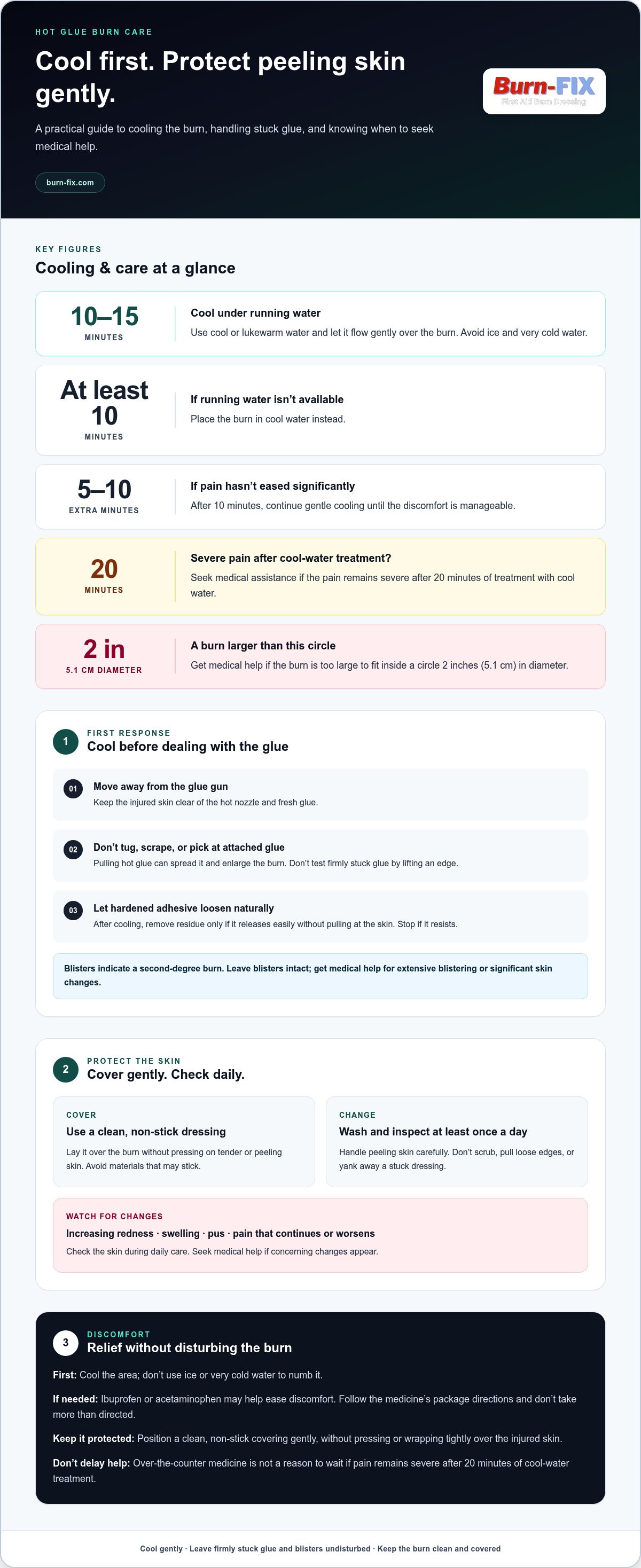
Pain relief starts with cooling, not peeling. Hot glue burn treatment for peeling skin begins by holding the area under cool, running water for 10-15 minutes; avoid ice and very cold water. Once the glue has hardened, cover the burn with a clean, non-stick dressing, and don’t pull firmly stuck glue away.
A hot glue gun burn can sting sharply, and tender or peeling skin can make even a light touch feel alarming. Cool the area first. Then use gentle care and a protective dressing to help keep it comfortable while it heals.
This guide explains how to cool the burn, what to do if glue remains stuck, and how to protect peeling skin without disturbing it. It also covers dressing changes, over-the-counter pain relief, and signs that mean the burn needs medical attention.
Key Takeaways
- Check the burn gently each day, and watch for increasing redness, swelling, pus, or pain.
- Leave blisters intact and handle peeling skin gently to help protect the area as it heals.
- Follow the package directions if using over-the-counter ibuprofen or acetaminophen for discomfort.
- Know when home care may not be enough, including severe ongoing pain, extensive blistering, or a burn larger than a 2-inch circle.
Cooling a hot glue burn
Don’t pull hot glue off immediately. Tugging can spread it and enlarge the burn. Cool the area first, then remove residue only if it releases easily. These steps offer a practical approach to hot glue peeling skin burn treatment when adhesive remains attached.
- Move away from the glue gun. Keep injured skin clear of the hot nozzle and fresh glue. If adhesive remains attached, don’t tug, scrape, or pick at it while the skin is hot.
- Cool the burn under lukewarm running water. Hold the affected area under the flow for 10-15 minutes. If running water isn’t available, place the burn in cool water for at least 10 minutes.
- Avoid ice and very cold water. These can further damage burned skin, even when the area feels intensely hot. Use cool or lukewarm water instead, and let it flow gently over the burn.
- Reassess pain after 10 minutes. If it hasn’t lessened significantly, continue cooling for another 5-10 minutes, until discomfort is manageable. Keep the water flowing gently during this extra cooling.
- Let hardened adhesive loosen naturally. After cooling, remove residue only when it releases easily without pulling at the skin. Stop if it resists; hot glue peeling skin burn treatment should never involve forcibly removing stuck adhesive.
- Watch for blisters and skin changes. Blisters indicate a second-degree burn. Get medical help for extensive blistering or significant skin changes instead of relying on home care alone.
- Seek medical assistance for warning signs. Get help if pain remains severe after 20 minutes of cool-water treatment, or if the burn is too large to fit inside a circle 2 in (5.1 cm) in diameter.
Covering and changing a burn dressing
After the adhesive has hardened and the burn has cooled, protect the skin with a clean covering. Keep the area covered with gentle daily care, and watch for changes.
-
Cover the Burn
Once the adhesive hardens, cover the burn with a clean, non-stick bandage or cloth. Lay it over the injured area without pressing on tender or peeling skin. Keep the dressing clean and avoid materials that may stick to the burn. If there’s a blister, leave it intact; opening it can increase infection risk.
-
Change the Burn Dressing
Gently wash and inspect the burn at least once a day, then cover it again with a clean, non-stick dressing or cloth. Handle peeling skin carefully: don’t scrub it or pull at loose edges. If the dressing sticks, don’t yank it away, as this can disturb the injured surface. Place a clean replacement covering over the burn.
-
Check the skin during daily care.
Watch for redness, swelling, pus, or pain that continues over the next few days. Note whether these signs change as you wash and inspect the area daily. A clean dressing helps shield the burn between checks, but you still need to monitor the skin. If concerning changes appear, seek medical help rather than relying on home care alone.
-
Choose a suitable clean dressing.
A non-stick covering helps protect the burn without adhering directly to its surface. For a ready-made option, consider the Burn-Fix 4x4 First Aid Burn Gel Dressing as part of dressing care. Whatever covering you use, keep it clean and avoid opening blisters or pulling at peeling skin when you replace it.
Pain relief
Cooling helps remove heat, while pain relief may ease lingering discomfort. Follow medicine directions, keep the burn protected, and pay attention to whether the pain eases or remains severe.
- Finish cooling before judging the pain. Cool running water is the first response to a hot glue burn. Once you’ve cooled the area, notice whether discomfort has eased. Don’t use ice or very cold water to numb it, because these can further damage skin.
- Consider an over-the-counter pain reliever. Ibuprofen or acetaminophen may help ease burn discomfort. Use the medicine’s package directions for the dose and timing, and don’t take more than directed. If you’re unsure how the instructions apply to you, ask a healthcare professional or pharmacist before taking it.
- Keep the dressing comfortable. A clean, non-stick covering can protect the burn from contact that may aggravate tenderness. Position it gently, without pressing or wrapping tightly over the injured skin. If movement or fabric makes the area hurt, adjust the covering so it shields the burn without rubbing.
- Track pain as you care for the burn. Notice whether discomfort improves after cooling and remains manageable during routine movement. Follow the medicine label rather than taking extra doses when pain returns. Persistent or worsening pain matters, especially alongside changes in the burn’s appearance.
- Respond to severe, ongoing pain. Seek medical assistance if burn pain remains severe after 20 minutes of treatment with cool water. Over-the-counter medicine is for easing discomfort, not a reason to delay help when pain stays severe. Keep the burn protected while arranging medical assistance.
- Reassess rather than masking changes. Check the burn during daily care and pay attention to pain that persists over the next few days. Redness, swelling, or pus can signal infection, and persistent pain is also a warning sign. Arrange medical help for these changes instead of relying only on pain medicine.
Should you peel dried hot glue off burned skin?
- Don’t peel the glue off immediately. Pulling hot glue from burned skin can spread the adhesive and enlarge the burn. Even if the glue looks dry, don’t lift an edge just to test it. First cool the area, then see whether any residue releases easily.
- Check how the adhesive is attached. A loose fragment that separates without pulling is different from glue firmly stuck to the skin. Don’t test firmly attached glue by tugging, scraping, or picking at it. These actions can disturb the burned surface and extend the injury.
- Remove residue only if it comes away easily. After cooling the area, let the adhesive release without force. Stop if you feel resistance or the skin moves with the glue. For example, if a small edge lifts freely but the rest remains attached, leave it in place rather than pulling.
- Leave peeling skin attached. Dried glue and injured skin can be close together, so pulling at one may disturb the other. Don’t use your fingernails or tools to separate them. If the skin is peeling, don’t treat it like loose adhesive. Leave it undisturbed and protect the area with a clean, non-stick covering.
- Don’t open a blister to reach trapped glue. A blister from a hot glue burn is a second-degree burn, and opening it increases infection risk. Don’t pierce, squeeze, or peel the blister to remove adhesive. Protect the area instead of forcing the glue away.
- Seek medical help when the burn needs more than home care. Get assistance if the burn is extensive, has blisters or significant skin changes, or pain remains severe after 20 minutes of cool-water treatment. A burn too large to fit inside a circle 2 in (5.1 cm) in diameter also needs medical assistance. Don’t delay care to remove firmly stuck glue.
Burn-Fix: BurnFix Hydrogel Burn Spray - 120ml
BurnFix Hydrogel Burn Spray - 120ml offers a cooling hydrogel option for first- and second-degree burns, including minor hot glue burns. Burn-Fix products are designed to provide fast pain relief while helping retain moisture, so the spray can support burn care after cooling the injury with water.
Use burn-care products as part of appropriate first aid, not as a substitute for medical help when a burn is extensive, blistered, shows significant skin changes, or causes severe ongoing pain. For covering the area afterward, Burn-FIX 4x4 First Aid Burn Gel Dressing offers a dressing option.
Explore Burn-Fix burn-care products to choose supplies for your first-aid kit.
Build confidence for the next step
Use recovery as a prompt to refresh your home first-aid supplies. Keep burn-care items together and easy to find, so you’re not searching during a stressful moment. A BurnFix Burn Kit can be part of your home setup. Store it somewhere practical and let everyone in your household know where it is.
For hot glue peeling skin burn treatment, keep supplies ready while following care steps appropriate to the injury. A kit helps you prepare, but it doesn’t replace medical attention when a burn needs professional care. Having supplies on hand can make it easier to respond calmly and protect the injured area.
If you’d like to explore Burn-Fix burn-care products, contact Burn-Fix for help. A little preparation now can make your next response feel more manageable.
Frequently Asked Questions
What should you do immediately after hot glue burns your skin?
Move away from the glue gun and cool the injured area under lukewarm running water. Don’t pull off attached glue, as tugging can spread the adhesive and enlarge the burn. Once the area is cool, see whether any residue releases easily; leave firmly stuck glue in place. If an edge resists a gentle lift, stop and protect the area instead.
How long should you cool a hot glue burn under running water?
Cool it under lukewarm running water for 10-15 minutes. If pain hasn’t lessened significantly after 10 minutes, continue cooling for another 5-10 minutes, until discomfort is manageable. Cool water is appropriate; ice and very cold water can further damage skin. If running water isn’t available, cool water is an alternative for at least 10 minutes.
When should you cover a hot glue burn with a dressing?
After the adhesive has hardened and the area has cooled, cover the burn with a clean, non-stick bandage or cloth. Lay it gently over the injured skin. If there’s a blister, cover it without pressing on or opening it. Replace the covering with a clean one during daily care, and don’t pull off material that sticks to the burn.
What pain relief is safe for a minor hot glue burn?
Over-the-counter ibuprofen or acetaminophen may help ease discomfort; follow the package directions for the medicine you choose. Don’t take more than directed. Cooling the burn and protecting it from rubbing can also make care more manageable. If pain remains severe after 20 minutes of treatment with cool water, seek medical assistance rather than relying on pain medicine alone.
What are the signs of a serious hot glue burn that needs urgent medical care?
Seek medical help if the burn is extensive, blisters, or causes significant skin changes. Get assistance if pain remains severe after 20 minutes of cool-water treatment, or if the burn is too large to fit inside a circle 2 in (5.1 cm) in diameter. During the next few days, watch for redness, swelling, pus, or persistent pain, which can indicate infection.
When should you seek care for a hot glue burn on the face, hand, or joint?
Seek medical help if a burn on the face, hand, or joint is extensive, blisters, or causes significant skin changes. Severe pain that continues after 20 minutes of cool-water treatment also warrants assistance. For example, don’t delay care for a blistered hand burn while trying to remove stuck glue. Keep the affected area protected while arranging medical attention.


