


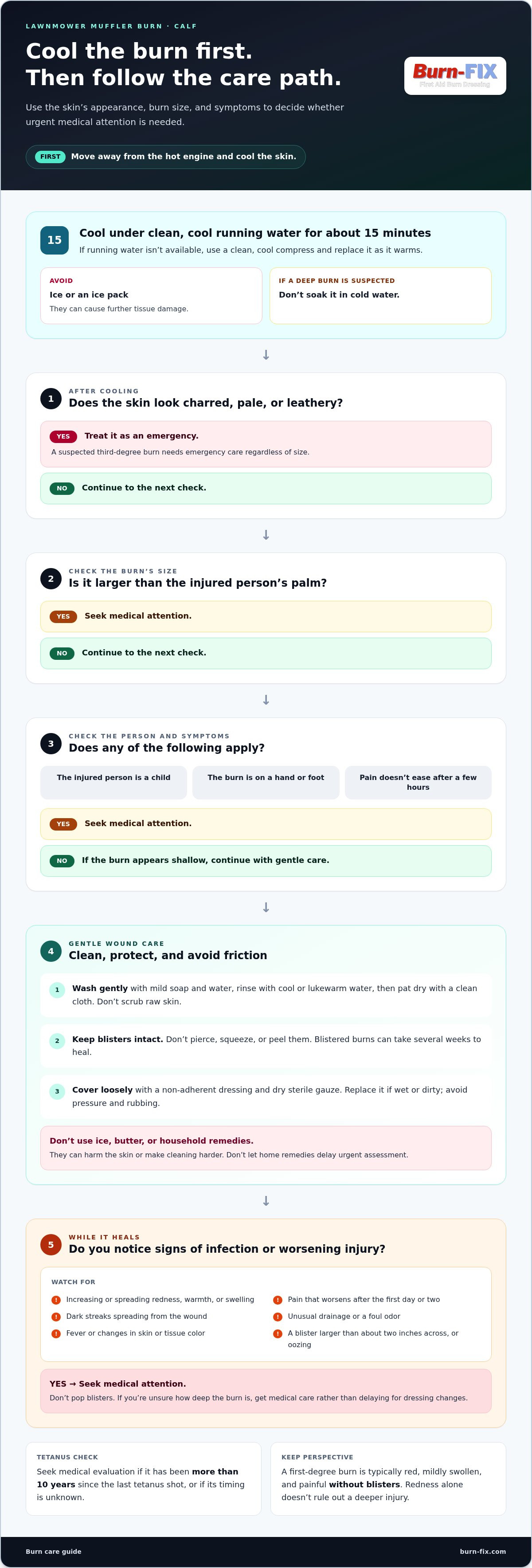
A lawnmower engine muffler burn on your calf needs prompt cooling, not ice. Move away from the hot engine and hold the burn under clean, cool running water for about 15 minutes; if the skin looks charred, pale, or leathery, treat it as an emergency.
The pain and sudden redness from a lawnmower engine muffler burn on your calf can be alarming, and it’s natural to want to cover the area right away. First, cool the skin; then check the injury to decide whether home care is appropriate or urgent medical attention is needed.
This guide explains how to cool and assess the burn, clean and cover it gently, and keep blisters intact. You’ll also learn which changes may signal infection and how to reduce the risk of another exhaust burn. A calm, practical approach can help protect the injured skin as you choose your next step.
Key Takeaways
- Cool the burn under clean, cool running water for about 15 minutes, and avoid ice.
- Keep blisters intact and cover the wound loosely with a non-adherent dressing.
- Watch for worsening pain, spreading redness, warmth, unusual drainage, or fever, which can signal infection.
- Reduce future exhaust-burn risk with protective clothing and by keeping your calf clear of hot mower parts.
Cooling and assessing a burn
Cool the skin first, then check its appearance and feel. A lawnmower engine muffler burn on your calf may look small while affecting deeper skin, so don’t assess it by redness alone.
-
Cool the Burn
Move away from the lawnmower and hold the burned calf under clean, cool running water for about 15 minutes. This helps cool the injured skin after contact with a hot muffler. If running water isn’t available, use a clean, cool compress and replace it as it warms. Don’t apply ice or an ice pack, which can cause further tissue damage. Don’t soak a suspected deep burn in cold water.
-
Check for Urgent Care Needs
Once the area is cool, look for blisters, deep redness, swelling, or skin that appears pale, charred, or leathery. A second-degree burn can affect both the outer and deeper skin layers. Seek medical attention if it’s larger than the injured person’s palm. Treat a suspected third-degree burn as an emergency, regardless of size. A child’s burn, a burn on a hand or foot, or pain that doesn’t ease after a few hours also needs medical attention.
-
Avoid Harmful Home Remedies
Don’t put ice, butter, or household remedies on a lawnmower engine muffler burn on your calf. Ice may cause further tissue damage, while butter and other substances can coat the skin and make cleaning harder. Petroleum-based ointment may be used on a first-degree burn, but don’t use it in place of medical care for a severe or deep injury. Cool the skin first, and avoid remedies that delay urgent assessment.
How can you help prevent exhaust burns?
- Recognize a first-degree burn before deciding how to care for it. It affects only the outer skin layer and typically looks red, mildly swollen, and painful, without blisters. Keep the area clean. A first-degree exhaust burn usually heals within about one week if kept clean. Shallow, sunburn-type muffler burns may take one or two weeks to settle, so watch for worsening symptoms rather than assuming every red mark is minor.
- Cover your lower legs before mowing or working near hot equipment. Long pants and sturdy footwear create a barrier between skin and the muffler; long socks or boots can protect exposed areas around the calf and ankle. For motorcycle rides, long pants, boots, jackets, and gloves made from heat-resistant materials can reduce contact risk. Clothing can lower exposure, but it doesn’t make touching an exhaust pipe safe.
- Keep a clear distance from exhaust pipes and hot engine parts. A motorcycle exhaust can reach around 500 degrees, and pipes may heat while a vehicle is being driven or parked in the sun. Don’t lean against a motorcycle, car, or lawnmower muffler, even briefly. Keep young children away from motorcycles and cars, since a child may reach for a hot pipe. Position any heat-resistant shield safely away from the exhaust.
- Check the skin if contact happens despite precautions. First-degree burns cause redness, mild swelling, and pain, while blisters can indicate a deeper injury. Cool the area under running water until the burning eases, then reassess its appearance. If a minor burn needs a protective covering, a burn gel dressing may be a useful first-aid option.
Monitoring for infection
Check the burned skin as it heals, and respond to changes rather than waiting for discomfort to pass. Infection signs can appear in the wound or elsewhere in the body.
-
Watch for Infection Signs
Inspect the burn during daily dressing changes for increasing redness, warmth, swelling, or pain. Pain that worsens after the first day or two can be an early warning. Also watch for dark streaks spreading from the wound, unusual drainage, a foul odor, fever, or changes in skin or tissue color. Seek medical attention if infection signs appear or the burn affects a significant area.
Pay attention to blisters, too. A blistered area larger than about two inches across, or a burn that is oozing, needs medical evaluation. Don’t pop blisters to inspect underneath, because damaged skin may be more vulnerable to infection. If you’re monitoring a small burn at home, take a photo every week or two to compare its appearance and healing progress.
-
Consider Tetanus and Infection Prevention
Check when the injured person last received a tetanus shot. Seek medical evaluation if it has been more than 10 years since that shot, or if you can’t establish the timing. A calf burn doesn’t automatically mean a booster is needed, but the time since the last shot is a reason to ask for evaluation.
Keep the wound clean during routine care. Gently wash it with mild soap and water, rinse with cool or lukewarm water, and pat dry with a clean cloth. Cover it with a non-adherent dressing and dry sterile gauze, secured loosely. Replace the dressing if it gets wet or dirty, and avoid touching the burn with unwashed hands. These steps support clean wound care but don’t replace medical attention if infection signs appear.
- Note changes each day, such as spreading redness, new drainage, or worsening pain. A simple written record can help you distinguish steady healing from a worsening burn and give a clinician clear details if an evaluation is needed.
Burn wound dressing
After cooling, protect the skin with a clean covering that won’t stick to the wound. For an exhaust burn, keep blisters intact and avoid pressure or friction.
- Gently clean the area before covering it. Use mild soap and water, rinse with cool or lukewarm water, then pat dry with a clean cloth. Don’t scrub raw skin or rub a blister. If the burn is severe or you’re unsure how deep it is, seek medical care rather than delaying to change the dressing.
- Leave blisters intact. They cover injured skin, and breaking them exposes the tender surface underneath. Don’t pierce, squeeze, or peel blistered skin, even if it catches on clothing. A blistered exhaust burn can take several weeks to heal, so protect it from rubbing as it recovers.
- Cover the burn with a non-adherent dressing, then add dry sterile gauze. Secure both layers loosely so they stay in place without pressing on your calf. A tight wrap can rub or compress swollen skin. Check that the dressing doesn’t pull when you bend your ankle or walk.
- Handle stuck clothing carefully. If fabric is stuck to a third-degree burn, don’t try to remove it; get urgent medical care. For a shallow burn, choose clothing that won’t scrape the dressing during ordinary movement. If you’re riding or working near equipment, keep the covered area protected from contact and friction. For a minor burn, choose a burn gel dressing as part of your wound-care supplies.
Burn-Fix: BurnFix Hydrogel Burn Spray - 120ml
Burn-Fix Hydrogel Burn Spray - 120ml is a practical option for first-aid care of minor burns after cooling. Burn-Fix hydrogel products are designed to provide cooling, retain moisture, and support care for first- and second-degree burns, including sunburns and scalds. Follow the product instructions, and keep the burn covered with an appropriate dressing when needed.
A spray can be a useful addition to a home first-aid kit when a small burn needs prompt care. It doesn’t replace medical evaluation for a deep, extensive, or worsening injury. For wound coverage, Burn-Fix 4x4 First Aid Burn Gel Dressing is another option in the range.
Choose burn-care supplies that fit your household’s first-aid needs, and keep them accessible. Visit Burn-Fix to explore its burn-care products.
Make your next step a safer one
If a lawnmower engine muffler burn on your calf leaves you unsure what to do next, use changes in the wound’s appearance and feel to guide your decisions. Seek medical attention for a severe injury or signs of infection rather than relying on a first-aid product alone. Once care is underway, make burn supplies easy to find before another yard-work mishap.
Keep a BurnFix Burn Kit with your household first-aid supplies for minor burn-care needs. Before mowing again, make checking hot mower parts and covering your lower legs part of your routine. A little preparation can make it easier to respond calmly if an accident happens.
For information about Burn-Fix products, contact Burn-Fix for support. Take the next step at a pace that keeps safety first, and give your skin the attention it needs to heal.
Frequently Asked Questions
What is an exhaust burn?
An exhaust burn is a skin injury caused by contact with a hot engine component, such as a lawnmower muffler or vehicle exhaust pipe. Heat transfers directly to the skin, so the injury may be deeper than it first appears. Depth matters more than the label: redness, blisters, and widespread skin damage can indicate different levels of injury and care needs.
Will a Muffler Burn Leave a Scar?
A muffler burn can leave a scar, particularly if it affects deeper skin layers. Healing time and the skin’s appearance afterward depend partly on burn depth and wound healing. Scar-care options include silicone gel or sheet dressings, massage techniques, and laser treatment. These approaches may help mitigate scarring, but they aren’t substitutes for appropriate care of a serious burn.
What should I do immediately for a lawn mower muffler burn on my calf?
Move away from the hot mower and cool your calf under clean, cool running water. Remove nearby clothing or jewelry if it comes away easily, but don’t pull off fabric stuck to the skin. After cooling, look for blisters, deep redness, or pale, charred-looking skin. Get urgent medical attention for a suspected full-thickness injury or a burn larger than the injured person’s palm.
How do you cool a thermal burn with running water, and for how long?
Hold the burned area under clean, cool running water for about 15 minutes. Let the water flow gently over the skin rather than scrubbing or rubbing it. If the calf is hard to position under a tap, use a clean, cool compress and replace it as it warms. Avoid ice, which can further damage burned tissue.
Should blisters from a muffler burn be popped or covered?
Don’t pop or peel burn blisters. Leave the skin intact, then protect the area with a non-adherent dressing and dry sterile gauze, secured loosely. On your calf, check that the dressing doesn’t pull when you walk or bend your ankle. If a blistered area is larger than about two inches across or starts oozing, seek medical evaluation.
How can I tell if a calf burn is superficial, partial-thickness, or full-thickness?
A superficial, first-degree burn affects the outer skin layer and usually looks red, mildly swollen, and painful. A partial-thickness, second-degree burn reaches deeper skin and may cause deep redness, swelling, pain, and blisters. A full-thickness, third-degree burn extends through every skin layer and may reach the tissue below. Appearance alone can’t reliably establish burn depth, so seek urgent care for a suspected full-thickness burn.
This information is for general informational purposes only and does not constitute medical advice, diagnosis, or treatment. Burn-Fix products are not intended to diagnose, treat, cure, or prevent any disease. Burn-Fix products have not been evaluated by the FDA.


