


Nearly 20,000 people are treated in emergency rooms for grill-related injuries every year, and many of these incidents involve painful contact burns that happen in a split second. You are standing over the grates, the heat is intense, and suddenly, a slip of the tongs or a flare-up turns a perfect afternoon into a painful emergency. That throbbing, radiating heat feels like it is digging deeper into your skin by the second. You might be tempted to reach for the butter or a handful of ice, but those common kitchen fixes can actually trap heat and make the damage worse.
Understanding the right first aid for grill burns is the difference between a minor sting and a permanent scar. This guide will show you how to use professional hydrogel technology to stop the pain instantly and shield your skin from blisters. We will explore why traditional methods often fail and how a specialized cooling dressing provides the rapid relief your body needs to heal without the trauma of a stuck bandage. By the time you finish reading, you will know exactly how to neutralize the heat and protect your skin like a seasoned first responder.
Key Takeaways
- Learn the essential steps for first aid for grill burns to immediately neutralize deep-tissue heat and prevent painful blistering.
- Discover how hydrogel technology acts as a heat extractor, drawing temperature away from the injury while mimicking the skin's natural moisture barrier.
- Understand why common home remedies like ice and butter can worsen a burn, and why room-temperature water is the only safe starting point for cooling.
- Identify when to use sheet dressings for flat contact burns versus amorphous sprays for uneven surfaces like knuckles or fingers.
- Master the step-by-step process for applying non-adherent dressings to ensure protection against infection and a painless removal during recovery.
What is a Hydrogel Dressing and Why is it Vital for Grill Burns?
Grill burns aren't your typical kitchen mishap. When you touch a grate that has been preheating for an hour, the thermal energy transferred to your skin is incredibly high. To manage this effectively, you need more than a dry bandage. What is a hydrogel dressing? It is a water-rich, sterile pad designed to donate moisture to a burn site. Unlike traditional dressings that simply cover a wound, hydrogel interacts with the injury to change the healing environment immediately.
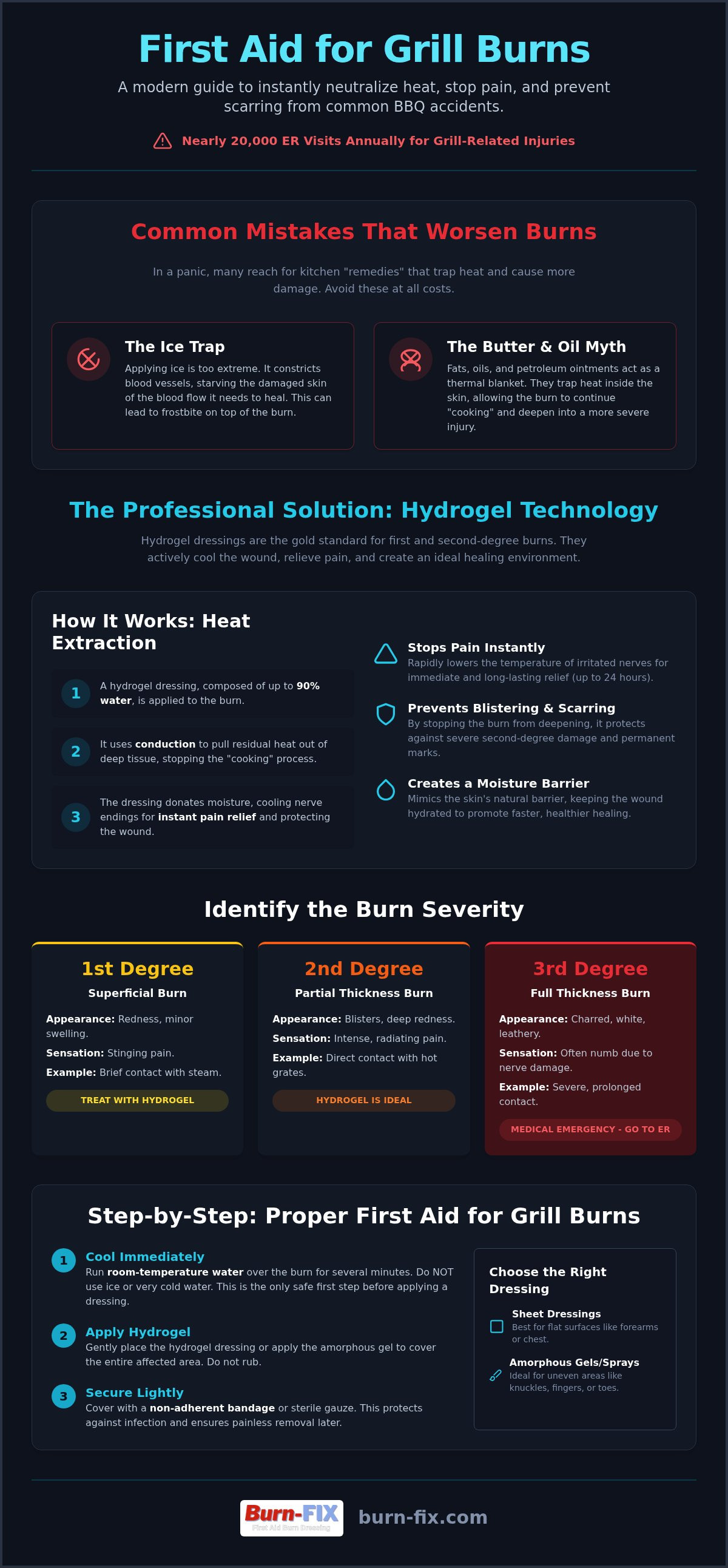
The secret lies in a process called "heat extraction." Because hydrogel is composed of up to 90% water, it uses conduction to pull residual heat out of deep tissue. This is a critical component of first aid for grill burns because the skin can continue to "cook" even after you have moved away from the heat source. By donating moisture, the dressing prevents the progression of a second-degree burn, stopping it from deepening into a more severe injury that could lead to permanent scarring.
How Hydrogel Stops the Throbbing Pain
The moment a grill burn occurs, your nerve endings send a constant, high-velocity stream of pain signals to your brain. Hydrogel provides immediate neurological relief by rapidly lowering the temperature of those irritated nerves. Hydrogel is an active moisture-barrier that neutralizes thermal energy. While running room-temperature water is an excellent first step, its cooling effect disappears the moment you turn off the faucet. A professional-grade hydrogel dressing can maintain this soothing, cooling sensation for up to 24 hours, providing a consistent environment for the skin to begin its recovery process without the agony of constant throbbing.
Identifying Grill Burn Severity
Before applying first aid for grill burns, you must identify the depth of the injury to ensure you are using the right treatment protocol. Grill accidents typically fall into three categories:
- First-degree burns: These present as redness and stinging. They are typical of flash heat from opening a grill lid or a brief encounter with steam.
- Second-degree burns: These involve blisters and intense, radiating pain. They often happen during direct contact with hot grates or from grease splatters.
- Third-degree burns: If the skin appears charred, leathery, white, or if the area feels numb despite the visible damage, this is a medical emergency.
While hydrogel is a gold standard for first and second-degree injuries, third-degree burns require an immediate ER visit. Never attempt to treat charred or deep-tissue burns at home, as these require specialized surgical intervention and infection control.
Hydrogel vs. Traditional First Aid: Why Ice and Butter Fail
When a grill flare-up strikes, the panic to find relief often leads to common kitchen myths that do more harm than good. Your first instinct might be to reach for the freezer or the refrigerator, but these household items are not designed for medical recovery. Proper first aid for grill burns requires a solution that cools without causing secondary trauma to the delicate, heat-damaged tissue.
The "Ice Trap" is a frequent mistake. Ice is far too cold for a burn. While it might feel good for a few seconds, the extreme temperature causes vasoconstriction, which is the narrowing of blood vessels. This restricts the blood flow your skin desperately needs to begin the repair process. In some cases, applying ice directly to a burn can even lead to frostbite on top of the heat injury. Similarly, the "Butter Myth" is dangerous. Fats and oils act as a thermal blanket. They trap the residual heat inside your skin and allow the burn to deepen, turning a manageable injury into a much more severe one. You should also avoid petroleum-based ointments for the first 24 hours. These products create a seal that prevents heat from escaping. Following established burn first aid guidelines means avoiding these traps and choosing a water-based cooling method instead.
The Moisture-Retentive Advantage
A hydrogel dressing creates an "occlusive" environment, which is a fancy way of saying it seals the wound off from the air while keeping it saturated. This is vital because skin cells die quickly when they are dehydrated. By providing a constant source of moisture, hydrogel mimics the protective function of a natural blister. It also facilitates "autolytic debridement." This is the body's natural process of using its own enzymes and moisture to soften and remove dead tissue. Unlike dry gauze, which can turn into a crusty barrier, hydrogel keeps the wound bed supple and clean. For the best results, keeping a Burn-FIX 4x4 First Aid Burn Gel Dressing in your BBQ kit ensures you are ready to provide this professional level of care instantly.
Painless Removal: The Non-Adherent Factor
One of the most distressing parts of first aid for grill burns is changing the bandage. Standard dry gauze acts like a Velcro strip on raw nerves. It often sticks to the wound and tears away newly formed skin cells during removal, which restarts the healing clock and increases the risk of scarring. A hydrogel dressing is non-adherent. Its physical structure is designed to stay moist, allowing the dressing to slide off effortlessly without disturbing the healing wound bed. This "painless removal" is a top priority for parents treating children's burns, as it removes the fear and trauma associated with wound care. It ensures that the recovery process is as gentle as the initial cooling was effective.
Choosing the Right Hydrogel for Your BBQ Accident
Not all grill burns are the same. A grease splatter on your knuckle requires a different approach than a palm-sized injury from a hot lid. Selecting the right format is a vital part of effective first aid for grill burns. While the cooling technology remains consistent, the delivery method determines how well the dressing stays in contact with your skin and how much relief you actually feel.
Sheet dressings are the gold standard for flat areas like the palms or forearms. If you accidentally grab a hot handle or brush your arm against the grill edge, a sheet provides total, uniform coverage. For uneven surfaces like knuckles, ears, or the spaces between your fingers, amorphous gels and sprays are far more effective. These formats fill the tiny gaps and contours of the body, ensuring every millimeter of the burn is neutralized. Keeping individual gel packets in your grill apron is a pro-safety move that ensures you have help within reach the second an accident happens.
Sterility is another critical factor. The outdoor BBQ environment is often filled with dust, smoke, and food particles that can easily contaminate an open wound. Professional hydrogel products come in sterile packaging to prevent secondary infections. This protection is especially important for second-degree burns where the skin barrier has been compromised. By choosing a sterile, specialized product over a generic wet cloth, you are providing your body with the clean environment it needs to repair itself without complications.
The Versatility of the 4x4 First Aid Burn Gel Dressing
The 4x4 size is the most common choice for household injuries because it covers the majority of the palm or the width of a forearm. This sterile burn dressing 4x4 is pre-saturated with cooling gel, so it doesn't just lower the skin temperature; it provides a physical cushion. This padding is a lifesaver if you accidentally bump the injury against a countertop or your apron while moving away from the grill. It stays in place better than smaller bandages and provides a consistent moisture-rich environment for hours.
When to Use Hydrogel Sprays
Flash burns and steam injuries often cover larger, sensitive areas like the face, neck, or chest. In these situations, friction is your enemy. A "no-touch" application is the primary benefit of a spray. It allows you to apply cooling relief without pressing down on raw, damaged tissue. You can learn more about this approach in our burn relief spray guide. Sprays are also ideal for initial first aid for grill burns when you need to stop the heat progression immediately across a large area before applying a more permanent dressing.
Step-by-Step: How to Apply a Hydrogel Dressing to a Grill Burn
Effective first aid for grill burns starts with immediate action. Whether you have suffered a grease scald from a flare-up or a contact burn from a hot grate, the steps you take in the first few minutes determine the speed of your recovery. Grease scalds are particularly tricky because the hot oil can cling to the skin or clothing; you must remove any oil-soaked fabric before cooling. Contact burns from the metal grate, however, transfer heat instantly and deeply into the tissue, requiring a focused cooling effort that stops the damage from spreading.
- Step 1: Cool the area. Place the injury under room-temperature running water for at least 5 to 10 minutes. Avoid freezing water, as we discussed earlier, to prevent tissue shock.
- Step 2: Prepare the skin. Gently pat the skin around the injury dry with a clean cloth. It's vital that you don't touch the burn itself or attempt to pop any blisters, as this opens a doorway for infection.
- Step 3: Apply the dressing. Open the sterile hydrogel pouch. Lay the pre-saturated dressing directly over the entire injury, ensuring it sits flat against the skin for maximum contact.
- Step 4: Secure the site. Wrap the area loosely with clean roller gauze or use medical tape only on the edges of the dressing to keep it in place.
Preparation and Assessment
Before you begin, wash your hands thoroughly or put on sterile gloves to maintain a clean environment. When placing the dressing, make sure it overlaps the burn edges by at least half an inch to ensure total heat extraction from the surrounding tissue. Secure the dressing loosely to accommodate natural inflammation and ensure the cooling gel remains in direct contact with the wound bed. This prevents the bandage from becoming a painful constriction as the body's natural healing response begins. To ensure you have all these components ready when an accident happens, it's wise to get your BurnFix Burn Kit today and keep it near your outdoor cooking station.
Monitoring the Healing Process
Consistency is key to a scar-free recovery. You'll generally want to change the dressing every 24 hours for fresh burns to ensure the moisture levels remain high. If you're using a spray format rather than a sheet, re-apply the gel whenever the area begins to feel warm or dry. Watch the site closely for red flags that indicate an infection or a deeper injury. If you notice increased redness spreading away from the burn, a foul odor, or if you develop a fever, you should contact a doctor immediately. These symptoms suggest the injury needs professional medical assessment beyond standard first aid.
Building the Ultimate Grilling First Aid Kit
A standard plastic box filled with adhesive bandages and antiseptic wipes isn't enough when you're dealing with a 500-degree propane grill. Most household first aid kits are designed for minor cuts and scrapes, but they lack the specialized tools needed to manage intense thermal injuries. Effective first aid for grill burns requires a kit that prioritizes heat extraction and moisture retention over simple surface protection. If you're relying on dry gauze and plastic strips, you're unprepared for the unique challenges of a BBQ-related accident.
The "Three Pillars" of grilling safety include 4x4 hydrogel sheets, a cooling spray, and sterile roller gauze. These three components work together to stop pain, prevent infection, and secure the wound without sticking to it. Storage is just as important as the contents. Keep your burn supplies in a cool, dry, and accessible location near your outdoor cooking station. Don't hide them in a bathroom cabinet three rooms away; every second the heat remains in your skin, the risk of a deeper burn increases. Burn-Fix products provide professional-grade emergency care that allows the home chef to act with the same confidence as a trained first responder.
The Grill Master's Safety Checklist
Your preparation should be as thorough as your recipe. A complete kit ensures that no matter how the accident happens, you have the right delivery method ready. Ensure your station is equipped with these essentials:
- BurnFix Hydrogel Burn Spray - 120ml: This is your first line of defense for flash burns or large areas. It provides instant, no-touch relief that stops the heat progression immediately.
- Burn-FIX 4x4 First Aid Burn Gel Dressing: These are mandatory for contact injuries. When you touch a hot grate or lid, the 4x4 pad provides the thick moisture barrier needed for deep-tissue cooling.
- BurnFix Burn Gel - 3.5g Per Packet: These individual packets are perfect for quick application to finger burns or small grease splatters. They fit easily into a grill apron pocket for immediate access.
Safe for the Whole Family
Grilling is often a family event, which means children are frequently nearby. Accidents happen fast, and young skin is much thinner and more susceptible to deep damage than adult skin. You can feel confident using Burn-Fix because the water-based formula is safe for children's sensitive skin. It avoids harsh chemicals or perfumes that can irritate a fresh wound. By using a doctor-recommended solution, you're choosing a path to recovery that focuses on gentle, effective healing. Don't leave your family's safety to chance this season. Protect your next BBQ with a professional Burn-Fix Emergency Burn Kit and ensure you're ready to turn a potential crisis into a manageable recovery.
Mastering BBQ Safety for Your Next Cookout
Accidents happen in the blink of an eye when you're managing a hot grill, but they don't have to ruin your season. By moving away from dangerous myths like ice and butter, you can provide the effective first aid for grill burns your skin deserves. Hydrogel technology changes the recovery timeline by drawing out deep-seated heat and maintaining a sterile, moisture-rich environment that prevents blisters.
You now have the professional technique to handle everything from minor steam stings to painful contact injuries. Remember that a non-adherent formula is essential for painless removal, ensuring you don't damage new skin cells during dressing changes. Being prepared means you can focus on the food and the family, knowing you have a doctor-recommended solution for 1st and 2nd degree burns within reach. These dressings provide instant cooling and long-lasting pain relief that water alone cannot match.
Don't wait for a flare-up to realize your kit is missing the essentials. Equip your grill station with professional-grade Burn-Fix hydrogel dressings and cook with the confidence of a seasoned pro. Keep your station safe and enjoy the peace of mind that comes with being truly prepared.
Frequently Asked Questions
Can I use a hydrogel dressing on a grill burn that is already blistering?
Yes, you can and should use hydrogel on blistering grill burns. Blisters indicate a second-degree injury where the skin's barrier is compromised. Hydrogel acts as a sterile, secondary skin that cushions the area and prevents the blister from popping prematurely. This protection reduces the risk of infection and stops the intense, throbbing pain. It provides a moist environment that is essential for the raw tissue underneath to begin repairing itself without drying out.
How long should I leave a hydrogel dressing on a fresh burn?
You should typically leave a hydrogel dressing on a fresh burn for up to 24 hours. During the initial phase of first aid for grill burns, the dressing works hard to extract residual heat from the tissue. After the first day, you should gently remove the non-adherent pad and assess the wound. If the area still feels warm or remains painful, apply a fresh dressing to maintain the protective moisture barrier and continue the cooling process.
Is hydrogel better than using ice for a BBQ burn?
Hydrogel is significantly safer and more effective than ice for treating BBQ burns. While ice provides a temporary numbing sensation, it causes rapid vasoconstriction that restricts blood flow and can damage already fragile tissue. Hydrogel uses a water-based conduction method to lower the skin's temperature gradually and safely. It provides sustained cooling relief for hours, whereas ice can lead to frostbite or ice burns if left in contact with the skin for too long.
Can I use hydrogel spray on a child's grill injury?
Yes, hydrogel spray is safe and highly recommended for treating a child's grill injury. The water-based formula is gentle on sensitive skin and contains no harsh chemicals or medications that could cause a reaction. Because children often find the sight of a burn distressing, the no-touch application of a spray provides instant relief without the pain of physical contact. It effectively calms the child by neutralizing the stinging sensation almost immediately after application.
Do hydrogel dressings expire, and how should I store them for summer?
Hydrogel dressings do have an expiration date, which is clearly marked on the sterile pouch. Over time, the water content can diminish, reducing the dressing's ability to extract heat effectively. For summer storage, keep your supplies in a cool, dry place away from direct sunlight, such as an indoor pantry or a dedicated first aid cabinet. Avoid leaving your kit in a hot car or an outdoor shed, as extreme heat can degrade the gel's consistency.
What should I do if the hydrogel dressing dries out?
If a hydrogel dressing dries out, you must remove it and apply a fresh one immediately. A dry dressing loses its ability to donate moisture and can eventually stick to the wound, causing pain during removal. Do not attempt to re-hydrate a used dressing with tap water, as this introduces bacteria to the sterile wound site. Always keep extra 4x4 sheets or gel packets on hand so you can maintain a consistently moist environment for the burn.
Can I use hydrogel for grease splatters or only for contact burns?
Hydrogel is effective for both grease splatters and direct contact burns. Grease scalds are unique because the hot oil can continue to burn the skin until it is neutralized. After cooling the area with room-temperature water to remove the oil, applying hydrogel helps pull out the remaining thermal energy. For contact burns from a hot grate, the gel provides a thick cushion that protects the damaged layers of skin from further irritation while stopping the pain.
Is hydrogel safe to use on 'flash burns' from lighting a gas grill?
Hydrogel is an excellent solution for flash burns caused by lighting a gas grill. These injuries often affect large areas like the face or forearms and result in widespread redness and stinging. Using a hydrogel spray is particularly helpful for flash burns because it allows you to cover a broad surface area quickly without friction. This immediate intervention is a vital part of first aid for grill burns, as it stops the heat from penetrating deeper into the skin layers.


