


The butter in your fridge or the ice in your freezer might seem like natural fixes for a burn; however, applying them to a fresh injury can actually trap heat and deepen the tissue damage. When you're facing the throbbing, searing heat of a liquid burn, you need a response that works with your skin's biology rather than against it. Knowing the correct first aid for hot water scalds is the difference between a quick recovery and a permanent scar. We understand that in the moment of injury, the pain feels overwhelming and the fear of blistering is real.
You don't have to wait for hours to find relief or wonder if you're making the right move. This guide provides a professional-grade protocol to neutralize the heat instantly and shield your skin from further trauma. We'll show you how to transition from initial cooling to sustained moisture retention using specialized solutions like Burn-Fix Hydrogel Burn Spray. You'll learn exactly how to stop the pain, prevent blisters from forming, and protect your skin with the same reliable techniques used by first responders.
Key Takeaways
- Stop the heat source immediately and remove any jewelry or restrictive clothing before swelling begins to trap them.
- Identify the difference between first and second-degree injuries to apply the most effective first aid for hot water scalds and prevent deep-tissue damage.
- Discover why moisture-retaining hydrogel technology provides faster, more sustained pain relief than traditional running water.
- Master the professional technique for cleaning and dressing a scald to prevent blisters and shield the skin from external stressors.
- Prepare your home for minor crises by keeping specialized, doctor-recommended burn care tools in your kitchen or bathroom.
Immediate Response: How to Stop a Hot Water Scald Instantly
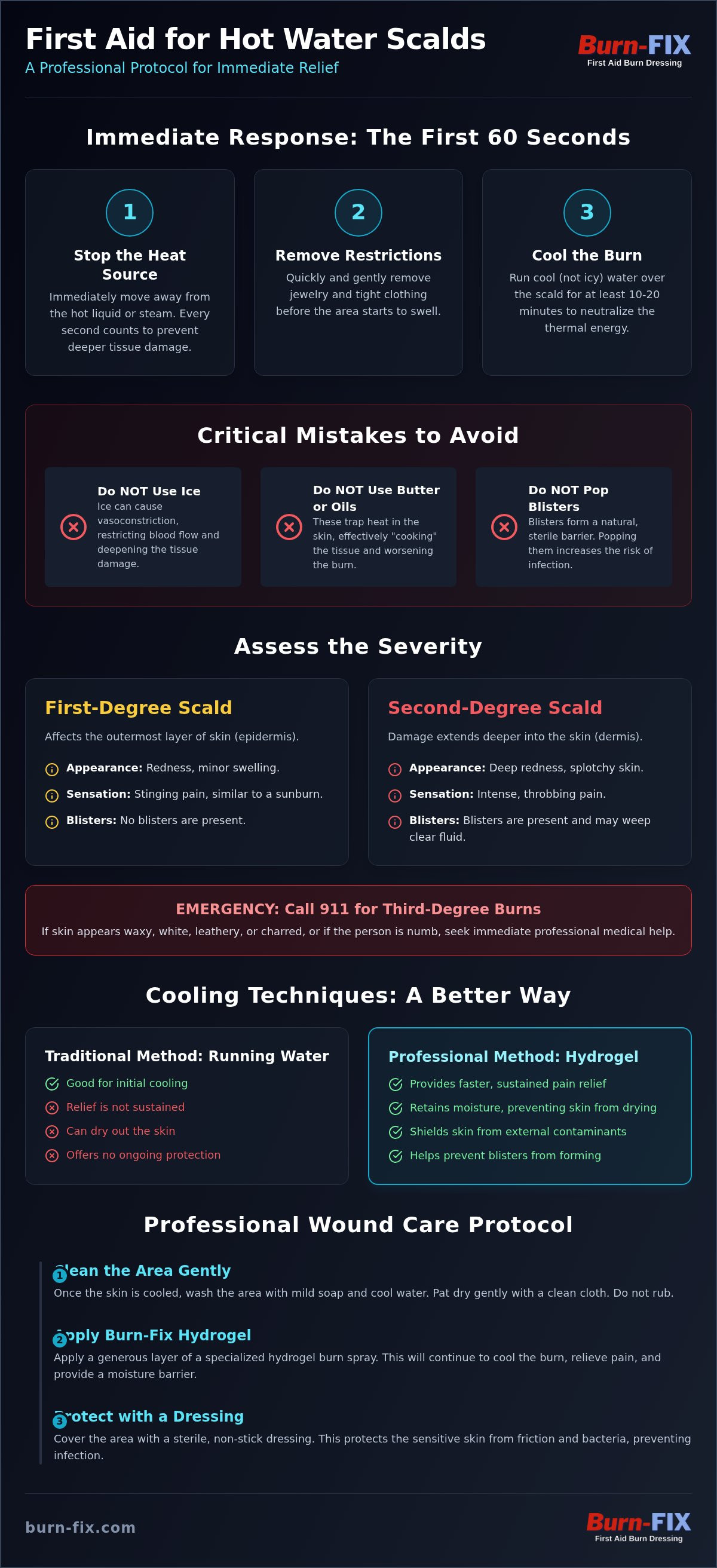
Stop the heat; save the skin. When hot liquid strikes, every second determines the depth of the injury. Effective first aid for hot water scalds begins with an immediate break from the heat source. If you've been splashed by boiling water or steam, move away from the area instantly. The residual heat trapped in your skin continues to damage underlying tissue even after the water is gone, so neutralizing that temperature is your absolute priority. Acting with a sense of calm urgency ensures you don't panic, allowing you to take the precise steps needed to minimize trauma.
The Critical First 60 Seconds
The first minute is a race against cellular damage. Speed is the most important factor in preventing a superficial first-degree scald from deepening into a painful, blistering second-degree injury. If you aren't near a sink, douse the area with any clean, room-temperature liquid available. You're trying to halt the "cooking" process that happens within the dermis. A quick response can significantly reduce the recovery time and lower the risk of long-term scarring. Don't waste time looking for specialized ointments yet; focus entirely on removing the thermal energy from your skin.
Clothing and Jewelry Removal Rules
Remove jewelry and restrictive clothing before the inflammatory response takes hold. Swelling is the body's natural reaction to a scald, but it can quickly turn a wedding ring into a dangerous tourniquet or make a watch strap impossible to unbuckle. Carefully cut away fabric near the wound bed rather than pulling it over the head or limbs, as this avoids unnecessary friction on sensitized skin. You should follow these specific safety guidelines during removal:
- Remove rings and watches: Do this immediately before the area begins to puff up.
- Cut, don't pull: Use scissors to remove clothing if it's near the injury site to prevent dragging fabric across raw skin.
- Leave stuck fabric: If clothing is already fused to the burn, don't attempt to peel it away. Leave it in place and seek professional medical help to avoid tearing the skin.
Once the area is clear, begin cooling with cool or room-temperature water. Avoid ice or freezing water at all costs; these can cause vasoconstriction, which restricts blood flow and potentially worsens the tissue damage. Your goal is a gentle, steady reduction in temperature that calms the nerves and stabilizes the skin. By following this medical-grade protocol for first aid for hot water scalds, you provide your body with the best chance for a complication-free recovery.
Assessing the Scald: Identifying First and Second-Degree Injuries
Once you've moved away from the heat source, you must determine the severity of the damage to choose the right course of action. Proper first aid for hot water scalds depends entirely on an accurate assessment. While the pain is often the first thing you notice, the visual appearance of the skin tells the real story of what's happening beneath the surface. You're looking for specific markers that separate a minor home-care situation from a medical emergency.
First-degree scalds affect only the outermost layer of skin. You'll see redness, feel a stinging pain, and notice minor swelling, much like a typical sunburn. There are no blisters at this stage. Second-degree scalds go deeper, reaching the dermis. These are characterized by intense, throbbing pain, deep redness, and the presence of blisters. If the skin appears charred, waxy white, or leathery, you're likely facing a third-degree injury. This is a critical situation that requires calling 911 immediately as it indicates full-thickness tissue damage.
Symptom Checklist for Home Care
Monitoring the injury in the first few hours is essential for a safe recovery. While redness is expected, you should check if the skin "blanches" or turns white when you press it gently. If it doesn't blanch, the heat may have penetrated deeper than initially thought. Interestingly, the level of pain is a vital diagnostic tool. Intense pain means your nerve endings are still functioning and sending signals. If a deep-looking scald feels numb or painless, it's a sign of nerve damage and requires urgent professional evaluation. As you manage the injury at home, keep a BurnFix Burn Kit nearby to ensure you have medical-grade supplies ready for any changes in the wound's condition.
- Blisters: Never pop them; they act as a natural, sterile barrier against infection.
- Infection signs: Watch for spreading redness, yellow discharge (pus), or a sudden spike in fever.
- The Hand Rule: If the affected area is larger than the victim’s own palm, it's too large to treat safely at home.
When to Call Emergency Services
Size isn't the only factor that dictates a trip to the hospital. Location is equally important. Scalds to the face can cause swelling that threatens the airway, while injuries to the hands, feet, or genitals can lead to long-term functional loss. You must also be wary of "circumferential" scalds. If the injury wraps all the way around a limb or a finger, it can create a tourniquet effect as the tissue swells, potentially cutting off circulation. Infants and seniors have significantly thinner skin, meaning hot water causes deeper damage much faster than it does in healthy adults. For these vulnerable groups, always err on the side of caution and seek professional first aid for hot water scalds if the injury is anything more than a minor, localized spot.
Cooling Techniques: Running Water vs. Hydrogel Professional Care
Neutralizing the heat is the primary goal of first aid for hot water scalds. While the instinct to grab ice is strong, doing so can cause secondary trauma. Ice constricts the blood vessels and may lead to localized frostbite, which complicates the healing process. Instead, you need a method that draws the thermal energy out of the skin without shocking the system. Fast-acting relief depends on how effectively you can stabilize the skin's temperature while maintaining the integrity of the underlying tissue.
The Limitations of Running Water
The traditional recommendation of 20 minutes under a cool tap is medically sound but practically challenging. Maintaining a consistent temperature and flow for that long is difficult, especially if the scald is on a large area or a moving child. Prolonged exposure to water can also lead to maceration, where the skin becomes overly soft and vulnerable to tearing. Additionally, water provides no protective barrier once the tap is turned off, leaving the nerve endings exposed to the air and the pain to return almost instantly. For infants or seniors, the risk of hypothermia from 20 minutes of cold water is a genuine concern that requires careful monitoring. Water is a good starting point, but it's rarely a complete solution for deep-tissue cooling.
Why Doctors Recommend Hydrogel for Scalds
Hydrogel is a moisture-retaining cooling agent that neutralizes heat on contact. It mimics the skin's natural moisture barrier to promote faster healing while providing immediate comfort. Unlike water, which evaporates quickly or runs off, specialized products like BurnFix Hydrogel Burn Spray - 120ml utilize the science of evaporation to continuously pull heat from deep tissue layers. This provides sustained relief that doesn't require you to stay tethered to a sink for half an hour.
It's the ideal "portable cooling" solution for active families or high-pressure workplaces. Hydrogel shields the wound bed from external stressors like dust and bacteria, creating an environment where the body can focus entirely on repair. If you're dealing with a kitchen splash or a steam burn, the spray format allows for rapid application without touching the sensitive area. This reduces the risk of contamination and provides a soothing sensation that transforms a moment of crisis into a manageable recovery. Transitioning from basic water to professional-grade hydrogel ensures you aren't just cooling the surface; you're actively protecting the deeper layers of your skin from ongoing damage. Effective first aid for hot water scalds requires this shift from temporary relief to long-term tissue preservation.
Step-by-Step Dressing: Protecting Scalded Skin from Blistering
Shield the skin to heal the body. After you've successfully cooled the area, your focus must shift to creating a sterile, moist environment that supports tissue repair. Professional-grade first aid for hot water scalds requires more than just a temporary cover; it needs a barrier that prevents infection while drawing out residual heat. By choosing the right dressing, you ensure the recovery process starts immediately and continues without interruption.
Before applying any dressing, gently clean the site with sterile saline or cool water. Never scrub the wound. Scrubbing destroys the delicate basement membrane of the skin and introduces bacteria deeper into the tissue. You should also avoid common "kitchen remedies" like butter, oils, or toothpaste. These substances are non-sterile and act as insulators, trapping heat inside the skin and potentially turning a minor scald into a severe injury. Instead, rely on medical-grade materials that are designed to breathe while protecting the wound bed.
Applying the Non-Stick Layer
Non-stick technology is vital for second-degree scalds where the skin is raw or blistered. If you use standard gauze, the fibers can become embedded in the healing tissue, causing excruciating pain and fresh trauma during dressing changes. Instead, use a specialized Burn-FIX 4x4 First Aid Burn Gel Dressing. Lay the dressing flat over the injury without applying pressure. Ensure the gel-soaked pad extends at least one inch beyond the visible edges of the injury to protect the surrounding sensitized skin. Secure it loosely with a clean bandage; you must allow room for the natural swelling that occurs in the first 24 hours.
Preventing and Managing Blisters
The golden rule of scald care is simple: never pop a blister. A blister is your body's natural, sterile bandage. It protects the raw dermis underneath from the air and bacteria. Moisture-retaining dressings are essential here because they keep the "roof" of the blister flexible and intact. If the skin becomes too dry, the blister roof can become brittle and snap, exposing the wound. If a blister breaks accidentally, clean the area gently with saline and immediately re-apply a fresh hydrogel dressing to maintain the protective seal. You can ensure your kit is fully stocked with non-stick dressings to be prepared for any kitchen or bathroom emergency.
Professional Results at Home: The Burn-Fix Scald Response Kit
Effective first aid for hot water scalds requires more than just a well-stocked medicine cabinet; it requires a specialized response system. While a standard first-aid kit might have bandages and antiseptic, it often lacks the specific tools needed to neutralize thermal energy and prevent deep-tissue damage. The BurnFix Burn Kit is a pre-assembled solution designed specifically for kitchen and bathroom scalds, providing you with the exact materials used by first responders to stop pain and preserve skin health. Having these professional-grade supplies on hand allows you to act with confidence the moment an accident occurs.
Essential Components of a Scald Kit
A comprehensive kit ensures you're prepared for everything from a minor steam burn to a significant boiling water spill. The BurnFix Hydrogel Burn Spray - 120ml is your best first-response tool for large splashes, as it allows you to cover a wide area quickly without having to touch the sensitized skin. For more localized injuries, having multiple sterile dressings is critical. The kit includes Burn-FIX 4x4 First Aid Burn Gel Dressings which are sized to handle most common household scalds, providing a thick layer of cooling gel that won't stick to raw tissue. For those on the move, the BurnFix Burn Gel - 3.5g Per Packet offers essential peace of mind during camping trips or family vacations, fitting easily into a pocket or travel bag for instant intervention.
Integrating Burn-Fix into Your Kitchen Safety
Storing your supplies near high-risk areas like the stove or kettle is a vital step in your home safety plan. When a spill occurs, you shouldn't be hunting through a cluttered cupboard; you need your "hot liquid response" station within arm's reach. Training every family member on the "Stop, Cool, Cover" method using Burn-Fix products creates a household culture of preparedness. This simple three-step process ensures that the heat source is removed, the skin is cooled with hydrogel, and the wound is protected with a sterile dressing before the pain becomes unmanageable.
Professional-grade care is the difference between a permanent scar and a fading memory. By using doctor-recommended hydrogel technology, you're giving your body the moisture it needs to heal from the inside out. Don't wait for an accident to happen before you realize your first-aid supplies are inadequate. You can protect your family and ensure your home is ready by securing a Burn-Fix Emergency Kit today. Having the right tools on hand transforms a moment of excruciating pain into a controlled, professional recovery.
Be Prepared for the Next Kitchen Crisis
A hot liquid accident happens in an instant, but your response determines how quickly the healing begins. By mastering the correct first aid for hot water scalds, you've moved from panic to professional care. Remember to stop the heat source immediately, assess the depth of the injury using the hand rule, and avoid dangerous home remedies like butter or ice that can trap heat or cause secondary trauma. Acting with speed and precision is what keeps a minor splash from becoming a permanent mark.
Preparation is the most effective tool in your safety arsenal. Using fast-acting hydrogel for instant pain relief and sterile, non-stick dressings ensures that you prevent skin trauma before it starts. These solutions are trusted by families and medical professionals alike for their ability to neutralize heat and protect the wound bed. Don't wait for an emergency to realize your medicine cabinet is empty. Equip your home with a doctor-recommended Burn-Fix Emergency Kit today to ensure you're always ready to protect your loved ones. You have the knowledge and the tools to turn a painful moment into a successful recovery.
Frequently Asked Questions
Can I put ice on a hot water scald?
No, you should never apply ice to a hot water scald. While it might feel like it provides instant relief, ice actually constricts blood vessels and can cause secondary tissue damage known as frostbite. This restricted blood flow slows the natural healing process and can make the injury significantly worse. Instead, use cool water or a hydrogel spray to gently draw the heat out of the skin without shocking the sensitized nerves.
How long should I cool a scald under running water?
You should cool the affected area under running water for at least 20 minutes. This duration is necessary because heat continues to penetrate deeper into your tissue even after the liquid is removed. Consistent cooling stops this "cooking" process and stabilizes the skin temperature. If maintaining a 20-minute flow is difficult, transitioning to a moisture-retaining hydrogel dressing provides a more practical and sustained cooling effect for effective first aid for hot water scalds.
Is it okay to put butter or flour on a scald?
You must avoid putting butter, flour, or oils on a scald. These substances are non-sterile and act as insulators, trapping the heat inside your skin rather than allowing it to escape. This can lead to deeper tissue damage and significantly increase the risk of infection. Professional-grade care relies on sterile, water-based solutions that allow the skin to breathe while maintaining the necessary moisture for the cells to repair themselves effectively.
What is the difference between a burn and a scald?
The primary difference lies in the source of the heat. A scald is a type of burn specifically caused by "wet heat," such as boiling water, hot tea, or steam. A burn is typically caused by "dry heat," including fire, hot metal, or electricity. While the source differs, the cellular damage can be equally severe. Both injuries require immediate cooling and protective dressings to prevent long-term scarring and ensure a safe recovery.
Should I pop a blister caused by boiling water?
You should never pop a blister caused by boiling water. That fluid-filled bubble serves as a natural, sterile barrier that protects the raw skin underneath from bacteria and air. Popping it exposes the wound bed to infection and increases your pain levels. If a blister breaks on its own, clean it gently with sterile saline and apply a non-stick hydrogel dressing to maintain the protective seal and support the healing process.
When does a hot water scald require a trip to the ER?
Seek emergency care if the scald is larger than the victim's palm or if it affects the face, hands, feet, or joints. You should also go to the ER if the skin appears waxy, charred, or leathery, which indicates a third-degree injury. Additionally, any scald that wraps entirely around a limb or causes difficulty breathing requires immediate medical attention. For infants and seniors, even minor-looking scalds should be evaluated by a healthcare professional.
How do I stop a scald from scarring?
Preventing a scar starts with the quality of your initial first aid for hot water scalds. Immediate cooling within the first 60 seconds is vital to limit the depth of the injury. Once the heat is neutralized, keeping the wound bed moist with a hydrogel dressing prevents the skin from drying out and cracking. Protecting the area from sunlight and avoiding the urge to pick at scabs or blisters further ensures the smoothest possible skin recovery.
Can I use hydrogel on a child’s scald injury?
Yes, hydrogel is safe and highly recommended for use on children’s scald injuries. It provides instant, soothing relief that helps calm a distressed child much faster than cold water alone. Because it's non-toxic and stays in place, it prevents the child from touching or scratching the sensitive area. The cooling effect is gentle enough for delicate skin, making it a staple for any family-friendly first-aid kit designed for minor household emergencies.


