


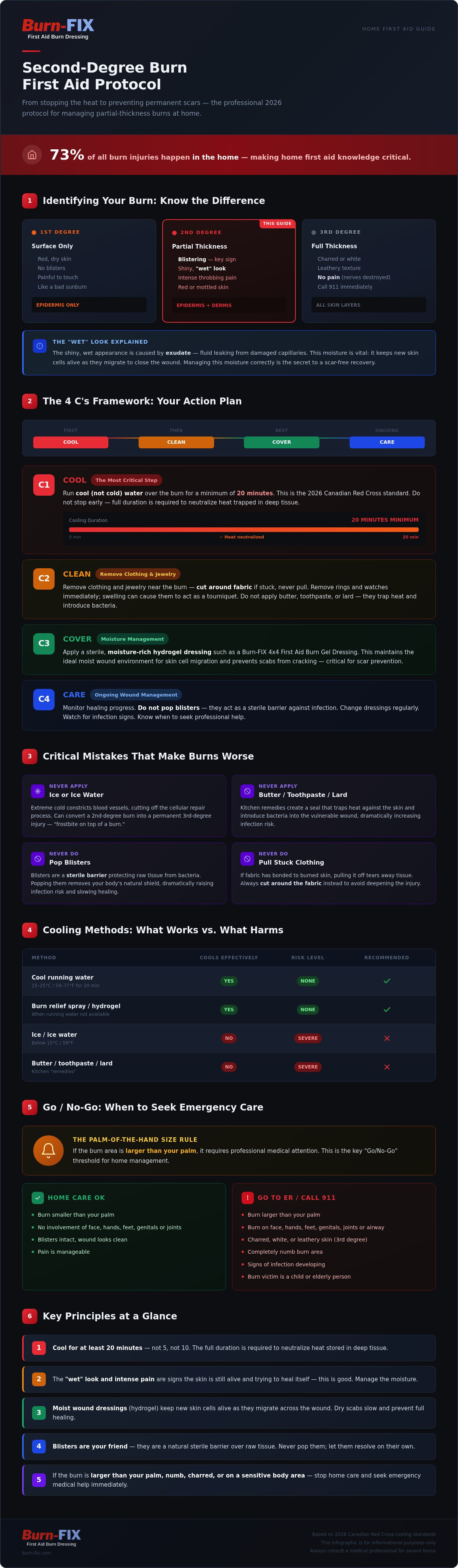
Did you know that 73% of all burn injuries happen in the home? When a splash of boiling water or a hot pan leaves you with sharp, throbbing pain and rising blisters, the instinct to reach for the freezer is strong. However, applying ice or butter can actually deepen the tissue damage. Mastering effective at-home first aid for second degree burns is about moving quickly from "stopping the heat" to "active moisture management" to ensure your skin heals without permanent scarring.
Stop the pain. Protect the skin. Prevent the scar. We understand the panic that sets in when you're staring at a raw, blistering wound and wondering if you should head to the emergency room. You want relief now, and you need a clear, professional plan that works. This guide provides the specialized protocols used by first responders to cool, dress, and heal second-degree burns safely. You'll learn the essential "4 C's" framework, the specific "Go/No-Go" criteria for seeking medical help, and the 2026 standards for cooling injuries for at least 20 minutes to neutralize heat and maximize your body's natural recovery process.
Key Takeaways
- Learn to identify the "wet" look of partial-thickness injuries and why cooling for 10 to 20 minutes is the vital first step in at-home first aid for second degree burns.
- Discover how moisture-rich protocols and tools like the Burn-FIX 4x4 First Aid Burn Gel Dressing prevent scabs from cracking and minimize permanent scarring.
- Protect your body's natural recovery process by understanding why blisters shouldn't be popped and how they serve as a sterile barrier against infection.
- Gain confidence with clear "Go/No-Go" criteria, such as the palm-of-the-hand size rule, to know exactly when a burn requires professional medical intervention.
- Master the professional transition from heat neutralization to long-term skin shielding to ensure a faster, more comfortable healing journey for your family.
Identifying a Second-Degree Burn: Symptoms and Severity
Second-degree burns, also known as partial-thickness burns, are complex injuries that require a specific response. They don't just affect the surface; they penetrate through the epidermis, which is your outer skin, and reach deep into the dermis. This deeper layer contains your blood vessels and nerve endings, making these injuries incredibly sensitive to touch and air. Understanding Burn classifications is the first step in deciding if you can safely manage the injury yourself. Unlike third-degree burns that destroy nerves and cause a dangerous lack of sensation, second-degree burns leave those nerves firing. This results in an intense, throbbing pain that confirms your nerves are still functional. This pain is your body's urgent request for at-home first aid for second degree burns to stop the heat from traveling deeper into your tissue.
Second-Degree vs. First-Degree: When to Level Up Your Care
A first-degree burn is essentially a bad sunburn; it's red, dry, and painful but lacks structural damage. You know you've transitioned to a second-degree injury when you see physical changes in the skin's texture. Blistering is the definitive red flag that your care needs to become more rigorous. The dermis is the thick layer of living tissue below the epidermis that contains capillaries and nerve endings. When heat damages this layer, the body creates fluid-filled pockets to shield the raw tissue. Superficial partial-thickness burns typically remain bright red and blanch when pressed, while deep partial-thickness burns may look mottled or pale. Both require a dedicated moisture-management plan to prevent the injury from converting into a deeper, more permanent scar.
The "Wet" Look: Understanding Partial-Thickness Damage
One of the most distinct markers of a second-degree burn is a shiny, "wet" appearance. This occurs because of exudate, a clear fluid that leaks from damaged capillaries into the wound bed. While it might look alarming, this moisture is a vital tool for recovery. It provides the hydration necessary for new skin cells to migrate and close the wound. Managing this moisture correctly is the secret to a scar-free recovery. You must recognize when the situation is beyond home care. If the burn looks charred, white, or leathery, or if the area feels completely numb, you are likely dealing with a third-degree injury. In these cases, stop your at-home first aid for second degree burns and call 911 or visit an emergency room immediately. For a standard second-degree burn, the wetness and pain are signs that the skin is still trying to save itself.
Immediate First Aid: The Critical First 5 Minutes
The first five minutes determine the depth of your injury. Stop the burning process immediately by moving away from the heat source or removing clothing soaked in hot liquids. If clothing is stuck to the skin, don't pull it; cut around the area instead. Once the source is gone, you must cool the site to halt the "cooking" of deeper tissue. Current 2026 guidelines from organizations like the Canadian Red Cross emphasize cooling the site with cool running water for at least 20 minutes. This duration is critical for heat neutralization. For comprehensive First aid for second-degree burns, consistency in cooling is the most effective way to reduce long-term damage.
Remove jewelry and tight clothing near the injury site immediately. Swelling is an inevitable part of the inflammatory response; a ring or watch can quickly become a tourniquet, cutting off circulation to your fingers or limbs. While you wait for the cooling process to work, ignore kitchen myths. Butter, toothpaste, and lard are dangerous. They create a seal that traps heat against the skin and introduces bacteria into a vulnerable wound. Effective at-home first aid for second degree burns relies on clean, professional methods rather than pantry staples.
Why Ice is the Enemy of Burned Skin
Extreme cold is not a friend to a heat injury. Applying ice or ice water constricts blood vessels, which drastically reduces the blood flow needed for cellular repair. In some cases, this can actually turn a manageable second-degree burn into a permanent third-degree injury. You risk creating a "frostbite on top of a burn" scenario, where the freezing temperatures kill the delicate tissue that the heat missed. To understand more about the dangers of extreme cold, prioritize regulated cooling over freezing shocks.
Neutralizing Heat with Burn Relief Spray
Standing over a sink for 20 minutes isn't always practical, especially in a high-stress moment. The BurnFix Hydrogel Burn Spray offers a faster, more portable solution for immediate heat neutralization. This medical-grade spray uses a specialized hydrogel to draw heat out of the skin through a thermal-transfer process. It mimics the cooling effect of running water without the mess or the risk of hypothermia from full-body exposure. It's a smart addition to any Burn-FIX home safety kit, providing instant relief and shielding the wound from external contaminants while you prepare the next steps of your healing plan.
Advanced Wound Care: Using Hydrogel and Sterile Dressings
Once you've neutralized the heat, your priority must shift from "stopping the burn" to "active moisture management." A second-degree burn is a dynamic injury that requires a hydrated environment to repair itself. If the wound bed dries out, a hard scab forms. This scab can crack during movement, causing fresh pain and increasing the risk of permanent scarring. Effective at-home first aid for second degree burns relies on keeping the dermis moist so new skin cells can migrate and close the wound. The Burn-FIX 4x4 First Aid Burn Gel Dressing is specifically designed for this purpose, providing a thick layer of hydrogel that saturates the injury site and prevents cellular dehydration.
Using a hydrogel dressing offers an immediate "occlusive" benefit. It seals the raw nerve endings away from the air, which significantly reduces what clinicians call "air-strike" pain. This is that sharp, stinging sensation that occurs every time a breeze or movement hits the exposed burn. After applying the gel dressing to a large or high-friction area, wrap it loosely with sterile gauze. You must avoid wrapping the area too tightly. If the gauze is too snug, it can cut off circulation as the area continues to swell, which starves the new skin of the oxygen it needs to heal. A loose, secure wrap is all you need to keep the dressing in place while the hydrogel does the heavy lifting.
The Non-Stick Advantage for Blistered Skin
Standard bandages are often a source of trauma for second-degree injuries. When dry gauze touches a weeping burn, the fibers become embedded in the healing tissue. Removing these bandages can be excruciating and often rips away the fragile new skin your body worked so hard to create. Hydrogel-soaked pads solve this problem by creating a protective barrier that slides off easily during changes. This non-stick technology ensures that your at-home first aid for second degree burns remains a process of comfort rather than a source of new pain. Change the dressing every 24 hours, or sooner if you notice the gel has been fully absorbed into the skin.
Maintaining a Sterile Environment at Home
Your home isn't a hospital, but your wound care should be just as disciplined. Maintaining a sterile environment is a cornerstone of treating burns and preventing infection. Always wash your hands thoroughly with soap and water, and use disposable medical gloves before touching the burn site or opening sterile packaging. Your kitchen safety first aid kit should always include sterile 4x4 pads to ensure you aren't using dusty or contaminated materials. Even a small, open blister is a magnet for airborne contaminants, so keeping the area shielded is your best defense against secondary complications.
Managing Blisters and Preventing Infection
Protecting the integrity of a blister is the most critical part of the healing phase. You must follow the golden rule of burn care: never intentionally pop or peel a blister. These fluid-filled pockets serve as a "biological dressing," keeping the raw dermis underneath in a sterile, hydrated environment that is impossible to replicate with bandages alone. The serum inside contains nutrients and growth factors that accelerate tissue repair. Effective at-home first aid for second degree burns requires you to act as a guardian of this natural barrier. If you break that seal, you invite bacteria into a warm, moist environment where they can thrive, potentially turning a simple recovery into a serious medical complication.
What to Do if a Blister Pops
Accidents happen, especially in high-friction areas like the hands or feet. If a blister ruptures on its own, don't panic. Start by gently cleaning the area with mild, fragrance-free soap and room-temperature water. You must avoid using harsh antiseptics like rubbing alcohol or hydrogen peroxide; these chemicals are cytotoxic and will kill the very cells trying to repair your skin. Once the area is clean, leave the "roof" of the blister in place if possible. Apply a BurnFix Burn Gel packet to the exposed skin to replace the lost moisture and provide a new protective shield. Re-dress the area with a sterile, non-stick pad immediately. Watch the site closely over the next 24 hours for increased warmth or spreading redness, as an open wound is significantly more vulnerable to environmental pathogens.
The Infection Watchlist: Red Flags in Day 3-5
Monitoring your progress is essential during the window between day three and day five, which is when most secondary infections begin to manifest. While some redness and swelling are normal parts of the inflammatory response, you need to watch for specific "red flags." If you notice thick, yellow or green pus, a foul odor, or if the pain suddenly intensifies after initially subsiding, the wound may be infected. More importantly, check for "lymphangitis," which appears as red streaks radiating away from the burn site toward your heart. This is a sign that the infection is entering your lymphatic system and is a medical emergency. Systemic symptoms like fever, chills, or a general sense of malaise also indicate that the body is struggling to contain the injury. Keeping an emergency burn kit for home ensures you have the tools for immediate treatment, but it isn't a substitute for professional care once an active infection takes hold.
Stay prepared for any household emergency by ensuring your first aid supplies are up to date. Equip your home with a professional BurnFix Burn Kit to manage second-degree injuries with confidence and speed.
When Home Care Isn’t Enough: Seeking Professional Help
Safety is your first priority. While most minor injuries respond well to at-home first aid for second degree burns, you must recognize when the damage exceeds the limits of home treatment. The "Size Rule" is your most reliable metric. If the burned area is larger than three inches or exceeds the size of the patient's palm, you need to seek professional medical attention immediately. Large burns cause significant fluid loss and increase the risk of systemic shock, which requires clinical monitoring and intravenous hydration that cannot be managed in a kitchen or bathroom.
Vulnerable populations require a lower threshold for professional intervention. Infants, the elderly, and individuals with compromised immune systems have thinner skin or slower healing responses. For these groups, even a small second-degree burn can quickly lead to dehydration or severe infection. If you are caring for someone in these high-risk categories, skip the home-care phase and consult a healthcare provider to ensure the wound is debrided and dressed according to hospital-grade standards.
Location-Specific Emergencies
The location of the injury is often more important than the size. Facial burns are high-risk emergencies because the heat that damaged the skin may have also scorched the airway. Swelling in the throat can occur hours after the initial incident, making breathing difficult. Burns on the hands and feet are equally critical. These areas contain a high density of nerves and tendons; improper healing can lead to permanent loss of fine motor skills or chronic nerve pain. Injuries to the genitals or major joints also require a specialist's touch. When a burn occurs over a joint like the knee or elbow, the skin can heal too tightly. This is known as "contracture," a condition where the new scar tissue permanently limits your range of motion. A specialist can provide physical therapy and specific dressings to ensure the skin remains elastic as it recovers.
The 48-Hour Rule for Medical Reviews
Recovery isn't always a straight line. You should schedule a follow-up appointment if the pain intensifies after the first 48 hours. While the initial sting usually subsides with proper at-home first aid for second degree burns, a sudden surge in throbbing or heat often signals that a deep partial-thickness burn is "converting." This is a process where the injury deepens into a third-degree burn as the surrounding tissue dies from lack of blood flow. Keep your Burn-Fix supplies on hand for minor secondary care, but don't hesitate to seek a professional debridement if the wound bed looks pale or leathery. A doctor can remove dead tissue safely, allowing your hydrogel dressings to work more effectively on the healthy skin underneath.
Taking Control of Your Healing Journey
Recovering from a second-degree burn doesn't have to be a journey defined by pain and scarring. By mastering the protocols of at-home first aid for second degree burns, you transition from a victim of a minor crisis to an active participant in your body's healing. You've learned how to neutralize heat quickly, why you must protect blisters as biological shields, and exactly when an injury demands a specialist's attention. Confidence comes from preparation.
Having the right medical-grade tools on hand ensures you can act with the professional precision required during those critical first five minutes. Our solutions are trusted by first responders and utilize instant cooling hydrogel technology to provide immediate relief and sterile, non-stick protection for your family. Equip your home with the Burn-Fix Emergency Kit today to ensure you're never caught off guard. You have the knowledge; now make sure you have the veteran solutions to back it up.
Frequently Asked Questions
How long does it take for a second-degree burn to heal at home?
Most second-degree burns take between two and three weeks to heal completely when managed with proper at-home first aid for second degree burns. The exact timeline depends on whether the injury is a superficial or deep partial-thickness burn. Superficial injuries may close within ten days, while deeper wounds require more time for the dermis to regenerate. Consistency in moisture management is the key to staying on the shorter end of this recovery window.
Should I use Neosporin or antibiotic ointment on a second-degree burn?
You don't necessarily need antibiotic ointments for an intact blister. Hydrogel dressings are often preferred because they provide the cooling and moisture retention needed without the greasy residue that can trap heat. If a blister pops, a thin layer of ointment can prevent infection, but your primary focus should be maintaining a sterile, moist environment. Always consult a professional if you suspect an active infection is developing despite your care.
What is the best way to stop the stinging pain of a burn instantly?
Neutralizing the heat is the only way to stop the stinging pain instantly. You should use the BurnFix Hydrogel Burn Spray to draw heat out of the tissue through a thermal-transfer process. This provides immediate relief by shielding exposed nerve endings from the air. If you don't have a specialized spray, use cool running water for at least 20 minutes to stabilize the skin temperature and halt the throbbing sensation.
Can I go to work with a second-degree burn?
Whether you can work depends on the physical demands of your job and the burn's location. If the injury is on a joint or your hands, movement might crack the healing skin or rupture blisters. For office environments, you can usually return if the wound is securely protected by a Burn-FIX 4x4 First Aid Burn Gel Dressing. Avoid environments with high heat, dust, or chemicals that could compromise your sterile dressing.
How can I prevent a second-degree burn from scarring?
Preventing a permanent scar requires you to keep the wound bed hydrated throughout the entire recovery process. When you use at-home first aid for second degree burns, avoid the temptation to let the wound "air out" or form a hard scab. A moist environment allows new skin cells to migrate across the wound smoothly. Once the skin has closed, protect the area from direct sunlight for one year to prevent permanent discoloration.
Is it normal for a second-degree burn to itch while healing?
Itching is a very common sign that your skin is successfully regenerating. This sensation is caused by the release of histamines and the physical stretching of new collagen fibers as the wound closes. You can manage this discomfort by keeping the area well-hydrated with hydrogel. Don't scratch the site, as this can tear the fragile new tissue and introduce bacteria that could lead to a secondary infection.
What happens if I accidentally pop a burn blister?
If you accidentally pop a blister, the goal is to protect the raw skin underneath immediately. Gently wash the area with mild soap and water, but don't peel away the loose skin "roof" as it still provides some protection. Apply a Burn-FIX 4x4 First Aid Burn Gel Dressing to replace the lost biological fluid. This keeps the exposed dermis moist and prevents the intense "air-strike" pain associated with open wounds.
When is a burn considered a medical emergency?
A burn becomes a medical emergency if it is larger than three inches or covers a major joint. You must seek immediate help for any burns on the face, hands, feet, or genitals. Other emergency indicators include signs of systemic infection like fever, chills, or red streaks radiating from the site. If the skin looks charred, white, or feels completely numb, it's likely a third-degree burn that requires hospital care.


