


Did you know that children under the age of four are at the highest risk for burn injuries, with the median age for a pediatric burn being just three years old? It's a terrifying moment when your child reaches for a hot cup or touches a stove. That sudden scream triggers an instant wave of anxiety, and in that split second, you just want the pain to stop. You're likely worried about blisters or permanent scarring while feeling overwhelmed by conflicting advice about home remedies. Effective burn care for children starts with neutralizing the heat immediately to prevent deeper tissue damage.
Stop the pain. Protect the skin. We understand that your priority is your child's comfort and safety. You don't have to navigate this crisis alone or rely on outdated myths. This guide provides a clear, doctor-recommended roadmap to manage the injury with confidence. You'll learn how to identify burn severity, apply immediate first aid according to the latest 2026 medical standards, and use specialized cooling solutions to protect your child’s skin. We will also cover exactly when a trip to the emergency room is necessary so you can focus on what matters most: your child's recovery.
Key Takeaways
- Distinguish between minor redness and painful blistering to quickly determine the severity of your child's injury and the necessary next steps.
- Master the essentials of burn care for children by learning why 20 minutes of cool running water is the gold standard for neutralizing heat.
- Avoid dangerous home myths like ice or butter, which can trap heat and increase the risk of infection or permanent scarring.
- Discover how doctor-recommended hydrogel technology provides instant, mess-free relief while maintaining the moisture needed for delicate skin to heal.
- Secure your home with a 2026 safety checklist designed to prevent scalds and contact burns in high-risk areas like the kitchen and bathroom.
Identifying Pediatric Burn Severity: First vs. Second Degree
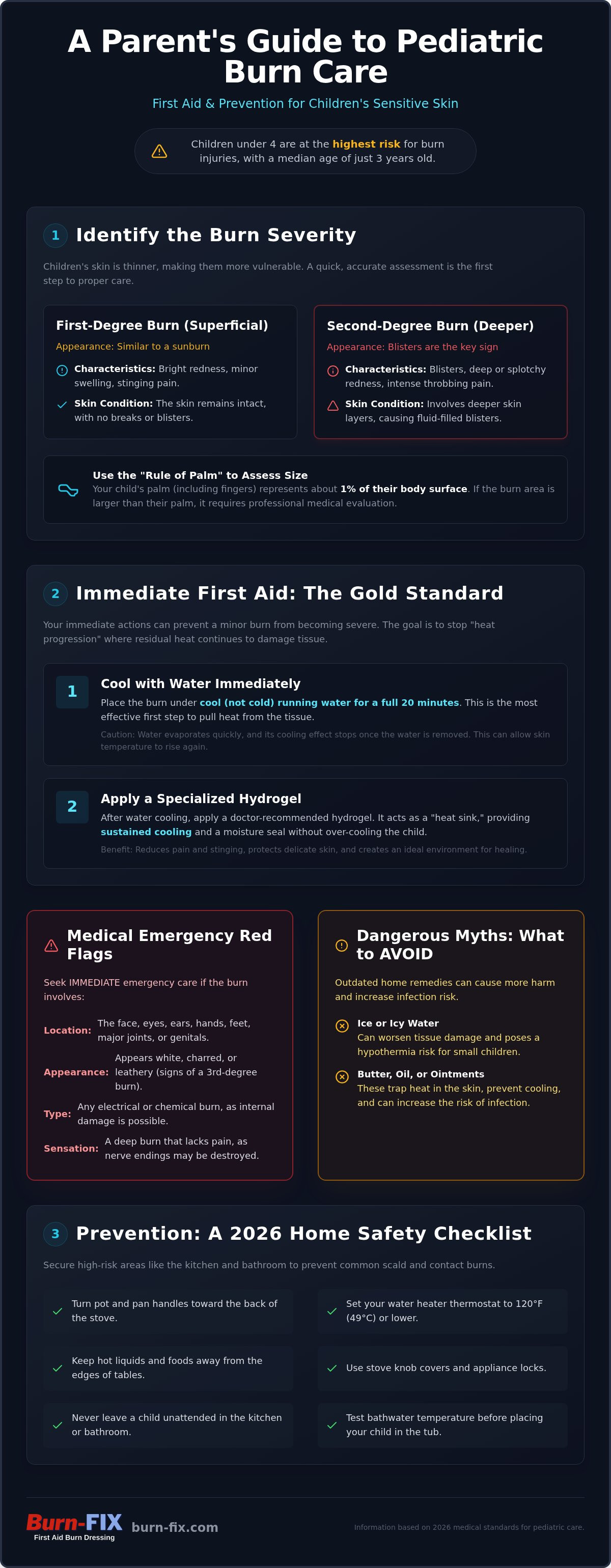
Assess the damage quickly. When your child is injured, your first instinct is to soothe the pain, but effective burn care for children depends on your ability to accurately identify the depth of the injury. Children’s skin is significantly thinner and more delicate than adult skin. This physiological difference means that a heat source which might only cause a minor sting for you can penetrate deeper into a toddler's tissue, causing severe damage in a matter of seconds. Standardized burn severity classification helps parents decide if a situation is manageable at home or requires a specialist.
First-degree burns are superficial. You will notice bright redness, light swelling, and a painful stinging sensation similar to a harsh sunburn. The skin remains intact without any breakage or fluid leakage. Second-degree burns, however, involve the deeper dermis layer. You can identify these by the presence of blisters, deep or splotchy redness, and intense, throbbing pain. If you see blisters forming, you should follow our guide on at-home first aid for second degree burns to protect the underlying tissue.
To determine the scale of the injury, use the "Rule of Palm." A child’s own palm (including their fingers) represents approximately 1% of their total body surface area. If the burn area is larger than the child's palm, it is generally considered a significant injury that requires professional evaluation.
When a Minor Burn Becomes a Medical Emergency
Location matters as much as depth. Even a first-degree burn can be critical if it occurs in high-risk areas. Seek immediate emergency care if the burn involves the following:
- The face, eyes, or ears
- Hands or feet
- Joints (knees, elbows, or shoulders)
- The genital area
- Any burn that appears white, charred, or leathery (signs of a third-degree burn)
Third-degree burns are deceptive because they often lack sensation. The nerve endings are destroyed, so the child may not scream in pain despite the severity. Additionally, always treat electrical or chemical burns as emergencies, as toddlers often suffer internal damage that isn't immediately visible on the skin's surface.
The Importance of a Fast Response
Heat is a persistent enemy. Even after you pull your child away from a hot stove or a splashing pot, the thermal energy remains trapped within the skin layers. This residual heat continues to "cook" the tissue, turning a manageable superficial injury into a deeper, more painful wound. Stopping "heat progression" is the priority in the first 60 seconds because neutralizing the temperature prevents further cell death and reduces the risk of long-term scarring. Quick action is the cornerstone of proper burn care for children, ensuring the healing process begins the moment the accident happens.
The Science of Cooling: Why Water is Only the Start
Cool running water for a full 20 minutes is the gold standard for immediate burn care for children, but it's only the first phase of treatment. When you place a burn under cool (not cold) water, the fluid absorbs thermal energy through conduction, pulling heat away from the damaged tissue. However, water has a major drawback: it evaporates quickly. As soon as you stop the flow, the skin temperature can spike again, allowing residual heat to continue damaging deeper layers. For more details on these initial steps, you can check these Parent FAQs on Burn First Aid.
Consistency is vital for recovery. Small children have a high surface-area-to-body-mass ratio, making them susceptible to hypothermia if they're doused in cold water for too long. You need a solution that maintains a steady, therapeutic temperature without the mess or the risk of over-cooling the entire body. Keeping the site consistently cool is what prevents the inflammatory response that leads to painful blistering. By stabilizing the temperature, you're effectively telling the body to stop the damage and start the repair.
How Hydrogel Stabilizes Burn Temperature
Hydrogel acts as a "heat sink." Unlike a wet cloth that dries out and becomes warm, a product like BurnFix Hydrogel Burn Spray creates a thick, aqueous barrier that stays in place. It absorbs heat from the wound and dissipates it while providing an immediate moisture seal. This sustained cooling significantly reduces the "stinging" sensation that causes so much distress in toddlers. Because it doesn't require constant re-application or rubbing, it's a "no-touch" way to keep your child comfortable while the skin begins to stabilize.
Protecting the Skin Barrier
Moisture drives regeneration. A dry burn is a slow-healing burn. When a wound dehydrates, the skin cells struggle to bridge the gap, which often leads to thicker, more visible scarring. Using a sterile, gel-based solution ensures the environment remains hydrated and protected from external contaminants. This transition from active cooling to long-term shielding is the most effective way to support the body’s natural repair process. Having a reliable burn kit on hand ensures you can provide this professional-level care the moment an accident happens.
Don't reach for the butter. In the frantic moments following an accident, well-meaning but outdated advice often leads parents to reach for kitchen staples. These home remedies actually sabotage effective burn care for children by complicating the healing process and increasing the risk of infection. Butter, margarine, and cooking oils are particularly dangerous because they are occlusive. They create a thick, greasy seal over the injury that traps the residual heat discussed earlier, effectively continuing the "cooking" process of the tissue. This trapped heat deepens the wound, potentially turning a minor injury into a more severe clinical case. Similarly, applying toothpaste or non-medical honey to fresh wounds should be avoided. Toothpaste contains chemicals and flavorings that irritate raw tissue, while honey can introduce bacteria into a vulnerable site. One of the most critical rules in pediatric first aid is to never pop a blister. A blister acts as your child's natural, sterile bandage. Breaking that seal creates an open doorway for bacteria to enter, leading to painful infections that require much more aggressive treatment.Why Ice Does More Harm Than Good
It seems logical to use ice to cool a burn, but extreme cold is actually a secondary trauma to the skin. When you apply ice directly to a burn, the blood vessels constrict instantly, cutting off the vital blood flow needed to begin cellular repair. Extreme cold can cause further tissue necrosis. Instead of freezing the skin, reach for a specialized burn relief spray that uses hydrogel technology to draw heat away gently and safely without the risk of frostbite.
The Risk of Home Ointments on Fresh Burns
Heavy creams and antibiotic ointments have their place in later recovery, but they shouldn't be applied until the heat has fully dissipated from the skin layers. If you apply a thick ointment too early, you're sealing the heat in and potentially worsening the depth of the injury. These substances also create a sticky, messy residue that is incredibly difficult to remove at a clinic. If your child requires professional attention, a medical provider will have to scrub those "old-school" remedies away to inspect the wound. This process causes significant, unnecessary pain for your little one. For the best burn care for children, always prioritize water-soluble, hydrogel-based solutions that provide immediate relief and can be easily rinsed away by a specialist if medical intervention is needed.
Pediatric First Aid: Step-by-Step Treatment
Act with precision. When an accident happens, the transition from panic to professional burn care for children begins with your composure. Your child is looking to you for safety, so taking a deep breath before you start ensures you provide the gentle, effective treatment they need. Following a logical sequence of actions prevents the injury from worsening and sets the stage for a faster recovery. Use these steps to stabilize the injury immediately.
- Step 1: Safety first. Pull your child away from the heat source immediately. Whether it's a hot liquid or a heating element, distance is the first step in stopping the damage.
- Step 2: Clear the site. Gently remove any clothing, diapers, or jewelry near the burn. If clothing is stuck to the skin, do not pull it; leave it for a medical professional and move to the next step.
- Step 3: Cool the tissue. Run room-temperature water over the area for 5 to 10 minutes. This draws out the initial thermal energy and begins to soothe the nerve endings without the risk of over-cooling.
- Step 4: Stabilize with gel. Apply a pediatric-safe hydrogel. This creates a moisture-rich barrier that halts the pain and protects the delicate skin cells from dehydration.
- Step 5: Shield the wound. Loosely wrap the site with a sterile, non-stick dressing. This protects the area from friction and bacteria while the skin begins to stabilize.
Calming Your Child During Treatment
Lower the heart rate. Your child mirrors your energy, so use soft, steady language while you work. The "No-Touch" advantage is a game-changer for parents. Using a spray like BurnFix Hydrogel Burn Spray allows you to deliver instant relief without the agony of rubbing or touching the raw skin. Distraction works wonders for toddlers; try blowing bubbles or telling a familiar story. For older school-aged children, give them a specific task, such as holding the sterile bandage, to shift their focus from the injury to the recovery process.
Applying the Right Dressing
Comfort starts with the cover. Never use standard gauze that can fuse to the wound as it dries, as this leads to a traumatic removal process later. Non-stick pads are essential for burn care for children because they allow the skin to breathe and heal without sticking to the injured tissue. Secure the wrap loosely with medical tape or a light cohesive bandage, ensuring you don't cut off circulation. Check your supplies now so you don't have to search through drawers during a crisis; ensure your emergency burn kit for home is fully stocked and accessible.
Be prepared for the unexpected by keeping a BurnFix Burn Kit in your kitchen and car for instant, medical-grade relief when every second counts.
Preventing Pediatric Burns: A 2026 Safety Checklist
Secure your home. Prevention is the most effective form of burn care for children, as it stops the trauma before the first tear is shed. In the kitchen, always turn pot handles toward the back of the stove to prevent curious hands from reaching upward. Establish a visible "no-go zone" using colored tape on the floor to keep toddlers at a safe distance from the oven while you're cooking. Modern hazards require updated rules. Air fryers, which have become a household staple, often have searing-hot exterior surfaces and steam vents that cause deep contact burns. Similarly, don't leave high-wattage charging cables plugged in and within reach; a live connector can cause severe electrical burns if a child places it in their mouth. In the bathroom, set your water heater to a maximum of 120°F to prevent accidental scalds, which currently account for 65% of burn-related hospitalizations for children under four.
Preparation reduces panic. Every home needs a dedicated kitchen safety first aid kit that is kept separate from your general medical supplies. This ensures you aren't digging through standard bandages while your child is in distress. Having specialized tools ready for immediate use is the hallmark of a prepared parent.
Outdoor and Seasonal Burn Safety
Gather safely. Family gatherings around grills and fire pits are high-risk environments for contact injuries. Keep a three-foot safety buffer around all open flames and never leave a hot grill unattended. For sun protection, apply SPF 30 or higher every two hours. Keep a hydrogel cooling spray in your travel bag for "missed spots" like the tops of ears or the back of the neck. As children grow, transition from child-proofing to education by teaching them the specific dangers of lighters and matches, emphasizing that these are tools for adults, not toys.
Maintaining Your Home First Aid Kit
Check your supplies. Burn-specific items like Burn Gel packets lose their effectiveness if the moisture-retaining seal is compromised. Inspect your hydrogel products annually to verify expiration dates and ensure the packaging remains intact. This level of preparation is especially vital because providing burn care for children is significantly harder when a child is crying or moving. Having your supplies organized and ready allows you to act with the calm urgency needed to stabilize the injury quickly. Finally, ensure every caregiver, from grandparents to babysitters, knows the exact location of the emergency burn kit and how to use the contents safely.
Securing Your Child’s Safety Through Preparation
Effective burn care for children balances immediate action with the right medical-grade technology. You now know how to identify injury depth, why hydrogel outperforms simple water for sustained relief, and which household myths to avoid to prevent infection. This knowledge turns a frantic emergency into a controlled, soothing response that prioritizes your child's comfort and long-term healing. A well-prepared home is the best defense against the unexpected.
Your family deserves the peace of mind that comes with professional-grade supplies. Equip your home with doctor-recommended burn care solutions from Burn-Fix to ensure you have fast-acting relief and moisture-retaining dressings ready when they matter most. Our compact kits are designed for home and travel, providing a reliable shield against the pain of first and second-degree burns. With the right preparation, you can protect your child’s delicate skin and navigate any minor crisis with confidence. You have the tools to ensure a safe, speedy recovery.
Frequently Asked Questions
Is hydrogel safe for babies and toddlers?
Yes, hydrogel is completely safe and doctor-recommended for babies and toddlers. The formula is specifically designed for pediatric use because it is non-toxic and gentle on delicate skin. Unlike heavy ointments, hydrogel provides a "no-touch" cooling experience that reduces distress for small children. It effectively stabilizes the wound temperature without the risks associated with extreme cold, making it a staple for any family's burn care for children strategy.
Should I put a bandage on my child’s burn or let it "breathe"?
You should always protect a fresh burn with a loose, sterile dressing rather than letting it "breathe." Exposing a raw wound to the air increases the risk of dehydration and bacterial infection. Use a non-stick pad, such as a Burn-FIX 4x4 First Aid Burn Gel Dressing, to provide a moist healing environment. This prevents the bandage from fusing to the skin, ensuring that the next dressing change is painless and comfortable for your child.
What is the best way to stop my child’s burn from hurting instantly?
The fastest way to stop the pain is to neutralize the heat immediately. Start by running room-temperature water over the site for 5 to 10 minutes to draw out the initial thermal energy. After cooling, apply a specialized hydrogel spray or gel packet. These products work by absorbing residual heat and shielding exposed nerve endings from the air, which provides instant, long-lasting relief from the intense stinging sensation your child feels.
Can I use antibiotic ointment like Neosporin on a fresh burn?
You should avoid applying antibiotic ointments like Neosporin to a fresh burn. These heavy, oil-based creams can trap residual heat inside the skin, potentially causing the injury to progress to a deeper level. Instead, use a water-soluble hydrogel during the first 24 to 48 hours. Once the heat has fully dissipated and the skin has stabilized, you can consult a professional about using antibiotic creams to support the later stages of healing.
How can I tell if my child’s burn is infected?
Watch for specific warning signs that indicate a developing infection. These include spreading redness around the wound, increased swelling, or the presence of yellow or green pus. If your child develops a fever or the pain suddenly intensifies days after the injury, seek medical attention immediately. Maintaining a sterile environment with hydrogel dressings is a proactive way to manage burn care for children and prevent these painful complications from occurring.
Will a second-degree burn leave a permanent scar on my child?
A second-degree burn does not always leave a permanent scar. While these injuries reach the deeper dermis layer, proper moisture management significantly reduces the risk of long-term marking. By keeping the wound hydrated with hydrogel and protecting it from sunlight during the healing phase, you support healthy cell regeneration. Most superficial second-degree burns in children heal beautifully within two to three weeks if the skin barrier is consistently protected and kept moist.
What should I do if a burn blister pops on its own?
If a blister pops accidentally, don't panic. Gently clean the area with mild soap and water, but do not remove the "roof" of the broken skin, as it still provides a natural protective layer. Apply a sterile hydrogel dressing immediately to keep the exposed tissue moist and protected from bacteria. This prevents the site from drying out, which is the leading cause of pain and scarring in popped pediatric blisters during recovery.
How long does it take for a minor pediatric burn to heal?
Healing times vary based on the depth of the injury. A first-degree burn, similar to a mild sunburn, typically resolves within 5 to 7 days as the redness fades. A superficial second-degree burn usually takes between 10 and 21 days to heal completely. Consistent use of moisture-retaining dressings and avoiding irritants will help the skin recover faster while ensuring your child remains comfortable throughout the entire regenerative process in the coming weeks.


