


The first thing to judge after a heat gun burn isn’t how dramatic it looks, it’s how quickly you can cool it. Hot airflow or a nozzle can cause immediate pain, redness, or blistering, and the skin’s appearance may not reveal the full depth of the injury. If you’re searching for heat gun burn on skin care, start with cool running water, not a cream or home remedy.
It’s unsettling when advice about ice, ointments, and dressings seems to conflict. Prompt cooling and early assessment matter more than appearance alone. Rinse the area under cool, not cold, running water for at least 20 minutes as soon as possible, and don’t use ice or pop blisters.
This guide explains how to cool, clean, and protect a minor burn, which warning signs call for urgent medical attention, and when a burn-care product may be appropriate after cooling. You’ll also learn why a small-looking injury can still need professional assessment, so you can act calmly without delaying needed care.
Key Takeaways
- Move away from the heat source and make sure the scene is safe before tending to the injury.
- Don’t rely on redness or a small-looking mark to judge burn depth; changes can develop, so keep assessing the skin.
- Seek urgent medical assessment for burns that are large, affect sensitive areas, wrap around a limb, or look leathery or charred.
- For heat gun burn on skin care, learn how to protect a minor injury with a clean, non-stick covering and monitor it for changes.
- Hydrogel spray, gel, or dressings may suit some minor burns after cooling, but follow the product label and don’t use them instead of needed medical care.
Heat Gun Burn on Skin: What to Do First
Stop the exposure first. Move away from the heat gun and switch it off only if you can do so safely. Check that you and the injured person are clear of hot surfaces, sparks, or other hazards. If the burn looks severe, the person feels faint or unwell, or the scene isn’t safe, call emergency services. Don’t put yourself at risk to reach the equipment.
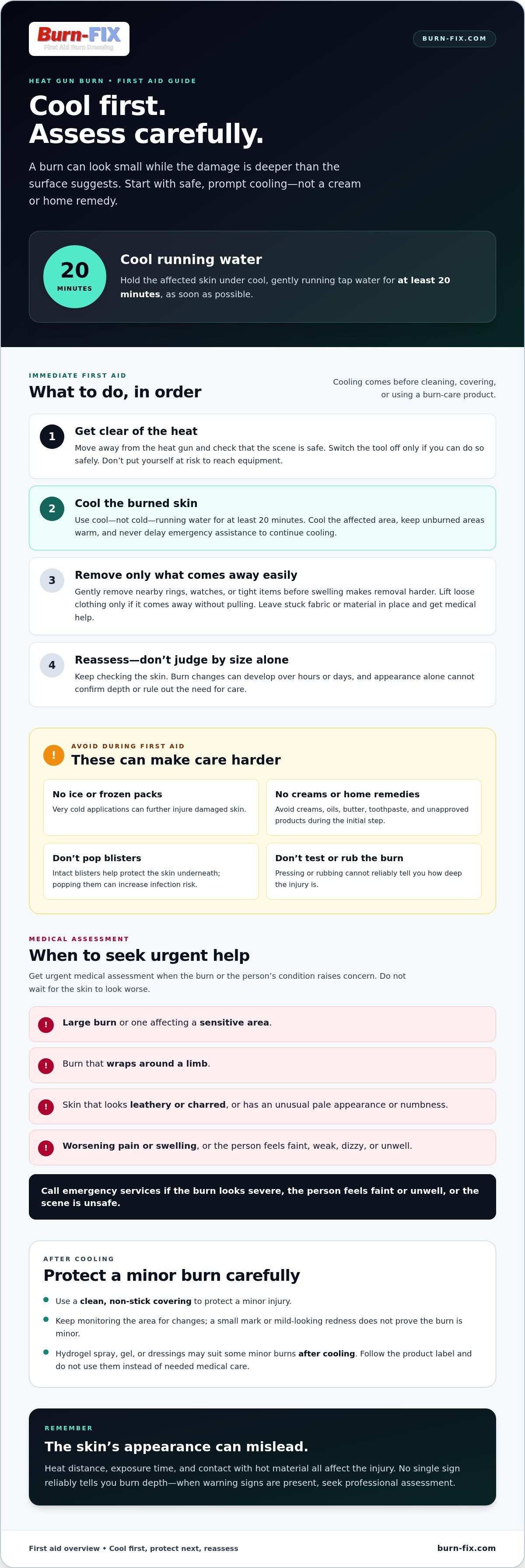
Begin cooling promptly. Hold the burned skin under cool, gently running tap water for at least 20 minutes. Cool the affected area rather than immersing the person’s whole body, and keep unburned areas warm. If you can’t use running water, seek professional guidance rather than applying ice or a frozen pack. Cooling is the immediate first-aid step; cleaning, covering, and any burn-care product come later.
- Move the person away from the heat source and assess safety.
- Cool the affected skin under cool running water for at least 20 minutes.
- Remove nearby jewelry and loose items if they come away easily.
- Get medical help if the injury appears serious or the person becomes unwell.
How should you cool a heat gun burn?
Use cool water, not icy water. Ice and very cold applications can further injure already damaged skin, while creams, oils, butter, and toothpaste may interfere with first aid. Don’t stop cooling just because the skin starts to feel more comfortable. If the person becomes chilled, weak, dizzy, or otherwise unwell, stop, keep them warm, and seek medical help. Never delay emergency assistance to continue cooling.
What should you remove or leave alone?
Take off rings, watches, or tight clothing near the burn as soon as you can do so gently, before swelling makes removal harder. Remove loose clothing only if it lifts away without pulling. If fabric, melted material, or another object is stuck to the skin, leave it in place and get medical help. Don’t apply home remedies or unapproved creams during this initial step.
A heat gun can injure skin through concentrated hot air or contact with heated material, and the damage may not be obvious at first. A burn’s appearance can change, so don’t use it alone to judge severity. For background on how burns are classified, see this overview, but don’t try to diagnose the injury yourself. Safe heat gun burn on skin care starts with cooling; once that’s done, assess the burn and follow appropriate guidance for wound protection.
How Heat Gun Burns Affect Skin, and Why Appearance Can Mislead
A heat gun can burn skin through concentrated hot air or contact with heated material. How much damage occurs depends partly on how close the skin was to the heat, how long it was exposed, and whether it touched a hot surface. The injury may look small at first, but that alone can’t confirm it’s minor.
A small visible mark doesn’t prove a small injury; burn depth can be greater than the surface suggests. Skin changes may evolve over the hours or days after exposure, so keep monitoring the area and don’t use appearance alone to decide whether medical care is needed.
What signs can a heat gun burn cause?
A burn may cause redness, tenderness or pain, swelling, and sometimes blisters. Skin can also look pale, waxy, leathery, or charred. Symptoms vary, and no single sign reliably tells you the depth. Numbness, an unusual pale or charred appearance, or worsening pain and swelling deserve prompt professional assessment.
Leave blisters intact. They help protect the skin underneath, and popping one can increase the risk of infection. Don’t press, rub, or otherwise test the burned area to judge how deep it is. If a blister breaks on its own, gently protect the area and seek medical guidance if you’re unsure how to care for it.
Why can heat-gun exposure be hard to judge?
Distance, exposure time, and contact with a hot nozzle or heated material all affect how skin responds. A brief exposure at a distance and direct contact with a hot surface aren’t the same, but you can’t reliably assign a burn degree based only on color, pain, or whether a blister forms. For related general information, read how to treat second-degree burns at home. It isn’t a substitute for having a concerning injury assessed.
For broader first-aid context, Mayo Clinic’s burn care guide explains burn symptoms and care steps, including actions to avoid. If you’re considering supplies for a burn that appears minor, explore burn first-aid products only after cooling and checking that the injury is suitable for label-directed care. Products don’t replace medical assessment when warning signs are present.
Heat Gun Burn Care: Home First Aid or Medical Evaluation?
Choose care based on the burn’s size, location, appearance, and how the person is feeling, not just how much it hurts. A heat gun can deliver concentrated heat, and symptoms may evolve after exposure. Use the guide below to help decide what to do, but remember that online information can’t diagnose a burn or replace a clinician’s assessment.
| Signs to monitor | Reasons to seek urgent professional assessment |
|---|---|
| A small area with redness or mild tenderness, no concerning location or appearance, and symptoms that aren’t worsening. | A burn larger than 3 inches across, or one on the face, hands, feet, genitals, or over a major joint. |
| A minor-looking area after cooling, while checking for changes and keeping it protected. | Skin that looks dry, leathery, pale, or charred; numbness; a suspected deep burn; or a burn that wraps around a limb. |
| Stable symptoms in someone who otherwise seems well. | Rapidly worsening symptoms, severe pain, breathing problems, or any immediate danger. Call emergency services for breathing trouble or a life-threatening emergency. |
When should you seek urgent medical care?
Get prompt medical attention for burns that meet the criteria in the table, particularly if depth is uncertain after concentrated heat exposure. Don’t wait for a blister or a larger patch of redness to appear if the injury looks deep, feels numb, or is worsening. A person’s age, health, and ability to describe symptoms can also affect the safest next step. If you’re unsure, contact a medical professional for advice.
When might minor-burn care at home be considered?
Home care may be reasonable for a small, superficial burn that’s not on a high-risk area, has no deep-burn warning signs, and isn’t getting worse. Continue to watch for changes, and seek professional advice if pain, swelling, redness, or other symptoms increase. A burn’s first appearance can’t reliably settle the question of severity.
For heat gun burn on skin care, separate first aid from the decision about ongoing care: cooling comes first, and wound protection follows only when home care is appropriate. Dressing materials differ, so read hydrocolloid versus hydrogel burn care for general context. Follow any product’s label, and don’t use a dressing or gel as a substitute for assessment when warning signs are present.
How to Protect a Minor Heat Gun Burn After Cooling
Once cooling is complete and the injury appears suitable for home care, protect the skin gently. Start with clean hands, then, if needed, rinse away visible dirt with clean water and avoid scrubbing. Cover the area with a clean, sterile, non-stick dressing or cloth that won’t press against the burn. Keep the covering loose, especially around a finger, hand, or limb, and change it if it becomes wet or dirty.
Blister care and dressing choice depend on the burn’s severity, so protect the skin without puncturing blisters or tightly wrapping the area. A blister helps shield the skin beneath it. If one breaks by itself, don’t tear away loose skin; gently rinse the area and cover it with a clean, non-stick dressing. If you’re unsure how deep the burn is, seek medical advice before treating it at home.
How should you cover and monitor the skin?
Reduce rubbing and pressure from clothing, tools, or jewelry, and check the burn regularly for changes. Some discomfort may remain, but worsening pain, spreading redness, increasing swelling, warmth, drainage, or fever can signal a problem that needs medical advice. Seek prompt assessment if the skin becomes pale, numb, leathery, or charred, or if the burn’s size or location raises concern. Don’t wait for a dressing change if symptoms are getting worse.
What should you avoid while the skin heals?
Skip ice, butter, oils, toothpaste, and other unverified home remedies. They can irritate injured skin or interfere with appropriate care. Don’t use a topical product just because the burn is uncomfortable; suitability depends on the injury and the product’s directions. If considering a burn-care product, first confirm that the burn is minor and that the label supports its use for that injury. For more on common misconceptions, read first aid myths about minor burns.
For heat gun burn on skin care, keep the after-cooling steps simple: clean gently when appropriate, cover without pressure, and watch for changes. Burn-Fix offers hydrogel spray, gel, and dressings for first-aid use with minor burns. Check the product label for directions and cautions, and don’t use a product in place of professional assessment when warning signs are present. Explore burn first-aid supplies for minor-burn care.
When Hydrogel Burn Care May Fit, and When It Is Not Enough
Burn-care products aren’t the first step after a heat gun injury. Cool the skin first, then consider the burn’s size, location, appearance, and symptoms. Hydrogel spray, gel, or dressings may be an optional first-aid choice for a minor burn only when the product label says it’s suitable. They can’t determine burn depth or replace professional assessment.
How do hydrogel spray, gel, and dressings differ?
The formats offer different ways to apply or cover a burn, but no type is right for every injury. A spray is dispensed onto the area, gel is applied directly, and a gel dressing combines a gel format with a covering. These general differences don’t confirm suitability for a particular burn. Check the current label for intended use, directions, age guidance, and cautions, and don’t apply a product to a burn that needs urgent care.
Burn-Fix hydrogel burn spray is one optional first-aid product category for appropriate minor burns. Use it only as directed after initial cooling, and don’t treat it, or any gel or dressing, as a substitute for medical care.
What should you do next?
If the burn appears minor and the label indicates the product is suitable, follow its directions exactly. Don’t use more than instructed or assume a product is appropriate because it feels soothing. Keep the injury protected as directed, and monitor for changes such as worsening pain, spreading redness, increased swelling, or other concerning symptoms. Contact a healthcare professional if the burn gets worse or you’re unsure about its severity.
For practical heat gun burn on skin care, having suitable first-aid supplies accessible can make it easier to respond, but supplies don’t prevent the need for assessment. Burn-Fix offers hydrogel spray, gel, dressings, and a burn kit for first-aid use with minor burns. Review the label before use, including any warnings or age restrictions.
If the burn looks deep, is extensive, affects a high-risk area, or its severity is uncertain, seek professional assessment rather than relying on a product. When in doubt, get medical advice.
Take the Next Safe Step
After a heat gun burn, act promptly but don’t judge severity by the mark alone. Cool the affected skin first, then protect a minor injury gently and watch for changes. Burns that are large, deep-looking, worsening, or on sensitive areas need professional assessment. If you’re unsure, seek medical advice rather than relying on a home-care product.
Good heat gun burn on skin care starts with first aid and a clear assessment. Hydrogel spray, gel, or dressings may be an option for a minor burn when the product label supports that use. Burn-Fix offers these supplies, along with a burn kit; always check directions and cautions, and remember that products don’t replace needed medical care.
Explore Burn-Fix burn-care products to review first-aid options for appropriate minor burns. With prompt cooling, careful monitoring, and professional help when needed, you can take the next step with greater confidence.
Frequently Asked Questions
What should I do immediately after a heat gun burns my skin?
Move away from the heat source, switch off the heat gun if it’s safe, and cool the burned skin under cool running water. Keep the person safe and warm, and remove nearby rings, watches, or loose clothing if they come away easily. Don’t pull off material stuck to the skin. Once cooling is complete, assess the injury and seek prompt medical care for serious warning signs or if you’re unsure about the burn’s severity.
How long should you run water on a heat gun burn?
Cool the burned area under cool, gently running water for at least 20 minutes. Start as soon as possible. Cooling may still help if begun within an hour of the injury, but don’t delay emergency care to complete the cooling period. Keep the rest of the person warm, and stop if they become unwell or the situation becomes unsafe. Don’t use ice or icy water instead of cool running water.
Can a heat gun burn be serious even if it looks small?
Yes. A small visible mark doesn’t rule out a deeper injury, and burn symptoms can change over time. The heat gun’s distance from the skin, exposure duration, and contact with a hot surface all affect the injury. Don’t rely on color, pain, or blistering alone to judge severity. Seek professional assessment for numbness, pale, leathery, or charred skin, worsening symptoms, or a burn in a high-risk location.
Should I put burn gel or hydrogel spray on a heat gun burn?
Cool the burn and assess its severity before considering a product. Hydrogel spray, gel, or dressings may be suitable for some minor burns, but only if the product label specifically supports that use. Follow its directions, age guidance, and cautions. Burn-Fix sells hydrogel burn-care products for first-aid use with minor burns. They don’t replace medical assessment or treatment when the injury is serious or its severity is uncertain.
Should I pop a blister from a heat gun burn?
No. Leave a burn blister intact because it helps protect the skin underneath. Popping or peeling it can damage the injured area and raise infection risk. Avoid pressure and friction, and cover the burn loosely with a clean, non-stick dressing if appropriate. If the blister breaks on its own, gently rinse the area with clean water. Get medical advice if the burn is extensive, worsening, or difficult to care for safely.
When should I go to the emergency room for a heat gun burn?
Seek urgent medical care for a burn larger than 3 inches across, one on the face, hands, feet, genitals, or a major joint, or one that wraps around a limb. Get emergency help for a dry, leathery, or charred appearance, suspected deep injury, breathing problems, severe symptoms, or immediate danger. If you can’t tell how serious the burn is, contact a healthcare professional promptly rather than relying on appearance alone.
What should I avoid putting on a heat gun burn?
Don’t put ice, butter, oils, toothpaste, or other home remedies on a fresh burn. They can irritate damaged skin or interfere with care. Avoid applying creams or burn products before cooling, and don’t assume a product suits every burn or stage of healing. After cooling, use a topical product only if its label indicates it’s appropriate for that injury. Seek professional care if warning signs appear or the severity is unclear.


