


A blister dressing should cushion the sore spot without adding more irritation. A hydrogel dressing for blisters may differ from a hydrocolloid bandage, so the material matters: hydrocolloid bandages are waterproof for bathing and can generally stay in place for 3 to 7 days, with more than 24 hours recommended. Don’t use one if you’re allergic to an ingredient, and speak with a doctor before using one if you’re immunocompromised.
It’s understandable to wonder whether water, sweat, or removal will undo a blister dressing’s protection. A well-fitting hydrocolloid dressing can stay in place during bathing, but sweat and friction may loosen its adhesive. Redness, swelling, warmth, or heavy bleeding are reasons to have the wound assessed.
This guide explains how blister dressings cushion the skin, how moisture and wear can affect them, and how they compare with ordinary bandages. You’ll also learn when a dressing may not be suitable and which side effects or wound changes deserve attention, so you can choose a sensible next step.
Key Takeaways
- Hydrocolloid blister dressings can generally stay in place for 3 to 7 days; the fit, moisture, and condition of the dressing help signal when it’s time for a change.
- Waterproof protection can help a dressing remain in place during bathing, while sweat and friction may affect how securely it sticks.
- Compare cushioning and ease of use with ordinary bandages to choose what feels comfortable and suits the blister’s location.
- Know when to avoid a dressing, including with an ingredient allergy or signs of infection, and when a wound needs medical assessment.
- For burns rather than friction blisters, BurnFix Hydrogel Burn Spray - 120ml is a burn-care option; the article explains the difference.
How long to leave a dressing in place
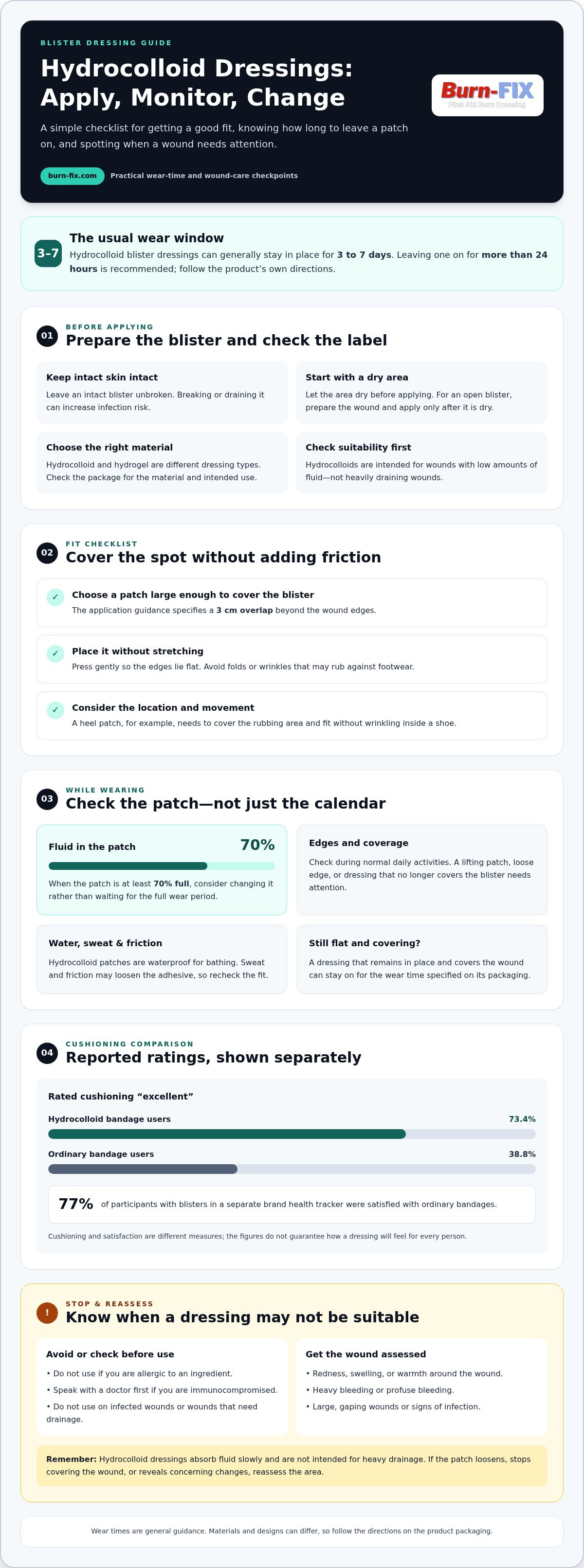
Wear time depends on the dressing type and the blister beneath it. For hydrocolloid blister dressings, the usual range is 3 to 7 days, with a change considered when the patch is at least 70% full.
Dressing Wear Time
Hydrocolloid dressing wear time is the period a patch stays attached while protecting a blister. Many can remain in place for 3 to 7 days, and leaving one on for more than 24 hours is recommended. Some may stay on for up to a week. These are general ranges, not a reason to ignore a dressing that is loosening or full.
Look at the patch rather than changing it automatically each day. Consider changing it when the patch is visibly full of wound fluid. A patch that lifts or no longer covers the blister also needs attention. Follow the product’s own wear-time directions, since materials and designs can differ.
To apply a hydrocolloid dressing, first leave an intact blister unbroken and let the area dry. Choose a patch large enough to cover the blister, then place it without stretching, with a 3 cm overlap beyond the wound edges. Press it into place gently so the edges lie flat.
Hydrocolloid plasters can cover intact blisters, blood blisters, and open blisters. Keeping an intact blister unbroken matters because breaking or draining it can increase infection risk. For an open blister, take care to prepare the area before applying a dressing. Avoid using it on infected wounds or wounds that need drainage.
Caring for a Covered Blister
Once a blister is covered, keep the patch in place and monitor its condition. Check the edges and visible surface during normal daily activities, especially if friction loosens the adhesive. A dressing that stays flat and covers the wound can remain in place for the wear period specified on its packaging.
When fluid reaches at least 70% of the patch, consider a change rather than waiting for the full week. If the dressing comes loose, no longer covers the wound, or reveals infection signs, reassess the area. Redness, swelling, or warmth around a wound warrants medical assessment.
Hydrocolloid dressings are designed for wounds with low amounts of fluid, not heavy drainage. They absorb fluid slowly, so they are unsuitable for heavily bleeding wounds. Large, gaping wounds and wounds that bleed profusely require a doctor’s care. Choosing an appropriate dressing helps protect healing skin without trapping a problem beneath the patch.
Comparison with ordinary bandages
For a blister, the better option depends on the dressing material and the affected area. Hydrogel and hydrocolloid are not interchangeable terms: hydrocolloid patches have an adhesive layer and an outer film, while hydrogel describes a different, gel-based dressing type. If you’re considering a hydrogel dressing for blisters, check the package to confirm its material and intended use.
In a comparison of cushioning, 73.4% of hydrocolloid bandage users rated the cushioning excellent, compared with 38.8% of ordinary bandage users. Ordinary bandages still have a place: they can cover a small blister when a specialist patch isn’t available. The figures describe reported cushioning, not a guarantee that one dressing will feel better on every foot.
A separate brand health tracker found that 77% of participants with blisters were satisfied with ordinary bandages. Satisfaction and cushioning measure different things, so those results can coexist. A basic bandage may meet someone’s needs if it stays over the spot and doesn’t rub against footwear. A patch designed for blisters may suit someone prioritizing cushioning and a secure fit.
Compare options by considering the blister’s location, what causes friction, and how each dressing fits. A heel patch, for example, needs to cover the rubbing area without wrinkling inside a shoe. A loose edge can catch and peel back. An ordinary bandage that shifts with each step may provide less practical protection, even if it initially covers the blister.
- Check the material: confirm whether the package says hydrocolloid or hydrogel.
- Assess the fit: choose a dressing that covers the blister without stretching or folding.
- Consider the setting: think about whether footwear or repeated movement might lift the edges.
Hydrocolloid dressings are intended for wounds with low amounts of fluid, not heavy drainage. They shouldn’t be used on infected wounds or wounds that need drainage. An ordinary bandage isn’t automatically suitable for every blister either; the skin condition and product instructions still matter. For an open blister, apply a hydrocolloid bandage only after the wound is dry.
In short, hydrocolloid patches have higher reported excellent-cushioning ratings, while ordinary bandages also receive positive satisfaction ratings. Before choosing a hydrogel dressing for blisters, compare the label, fit, and intended use rather than assuming “hydrogel” and “hydrocolloid” mean the same thing. That distinction helps you match the dressing to the blister.
For cushioning, a hydrocolloid blister bandage may be the better choice. Use a hydrogel dressing only if its label says it is intended for blisters. The best option still depends on the blister’s location, fit, and skin condition.
Consider the blister and the area it will cover. A blister can take up to two hours to fully fill with fluid. Hydrocolloid bandages are not effective for cystic acne, which forms deep within the skin. These are different situations: fluid developing in a blister and an acne condition beneath the skin. For a blister, check the dressing’s label and stated intended use before applying it.
Cushioning
Cushioning helps reduce direct rubbing and pressure on a blister, which can ease friction-related discomfort. A dressing doesn’t remove the source of friction, so shoe fit and repeated movement still matter. For example, a patch over a heel can create a protective layer between the blister and the back of a shoe.
Hydrocolloid patches form a gel layer over the covered area, while ordinary bandages have a different structure. The dressing’s surface and fit affect how it feels as you walk or grip an object. A wrinkle or edge over a pressure point can become irritating, so a smooth, well-positioned patch matters.
Can hydrogel dressings prevent infection or reduce blister pain? A dressing can cushion a blister and reduce rubbing, but it doesn’t treat an infection. Hydrocolloid bandages shouldn’t be used on infected wounds; redness, swelling, or warmth around a wound calls for medical assessment.
For friction-related discomfort, consider where pressure lands during the activity that caused the blister. A heel blister rubs against footwear, while a finger blister may press against a tool or sports equipment. The dressing should cover the affected area without stretching, bunching, or leaving the blister exposed to continued contact.
Cushioning ratings offer a useful comparison, but they don’t predict how every person will experience a patch. In a comparison, 73.4% of hydrocolloid bandage users rated cushioning excellent. That result reflects reported experience, not a promise of pain relief for a particular blister or a reason to ignore poor fit.
Padding has limits, too. A dressing that feels bulky inside a tight shoe can add pressure rather than reduce it. Check the fit while standing and moving, then see whether the patch stays smooth against the skin. If an edge folds or catches, friction can continue at that spot.
Keep the blister intact when possible. Breaking or draining it can increase infection risk, and covering it doesn’t make that risk disappear. If the blister opens, apply a hydrocolloid dressing only after the wound is dry. Avoid these dressings on infected wounds or wounds that need drainage.
A 2014 systematic review found no conclusive evidence that hydrocolloid bandages were superior to other dressings for chronic bed sores. That finding concerns a different wound type, not blister cushioning, but it underlines why dressing choice should match the wound. For a blister, prioritize a comfortable fit, a smooth protective layer, and reduced contact with the source of rubbing.
Risks and side effects
A dressing can protect a blister, but the wrong match can cause problems. Hydrogel and hydrocolloid describe different dressing types, so check the package instructions before applying a product. For hydrocolloid bandages, ingredient allergies, infection, heavy bleeding, or a wound that needs drainage are important reasons to avoid use.
Don’t use a hydrocolloid bandage if you’re allergic to any of its ingredients. If you’re immunocompromised, speak with a doctor before using one. These precautions matter even for a small friction blister, because the material and your health can affect whether the dressing is suitable.
Hydrocolloid dressings are intended for wounds with low amounts of fluid, not wounds with large amounts of exudate. They also absorb fluid slowly, so they aren’t appropriate for heavily bleeding wounds. A blister that keeps bleeding or produces substantial fluid needs a different assessment from a dry, intact blister.
When should you see a doctor for a blister? Have a doctor assess a blister wound that is deep, bleeds heavily, or shows signs of infection, such as redness, swelling, or warmth. Large, gaping wounds and wounds that bleed profusely also require a doctor’s care.
Check the wound and whether the dressing is suitable before covering the area:
- Allergy: avoid a hydrocolloid bandage if you’re allergic to any ingredient.
- Infection signs: redness, swelling, or warmth need medical assessment, not coverage with a hydrocolloid patch.
- Bleeding or drainage: avoid hydrocolloid dressings for heavy bleeding or wounds that need drainage.
- Health status: speak with a doctor before use if you’re immunocompromised.
Breaking or draining an intact blister can increase infection risk. Leave the skin intact where possible, and don’t treat a dressing as a substitute for assessment if the wound changes. For an open blister, apply a hydrocolloid bandage only after the wound is dry. A wet wound or one that needs drainage does not meet this condition for use.
Pay attention to what appears around the blister, not only beneath the patch. Redness, swelling, or warmth can signal infection and warrant a doctor’s assessment. If a dressing covers these changes, don’t let keeping the patch in place distract you: the wound’s appearance and symptoms matter more.
Choose the dressing according to the wound, not just its location. A small, dry friction blister differs from a deep wound, heavy bleeding, or signs of infection. Matching the dressing to the wound helps avoid using a hydrocolloid bandage where it isn’t appropriate, while prompt medical assessment addresses wounds that need care beyond a covering.
Before using a hydrocolloid bandage, consider its ingredients and your health. Anyone allergic to an ingredient in the bandage should avoid using it, so check the ingredients if you have an allergy concern. An allergy is a reason not to use the product, not a reason to try it and monitor your skin.
Anyone who is immunocompromised should consult a doctor before using a hydrocolloid bandage. Have that discussion before applying it rather than assuming the dressing is suitable. These precautions are distinct: people allergic to any ingredient should not use the bandage, while people who are immunocompromised should speak with a doctor beforehand.
Waterproof and sweatproof properties
Water resistance can help a blister dressing stay in place during everyday washing. Hydrocolloid bandages are waterproof and can remain in place during bathing. However, that doesn’t mean every dressing type has the same property or that its edges will stay sealed during every activity. Check the package to confirm the material and care instructions.
Bathing and sweating expose a dressing to different conditions. Water may run over a hydrocolloid patch, while sweat can collect beneath clothing or footwear and combine with repeated friction. For example, a heel patch inside a damp sock faces rubbing that a patch on an uncovered arm may not. Waterproofing alone doesn’t establish how well a dressing will adhere during exercise.
Fit matters. A hydrocolloid patch should cover the blister and sit smoothly without stretching. Lifted edges can let water or sweat reach the skin underneath, and movement may catch a loose edge. Before bathing, press down edges that are already lifting only if the product directions allow it; don’t assume a loose patch will reseal.
After bathing, gently pat the surrounding skin dry and check the dressing’s edges. Don’t rub the patch with a towel, as friction can pull at its border. If water exposure leaves the dressing loose or no longer covering the blister, follow the package instructions for replacement. Secure coverage and intact edges matter more than the word “waterproof” alone.
Check the patch separately during activity. Beneath a running shoe, it may face warmth, moisture, and pressure at once. If the edges roll, the dressing shifts, or the blister becomes exposed, stop and reassess the fit. Continuing with a loose patch can allow more rubbing, even if the dressing material itself resists water.
- Before bathing: check that the patch covers the blister and its edges are flat.
- After bathing: pat nearby skin dry, then inspect for lifting or exposed skin.
- After sweaty activity: check whether friction has shifted or loosened the dressing.
Waterproof doesn’t mean suitable for every kind of water exposure or activity. Follow the specific product directions, especially if the patch lifts, leaks, or stops protecting the blister. Don’t stretch the dressing to force a better seal; a poor fit can make the edges lift during movement.
If you’re preparing first-aid supplies for burns rather than friction blisters, explore BurnFix Hydrogel Burn Spray - 120ml. It’s a burn-care product, not a blister dressing, so choose supplies according to the injury.
Burn-Fix: BurnFix Hydrogel Burn Spray - 120ml
Burn-Fix Hydrogel Burn Spray - 120ml is intended for burn care, not friction blisters. Burn-Fix offers hydrogel burn-care products for first- and second-degree burns, sunburns, and scalds, with cooling and moisture-retaining properties described for its range. If the injury is a friction blister, use guidance for blister dressings instead; if it's a burn, choose a product designed for burn care and follow its label.
For a dressing option, Burn-Fix 4x4 First Aid Burn Gel Dressing is another burn-care offering. Matching the product to the injury helps avoid confusing a burn dressing with a blister patch. Visit Burn-Fix online to explore its burn-care products.
Choose your next step with confidence
A sore spot can change how you walk, work, or enjoy an activity. Use what you’ve learned to plan for the situation that caused the irritation, whether that means adjusting footwear, reducing repeated rubbing, or keeping suitable first-aid supplies nearby. A hydrogel dressing for blisters is one part of that plan, not a substitute for noticing when the wound needs attention.
It also helps to keep burn care and blister care distinct. Burn-Fix offers burn-care products, including BurnFix Hydrogel Burn Spray - 120ml, Burn-FIX 4x4 First Aid Burn Gel Dressing, and BurnFix Burn Kit. These are burn-care offerings, rather than friction-blister dressings. Choosing supplies by injury type makes your next response clearer and more deliberate.
If you have questions about Burn-Fix’s burn-care products, contact Burn-Fix with your questions. Take the next step calmly, and give the injury the care it calls for.
Frequently Asked Questions
What is a hydrogel dressing and how does it help blisters heal?
A hydrogel dressing contains water held in a gel, while many blister patches called hydrocolloid have an adhesive layer and an outer film. The distinction matters: guidance for hydrocolloid patches doesn’t automatically apply to every hydrogel product. A suitable covering can shield a blister from rubbing. Check the dressing label for its material and intended use, and don’t assume “hydrogel” and “hydrocolloid” mean the same thing.
How often should you change a hydrogel dressing on a blister?
For a hydrocolloid blister patch, follow its package directions; patches can generally stay in place for 3 to 7 days. Consider changing one when it’s at least 70% full of wound fluid, or sooner if it loosens and stops covering the area. A patch may remain on for up to a week, and leaving it in place for more than 24 hours is recommended.


