


The steam can burn you before the bowl feels hot. The first step in microwave bowl steam burn treatment is to cool the affected skin under cool tap water until it feels cool to the touch, which can take 20 minutes or longer. Start as soon as possible, and don’t use ice.
It’s easy to lift the lid of a microwave meal too quickly, especially when you’re hungry or in a hurry. Steam trapped beneath the lid can rush out, and hot food or liquid can spill onto your skin. Either can cause a painful scald. This guide explains how microwave bowl steam burns happen, what to do right away, what to avoid, and when to seek medical care. You’ll also learn how to protect the cooled area and reduce the chance of another burn, so you can focus on the next safe step.
Key Takeaways
- Open microwave lids carefully, directing escaping steam away from your face and body.
- Cool a steam burn under cool running tap water until the skin feels cool, which can take 20 minutes or longer.
- Avoid ice, butter, and oils, and don’t break blisters; protect the cooled area with a clean covering.
- Get urgent medical help for deep burns, burns on the face or hands, or steam injuries affecting the eyes or airways.
- Learn how to recognize infection warning signs and when BurnFix Hydrogel Burn Spray may support care for a minor burn.
How Do Steam Burns Occur?
Prevent steam burns by letting microwaved food cool before removing it and venting it during cooking. Open the lid carefully, pointing it away from your body, and use oven mitts to handle the bowl.
- Recognize how the burn happened. Steam trapped under a microwave lid can escape suddenly when you open it. Hot liquids can also spill from a bowl and scald skin. Steam and hot-liquid scalds are common causes of burns. A bowl may feel manageable while its escaping steam or contents are still hot.
- Start first aid promptly. Move away from the microwave and any spilled liquids. Take off nearby jewelry or clothing only if it isn’t stuck to the burned skin. Begin cooling as soon as possible, within 3 hours of the injury. Quick cooling helps limit the heat’s continued effect on skin.
- Cool the affected area with tap water. Hold the burn under cool running water until it feels cool to the touch. This can take 20 minutes or longer. Don’t use ice or very cold water, which can further damage the skin. If running water isn’t available, use a clean, cool, wet cloth.
- Look for signs of a deeper injury. A first-degree burn affects only the outer skin and may look red and painful. A second-degree burn can involve two skin layers, with painful blisters and wet-looking skin. A third-degree burn affects all three layers and may look white, black, or bright red, with a leathery appearance. Treat suspected third-degree burns as emergencies.
- Get emergency help for severe burns. Call 911 for a burn that affects the face, hands, feet, genitals, buttocks, or a major joint. A burn larger than 3 inches across needs emergency medical help; burns larger than 2 inches also warrant medical care. Steam burns to the eyes or airways need immediate emergency attention. Cover a major burn loosely with clean, dry cloth while help is coming.
- Protect the cooled skin without home remedies. Don’t apply ice, butter, or oils; these can interfere with healing. Don’t break blisters, because this raises infection risk. Once the burn is cool, cover it with a clean bandage. Cling film can lie loosely over the area, but don’t wrap it around a limb.
When to seek medical care
Use the burn’s depth, size, location, and symptoms to decide what to do next.
- Call 911 for emergency signs. Get emergency help for burns affecting the face, hands, feet, genitals, buttocks, or a major joint. Steam exposure to the eyes or airways also needs immediate emergency medical attention. A burn covering more than 9% of the person’s body is another reason to go to an emergency room or call 911.
- Arrange medical care for a suspected deeper burn. A second-degree burn can cause painful blisters and moist-looking skin. Seek medical attention for suspected second- or third-degree burns, and for a second-degree burn larger than the palm of the hand. A burn larger than 2 inches in diameter warrants medical care; one larger than 3 inches across needs emergency medical help.
- Don’t judge severity by pain alone. A third-degree burn can damage all three skin layers and may look white, black, or bright red, with a leathery surface. Nerve damage can affect sensation, so little pain doesn’t mean the injury is minor. Cover a major burn loosely with clean, dry cloth or sterile gauze while help is coming.
- Care for a small first-degree burn at home. After cooling, keep the area clean and apply petroleum jelly or aloe vera gel a few times a day. A cold, wet compress can ease discomfort, but don’t put an ice pack directly on skin. Over-the-counter acetaminophen or ibuprofen can help with pain; follow the product label.
- Protect blisters and broken skin. Don’t pop or pick blisters, since damaged skin can increase infection risk. A nonstick bandage can shield an irritated or open blister from clothing. If a blister breaks, gently clean it with water and apply over-the-counter antibiotic ointment. Keep the area protected during cooking and other activities that could rub it.
- Watch the wound as it heals. Change a bandage covering a burn daily, and keep a home-treated burn dressing on for at least 10 days. A superficial burn usually heals within two weeks; a minor second-degree burn smaller than the palm may heal in a week or two. Seek care for abnormal drainage, foul odor, fever, or a change in skin or tissue color.
- Consider tetanus protection for a deep burn. According to the Centers for Disease Control and Prevention, someone with a deep burn who hasn’t had a tetanus shot in the past five years may need a booster. Mention the injury and vaccination timing when seeking care, especially if the burn is deep or the skin is broken.
Cooling a steam burn
Cool the skin promptly, then check for redness, pain, or blisters that may indicate a deeper injury. A practical microwave bowl steam burn treatment starts with water, not ointment or ice.
-
Cool the Burn With Tepid Water
Hold the burned area under cool tap water until it feels cool to the touch. This can take 20 minutes or longer; begin as soon as possible, within 3 hours of the injury. For minor burns, cool running water for about 10 minutes is also advised. Keep the water comfortable, not icy, and avoid scrubbing tender skin.
-
Cool a First-Degree Burn
Run cool water over a first-degree burn, which affects only the outer layer of skin. Redness and pain may resemble sunburn, without the wet appearance or painful blisters often associated with second-degree burns. Don’t use ice or place an ice pack directly on the skin. After cooling, a clean, cool, wet compress can ease discomfort.
-
Continue cooling if heat or pain remains.
Continue cooling the skin under cool running water until it feels cool. A damp towel can rest gently on the area in ten-minute increments to ease pain and swelling. Re-wet it as needed to keep it cool. Don’t press hard, especially where the skin looks fragile or blistered. Cooling remains a key step in microwave bowl steam burn treatment.
-
Adjust the approach for children.
Cool a child’s burn with gentle running water while keeping the child warm elsewhere. A small injured area can lose body heat quickly during prolonged cooling, so avoid chilling the rest of the child. Don’t use ice, frozen packs, or icy water. Seek medical attention if the burn looks deep, covers a large area, or affects a sensitive location.
-
Protect the skin after cooling.
Carefully pat the area around the burn dry, then cover it loosely with a clean bandage. Don’t apply butter, oil, or sticky dressings. For a first-degree burn, petroleum jelly or aloe vera gel can soothe and protect the skin when applied a few times a day. If a blister breaks, gently clean it with water and apply over-the-counter antibiotic ointment.
-
Reassess before treating it as minor.
Cooling helps limit ongoing heat injury, but it doesn’t determine the burn’s degree. Watch for blisters, moist-looking skin, worsening swelling, or pain that continues after cooling. These signs may indicate a more serious burn than simple redness. Don’t delay medical care for a deep injury or a burn affecting the eyes or airways.
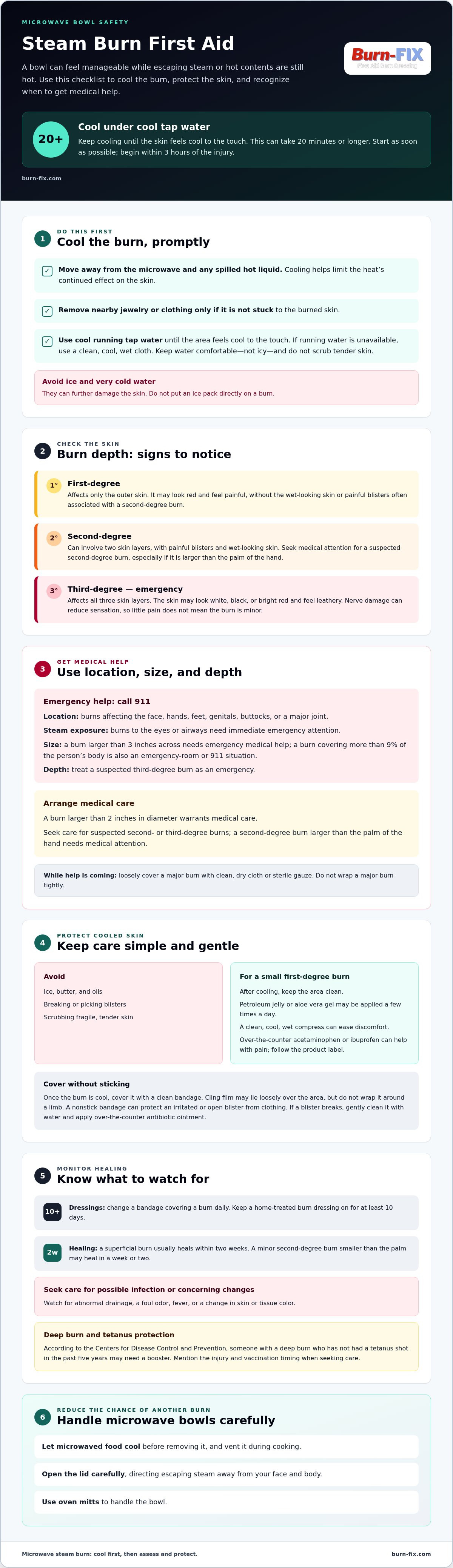
Avoiding creams, oils, butter, and sticky dressings
After cooling a thermal injury, choose a clean covering and avoid substances that could interfere with healing. The right choice depends on whether the skin is intact, blistered, or open.
-
Avoid Creams, Oils, and Butter
Don’t spread butter or cooking oils over a burn, as they can interfere with healing. Avoid applying creams before cooling the skin, because they don’t remove the heat causing the injury. For a cooled first-degree burn, petroleum jelly or aloe vera gel can soothe and protect the skin when applied a few times a day. Keep products off broken skin unless advised for that wound.
-
Avoid Sticky Dressings and Other Remedies
Cover the cooled area with a clean, nonstick bandage rather than applying adhesive directly to the burn. Sticky dressings can pull at tender skin or blisters when removed. Don’t wrap cling film around an arm or leg; if using it, lay it loosely over the burn. Avoid ice, toothpaste, and other kitchen remedies, which don’t replace cooling with water.
-
Leave blisters intact.
Don’t press, pick, or break a blister. Its surface helps protect injured skin, and breaking it can increase the risk of infection. If clothing rubs against the blister, use a nonstick bandage as a barrier. Keep the dressing loose, and replace it if it becomes wet or dirty.
-
Use ointment only for the right wound.
An intact, red first-degree burn doesn’t routinely need antibiotic ointment. If a blister breaks, gently clean the area with water and apply over-the-counter antibiotic ointment. Avoid rubbing the wound or using a cotton swab that may leave fibers behind. Watch for increasing pain, abnormal drainage, a foul odor, fever, or a change in skin color.
-
Check the skin before choosing home care.
Redness and soreness may indicate a first-degree injury, while painful blisters or moist-looking skin can signal a second-degree burn. A deep burn, or one that looks white, black, or leathery, needs urgent medical attention, not home creams. Seek emergency care for burns affecting the face, hands, feet, or a major joint.
-
Keep the bandage clean during healing.
Change the burn bandage daily and keep it from sticking to the injured skin. If it adheres, wet it with clean water before removing it rather than pulling. Don’t cover a burn with a tight wrap that applies pressure. Each time you change the bandage, check for new swelling, drainage, odor, or worsening symptoms.
What is a steam burn?
Steam burns are thermal injuries caused by hot vapor. Microwave bowls can also scald skin with hot food or liquids. Both can damage the skin, so assess the affected area and watch for signs of infection as it heals.
- Note how the burn happened. Steam escaping from a covered bowl can strike exposed skin, while spilled soup can scald it directly. Both are thermal burns, but the contact differs: vapor may reach skin suddenly, and hot liquids can spread across it. In either case, the injury’s depth and location matter more than its cause.
- Check which skin layers may be affected. A first-degree burn damages only the outer layer and can look red and painful. A second-degree burn affects the outer and underlying layers, often causing painful blisters and moist-looking skin. A third-degree burn reaches all three skin layers and may appear white, black, or bright red with a leathery surface.
- Keep blisters intact. Don’t puncture, squeeze, or peel blistered skin. A blister can cover damaged tissue, and breaking it increases infection risk. If clothing rubs the burned area, place a clean nonstick bandage over it. Avoid adhesive directly on the injury, since removal can pull at fragile skin.
- Inspect the burn during dressing changes. Change a covering daily and look for abnormal drainage, foul odor, fever, or a change in skin or tissue color. These are warning signs of burn infection. A clean, healing wound should not develop new concerning changes; seek medical attention if these signs appear.
- Notice changes beyond the wound. Cool, pale skin, a weak pulse, or fast breathing can signal shock after a burn. Call 911 for emergency help if these symptoms occur. Also treat steam exposure to the eyes or airways as an emergency, even if the visible skin injury seems small.
- Get medical care for deep or extensive damage. A burn larger than 3 inches across needs emergency medical help. Seek care for burns affecting the face, hands, feet, genitals, buttocks, or a major joint. A suspected second- or third-degree burn also needs medical attention, rather than home monitoring alone.
- Track whether healing is progressing. A superficial burn usually heals within two weeks. A blister that doesn’t heal within a week may indicate a chronic or non-healing wound. Keep the area clean, protect it from friction, and arrange medical care if healing stalls or infection warning signs develop.
Burn-Fix: Burn-Fix Hydrogel Burn Spray - 120ml
Burn-Fix Hydrogel Burn Spray - 120ml can support first-aid care after a minor steam or scald burn has been cooled. Burn-Fix hydrogel products are designed to provide cooling, retain moisture, and help relieve pain from first- and second-degree burns. Use the spray as directed on its packaging, and keep the burn clean and protected as it heals.
Hydrogel isn’t a substitute for cooling the skin under cool running water, and it isn’t appropriate for a suspected third-degree burn or an injury requiring emergency care. Seek medical attention for deep, large, or sensitive-area burns, or if signs of infection develop. For home burn-care supplies, Burn-Fix offers spray, gel, dressing, and kit options.
Visit burn-fix.com to learn more about Burn-Fix burn-care products.
Make your next step a prepared one
A painful kitchen accident can make even a familiar task feel unsettling. Once you’ve cared for the immediate injury, use the experience to make your cooking routine safer: pause before opening a covered bowl, keep children clear of hot dishes, and make household first-aid supplies easy to find. A simple plan can help everyone respond more calmly if another scald occurs.
Knowing the steps for microwave bowl steam burn treatment also means recognizing when home care isn’t enough. If an injury is deep, affects a sensitive area, or shows signs of infection, seek medical attention rather than relying on first-aid products alone. For questions about Burn-Fix burn-care products, contact Burn-Fix for support.
Take a moment to prepare before your next meal. A safer routine and a clear response plan can help you feel more ready in the kitchen.
Frequently Asked Questions
When Should I Go to the ER?
Go to the emergency room for a deep burn, a burn affecting a sensitive area, or signs of shock. Emergency signs include cool, pale skin, a weak pulse, or fast breathing. A burn larger than 9% of the person’s body also warrants emergency care. If the injury affects breathing or the eyes, call 911 rather than driving yourself.
What should you do immediately after a steam burn from a microwave bowl?
Move away from the bowl and cool the burned skin under cool running tap water. Remove nearby jewelry before swelling makes it difficult, but don’t pull away clothing stuck to the burn. If hot food spilled onto clothing, remove it only if it comes away easily. Once the area is cool, cover it loosely with a clean dressing.
How long should you cool a steam burn under cool running water?
Keep the area under cool running water until the skin feels cool to the touch; this can take 20 minutes or longer. Start promptly, even if the burn initially looks small. If you can’t use a tap, place a clean, cool, wet cloth over the area and refresh it. Don’t use ice or very cold water.
Should you use ice, butter, or burn cream on a steam burn?
No. Ice can further damage burned skin, while butter and oils may interfere with healing. Don’t apply creams before cooling the area, and avoid toothpaste or other kitchen remedies. After cooling, petroleum jelly or aloe vera gel can soothe a minor first-degree burn. Don’t apply products to a deep burn or broken skin without medical guidance.
How do you treat a minor steam burn blister at home?
Don’t pop or peel the blister. Keep it clean and protect it from rubbing with a nonstick bandage. If it breaks, gently wash the area with water and apply over-the-counter antibiotic ointment. Change the covering daily and watch for increasing redness, abnormal drainage, odor, or fever. Seek medical care if the blistered burn is larger than the palm.
When should you seek emergency care for a microwave steam burn?
Call 911 for steam burns affecting the eyes or airways, or for a burn that looks deep, white, black, or leathery. Emergency evaluation is also needed for burns on the face, hands, feet, genitals, buttocks, or a major joint. Don’t wait for blisters to appear if the skin looks severely damaged or the person has trouble breathing.
What signs indicate a steam burn is infected or getting worse?
Watch for abnormal drainage, a foul odor, fever, or changes in skin or tissue color. Worsening pain, spreading redness, or swelling also warrants prompt medical attention. Compare the area with how it looked after the injury, rather than relying on pain alone. If a blister isn’t healing within a week, arrange a medical assessment.
What pain relief and dressings are recommended for a minor steam burn?
After cooling, a clean, nonstick bandage can protect the area from clothing and daily activities. Over-the-counter acetaminophen or ibuprofen can help ease pain; follow the package directions and consider the person’s health conditions. Change the bandage daily, and don’t apply adhesive directly to burned skin. Seek medical care if pain worsens or the wound shows signs of infection.
This information is for general informational purposes only and doesn’t constitute medical advice, diagnosis, or treatment. Burn-Fix products aren’t intended to diagnose, treat, cure, or prevent disease and haven’t been evaluated by the FDA. Use products only as directed on the label; don’t exceed the recommended dose unless instructed by a healthcare provider. Don’t use if allergic or sensitive to ingredients. Protective gloves are suggested when handling acidic gel. Burn-Fix isn’t liable for adverse effects; use is at your own risk.


