


The first few minutes after a tea spill matter. The safest response is simple: cool the burn before reaching for a cream or dressing. If boiling tea lands on your skin, start boiling water tea spill burn management by holding the area under cool or lukewarm running water for at least 20 minutes. Don’t use ice, which can cause further damage.
The sting and shock can make it hard to think clearly. You may be unsure whether to remove clothing or jewelry, what to do about a blister, or whether the burn needs medical care. A clear sequence can help you act calmly.
This guide explains what to do immediately, how to recognize signs that need urgent medical assessment, and how to protect a minor scald as it heals. You’ll also learn what not to put on burned skin, how to handle clothing and blisters safely, and where hydrogel products may fit after cooling when used according to their directions. Cool first, assess next, protect afterward.
Key Takeaways
- Boiling water tea spill burn management starts with stopping exposure and cooling the affected skin, then moves to assessing the injury and protecting it.
- Burn size, depth, location, and the person’s age and overall condition can all affect whether urgent medical assessment is needed.
- Skip household remedies such as butter, oils, and toothpaste. Learn which simple steps can help protect a minor scald after cooling.
- Practical changes to how you carry and place hot tea, plus accessible first-aid supplies, can help you respond more calmly if a spill happens.
Boiling Water or Tea Spill Burn: What to Do Immediately
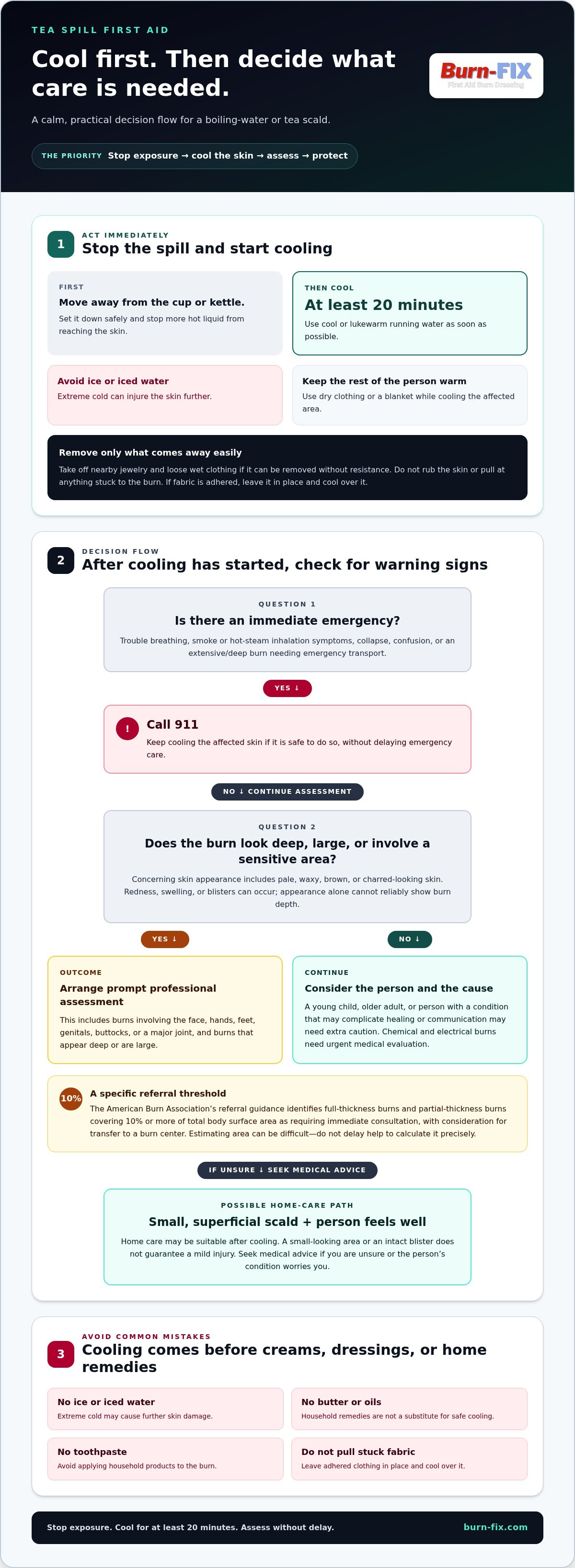
Move away from the cup or kettle and stop the hot tea from contacting the skin. Start cooling the burn promptly. Don’t pause to find a first-aid kit, take a photo, or decide how severe it looks. For boiling water tea spill burn management, the first steps are to stop exposure, cool the affected area, and remove anything loose that could tighten as swelling develops.
The first minutes after a tea spill
Keep your voice calm and follow this order. If the injured person is a child, reassure them while another person helps, if available.
- Move away from the spill. Set down the cup or kettle safely and make sure no more hot liquid can reach the skin.
- Cool the burned area under cool or lukewarm running water for at least 20 minutes. Begin as soon as possible. Don’t use ice or iced water, because extreme cold can injure skin further. If you can’t get to a tap, use clean, cool water while arranging an appropriate source of running water.
- Remove a ring, watch, other nearby jewelry, and loose wet clothing as soon as they can be taken off easily. Swelling can make jewelry difficult to remove later. Don’t rub the skin or pull at anything stuck to the burn.
- Keep the rest of the person warm with dry clothing or a blanket while leaving the affected area exposed to the running water. Avoid chilling the whole person, especially a child.
Remember the order: stop the spill, cool the skin with running water, remove loose items, and keep the rest of the person warm. Cooling takes priority over gathering supplies, applying a product, or covering the injury. Burn depth can be difficult to judge by appearance alone. For background on burn classifications and causes, see Understanding Burn Degrees and Causes.
What to do when tea soaks through clothing
Tea can remain trapped in a sleeve, shirt, or other fabric against the skin. Begin cooling, then gently remove soaked clothing only if it releases easily. Don’t peel, tug, or pull fabric that has adhered to burned skin. Leave it in place and direct cool running water over the area. Forcing it off could worsen the injury.
Remove only what comes away without resistance, and leave anything stuck. Don’t scrub to remove tea or fabric fibers. Keep cooling the skin rather than focusing on clothing removal, and keep unaffected parts of the person covered and warm. If the spill covers a large area or the person seems seriously unwell, seek urgent medical help while cooling continues, if it’s safe to do so.
Judging Tea Scald Severity: When to Get Help
After cooling has started, look at the whole situation, not just the mark on the skin. A tea scald may cause redness, swelling, or blisters, but appearance alone can’t reliably show how deep the injury goes. Burn depth, the area affected, the location, and the injured person’s age and overall condition all matter. If you’re unsure, seek medical advice rather than relying on a quick visual check.
Signs that a tea spill may be more than a minor scald
Redness and tenderness can occur with a superficial burn; swelling or blisters may indicate a deeper injury. Pale, waxy, brown, or charred-looking skin is especially concerning. Pain is not a dependable severity test: a deep burn can sometimes hurt less because of nerve damage. A small-looking area or an intact blister doesn’t guarantee that the injury is mild.
Notice whether the skin is changing, how much of the body is affected, and whether the person seems faint, confused, unusually weak, or very unwell. Don’t wait for a burn to “declare itself” if its appearance or the person’s condition worries you.
When to seek urgent medical care in the United States
Call 911 for trouble breathing, symptoms of smoke or hot-steam inhalation, collapse, confusion, or another immediate emergency. Also call 911 if the burn appears extensive or deep and the person needs emergency transport. Keep cooling the affected skin if you can do so safely, without delaying emergency care.
Arrange prompt professional assessment for burns that appear deep, are large, or involve the face, hands, feet, genitals, buttocks, or a major joint. The American Burn Association’s referral guidance identifies full-thickness burns and partial-thickness burns covering 10% or more of total body surface area as requiring immediate consultation with consideration for transfer to a burn center. Estimating area can be difficult, so don’t delay getting help to calculate it precisely. Chemical or electrical burns also need urgent medical evaluation.
Be especially cautious with a young child, an older adult, or someone with a condition that may complicate healing or communication. These factors can affect how urgently an injury should be assessed. A clinician can help determine the appropriate level of care.
A small, superficial scald in a person who feels well may be suitable for home care after cooling. Suspected depth, a sensitive location, a large area, or concerning symptoms call for medical assessment. If you’re preparing household supplies for minor first aid, keeping a home burn kit accessible can help you find dressings quickly. It can’t replace urgent assessment when warning signs are present.
Tea Spill Burn Myths: What Not to Put on a Fresh Scald
After a tea spill, a quick household fix can feel reassuring, especially when the skin stings. But a cold sensation or a coating over the burn isn’t a substitute for first aid. Start with cool or lukewarm running water, and avoid home remedies that may irritate the skin, hold heat against it, or get in the way of proper assessment. In boiling water tea spill burn management, the priority is safe cooling, not experimenting with what’s in the kitchen or bathroom cabinet.
Why ice and household remedies are not first aid
Ice may numb the area, but extreme cold can injure burned skin. Butter, oils, and other greasy substances can coat the skin and interfere with cooling and assessment. Toothpaste, vinegar, alcohol, bleach, milk, and raw eggs aren’t recommended burn treatments either; they can irritate the injury or contaminate it. A home remedy shouldn’t delay medical assessment when the burn looks serious or the person feels unwell.
Skip these common substitutes:
- Ice or iced water: use cool or lukewarm running water instead.
- Butter, cooking oil, or greasy creams: don’t spread them over a fresh scald.
- Toothpaste, vinegar, alcohol, bleach, milk, or raw eggs: keep them off the burned skin.
Wait until the recommended cooling is complete before considering any burn-care product. For a minor scald, a hydrogel spray or dressing may be used afterward as an adjunct, following its current label directions. It doesn’t replace cooling, a clean protective covering, or medical evaluation when warning signs are present.
Why blisters should not be popped
A blister’s surface provides a natural cover over injured skin. Popping, cutting, picking, or deliberately draining it can expose the tender area to dirt and raise the chance of infection. Leave it intact and protect it from friction. If it breaks on its own, don’t pull at loose skin. Keep the area clean and seek medical advice if you’re unsure how to care for it.
Get professional assessment if a blister is extensive, worsening, or accompanied by signs that concern you, such as increasing redness, swelling, drainage, worsening pain, or fever. A blister also doesn’t prove that a scald is minor. Consider its location and the person’s overall condition, and don’t rely on blister size alone to decide whether care is needed.
Cool a tea scald with running water; don’t substitute ice, kitchen remedies, or a popped blister for proper first aid. Once cooling is complete, cover the area with a clean, non-fluffy dressing if appropriate. Get medical help for concerning burns rather than trying to treat them with household products.
How to Care for a Minor Tea Scald After Cooling
Home care is appropriate only when the scald appears small and superficial, isn’t on a sensitive area such as the face, hands, feet, genitals, or a major joint, and the person is otherwise well. If the burn looks deep, covers a large area, or you’re uncertain about its severity, seek medical assessment instead of treating it at home. A product or dressing can support care for a minor scald, but it can’t replace first aid or professional evaluation when needed.
After cooling is complete, protect the skin from rubbing and dirt. Use a clean, non-fluffy covering, such as a sterile non-stick dressing, and keep it in place without wrapping tightly. Avoid putting adhesive directly on burned skin. If you use a hydrogel burn spray or dressing, follow the current product label. It’s an optional aid after cooling, not a substitute for it. For additional background on caring for a deeper burn, see this guide to second-degree burn care at home.
Protecting the skin during early recovery
Keep the area clean and covered, and avoid friction from clothing, jewelry, or activity. Don’t pick at peeling skin or pop blisters. If the covering becomes wet, dirty, or loose, replace it with a clean one, following any dressing or product directions. Mild tenderness may persist, but worsening pain or a change in the skin’s appearance deserves attention rather than guesswork.
For simple boiling water tea spill burn management at home, check the area regularly in good light and note whether it seems to be improving. If you’re preparing for minor household burns, keep suitable first-aid supplies together in a home burn kit, where they’re easy to find. Supplies help with organization, but they don’t replace cooling or medical care.
Signs that healing needs medical attention
Contact a clinician if pain is increasing instead of easing, redness spreads beyond the burn, swelling worsens, or the area develops drainage or pus. Fever, feeling unwell, or a wound that isn’t progressing toward healing also calls for medical advice. These changes can have different causes, so don’t try to diagnose an infection from appearance alone.
Seek reassessment if the burn worsens, a blister becomes extensive, or new symptoms appear. A young child or someone with a health condition that may affect healing may need individualized advice sooner. If symptoms are severe or the person’s overall condition deteriorates, seek urgent care. If recovery doesn’t seem to be moving in the right direction, have a clinician assess the skin and advise on next steps.
Prepare for the Next Tea Spill with a Simple Home Burn Response Plan
A few small preparations can make it easier to respond calmly if hot tea spills again. Think in two parts: reduce the chance of a spill, then know where to find water and basic supplies. A kit can keep useful items together, but it never replaces the first priority in boiling water tea spill burn management: cool the affected skin with running water.
Make a tea-spill response easier to follow
Choose a clear spot for first-aid supplies and make sure household members know where they are. Keep emergency numbers and a short burn-response reminder somewhere easy to find, such as with the kit. A prepared kit organizes supplies for minor first aid; it isn’t a substitute for cooling or professional assessment of a serious burn.
Prevent spills by carrying a mug with both hands when practical, setting it down before reaching for something else, and placing hot drinks well away from table edges. Use a stable, flat surface, and avoid carrying hot tea over or around children and pets. Keep cups, kettles, and freshly poured drinks out of their reach, and don’t leave a hot drink unattended where it could be knocked over.
Check that you can get to a sink or another source of cool running water without moving obstacles. A home emergency burn kit checklist can help you plan what to keep together, while a kitchen safety first-aid guide can support a broader household setup. Keep supplies accessible, but don’t delay cooling to retrieve them.
Where hydrogel products fit after first aid
Once the burn has been cooled, a hydrogel burn spray, gel dressing, or burn gel may be an option for a minor scald when used according to its current label. These products are adjuncts to first aid, not a replacement for cooling, a clean protective covering, or medical assessment. Don’t use them to manage a burn with concerning signs instead of seeking care.
Before an accident, read the directions and store supplies where adults can reach them quickly, but children and pets can’t. A burn kit can keep relevant items organized so they’re easier to locate in a stressful moment. For a burn that appears deep or extensive, affects a sensitive area, or comes with worrying symptoms, seek medical help rather than relying on home supplies.
For home first-aid supplies that may support care for minor burns after cooling, explore Burn-Fix burn-care supplies.
Make Your Next Step a Prepared One
Before your next cup of tea, take a moment to make the first response easy to remember. A brief note near your household supplies can help everyone recall where to find cool running water, who to call, and how to get help if an injury looks serious. Preparation won’t prevent every spill, but it can make a stressful moment feel more manageable.
For minor-burn first-aid supplies to keep at home, Burn-Fix offers hydrogel burn spray, gel dressings, gel packets, and a burn kit. These products are doctor-recommended. Use hydrogel products only after appropriate cooling and according to their current directions, and don’t let supplies delay medical assessment when a burn is concerning.
Keep the response simple, and make sure the people in your home know the plan. Explore Burn-Fix burn-care supplies to prepare your home for a calmer response. A little readiness can help you act with confidence if a tea spill happens.
Frequently Asked Questions
Can hot tea burn through clothing?
Yes. Hot tea can soak into fabric and hold heat against the skin, so clothing doesn’t necessarily prevent a scald. Start cooling promptly, and remove wet fabric near the burn only if it lifts away easily. Don’t tug at material that’s stuck. A sleeve that feels tight or a burn that looks deep or extensive deserves prompt medical advice. In boiling water tea spill burn management, don’t let clothing removal delay cooling.
Does tea with milk or sugar change how I should treat a scald?
No. Milk or sugar doesn’t change the first-aid priority: stop contact with the hot liquid and cool the affected skin using current burn-care guidance. Don’t scrub to remove sticky residue, since rubbing can further irritate injured skin. Avoid putting kitchen or bathroom remedies on the burn. Once cooled, consider the injury and the person’s condition; get professional care if it’s worsening, severe, or in a sensitive location.
Can a tea spill burn look worse several hours later?
Yes. A burn’s appearance and symptoms can change after the spill, and the first look may not reveal its full depth. Watch for new or increasing pain, swelling, blistering, or spreading redness. Don’t use color or blister size alone to decide that it’s mild. If the area worsens, feels increasingly painful, or leaves you uncertain about severity, arrange medical assessment rather than waiting for a clearer sign.
What should I do if hot tea splashes into someone’s eye?
Treat hot tea in the eye as urgent, not as a routine skin scald. Seek immediate professional medical guidance, and call 911 for serious injury or emergency symptoms such as vision changes or severe pain. Don’t rub the eye or put burn gel, spray, or a dressing in or around it. Follow instructions from emergency services or a qualified clinician, and don’t delay care to assess the eye yourself.
Should a baby or young child be checked after a tea spill?
Yes. Get prompt medical guidance after a hot-liquid scald in a baby or young child, since age and the burn’s location can affect assessment. Begin safe cooling while arranging help, and keep the child warm away from the injured area. Don’t wait to see whether a blister appears before seeking advice. If the child has trouble breathing, becomes unusually drowsy, or seems seriously unwell, call 911.
What if the pain gets worse after I have cooled a tea burn?
Worsening pain deserves attention, even if you’ve already cooled the area. Check for new or increasing redness, swelling, blistering, drainage, or other changes, but don’t try to diagnose the cause yourself. Contact a clinician for advice if pain persists or the injury deteriorates. Don’t use ice or household remedies to numb the skin. Call 911 if the person has severe symptoms or appears to be in an emergency.
Can I shower after a minor tea scald?
Be cautious with a fresh scald. Avoid scrubbing the area or exposing it to hot water, strong water pressure, or soaps and products that irritate the skin. If you need to wash, protect the burn as appropriate and follow current medical advice for minor burns; don’t peel damaged skin. If washing causes significant pain, the area looks worse afterward, or you’re unsure how to protect it, seek medical advice.


