


Your toddler cries as you unbuckle them, and you notice a red mark where the metal buckle touched their skin. A hot car seatbelt metal burn on toddler skin can be frightening, especially when you’re unsure how serious it is. Start with gentle, steady cooling: hold the burned area under cool running water for 10 to 20 minutes, and don’t use ice.
It’s natural to worry when your child is hurting and the injury is hard to judge. Prompt cooling can ease discomfort, but some burns need medical attention, and a toddler’s injury deserves careful assessment. If you’re uncertain about the burn’s depth or size, contact your child’s pediatrician for guidance.
This guide explains how to cool the burn safely, which warning signs call for professional care, and what to avoid while the skin heals. You’ll also find practical ways to reduce the chance of another hot-buckle injury on your next drive, so you can focus on helping your child feel more comfortable and keeping them protected.
Key Takeaways
- For a hot car seatbelt metal burn on toddler skin, move your child away from the buckle and cool the area under cool running water for 10 to 20 minutes.
- Blisters, severe pain, pale or charred skin, or worsening swelling can signal a burn that needs prompt medical assessment.
- After cooling, protect the injury gently. Avoid tight wrapping, adhesive on the burn, or pulling away clothing stuck to the skin.
- Skip ice, greasy substances, toothpaste, and unverified remedies, which can worsen irritation or injure the skin further.
- Before the next ride, check the buckle’s temperature and keep it shaded when practical to reduce the risk of another burn.
Hot seatbelt buckle burn: what to do immediately
A hot buckle burn can be upsetting, but a calm, quick response helps protect your toddler’s skin. Unfasten the harness and move your child away from the hot metal. Get them out of direct sun or the hot vehicle, then focus on cooling the affected area. Don’t delay urgent medical care if your child seems seriously unwell or the burn looks severe.
A simple first-aid sequence for a hot buckle burn
- Move away from the heat. Take your toddler out of the car seat and away from the buckle. Handle them gently, and don’t press or rub the injured skin.
- Cool the burn. Hold the affected area under cool, gently running tap water for 20 minutes if you can. First-aid guidance for minor burns recommends cool, not cold, running water for 10 to 20 minutes. Cool only the burned area and keep the rest of your child warm with a blanket or clothing. If running water isn’t available, use a clean cloth soaked in cool water and re-wet it as it warms.
- Remove anything loose nearby. Take off clothing or jewelry close to the burn if it comes away easily and isn’t stuck to the skin. Don’t pull at fabric or material that has adhered to the injury. Leave it in place and seek medical advice.
- Assess your child. Once cooling is underway, observe how your toddler is responding and look at the burn without touching, rubbing, or testing the skin. A quick look can’t reliably show how deep a burn is, so get professional guidance if you’re uncertain.
Don’t apply ice, butter, toothpaste, greasy substances, or other home remedies. Ice and very cold items can further injure burned skin, while household products may irritate the area or make it harder to assess. Keep the burn clean and avoid putting pressure on it while you arrange any care your child may need.
What to do if the toddler is very distressed
Stay close, speak softly, and explain in simple words that you’re helping cool the sore spot. If possible, have another adult comfort and supervise your toddler while you hold the injured area under water. Don’t force a struggling child to stay beneath a tap if that risks further injury. Use a cool, wet cloth while you seek advice. If you’re worried about your child’s condition, don’t wait to finish home first aid before seeking urgent care.
For a hot car seatbelt metal burn on toddler skin, move the child away from the buckle and cool the burn under cool running water. For an overview of burns in children, see this pediatric burn information.
How to tell whether a toddler’s seatbelt burn needs urgent medical care
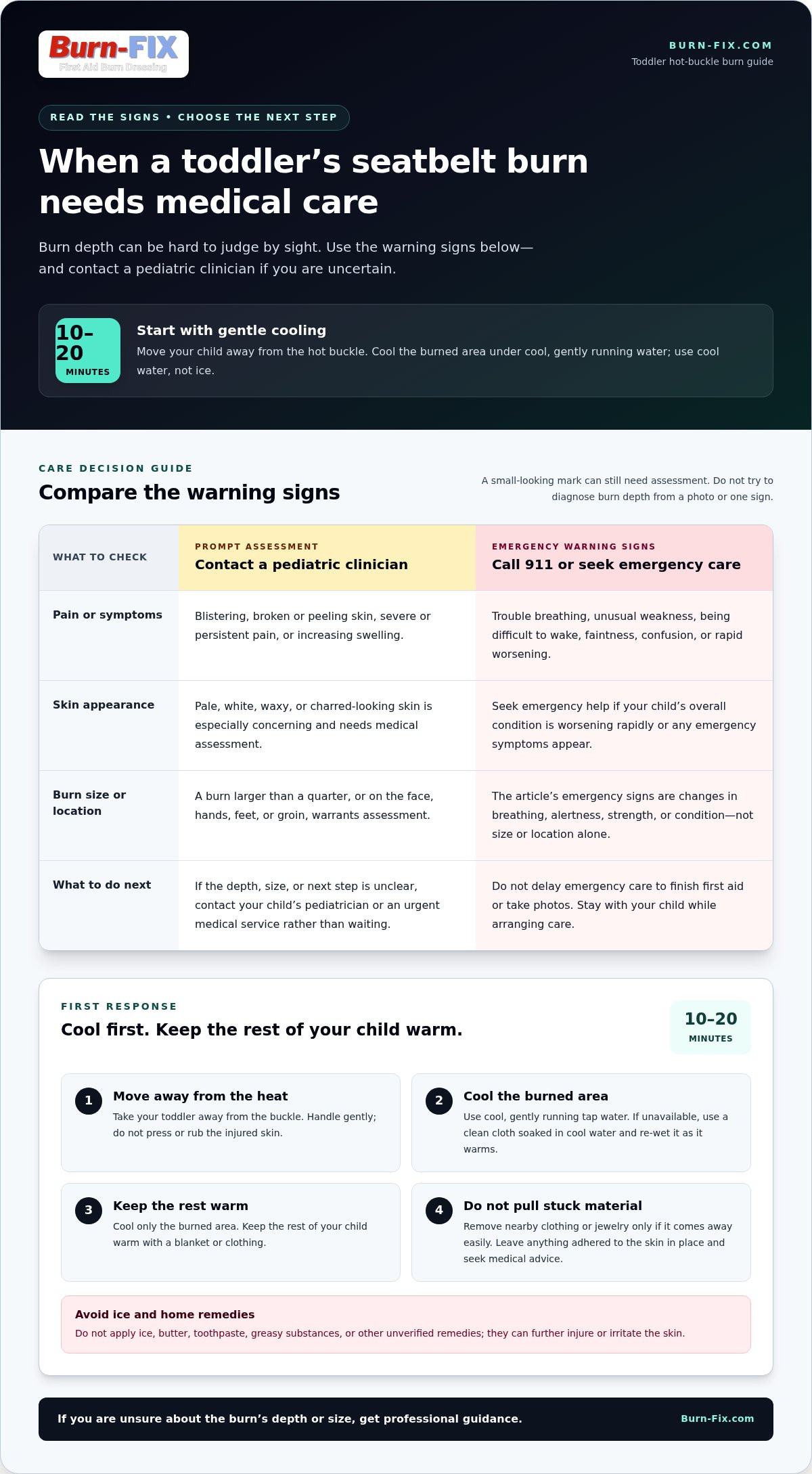
Once the buckle is no longer touching your child, consider whether the skin needs prompt medical attention. It can be difficult to judge a burn by sight, and caregivers can’t reliably determine its depth from appearance alone. A small-looking mark may still need assessment, especially on a toddler. If you’re unsure about the injury’s size or severity, contact your child’s pediatrician or an urgent medical service rather than waiting for it to change.
Signs that call for prompt medical assessment
Get professional advice promptly if you notice a blister, broken or peeling skin, severe or persistent pain, or increasing swelling. Pale, white, waxy, or charred-looking skin is especially concerning. A burn larger than a quarter, or one located on the face, hands, feet, or groin, also warrants medical assessment, according to general first-aid guidance.
Consider the whole picture: the burn’s size and location, how the skin looks, your child’s discomfort, and whether their condition is changing. Don’t try to diagnose a burn degree from a photograph or a single sign. If the mark is hard to assess or your toddler remains very distressed, call a pediatric clinician for direction.
When a caregiver should seek emergency help
Call 911 or seek emergency care if your child has trouble breathing, becomes unusually weak or difficult to wake, appears faint or confused, or worsens rapidly. These symptoms may signal a serious problem and need immediate attention. Don’t delay emergency care to finish home treatment or take photos of the burn.
For a burn without emergency symptoms, contact your toddler’s pediatrician or an urgent care service if you’re uncertain about the depth, size, or next steps. Be ready to describe where the buckle touched, when the injury happened, what the skin looks like now, and how your child is acting. Note whether blisters or swelling have appeared if you can do so easily, but don’t handle the injured skin to check it.
A hot car seatbelt metal burn on toddler skin deserves careful attention because a caregiver’s visual check can’t confirm how deep the injury is. Stay with your child while you arrange care, and follow the clinician’s advice if symptoms change. For future readiness, you can keep age-appropriate first-aid supplies, such as a burn first-aid kit, on hand. Use any product only as its label directs, and never as a substitute for medical assessment.
How to protect the burned skin after cooling it
Once the burn has been cooled, protect the tender skin from rubbing and dirt while you follow medical advice. For a small area that isn’t stuck to clothing, a clean, non-fluffy, non-adherent dressing can provide temporary cover. Keep it loose. A dressing is only a protective covering, not a substitute for a clinician’s assessment, particularly if you’re unsure how serious the burn is.
If your toddler has already been assessed, follow the clinician’s specific instructions for cleaning, covering, and checking the injury. Care can depend on the burn’s location and appearance, and a covering that works for one spot may not suit another. Don’t delay seeking care to find or apply a dressing.
Choosing a gentle temporary covering
Use a clean dressing that won’t shed fibers or stick to the injured skin. Lay it gently over the area rather than pressing it down, and don’t put adhesive tape directly on the burn. If the burn is on an arm or leg, avoid winding a bandage tightly around it. The covering shouldn’t restrict movement or circulation. If you’re unsure what to use, ask a pediatric clinician.
- Keep the covering loose enough that it doesn’t squeeze the skin or leave deep marks.
- Don’t use fluffy cotton, loose fibers, or a material that may cling to the burn.
- Don’t pull away clothing or fabric that’s stuck to the injured area.
- For a burn near the face, hand, foot, or a joint, seek medical guidance on how to protect it.
Blisters, pain, and changes to watch
Leave blisters intact, and don’t peel, pick, or trim damaged skin. These actions can hurt and may expose more delicate tissue. Watch the area and follow the clinician’s care instructions, including when to change or remove a dressing. If your child needs pain relief, ask a pediatric clinician or pharmacist for age-appropriate advice and follow the medicine label. Don’t guess a dose.
- Contact a clinician if pain is worsening or the skin becomes increasingly red or swollen.
- Seek medical advice if you notice drainage, a new or worsening odor, or a fever.
- Get prompt help if the dressing sticks, the injury changes, or you’re uncertain whether the burn is healing as expected.
With a hot car seatbelt metal burn on toddler skin, aftercare should stay gentle and secondary to professional guidance. If the burn appears severe or your child’s condition worsens, seek urgent care rather than trying a different dressing or home remedy.
What not to do for a toddler’s hot metal burn
After a buckle burn, a quick fix can seem tempting. Stick with safe first aid: cool the skin with cool running water, avoid unverified treatments, and seek medical advice if the injury or your toddler’s condition causes concern. A product applied at home should never delay assessment, especially when you can’t tell how deep the burn is.
Why ice and household remedies are poor choices
Cool running water gently draws heat away from the skin. Ice is different: direct, extreme cold can injure already damaged skin, so don’t put ice or an ice pack on the burn. Butter, oils, toothpaste, and other household remedies aren’t reliable burn care and may irritate the area or make it harder to assess. For more detail, see Hydrogel vs Ice for Burns: The Dangers of Extreme Cold.
Avoid rubbing, scrubbing, or pressing on the injury to remove a substance once it’s applied. Don’t pop blisters or peel skin, either. These actions can cause more discomfort and interfere with careful assessment. If someone has already put a household product on the burn, gently rinse it away with cool water if you can do so without rubbing. Contact a pediatric clinician if you’re unsure what to do next.
- Don’t use ice or very cold water. Choose cool, gently running water instead.
- Don’t apply butter, grease, toothpaste, or home mixtures. They aren’t a substitute for burn first aid.
- Don’t cover the burn with an unverified remedy. Keep the area clean and follow medical guidance.
- Don’t delay care. A spray, gel, or dressing shouldn’t be used to postpone professional assessment.
When burn-care products are not a substitute for care
Burn-care supplies may be appropriate for some minor burns, but they can’t determine how serious a toddler’s injury is. Get professional advice if the burn is severe, blistered, in a sensitive location, worsening, or difficult to judge. Burn-Fix supplies are first-aid products for appropriate minor burns. Use them only as directed on the label and never instead of needed medical care. The article How to Treat Second-Degree Burns at Home (2026) offers broader context, but it doesn’t replace advice for your child’s specific injury.
If you keep first-aid supplies at home, choose age-appropriate items and read their labels before an emergency. Burn-Fix offers burn-care supplies, including gel dressings and hydrogel spray, for appropriate first-aid use. Explore Burn-Fix burn first-aid supplies, and follow a clinician’s advice whenever the injury’s severity, location, or symptoms are concerning.
How to prevent another hot seatbelt buckle burn
A brief temperature check before every ride can help prevent another injury. Buckles and other metal parts may heat up while a car is parked in direct sun, even if the seat fabric feels comfortable. Don’t rely on a set waiting time: conditions and the amount of shade can vary. Check the actual surfaces your child may touch before you buckle them in.
A quick buckle-temperature check before every ride
Before placing your toddler in the seat, carefully touch the buckle and nearby metal hardware with your fingers. Check the straps and any other metal parts close to the child’s skin, not just the seat fabric. If something feels hot, keep your toddler away from it and let it cool naturally in a shaded, ventilated spot. Don’t use ice or cold packs on the child.
- Make the check part of your routine after the car has been parked, especially in sunny weather.
- When practical, park in shade or use a suitable cover to keep direct sun off the seat and buckle while the car is empty.
- Remove any cover before placing your child in the seat, and use the car seat as directed by its manufacturer.
- Recheck the buckle before each ride, even if the car has been parked in the same place before.
Avoid placing a towel or other loose item where it could interfere with the harness or how the car seat is used. A cover can shade an empty seat, but it should never be left beneath or around a child unless the car seat manufacturer says it is safe to use that way. The safest habit is a quick hands-on check of the metal parts before your toddler gets in.
Prepare a family car first-aid kit
Keep basic first-aid supplies accessible for minor injuries, including clean dressings suited to your family’s needs. Store them according to their labels, and make sure an adult can find them quickly. A kit supports first aid, but it doesn’t replace medical assessment when a child’s injury is concerning. For ideas on organizing supplies at home, see Emergency Burn Kit for Home: The Essential 2026 Safety Checklist.
To help prevent a hot car seatbelt metal burn on toddler skin, pair the buckle check with a simple family plan: shade the empty seat when practical, inspect contact points before every ride, and know where your first-aid supplies are. Keeping appropriate supplies nearby can help you respond calmly to a minor injury. Explore Burn-Fix first-aid supplies, and follow product labels and medical advice when care is needed.
Make the next ride feel more prepared
A painful buckle burn can shake your confidence, but a simple pre-ride habit can help you feel ready next time. Build a quick temperature check into getting your toddler settled, and keep first-aid supplies where an adult can reach them. If you’re still concerned about the hot car seatbelt metal burn on toddler or how the skin is healing, follow up with a pediatric clinician rather than relying on a product to judge the injury.
Burn-Fix offers hydrogel burn spray, gel dressings, gel packets, and a burn kit, with burn-care products designed for children and adults. These are first-aid supplies for appropriate use, not a replacement for professional assessment or emergency care. Choose supplies that suit your family, and follow each product’s label.
Explore Burn-Fix first-aid supplies as you prepare your family’s kit. With a little planning and a careful buckle check, you can approach the next car ride with greater confidence and care.
Frequently Asked Questions
Can a hot seatbelt buckle burn a toddler through clothing?
Yes. A hot buckle can burn exposed skin, and thin clothing may not reliably protect against a very hot surface. Check the skin where the buckle or strap touched, even if the fabric looks undamaged. If you notice redness, blistering, or broken skin, treat it as a possible burn. Don’t assume the injury is harmless based on clothing alone. Seek medical advice if you’re unsure.
How long should I cool a toddler’s seatbelt burn?
Cool the affected skin under cool running water for about 20 minutes, while keeping the rest of your child warm. If you can’t use a tap, a clean cloth soaked in cool water can help while you arrange care. Don’t use ice or ice water. If the burn looks serious, your toddler seems unwell, or you’re uncertain about the injury, seek medical help without delaying urgent care.
Should I take my toddler to the doctor for a small seatbelt burn?
A small-looking burn may still need a clinician’s assessment, particularly if your toddler has blistering, broken skin, significant pain, or an injury whose depth is unclear. Contact your pediatrician or an urgent medical service for advice, and describe the burn’s location and how your child is acting. Don’t use its size alone to decide that care isn’t needed. Seek emergency help for severe symptoms or a serious-looking injury.
Can I put burn gel or spray on my toddler’s buckle burn?
Cool the burn first, then seek medical advice before using a product if the injury is concerning. Burn gels, dressings, or sprays are first-aid supplies for appropriate minor burns, not a way to avoid an assessment. Follow the product label and any clinician instructions, and don’t apply household remedies or products not intended for burns. For a hot car seatbelt metal burn on toddler skin with blisters or damaged skin, get medical guidance.
What should I do if clothing is stuck to the burn?
Leave fabric stuck to burned skin in place. Pulling, peeling, or cutting it away can worsen the injury, so don’t try to remove it at home. Cool the exposed area as safely as possible without disturbing the material, and seek prompt medical advice. If the burn looks severe, your child is extremely distressed, or other urgent symptoms appear, contact emergency services rather than trying to manage the injury yourself.
Can my toddler ride in the car again after a seatbelt buckle burn?
Your toddler may be able to travel, but protect the sore area from pressure or rubbing and follow medical advice about the injury. Don’t loosen, reposition, or add padding to the car-seat harness in a way that changes how it fits. Before the next ride, check the buckle and nearby metal parts by touch. If securing your child presses on the burn or causes pain, ask a clinician for guidance before travelling when possible.


