


A rope burn on your palm can make gripping a bar, opening a door, or getting through the day uncomfortable. For gym rope burn treatment on palms, first cool and protect the injury, then assess whether the skin is scraped, blistered, or more seriously damaged.
Stop exercising and check the area before deciding what to do next. This guide covers how to cool and clean the injury, choose a suitable dressing, protect the palm while it heals, and recognize signs that need medical attention. It also explains when to pause rope training and how Burn-Fix hydrogel products fit into first aid for burns.
Key Takeaways
- Stop exercising and assess the palm carefully. How an injury looks may not reveal its full depth.
- Follow the first-aid steps below to cool, clean, and protect a gym rope burn on your palm.
- Choose a dressing based on the injury and keep the area protected from further rubbing.
- Watch for spreading redness, swelling, drainage, fever, or worsening pain as the hand heals.
- Know which warning signs call for prompt medical care, and pause training while the palm recovers.
Gym rope burn on the palm: assess the injury before treating it
Stop exercising, let go of the rope, and inspect your palm in good light. Don’t climb again or grip other equipment while the skin is stinging or damaged. A rope burn is a friction injury: rubbing damages the skin and may also generate heat. The term friction burn describes this combination, but it doesn’t tell you how deep a particular injury is.
The palm may look red, scraped, raw, blistered, or bleeding. A deeper injury may expose tissue beneath the skin, but appearance alone can’t reliably establish burn depth. Pain is also an unreliable measure of severity. Take uncertainty seriously, especially if the injury is more than a surface scrape.
How to assess a rope burn without diagnosing it yourself
Check the whole palm, including its creases and the base of each finger. Note whether the skin is intact, scraped, blistered, or open, and look for bleeding or visible debris. Without probing the wound, see whether swelling, pain, or damaged skin makes it hard to bend and straighten your fingers or gently close your hand. These observations can guide your next step, but they can’t replace professional assessment of a deep or uncertain injury.
Seek prompt medical assessment for a deep wound, severe pain, loss of sensation, or impaired movement. Don’t guess at the injury’s depth if you can see tissue beneath the skin or aren’t sure how extensive the damage is. Professional evaluation is the safest next step.
Why the palm location changes the practical questions
Palm skin is involved in nearly every grip, so even a small injury can hurt when you hold a bottle, turn a handle, wash your hands, or make a fist. Bending and rubbing may irritate the damaged area. Consider whether the scrape crosses a palm crease, covers a broad patch, or makes ordinary finger movement and gripping difficult. How well your hand functions matters as much as what you can see.
For gym rope burn treatment on palms, ask whether you can move each finger comfortably and use your hand without sharp or worsening pain. If not, stop training and seek assessment rather than testing the injury with another climb. A wound across a crease or one that interferes with normal hand use deserves particular attention because movement can keep stressing the area.
- Get prompt care if the injury is deep, movement or sensation is affected, or you can see deeper tissue.
- Don’t judge depth by color or pain alone. If you’re unsure what you’re seeing, seek professional assessment.
How to treat a gym rope burn on your palm: immediate first aid
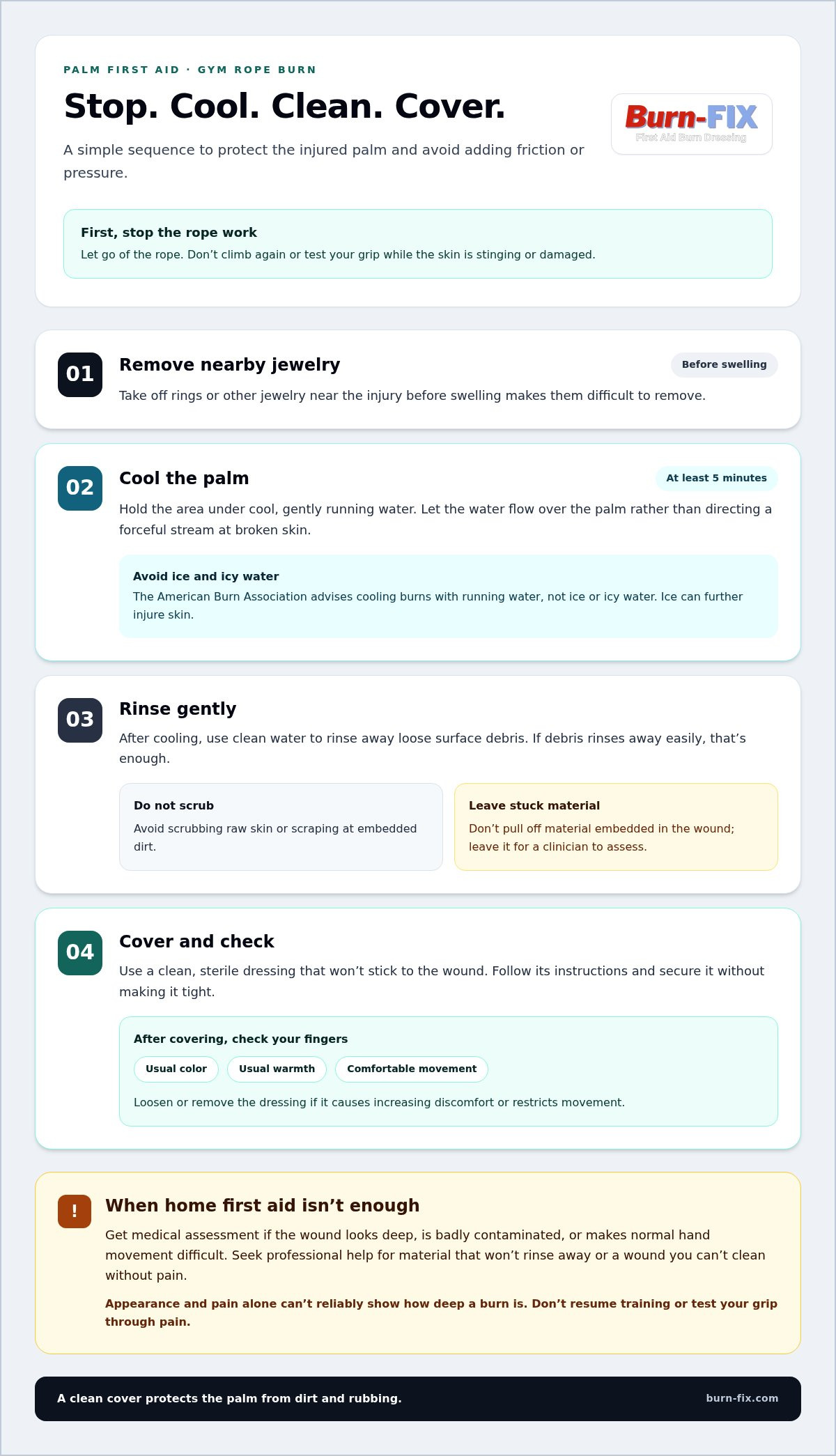
Act gently and in order: stop the rope work, cool the injured skin, rinse away loose dirt, then cover it. For gym rope burn treatment on palms, the aim is to limit further friction and protect the area without adding pressure or irritation. If the wound looks deep, is badly contaminated, or makes normal hand movement difficult, get medical assessment rather than relying on home care.
- Stop the friction. Let go of the rope and remove rings or other jewelry near the injury before swelling makes them difficult to take off. Don’t resume training or test your grip.
- Cool the area. Hold the palm under cool, gently running water for at least five minutes. The American Burn Association advises cooling burns with running water, not ice or icy water. Avoid ice, which can further injure skin.
- Clean it gently. After cooling, rinse away loose surface debris with clean water. Don’t scrub raw skin, scrape at embedded dirt, or pull off material stuck to the wound. Leave anything embedded in place for a clinician to assess.
- Protect the injury. Cover it with a clean, sterile dressing that won’t stick to the wound, following the dressing’s instructions. Keep the cover secure but not tight.
Cleaning and cooling without adding irritation
Cool running water should feel comfortably cool, not painfully cold. Let it flow over the palm rather than directing a forceful stream at broken skin. If debris rinses away easily, that’s enough. Avoid rubbing the wound with a towel or trying to clean deep inside it. Material that won’t rinse free, or a wound you can’t clean without pain, needs professional attention.
Don’t apply ice or pop blisters if they form. If the injury is deeper than a minor surface scrape, or you’re uncertain about its severity, have it assessed. A clinician can advise on care for a more significant burn. Burn-care first-aid products should only be used when suitable for the injury and according to the product label.
Covering the palm while keeping it usable
A clean dressing shields damaged skin from dirt and rubbing, but wrapping too tightly can add pressure and restrict movement. After covering the area, check that your fingers remain their usual color and warmth and that you can move them comfortably. Follow the dressing instructions, and loosen or remove it if it causes increasing discomfort or restricts movement.
A dressing may make everyday tasks more manageable, but don’t use it as a reason to grip a rope or lift through pain. Seek medical help if pain worsens, finger movement becomes harder, or the injury limits hand function. For a deeper injury, follow professional advice rather than relying on a home assessment.
Rope burn dressing choices: protect the palm without trapping the wrong injury
A dressing should keep the injured skin clean, limit rubbing, and allow you to check for changes. Choose based on what needs covering. A shallow scrape, an intact blister, and an open or deeper burn aren’t interchangeable, so don’t choose a dressing just because it feels soothing or is easy to wrap around your hand.
For a small, superficial scrape, a clean, sterile covering can shield the palm during necessary tasks. A dressing that shifts whenever you bend your fingers may rub the wound. One that’s bulky or tight can make movement awkward or restrict circulation. Aim for comfortable coverage, not a pressure wrap. After dressing the hand, check that your fingers remain their usual color and warmth and move comfortably.
When simple protection may be enough
If the skin is only lightly scraped and there’s no blister or deeper wound, basic clean protection may be more appropriate than a burn product. Choose a covering that stays in place without pressing hard into the palm or across finger creases. Keep it clean and check the skin when changing it. Seek medical advice if the injury worsens or ordinary hand movement becomes difficult.
When hydrogel products may fit, and when they may not
Hydrogel and hydrocolloid dressings are different approaches, so don’t assume they’re interchangeable or suitable for every rope injury. Burn-Fix hydrogel spray, gel, and dressing products are intended for first- and second-degree burns. A scraped abrasion isn’t automatically the same as a burn these products are intended for. Check the product label and use a hydrogel product only when it’s appropriate for the injury and its directions support that use.
If the skin is blistered or open, or the injury’s depth is unclear, don’t assume a gel or dressing is the right fit. A deeper or concerning injury needs professional assessment. Product directions matter, but they don’t replace medical care when the wound is extensive, contaminated, or interfering with hand function.
- Superficial scrape: Prioritize clean coverage and protection from friction.
- Blister or open injury: Don’t pop blisters or apply a product unless its directions fit the injury.
- Deep or uncertain injury: Get professional assessment instead of relying on a dressing choice.
For gym rope burn treatment on palms, comfort is only one consideration. The dressing should protect the area without hiding changes or limiting finger movement. Once you’ve matched care to the injury, review Burn-Fix hydrogel burn-care products and follow the label directions for any product you use.
Palm rope burn recovery: monitor healing and return to training safely
Give your palm time to settle. Recovery depends on the injury’s depth and extent, and on whether everyday use keeps rubbing or stretching the area. There’s no single timeline for every rope burn. Check the skin regularly when you change or remove its covering. Watch for spreading redness, increasing warmth or swelling, drainage, or pain that gets worse rather than gradually easing.
Your hand can be under repeated strain even outside the gym. Bending your fingers, gripping objects, and washing your hands may irritate damaged skin, so notice how it feels after these activities. If the wound reopens or your grip becomes less comfortable, reduce hand strain and reassess instead of pushing through.
Signs that need closer attention during healing
Some redness and tenderness can occur around an injury, but worsening or spreading redness, increasing warmth or swelling, pus or other drainage, and escalating pain are reasons to seek timely medical assessment. A fever or feeling unwell alongside changes at the wound also needs prompt attention. Don’t let a dressing or gel reassure you if the injury is getting worse. Covering the skin doesn’t rule out infection or a more serious problem.
If you’re unsure whether a change is normal, especially if pain or swelling affects finger movement, get professional advice. Keep track of what’s changing and when, and follow any care instructions you’ve been given rather than judging the injury by the dressing alone.
Returning to rope training and lowering repeat-friction risk
Wait until the skin has closed and your palm feels comfortable during ordinary hand movement before considering rope work again. Start cautiously, and stop if gripping brings back pain, damages the skin, or makes you feel less in control of the rope. A pain-free moment or a covering doesn’t prove your palm is ready for a full session.
Before training, look over the rope for rough, damaged, or frayed areas that could increase rubbing. Review your grip and handling so the rope doesn’t slide rapidly across your palm. For future sessions, consider hand protection suited to the activity, such as appropriate training gloves or tape, and make sure it doesn’t compromise your grip or control. If friction or discomfort returns, stop and adjust instead of continuing through it.
Good gym rope burn treatment on palms includes recovery decisions, not just care for the initial injury. Return gradually, pay attention to hand function, and adjust how you handle the rope to avoid stressing healing skin. For burn-care supplies intended for first- and second-degree burns, explore Burn-Fix first-aid products and follow the product directions for appropriate use.
When to seek medical care, and where Burn-Fix products fit
Some palm rope burns need more than home first aid. Because the hand is essential for grip and everyday tasks, take changes in movement or sensation seriously. A small, superficial injury that you can gently clean and protect may be suitable for cautious home care, but appearance alone can’t reliably show whether a wound is deep or complicated.
When a palm rope burn needs professional assessment
Arrange prompt medical assessment if the injury is deep, extensive, badly contaminated, or makes it difficult to bend your fingers, grip, or use your hand normally. Get urgent help for uncontrolled bleeding, visible deeper tissue, or numbness and other impaired sensation. If bleeding won’t stop or the hand’s function or feeling is suddenly affected, contact local emergency services. Don’t delay care to try a gel or dressing first.
Seek medical advice if pain is severe or worsening, or if the wound develops spreading redness, increasing swelling, drainage, or other signs of infection. These symptoms don’t establish a diagnosis, but they warrant attention. A dressing can cover a problem without resolving it, so don’t ignore worsening signs because the injury feels different after applying a product.
Home care is more reasonable when the injury appears minor, bleeding is controlled, and you can move and feel your fingers normally. If you’re unsure, choose professional assessment. A clinician can evaluate the wound directly and advise on care based on its depth, condition, and effect on hand function.
Choosing Burn-Fix first-aid products responsibly
Burn-Fix hydrogel products are intended for first- and second-degree burns, but not every rope injury is necessarily the type of burn they’re intended for. The Burn-Fix Hydrogel Burn Spray, Burn-Fix Burn Gel packets, and Burn-Fix 4x4 First Aid Burn Gel Dressing are first-aid options only when appropriate for the injury and consistent with their label directions. Don’t use them to manage a deep or severe injury in place of professional assessment.
For gym rope burn treatment on palms, start with the injury and its warning signs, not the product. If the skin is simply scraped, don’t assume a hydrogel is suitable unless its instructions and appropriate clinical guidance support that use. When an injury is uncertain, deep, or affecting movement or sensation, prioritize medical care and follow the clinician’s advice about dressing and treatment.
If a Burn-Fix hydrogel product fits the injury’s stated indication, review its directions as you choose first-aid supplies. Explore Burn-Fix burn-care products as an option for your first-aid kit, not as a substitute for professional evaluation when warning signs are present.
Make palm protection part of your next training session
Give your hand the time and care it needs before asking it to grip again. Let comfort and normal movement guide your return, not pressure to keep up with a workout. If the injury changes or you’re uncertain about its severity, choose professional assessment over guesswork.
Planning ahead can also make future sessions feel more prepared. Keep suitable first-aid supplies accessible and review their directions before you need them, so you can make a considered choice if friction injures your skin. For gym rope burn treatment on palms, the right product depends on the injury and the product’s intended use. First-aid products don’t replace medical care when warning signs appear.
Explore Burn-Fix burn-care products and add suitable supplies to your first-aid kit. Protect your palm, respect its recovery, and return to rope training when your hand is ready.
Frequently Asked Questions
Can I keep working out with a rope burn on my palm?
Pause rope exercises if gripping hurts, the wound is open, or friction keeps reopening the skin. Continuing may aggravate the injury and make it harder to hold the rope safely. You can choose activities that don’t rub or strain that palm, such as lower-body exercises that don’t require a firm handhold. Return gradually when ordinary hand movement feels comfortable, and seek medical advice if pain, movement, or sensation is significantly affected.
How long does a rope burn on the palm take to heal?
Healing time varies with the injury’s depth and size, as well as repeated irritation from gripping or daily tasks. A superficial scrape may settle sooner than a blistered or deeper wound, so a fixed number of days can’t predict your recovery. Look for steady improvement in comfort and skin condition. If healing stalls, pain increases, or the injury interferes with normal hand use, seek professional assessment.
Can a rope burn leave a scar on your hand?
Scarring is more likely with a deeper or larger injury, infection, or repeated damage, but you can’t predict the outcome just by looking at the palm initially. Protect healing skin from renewed friction and follow appropriate wound-care guidance. Avoid picking at scabs or damaged skin. If the wound appears deeply damaged or seems to be healing abnormally, a healthcare professional can assess it and advise you on next steps.
Should I pop a blister from a rope burn?
No, don’t deliberately pop a burn blister. Its intact surface provides a natural covering, and opening it can expose the skin to contamination and added irritation. Protect the area instead of draining or trimming it yourself. If the blister is large, painful, lies over a joint, or makes it hard to move your palm or fingers, seek medical advice for care suited to its location and impact.
Can I use liquid bandage on a rope burn on my palm?
Not automatically. Liquid bandage may be unsuitable for a deep, blistered, bleeding, or contaminated injury, and a coating on the palm may be uncomfortable where skin bends and grips. Read the product directions and follow appropriate first-aid guidance. Don’t seal a wound that needs assessment. If you can’t tell how deep it is, or it affects hand function, get medical advice before applying a liquid covering.
What should I do if a rope burn has dirt or rope fibers in it?
Rinse the area gently according to current first-aid guidance, but don’t dig into the wound or tug at embedded fibers. If debris remains, especially in a deep or painful injury, arrange professional assessment rather than trying to remove it with tweezers. Keep the area cleanly covered while arranging care. Seek prompt help if bleeding continues or the injury affects movement or sensation.


