


A hot oil splash on your face deserves prompt attention, not guesswork. In the United States, a burn on the face warrants emergency medical help. While arranging care, cool the area with a cool, wet cloth for about 10 minutes; if oil gets into an eye, gently flush it with cool or lukewarm water for 15 to 20 minutes.
It’s understandable to focus on easing the sting and helping the skin heal quickly. The safest hot oil splash on face emergency care starts with cooling, but knowing when a burn needs urgent evaluation matters just as much. This guide explains how to respond to a facial splash, what first- and second-degree burns can look like, and which warning signs call for immediate help. You’ll also learn what to avoid putting on burned skin and how to tell whether symptoms are improving or need prompt attention.
Key Takeaways
- Cool the burn gently, and use a cool, wet cloth on facial skin rather than ice.
- If oil reaches an eye, rinse it thoroughly and watch for pain or changes in vision.
- Remove tight items near the burn before swelling makes them harder to take off.
- Learn which burn symptoms call for emergency help, including signs of shock or a serious eye injury.
- Understand how care differs for first- and second-degree burns and when burn-care products may help.
What is the correct treatment for a burn?
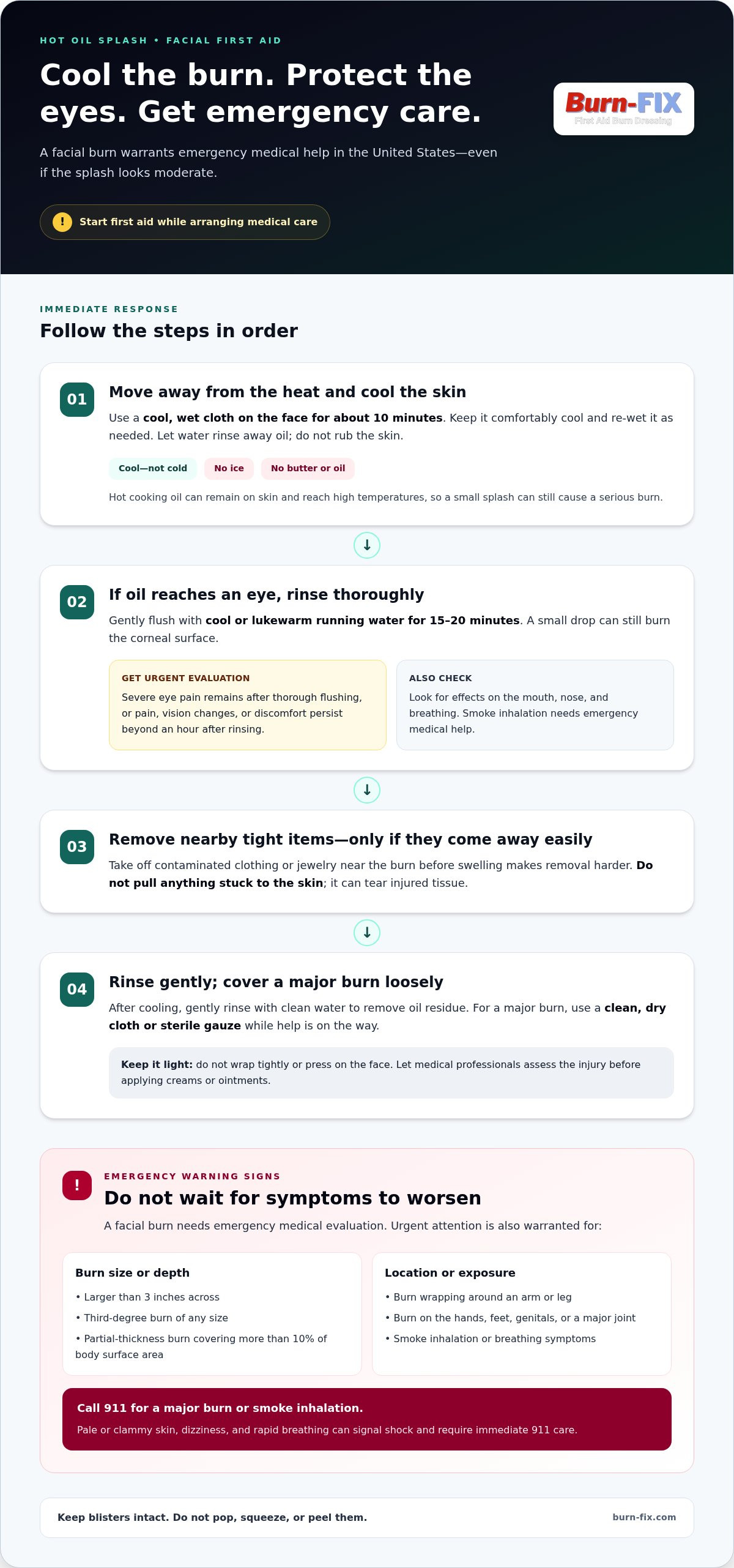
Cool a facial oil burn promptly, then assess the eyes, breathing, burn depth, and affected area. A burn on the face warrants emergency medical help in the United States; severe pain, vision changes, or smoke inhalation also call for urgent attention.
-
Cool the Minor Burn
Apply a cool, wet cloth to a minor burn on the face. According to Mayo Clinic, cool a minor burn with cool, not cold, water for about 10 minutes; on the face, use a cool, wet cloth. Keep the cloth comfortably cool and re-wet it as needed. Don’t use ice, which can further injure burned skin.
Hot cooking oil can cause a serious burn because it can reach high temperatures and remain on the skin. Cool the area first rather than judging severity by the size of the splash.
-
Check for Signs of a Serious Burn
Check the eyes and breathing as you cool the skin. If oil has entered an eye, flush it gently with cool or lukewarm running water for 15 to 20 minutes. Even a single drop of very hot oil can burn the corneal surface, so a small splash doesn’t rule out an eye injury.
Seek emergency help if severe eye pain remains after 15 minutes of thorough flushing. Pain, vision changes, or discomfort that persist beyond an hour after rinsing also need professional evaluation. Smoke inhalation warrants emergency medical help, especially if breathing symptoms occur.
-
Assess Emergency Referral Needs
Arrange emergency medical help for a facial burn, even if it appears moderate. A burn larger than 3 inches across, a third-degree burn of any size, or a burn wrapping around an arm or leg also warrants urgent attention. Partial-thickness burns covering more than 10% of body surface area meet American Burn Association referral criteria for emergency care.
Call 911 for a major burn or smoke inhalation. Pale or clammy skin, dizziness, and rapid breathing can signal shock and require immediate 911 care. Don’t wait for symptoms to worsen before seeking help.
-
Clean and Cover the Burn
After cooling, gently rinse the area with clean water to remove oil residue. Don’t rub the skin or apply butter or oil, which can trap heat. Avoid household fats, even if the burn looks minor.
For a major burn, loosely cover the area with a clean, dry cloth or sterile gauze while waiting for help. Keep the covering light and avoid pressure on the face. Let medical professionals assess the injury before applying creams or ointments.
Immediate cooling and first aid for hot oil burns
Act quickly: cool the skin, protect the eyes, and assess how much the burn affects. If hot oil gets in an eye, gently flush it with cool or lukewarm running water for 15 to 20 minutes.
-
Begin Immediate Cooling and First Aid
Move away from the cooking surface and cool the burned skin under gently running water as soon as possible. Cool it for at least five minutes. Don’t use ice, butter, or more oil, which can worsen irritation or trap heat. If oil remains on the skin, let the water rinse it away without rubbing.
Hot cooking oil can cause deeper burns than hot-water scalds because it reaches higher temperatures and stays on skin longer. Oil in a working fryer commonly exceeds 350°F, so a small splash can still cause a serious injury.
-
Check for Facial and Major-Body-Part Burns
Check whether the splash affected the eyes, mouth, nose, or breathing. Facial burns need emergency medical evaluation, even if they seem moderate. Eye pain, blurred vision, or persistent discomfort after rinsing can signal an eye injury. Smoke inhalation also requires emergency medical help.
Burns on the hands, feet, genitals, or a major joint also need emergency evaluation. Don’t wait for a large patch of skin to appear before taking these warning signs seriously.
- Remove contaminated clothing or jewelry near the burn if it comes away easily. Don’t pull off anything stuck to the skin, as this can tear injured tissue. Let water rinse away any remaining oil without rubbing, and avoid pressing fabric against the affected area.
- After cooling, loosely cover a major burn with a clean, dry cloth or sterile gauze while emergency help is on the way. Keep the covering light and don’t wrap it tightly. Deep burns need medical assessment; a clinician can also advise whether a tetanus booster is appropriate if the injured person hasn’t had a tetanus shot in the past five years.
- Keep burn-care supplies for minor injuries in a home first-aid kit, but don’t let them delay care for a facial burn. The Burn-FIX 4x4 First Aid Burn Gel Dressing is one option to have on hand for burn first aid. A dressing doesn’t replace emergency evaluation when the face, eye, or breathing is affected.
First- and second-degree burn treatment
After cooling, don’t pop facial blisters. Keep the area clean and seek medical evaluation. A facial burn warrants emergency medical help in the United States, even when it appears moderate.
- Have a medical professional assess the burn’s depth before considering further care. Although aloe vera, burn creams, or antibiotic ointment may be used for some first- and second-degree burns after cooling, get medical guidance before applying anything to a facial injury, especially near the eyes, nose, or mouth. The next step depends on the burn’s location and severity.
- Leave blisters intact. Don’t puncture, squeeze, or peel them, as this can expose tender skin. If a blister breaks, avoid rubbing the area or pulling away attached skin. Keep it clean and loosely protected with a clean bandage while arranging care. A facial blister needs medical attention because facial burns warrant emergency evaluation.
- Use care suited to the burn and its location. Aloe vera, burn creams, and antibiotic ointment may be options for some first- and second-degree burns after cooling, but a doctor should guide care for a facial injury. Don’t apply butter, milk, or oil, which can trap heat. If pain, vision changes, or eye discomfort continue after rinsing, seek professional evaluation.
- Call 911 for a third-degree burn, whatever its size. While waiting for help, cover the area loosely with a clean, dry cloth or sterile gauze. Don’t apply creams or ointments to a serious burn or try to treat it at home. For a major burn, emergency care takes priority over home treatment; a doctor can assess the injury and determine appropriate care.
If possible, keep the burned area above heart level. Choose a position that allows the face to remain comfortable without pressing on the injured skin, and keep the area protected with a clean, loose bandage while arranging medical care. Avoid disturbing any blister or applying a product without medical guidance. If the burn appears serious, prioritize emergency care rather than trying additional home treatment. A doctor can assess the injury and advise what care is appropriate for its depth and location.
Removing tight items before swelling
Remove items that could become tight as the injured skin swells. While arranging medical care for a facial oil burn, check for earrings, necklaces, glasses, or anything touching the affected area.
- Gently remove rings, watches, bracelets, or tight clothing near the burn if you can. Swelling can make these items harder to remove, so act before the area tightens. For example, slide off a ring on an unburned finger rather than waiting until the hand swells.
- Remove earrings or a necklace near the splash if they come away easily. Jewelry can rub against burned skin, and swelling around an earlobe may make an earring uncomfortable or difficult to move. Don’t tug on jewelry that sticks to the skin or causes pain.
- Take off glasses if oil has reached the frames or the skin beneath them. Set them aside before gently cooling the area, without pressing the frames against the burn. If oil entered an eye, prioritize thorough rinsing and emergency evaluation rather than struggling with stuck items.
- Loosen clothing around the neck or face without pulling fabric across burned skin. If a collar, scarf, or other material sticks to the injury, leave it in place and get emergency medical help. Pulling stuck fabric can damage the skin and complicate treatment.
- After removing loose items, check whether swelling is making jewelry, a strap, or clothing press against the skin. Don’t force off anything embedded in or stuck to burned tissue. Keep pressure off the area and seek urgent care.
- Keep removed jewelry and accessories together so they don’t get lost during transport. For a facial burn, seek emergency medical evaluation. Don’t delay care to remove an item that won’t come off easily. Avoid butter or oil, and keep your hands clean around broken skin.
For prevention during cleanup, let fryer oil cool well below its operating temperature; many kitchens use a target below 100°F before transfer.
Warning signs requiring emergency care
Judge urgency by symptoms and the burn’s location, not its apparent size alone. Eye pain, breathing problems, signs of shock, or a third-degree burn call for emergency help. This hot oil splash on face emergency care guide can help you recognize when first aid isn’t enough.
- Call 911 for a third-degree burn, no matter how small it looks. Also call for pale or clammy skin, dizziness, or rapid breathing, which can signal shock. Keep the person still and loosely cover a major burn with clean, dry cloth or sterile gauze while help is on the way.
- After oil reaches an eye, flush gently with cool or lukewarm water for 15 to 20 minutes. Get emergency help if severe pain remains after 15 minutes of thorough flushing. Pain, vision changes, or discomfort that continue beyond an hour after rinsing need professional evaluation.
- Watch the injured eye closely during the first 24 to 48 hours. Some complications can develop after the initial splash, even if early symptoms seem to ease. New vision changes, persistent discomfort, or worsening pain need prompt medical attention. Don’t use ointment or antibiotic products in the eye unless a medical professional directs you.
- Treat smoke inhalation as an emergency, particularly if breathing becomes difficult. A burn that encircles an arm or leg also warrants emergency medical help. For a major burn, don’t delay care to apply ointment, butter, or oil. Loosely cover the area with a clean, dry cloth instead.
- Seek emergency evaluation for any facial burn, even when the visible area seems small. The face’s proximity to the eyes and airway makes the location important. A minor-looking spot doesn’t rule out a deeper injury, especially after contact with hot cooking oil. If symptoms worsen or new eye or breathing problems appear, act immediately.
- Keep basic burn-care supplies accessible, but don’t let a dressing or ointment delay emergency care. For a minor burn, a suitable first-aid product may be helpful after cooling; serious burns, eye injuries, and shock need urgent medical assessment. Use this hot oil splash on face emergency care guide to support a clear first-aid response, not as a substitute for emergency evaluation. Explore burn-care supplies for your first-aid kit.
Burn-Fix: BurnFix Hydrogel Burn Spray - 120ml
Burn-Fix Hydrogel Burn Spray - 120ml offers a cooling hydrogel option for first- and second-degree burns after the initial cooling step. Burn-Fix products are designed to provide instant cooling and moisture retention, helping support hot oil splash on face emergency care for minor injuries.
A hot oil burn on the face needs emergency medical evaluation. Never let a spray delay care or use it in the eyes. Burn-Fix offers a hydrogel spray, gel dressing, burn kit, and individual gel packets for first-aid kits. Choose supplies for your first-aid needs, and use each product only as directed on its label.
For more information, visit Burn-Fix.
Make burn readiness part of your routine
A painful splash can make it hard to think clearly. Preparing ahead can help you respond with more confidence, whether you’re cooking at home or updating a family first-aid kit. Keep supplies in a familiar, accessible place, and make sure everyone knows where to find them.
For minor burn first-aid needs, Burn-Fix offers BurnFix Hydrogel Burn Spray - 120ml, Burn-FIX 4x4 First Aid Burn Gel Dressing, and BurnFix Burn Kit. These products can support preparation for first- and second-degree burns, but they don’t replace emergency evaluation for a facial burn or serious symptoms. For hot oil splash on the face emergency care, let the need for medical attention guide your next move, not the supplies on hand.
Explore burn-care options or ask Burn-Fix a product-related question through contact Burn-Fix. A calm, prepared response starts with knowing where to turn next.
Frequently Asked Questions
How do I heal a burn quickly?
Cool the burn promptly and avoid actions that can worsen the injury. A minor burn may show steady improvement over two to three days, while a more severe burn can take weeks or months to heal. Don’t pick at damaged skin or pop blisters. Because the injury is on the face, seek medical evaluation rather than relying on home care alone.
How long should you run cool water on a hot oil burn?
For a hot oil burn, run cool water over the affected skin for at least five minutes. For a minor facial burn, Mayo Clinic recommends cool, not cold, water for about 10 minutes and a cool, wet cloth on the face. If oil gets into an eye, flush gently with cool or lukewarm water for 15 to 20 minutes.
Is it safe to put butter, ice, or toothpaste on a hot oil burn?
No. Don’t put butter or oil on a burn, as they can trap heat. Avoid ice, which is colder than cool running water, and don’t apply toothpaste. Use cool water or a cool, wet cloth, and get medical help for a facial burn.
When does a kitchen burn need 911 or the ER instead of on-site first aid?
Call 911 for a third-degree burn, signs of shock, smoke inhalation, or a major burn. Warning signs of shock include pale or clammy skin, dizziness, and rapid breathing. Seek emergency help for burns larger than 3 inches across or those that wrap around an arm or leg. A facial burn also warrants emergency medical evaluation.
What should you do immediately after hot oil splashes on your face?
Move away from the hot pan or fryer, then cool the affected skin with a cool, wet cloth. If oil has splashed into an eye, gently rinse it with cool or lukewarm water. Don’t rub the face or apply butter, oil, or ice. Arrange emergency medical evaluation for the facial burn, and don’t let first aid delay it.
How long should a facial oil burn be cooled under cool running water?
For a minor facial burn, use a cool, wet cloth for about 10 minutes; Mayo Clinic recommends this approach for burns on the face. If the burn is elsewhere, cool, not cold, running water is appropriate. If hot oil entered an eye, rinse it gently for 15 to 20 minutes. Facial burns still need medical evaluation.
Should you use ice, butter, ointment, or home remedies on a facial burn?
Avoid ice, butter, oil, and untested home remedies, which can irritate skin or trap heat. Cool the burn first. Although aloe vera, burn creams, or antibiotic ointment may be used for some first- and second-degree burns after cooling, facial burns need medical evaluation. Don’t put ointment in an eye or use it in a way that delays urgent care.
When does a hot oil burn on the face require emergency room care or 911?
Seek emergency medical care for a facial burn, even if the mark looks small. Call 911 for a third-degree burn of any size, shock symptoms, or smoke inhalation. Eye pain that remains after thorough flushing, vision changes, or continuing eye discomfort also needs urgent professional evaluation. If symptoms worsen after the initial splash, don’t wait for them to resolve on their own.


