


A turf burn needs more than a quick rinse before you head back to play. It’s a friction abrasion, not a heat burn, and dirt or turf debris left in the raw skin can raise infection concerns. If you’re unsure whether to cover it or let it air out, careful turf burn wound care for athletes starts with cleaning the scrape and protecting it while it heals.
The sting can make a minor injury feel urgent, but clear steps can help you manage it calmly. This guide explains how to control bleeding, rinse away loose debris, cover the wound, and replace the dressing when needed. It also covers warning signs that call for medical attention and how to use comfort, protection, and normal movement to guide a return-to-play decision.
Don’t rush newly healed skin back into friction. Protecting the area can help prevent reopening the scrape while your body recovers.
Key Takeaways
- Turf burn is a friction abrasion, so treat it as scraped skin rather than assuming it’s a heat burn.
- For turf burn wound care for athletes, wash your hands, rinse gently with clean running water, and avoid scrubbing raw skin.
- Cover the cleaned wound to help protect it during daily activity, and watch for changes such as worsening redness, swelling, drainage, or fever.
- Consider the wound’s size, depth, contamination, pain, and location when deciding whether home care is appropriate or medical help is needed.
- Use comfort and protection to guide a return to play: normal movement should feel manageable, and the wound should stay clean and covered.
What Is a Turf Burn, and What Should Athletes Do First?
Pause play and take a calm look at the injury. A turf burn can sting sharply because friction has scraped away part of the skin’s protective outer layer, leaving a tender, raw surface. Dirt, rubber, or other debris may cling to it, so don’t wipe or brush the area. Check how large and deep it appears, whether it’s bleeding, and whether the athlete can move comfortably.
A turf burn is a friction abrasion caused when exposed skin scrapes across a playing surface. It is not a heat-caused burn. The distinction matters because the first response is to assess and gently clean scraped skin, rather than treating it as a thermal injury. For a broader overview of artificial turf and reported injury concerns, see Artificial Turf and Associated Health Risks.
How does artificial turf cause a skin abrasion?
When skin slides against a surface, friction can scrape or tear its outer layer. The size of the abrasion depends partly on how forcefully and how long the contact occurs, so it may affect a small patch or a broader area. Knees, elbows, and forearms are often exposed during falls, slides, or dives, making them more likely to meet the playing surface directly. Turf conditions and the details of the fall also matter, so injuries can vary from athlete to athlete.
What should an athlete do first?
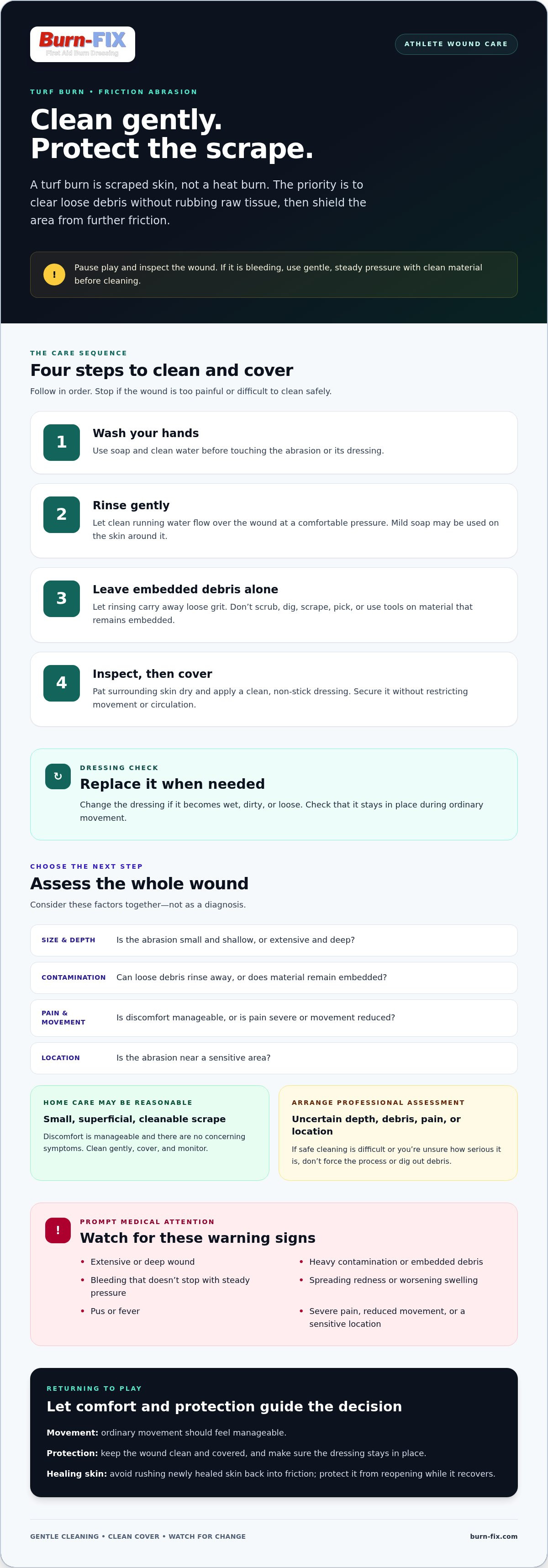
Stop activity so the wound isn’t scraped again, then inspect it in good light. If there’s bleeding, apply gentle, steady pressure with clean material. Once it’s controlled, begin cleaning with clean running water. Avoid rubbing, scraping, or picking at raw skin, which can increase irritation. These first steps are the starting point for turf burn wound care for athletes. The next section explains how to clean and cover the abrasion.
Which turf burns need prompt medical attention?
Get a clinical assessment for an extensive or deep wound, heavy contamination, or bleeding that doesn’t stop with steady pressure. Seek prompt care if redness spreads, swelling worsens, pus appears, or fever develops, as these may signal infection. Severe pain, reduced movement, or an abrasion near a sensitive area also deserves immediate attention. If debris appears embedded or you’re unsure how serious the injury is, don’t try to dig it out. Have the wound assessed. When in doubt, prioritize safety over returning to the field.
How to Clean and Cover a Turf Burn Without Irritating It
Gentle cleaning helps lift away loose grit without adding friction to tender skin. Once bleeding is controlled, follow these steps. If the wound is deep, heavily contaminated, or too painful to clean, stop and seek clinical assessment rather than forcing the process.
- Wash your hands. Use soap and clean water before touching the abrasion or its dressing. This helps avoid transferring dirt and germs to the exposed skin.
- Rinse gently. Let clean running water flow over the wound to wash away loose surface debris. Keep the pressure comfortable. A forceful stream can hurt and irritate raw tissue.
- Remove only loose debris. If a small piece of grit rests on the surface and rinsing carries it away easily, let the water do the work. Don’t dig, scrape, or use tools to remove material that’s embedded.
- Inspect the area. Check whether debris remains, bleeding continues, or the abrasion looks deeper or more extensive than you first thought. If you can’t clean it comfortably, arrange professional assessment.
Gentle rinsing clears loose debris, while a clean cover helps shield raw skin from friction and dirt that can keep irritating it.
What is the safest way to rinse turf debris away?
Use clean running water and, if needed, mild soap on the skin around the abrasion. Avoid scrubbing the raw area, and don’t pour harsh cleaning products into it. If debris is embedded, rinsing doesn’t clear it, or pain makes cleaning difficult, don’t probe the wound. A clinician can assess and clean it while reducing the risk of further tissue injury.
How should an athlete protect the abrasion afterward?
After rinsing, gently pat the surrounding skin dry and cover the wound with a clean, non-stick dressing. Secure it without wrapping so tightly that it restricts movement or circulation. Change the dressing if it becomes wet, dirty, or loose, and replace it with a fresh one. Clothing, protective pads, and repeated bending or sliding can rub against exposed skin, so check that the dressing stays in place during ordinary movement.
These steps are the practical core of turf burn wound care for athletes: clean without scraping, then protect the area from repeated contact. Don’t apply a burn-care product to a turf abrasion unless its label specifically supports that use. For a separate thermal-burn first-aid kit, explore burn-care supplies and follow the product directions for the burn type stated on the label.
Turf Burn Care: Home Care vs. Medical Help
Not every turf abrasion needs the same response. A small, shallow scrape that can be cleaned and covered is different from a deep wound with embedded debris or pain that limits movement. Consider the wound’s size, depth, contamination, pain, and location together, and reassess if it changes. Use this comparison to help decide what to do next, not as a diagnosis.
| Wound situation | Sensible next step |
|---|---|
| Small, superficial, cleanable abrasion; discomfort is manageable and there are no concerning symptoms. | Home care may be reasonable. Clean gently, cover with a clean dressing, and monitor the area. |
| You’re unsure how deep it is, debris remains, pain is significant, or the wound is in a sensitive location. | Arrange professional wound assessment, especially if cleaning it safely is difficult. |
| Wound is extensive or deep, bleeding persists, or redness spreads, swelling worsens, pus appears, or fever develops. | Seek prompt medical attention. Severe pain or reduced movement also calls for urgent assessment. |
Burn-care products are intended for thermal burns, such as heat-related injuries, and shouldn’t be assumed suitable for a friction abrasion. For thermal-burn preparedness, Burn-Fix offers burn-care supplies. Use those products only for the burn types stated on their labels.
When can a minor turf abrasion be cared for at home?
Home care may suit a small, shallow wound that rinses clean, has manageable discomfort, and isn’t accompanied by concerning symptoms. Continue gentle cleaning as needed, replace the dressing if it becomes wet or soiled, and observe the skin during dressing changes. If the scrape becomes harder to clean, more painful, or increasingly red or swollen, reassess and seek medical advice.
When should an athlete seek professional wound assessment?
Choose clinical assessment for deep, extensive, heavily contaminated, or persistently bleeding wounds, or if pain interferes with normal movement. Spreading redness, increasing warmth or swelling, pus, and fever can indicate a worsening problem and warrant prompt care. A wound near a sensitive area also deserves extra caution. This guide offers general education, not a diagnosis of an individual injury.
Good turf burn wound care for athletes means matching the response to what you can see and how the athlete feels, then staying alert to changes. If you’re uncertain whether a wound is minor, getting it assessed is safer than relying on a dressing alone.
Turf Burn Aftercare: Reduce Friction and Watch Changes
After cleaning and covering the abrasion, protect it during ordinary daily activity. Keep the dressing clean and in place, and avoid contact with surfaces that could grind dirt into the wound or pull at tender skin. A cover helps shield the scrape, but it doesn’t mean the skin is ready for practice, contact, or high-friction movement. It may still be fragile beneath the dressing.
Build wound checks into dressing changes rather than touching the raw area repeatedly. Look at the scrape and nearby skin, note how discomfort changes, and compare what you see with the previous check. Some tenderness can persist, but a clear worsening trend deserves attention rather than being hidden so training can continue.
How can athletes reduce rubbing during recovery?
Choose clean clothing and protective gear that sits comfortably without pressing hard on the injury. For example, adjust a knee pad if its edge catches the dressing, or choose a sleeve that doesn’t scrape an elbow with each bend. Repeated friction can loosen a dressing, expose the abrasion, and irritate healing skin. If movement causes bleeding, increasing pain, or dressing displacement, stop and adjust the activity instead of repeatedly re-securing the same cover and carrying on.
Keep the area protected during routine movement, but don’t use a dressing to push through symptoms. If ordinary walking, bending, or reaching pulls at the wound, scale back the motion that triggers it and reassess the fit of clothing or gear. This gradual approach helps you notice what the skin can tolerate without turning every daily task into a test.
What should athletes check during dressing changes?
With clean hands, remove the dressing gently and inspect the wound and surrounding skin without rubbing or repeatedly touching the exposed surface. Replace a dressing that’s wet, dirty, loose, or damaged with clean material. Watch for spreading redness, increasing warmth or swelling, new drainage, worsening pain, or fever. Note whether the wound looks more irritated after a particular activity or piece of equipment, since that can help identify a source of rubbing.
- Check the dressing: Is it clean, secure, and protecting the abrasion?
- Check the skin: Is redness spreading, or are warmth and swelling increasing?
- Check how it feels: Is pain easing, steady, or getting worse? Is there new drainage or fever?
Worsening symptoms, including spreading redness, increasing swelling, pus, or fever, are reasons to seek medical advice promptly.
In practical turf burn wound care for athletes, protection is a recovery step, not proof that an athlete is ready for contact or sliding. Wait until movement is comfortable and the wound can stay clean and covered during the demands of the sport. The next section looks at making that return-to-play decision. For separate thermal-burn preparedness, explore Burn-Fix burn-care supplies, and use them only according to their labels.
Returning to Play After Turf Burn: Protect the Skin and Choose the Next Step
There’s no single number of days that determines when an athlete is ready to return. Base the decision on comfort, movement, the wound’s condition, and whether it can stay clean and protected during the activity. A dressing helps protect the scrape, but it doesn’t make an open or painful abrasion ready for contact, sliding, or drills that create repeated friction.
What signs suggest an athlete is ready to resume activity?
Before returning, consider whether the athlete can move normally without sharp or increasing pain and whether the dressing stays secure during those movements. A contact sport or friction-heavy drill may challenge a cover more than walking or gentle practice, so readiness for one activity doesn’t automatically mean readiness for another. Significant injuries, ongoing symptoms, or uncertainty call for individualized clinical advice.
- Movement: Can the athlete bend, stretch, and move as their sport requires without discomfort that changes their form?
- Protection: Does the clean dressing stay in place without rubbing or exposing the wound?
- Symptoms: Is there no new bleeding, worsening pain, or sign that the injury is deteriorating?
If these conditions aren’t met, pause or modify activity rather than testing the wound in a full practice. Returning gradually can help reveal whether movement or equipment causes rubbing before the athlete faces more intense play.
What should an athlete do if symptoms return during activity?
Stop if pain increases, bleeding starts, the dressing slips or fails, or the area becomes more irritated. Move to a clean setting, assess the wound, and replace a soiled or damaged cover as appropriate. Don’t mask worsening symptoms just to finish training. If the wound is difficult to protect, symptoms are getting worse, or infection signs appear, seek medical advice before resuming sport.
Once the skin has healed, it may still be more delicate than surrounding skin. Keep it protected from direct rubbing as activity builds, and pay attention to how it responds after practice. If the area reopens, becomes painful, or shows concerning changes, step back and reassess rather than treating the previous return as proof that it’s ready.
How should athletes prepare a broader first-aid kit?
Keep supplies for cleaning and covering abrasions separate from products intended for thermal burns. A turf burn is a friction abrasion, so don’t assume a burn spray, gel, or burn dressing is appropriate for it. Follow product labeling for the injury type it addresses. For heat-related burn preparedness, explore Burn-Fix burn-care supplies and the emergency burn kit guide, while keeping abrasion care focused on clean wound-care materials.
Good turf burn wound care for athletes includes a return decision based on function and protection, not pressure to get back quickly. When movement feels comfortable and the wound can remain clean and covered, the athlete can make a more informed next-step decision. If symptoms or wound protection raise doubts, wait and seek personalized guidance.
Build a First-Aid Kit for the Injuries You May Face
Use this injury as a prompt to review your sports first-aid kit before the next practice. Keep supplies for cleaning and covering scrapes separate from products intended for thermal burns, and make sure athletes know which is which. Turf abrasion care shouldn’t be replaced with burn products unless the label specifically supports that use.
For heat-related burn preparedness, Burn-Fix offers hydrogel burn spray, burn gel dressings, burn gel packets, and a burn kit. These burn-care products are doctor-recommended and moisture-retaining. Explore Burn-Fix burn-care supplies for your first-aid kit, and follow the product label for its intended use.
With a clear plan for wound care and return to activity, athletes can make safer decisions without rushing recovery. Let comfort, protection, and changing symptoms guide the next step, and give healing skin the time and care it needs.
Frequently Asked Questions
Can I shower with a turf burn?
Usually, gentle rinsing with clean water in the shower is appropriate. Let water flow over the abrasion without scrubbing, then pat the surrounding skin dry with a clean towel. Replace the dressing if it gets wet or dirty, and don’t share towels or leave a contaminated dressing in place. If rinsing causes unusual pain or the wound looks worse afterward, pause and seek medical guidance.
Should I use hydrogen peroxide or rubbing alcohol on a turf burn?
No. Avoid pouring hydrogen peroxide or rubbing alcohol into raw skin unless a clinician specifically directs you to. These products can irritate exposed tissue and make cleaning more painful. Use clean water to rinse the area instead. If debris remains stuck or pain makes it hard to clean the abrasion safely, don’t keep trying with stronger products or tools. Arrange professional assessment.
Do I need a tetanus shot after a turf burn?
Whether you need a tetanus booster depends on your vaccination history and the wound, particularly if dirt or other material contaminated it. Check your immunization record, and contact a healthcare professional if you can’t tell whether your protection is up to date. A small-looking scrape doesn’t answer that question by itself. A clinician can consider your history and the wound when advising you.
Can I put antibiotic ointment on a turf burn?
Antibiotic ointment isn’t automatically needed for every abrasion, and some products can irritate skin or trigger an allergic reaction. It also doesn’t replace rinsing away debris and protecting the wound with a clean dressing. Follow the ointment’s label, and ask a healthcare professional if you have medication allergies, the wound is contaminated, or symptoms are worsening. These careful choices support safe turf burn wound care for athletes.
Can a turf burn leave a scar?
It can, although some abrasions heal without a noticeable mark. Deeper skin injury, infection, repeated rubbing, or picking at healing skin may affect how the area looks afterward. Avoid pulling at scabs or damaged skin, even if it itches, and protect the site from friction as it heals. If healing seems delayed or the wound worsens, seek medical advice rather than relying on a product to prevent scarring.
What should I do if turf or dirt is stuck in the wound?
Rinse the area gently with clean running water, and let only loose material that comes away easily wash off. Don’t scrape or dig into raw skin, and don’t use sharp tools to pull out embedded debris. If material remains, the abrasion is deep, or cleaning causes substantial pain or bleeding, arrange professional assessment. Repeated attempts can injure the tissue further and make the wound harder to manage.


