


A glowing ember can burn through clothing before you realize it has reached your skin. If you’re dealing with a campfire ember burn through clothing, act quickly but stay calm: move away from the heat and cool the burn before trying to judge its severity.
When fabric covers the injury, it can be hard to see what has happened. Cool the area under cool, running water for 10 to 20 minutes. Gently remove clothing and jewelry if they aren’t stuck to the skin. Leave any stuck fabric in place.
This guide covers immediate first aid, how to cool and protect the burn, and signs that call for urgent medical attention. It also explains how to care for a minor burn and reduce the chance of another ember injury.
Key Takeaways
- Move away from the fire first. If clothing is burning, use stop, drop, and roll or smother the flames when it’s safe.
- A campfire ember burn through clothing can injure skin even when the scorch mark looks small. Don’t judge severity by clothing damage alone.
- Protect the burn after cooling. Avoid ice, butter, oils, and household remedies that can worsen the injury.
- Know which warning signs need urgent medical care. Call 911 for breathing problems, suspected smoke inhalation, fainting, or immediate danger.
- Reduce future risk by keeping a safe distance, avoiding loose clothing near flames, and following local fire restrictions.
Campfire ember burned through clothing: what to do first
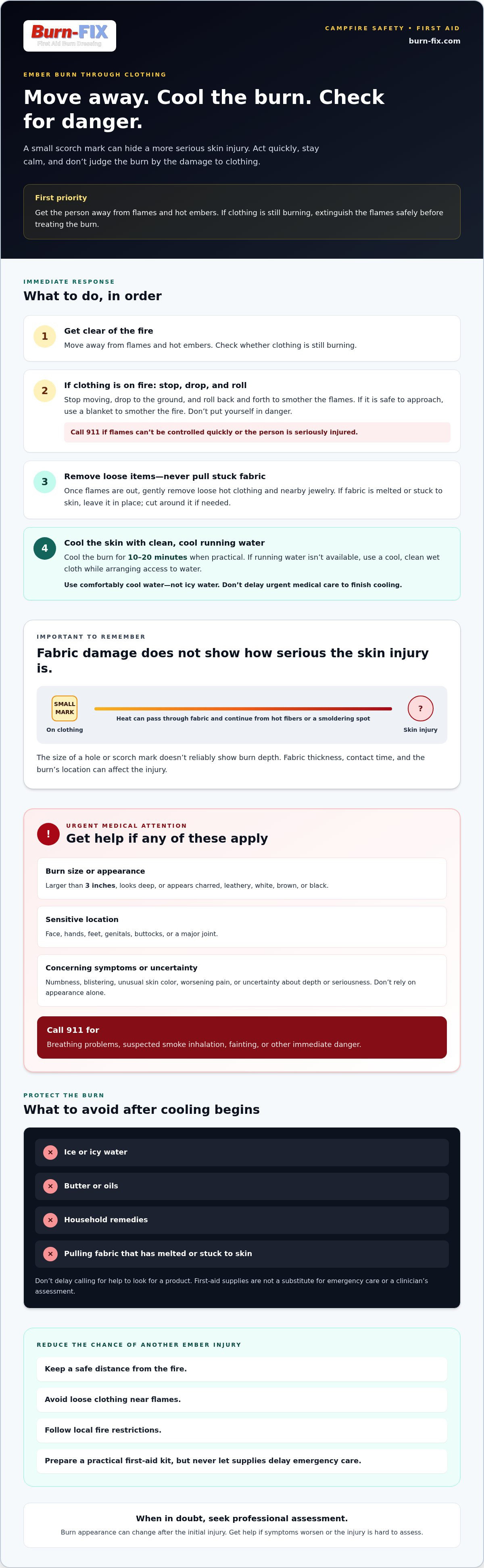
Move away from the fire and make sure the person is no longer near flames or hot embers. Check whether clothing is still burning. An ember can burn through fabric and injure the skin beneath it, so a small hole in clothing doesn’t mean the burn is minor. For background on how burns injure the skin, remember that fabric damage doesn’t show how serious the skin injury is.
Once flames are out, gently remove loose hot clothing and nearby jewelry, then cool the burn with cool, clean running water. Don’t use ice or icy water. Get emergency help for a large or severe burn, or if the person has serious symptoms. First-aid supplies should never delay emergency care.
If clothing is still burning, extinguish the flames safely
Give clear instructions: stop moving, drop to the ground, and roll back and forth to smother the flames. If it’s safe to approach, cover the person with a blanket to smother the fire. Don’t put yourself in danger while helping. Call 911 if the flames can’t be controlled quickly or the person is seriously injured.
Remove hot fabric carefully without pulling stuck material
After the flames are out, gently remove loose clothing and jewelry near the burn before swelling makes them harder to take off. Don’t peel away fabric that has melted or stuck to the skin. If needed, cut around the stuck material without pulling or disturbing the injured area, then leave it in place for medical professionals to assess.
Cool the burn before judging its severity
Hold the affected area under cool, clean running water for about 20 minutes when practical. Cooling helps limit ongoing heat exposure and can ease pain. If running water isn’t available, use a cool, clean wet cloth while arranging access to water. Don’t apply ice, butter, oils, or household remedies to a fresh burn, and don’t delay calling for help to look for a product.
Once cooling has started, check for signs that urgent care is needed. A burn larger than 3 inches, one that looks deep, charred, leathery, white, brown, or black, or one on the face, hands, feet, genitals, buttocks, or a major joint needs prompt medical attention. Call 911 for breathing problems, suspected smoke inhalation, fainting, or other immediate danger. A campfire ember burn through clothing can be hard to assess at first, so seek professional help if you’re unsure about its depth or seriousness.
How an ember burn through clothing can injure the skin
A campfire ember can lodge against clothing and transfer heat through the fabric to the skin. Even after the ember is knocked away, hot fibers or a smoldering spot may remain against the body, allowing heat to keep moving into the skin. Once it’s safe, remove loose, hot clothing promptly. Don’t tug on fabric that has melted or stuck to the burn.
The size of a hole or scorch mark doesn’t reliably show how deeply the skin has been injured. Fabric thickness, how long hot material touched the body, and the burn’s location can all affect the injury. A small mark on a shirt can conceal a burn that needs medical assessment.
What burn appearance can and cannot tell you
Redness, tenderness, pain, and swelling can occur after a burn, but they don’t prove it’s superficial. Blisters may also form. Don’t pop them, since intact skin helps protect the area. Numbness, pale or charred skin, or worsening pain are concerning signs. Seek medical attention rather than relying on appearance alone.
A small, mildly sore area may be minor, but blistering, numbness, unusual skin color, worsening pain, or uncertainty about the injury calls for professional assessment. This is especially important if the burn is on a sensitive area or covers a larger patch of skin. Keep monitoring the area, since changes may become clearer after the initial injury, and get help if symptoms worsen.
Understanding the risk can also help prevent another injury. Keep a safe distance from the fire and follow the practical guidance in Prevent campfire ember burns. After cooling a minor burn and checking that medical care isn’t needed, a prepared first-aid kit can help you care for small injuries. You can review Burn-Fix burn-care supplies and follow each product’s label. Supplies aren’t a substitute for emergency help or a clinician’s assessment.
How to cool and protect an ember burn after clothing contact
Once the heat source is gone and loose fabric is clear, cool the injured skin promptly. Hold it under cool, clean running water for about 20 minutes when practical. This helps draw heat away and may ease pain. The Mayo Clinic’s first aid for burns also emphasizes cooling the area and avoiding ice. Don’t delay emergency care to complete cooling if the burn appears serious or the person needs urgent help.
Cool the burn without chilling the person
Use comfortably cool water, not icy water, and don’t place ice packs on the skin. Extreme cold can cause further injury. Keep the rest of the person warm and watch for shivering or signs they’re becoming chilled, especially if the person is a child, the burn is extensive, or the weather is cold. If you’re concerned about chilling or the injury’s size, seek medical guidance promptly.
Cooling matters even when a campfire ember burn through clothing looks like a small spot. Don’t scrub, rub, or press on the area as water runs over it. If running water isn’t available, use a clean, cool, wet cloth while arranging access to water. Avoid butter, oils, toothpaste, and other household remedies, which can irritate the burn or complicate assessment.
Cover the area and avoid common first-aid mistakes
After cooling, loosely cover the burn with a clean, non-fluffy cloth or a sterile, non-stick dressing. The covering should protect the skin without pressing on it or shedding fibers. Don’t burst blisters, pull away embedded material, or place adhesive directly on injured skin. If a dressing sticks, don’t yank it off. Get medical advice on how to remove it safely.
Wait until cooling is complete before considering a hydrogel or burn dressing, and don’t use one instead of getting an urgent assessment. For a small burn that doesn’t need emergency care, follow the product label and any clinician’s instructions. For more guidance on caring for an appropriate minor injury, read how to treat second-degree burns at home. If the burn is large, deep-looking, in a sensitive location, or otherwise concerning, prioritize professional care over applying a product.
When an ember burn needs urgent medical attention
A small ember doesn’t automatically mean a minor injury. It can leave a tiny mark on clothing while causing a more serious burn beneath it, so consider symptoms, location, and the person’s overall condition. If you’re unsure how serious the injury is, contact emergency services or seek prompt medical assessment instead of trying to judge it at home.
Signs that should prompt emergency help or urgent evaluation
Call 911 for difficulty breathing, suspected smoke inhalation, fainting, collapse, or another immediate danger. Facial burns, confusion, or pain that can’t be controlled also need urgent attention. Don’t wait to see whether symptoms settle if the person seems seriously unwell.
Seek prompt medical assessment for a burn that looks deep, extensive, or is getting worse. Concerning signs include skin that appears white, brown, charred, or leathery, as well as numbness. A burn larger than 3 inches or one affecting the face, hands, feet, genitals, buttocks, or a major joint should also be assessed. Burns in these areas can affect important functions, even if the visible mark seems limited.
Be especially cautious with children and people with health conditions that may affect healing. If the burn’s depth or size is difficult to assess, or symptoms are concerning, get medical help. Don’t let a small-looking spot after a campfire ember burn through clothing reassure you when symptoms or the burn’s location suggest otherwise.
When home first aid may be appropriate
Home care may be reasonable only for a small, apparently minor burn when the person feels well and there are no concerning symptoms or sensitive locations involved. Keep watching for changes. Increasing pain, redness, swelling, pus-like drainage, or fever warrants medical advice, as these can signal a problem that needs assessment.
Don’t try to assign a burn degree yourself or rely on one early look. Appearance and symptoms can change, and a clinician can assess concerns that aren’t clear to you. If you’re considering burn-care supplies for minor injuries, review Burn-Fix burn-care products and follow the product label. Supplies are for first-aid preparation, not a substitute for emergency services or professional assessment.
Prevent campfire ember burns and prepare a practical first-aid kit
Simple habits can reduce the chance of an ember reaching skin. Choose close-fitting clothing around the fire, and keep loose sleeves, scarves, and dangling fabric well away from flames and sparks. Keep children under close supervision and set a clear boundary around the fire area. These precautions matter because an ember can land unnoticed and cause a campfire ember burn through clothing.
Reduce ember exposure around the campfire
Use a designated fire area and check current local fire restrictions before lighting a campfire. Keep the fire at least 15 feet from tents, shrubs, and other flammable objects, and clear a 10-foot area around the fire pit down to bare soil. Keep water and a shovel nearby. Before leaving, drown the fire, stir the embers, and add water again until everything is cool to the touch.
Don’t assume a fire is safe because the flames have disappeared. Embers can remain hot beneath ash, so check carefully and keep people away until the fire is fully extinguished. For preparation beyond the campsite, use this emergency burn kit for home checklist to think through what supplies to keep accessible.
Keep burn-care supplies ready for minor injuries
A stocked first-aid kit makes basic supplies easier to find when a minor incident happens. Keep it accessible, and check product labels so you know how to use each item. Burn-Fix offers the Burn-Fix Hydrogel Burn Spray - 120ml, Burn-Fix 4x4 First Aid Burn Gel Dressing, Burn-Fix Burn Gel - 3.5g Per Packet, and Burn-Fix Burn Kit for first-aid preparation. Use products only as directed and after cooling the burn.
Preparation is helpful, but it doesn’t replace medical care. If a burn is large, deep-looking, in a sensitive area, or accompanied by serious symptoms, seek urgent professional help rather than reaching for a product. For minor injuries, you can Explore Burn-Fix burn-care supplies and review the relevant product instructions before you need them.
Be ready to act calmly around the next campfire
If a campfire ember burn through clothing happens, move away from the heat, put out any flames, and cool the skin promptly with cool running water. Remove loose hot fabric and jewelry, but never pull material stuck to the skin. A small scorch mark doesn’t guarantee a minor injury, so seek urgent medical help for serious symptoms, deep-looking or extensive burns, or injuries in sensitive areas.
For a minor burn, protect the cooled area and watch for worsening pain, redness, swelling, drainage, or fever. Keep a safe distance from the fire, supervise children, and make sure embers are fully extinguished before leaving. Preparation can make basic supplies easier to find: Burn-Fix offers hydrogel spray, gel dressings, gel packets, and a burn kit. Check current product instructions and suitability before use. These supplies are for first-aid preparation, not a substitute for emergency care.
Explore Burn-Fix burn-care supplies and keep suitable basics ready for minor injuries. A clear plan and careful fire habits can help you respond with greater confidence at your next outdoor gathering.
Frequently Asked Questions
What should I do if a campfire ember burns through my clothes?
Move away from the fire and make sure the ember or flames are no longer touching the person. If clothing is burning, stop, drop, and roll, or smother the flames with a blanket if it’s safe to approach. Remove loose hot clothing and jewelry, but don’t pull fabric stuck to the skin. Cool the burn under cool, clean running water and seek medical help if it looks serious or symptoms are concerning.
Should I remove clothing from a burn if fabric is stuck?
No. Don’t pull or peel fabric that’s melted or firmly stuck to the skin, because doing so can further injure the area. Remove loose clothing and nearby jewelry gently, since swelling can make them harder to take off. If you can do so without disturbing the burn, cut around the stuck material and leave it in place. Get medical advice if the injury is significant or you’re unsure what to do.
How long should you run cool water over a burn?
Run cool, clean water over the burned skin for about 20 minutes when practical. Use comfortably cool water, not ice or icy water, which can further damage skin. Don’t delay calling for emergency help or getting urgent care just to finish cooling. If running water isn’t available, a clean, cool, wet cloth can help while you arrange access to water. Keep the person warm and watch for shivering, especially in cold conditions.
Can a small ember cause a serious burn through clothing?
Yes. A campfire ember burn through clothing can be more serious than a small hole or scorch mark suggests. Heat may pass through fabric and injure the skin beneath it, and appearance alone can’t reliably show burn depth. Seek prompt medical assessment if the skin looks pale, charred, leathery, or numb, or if the burn is large, worsening, or on the face, hands, feet, genitals, buttocks, or a major joint.
Should I put burn gel or hydrogel on a fresh campfire burn?
First cool the burn with cool, clean running water. Don’t apply gel or hydrogel before cooling, and don’t use a product to delay urgent medical assessment. For a small burn without concerning symptoms, a burn-care product may be appropriate after cooling if its label indicates it’s suitable for the injury and person. Follow the instructions carefully. Products don’t replace emergency services or a clinician’s assessment when either is needed.
When should I call 911 for a campfire burn?
Call 911 for breathing problems, suspected smoke inhalation, fainting, collapse, or another immediate danger. Get emergency help if flames can’t be controlled quickly or the person is seriously injured. A deep-looking or extensive burn, severe or uncontrolled pain, or a burn affecting the face may also need urgent attention. If you’re unsure about severity and symptoms seem concerning, contact emergency services rather than waiting to see whether the injury improves.
Can I pop a blister from an ember burn?
No. Don’t pop or drain a burn blister. The intact skin helps protect the area, and breaking it can increase the chance of infection. Keep the burn clean, avoid rubbing or pressing on it, and loosely cover it with a clean, non-fluffy dressing if appropriate. Seek medical advice if the blister is extensive, the burn is in a sensitive location, or pain, redness, swelling, drainage, or fever worsens.


