


The asphalt may be the part you most want to pull away, but leave it in place. A hot asphalt burn on bare feet can be intensely painful, and the sticky material may keep heat against the skin. Start cooling the burn with cool running water for at least 15 to 20 minutes. Don’t use ice or try to peel asphalt off, since either can worsen the injury.
If standing or walking hurts, sit or lie down and ask someone for help. The safest first steps are to cool the area, avoid disturbing stuck material, and arrange medical assessment. This guide explains how to protect the injured foot and recognize warning signs that need urgent attention.
Even a burn that looks small should be evaluated by a doctor because it’s on the foot and involves hot asphalt. You’ll learn when to seek emergency care, what to avoid while waiting, and how clinicians can manage asphalt attached to skin.
Key Takeaways
- A hot asphalt burn on bare feet needs careful assessment, even if it looks small. Appearance alone can’t reliably show how deep it is.
- White, charred, numb, blistered, or extensive skin damage can signal a need for urgent medical attention.
- Protect the injured foot with clean, loose coverage. Avoid pressure and fluffy materials while arranging care.
- Reduce further irritation by keeping weight off the foot as much as safely possible.
- Use burn-care supplies only as directed by a clinician. Products for minor burns aren’t a substitute for evaluating a foot burn.
Hot Asphalt Burn on Bare Feet: What to Do Immediately
Move away from the hot surface and keep the injured foot from touching it again. Hot asphalt may cling to skin and continue transferring heat, so don’t delay cooling to inspect the injury or judge its severity.
First-aid summary: Move to safety, cool the burn with cool running water, leave stuck asphalt in place, cover the foot loosely, and seek prompt medical assessment.
- Get to a safe place. Sit or lie down if standing is difficult, and ask someone to help if needed.
- Cool the burn. Hold the affected area under cool, clean running water for at least 15 to 20 minutes.
- Protect the foot. Don’t peel away asphalt or put pressure on burned skin. Loosely cover it with a clean, non-fluffy dressing.
- Arrange medical care promptly. A medical professional should assess a foot burn from hot asphalt, even if it looks small.
While arranging care, don’t apply ice, iced water, creams, or household remedies. Extreme cold can injure burned skin further, and products may complicate assessment. If the burn looks deep, white, charred, or leathery, or the foot feels numb, seek emergency care. Don’t delay care to examine the wound or remove debris.
How to cool a hot asphalt burn safely
Let cool, clean running tap water flow gently over the burn for at least 15 to 20 minutes. Avoid forceful spraying, ice, and iced water. Remove shoes, socks, or jewelry only if they come away easily and aren’t stuck to burned skin. Leave anything adhered in place for medical professionals to handle.
Cooling helps limit ongoing heat injury, but it doesn’t replace an assessment. Because the foot is involved and asphalt may remain attached, arrange prompt medical advice while cooling or as soon as possible afterward. Ask someone to help you get care if you can’t travel safely.
What to do if asphalt is stuck to the skin
Leave it alone. Don’t peel, scrape, rub, or pull adhered asphalt from the foot. These actions can tear injured skin and worsen the burn. After cooling, loosely cover the area with a clean, non-fluffy dressing without pressing down. A clinician should assess the burn and attached material before deciding how to remove it safely.
A burn is skin injury caused by heat, and its depth can’t always be judged by appearance alone. For background on different types of burns, including their causes and complications, see this overview. With asphalt burns, prompt assessment matters even when the visible injury seems limited.
Why hot asphalt burns can seriously injure bare feet
A thermal burn is skin damage caused by contact with a heat source. Hot asphalt can cling to skin and keep transferring heat after contact, so a hot asphalt burn on bare feet deserves careful assessment even if the visible mark seems small.
Burn depth isn’t always obvious. Redness, blistering, and pain can offer clues, but they can’t reliably show how much tissue is affected. Clinicians consider depth and area alongside symptoms and a person’s health when deciding what care is needed.
Why contact with hot asphalt needs careful assessment
Because asphalt can be sticky as well as hot, pulling or scraping it away may injure the skin further. Don’t force stuck material off at home. A clinician can assess the burn and attached asphalt before deciding how to manage it. Guidance on first-aid for minor burns explains general burn care, but an asphalt burn on the foot needs individual medical advice rather than assumptions based on minor-burn guidance.
There’s no reliable way to judge severity by how dramatic the surface looks. A small-looking area may still need professional evaluation, particularly if pain is severe, sensation is reduced, or the skin looks white, charred, or leathery.
Why a foot burn is different from a small surface burn
The feet support body weight and make standing and walking possible. A burn on the sole can make ordinary movement painful and may be exposed to pressure or friction. Diabetes, reduced sensation, or circulation problems can add concern, so tell the clinician assessing the injury about these conditions.
A burn on the foot can affect weight-bearing and mobility, so foot burns warrant prompt medical assessment. The care team will consider location alongside depth, size, symptoms, and individual health factors, rather than relying on appearance alone.
After a clinician has assessed the injury and advised that home care is appropriate, suitable supplies may help you follow their instructions. For general preparedness, review burn-care supplies, but remember that supplies aren’t a substitute for evaluation or treatment of a hot asphalt foot burn.
How to tell when an asphalt foot burn needs urgent medical care
Don’t wait for a hot asphalt burn on bare feet to look worse before seeking help. Surface appearance can’t reliably show burn depth, and burns on the feet deserve prompt medical assessment. The signs below can help you judge how urgently to act, but they can’t diagnose the injury.
Signs that may require emergency services
Call 911 if the person seems seriously unwell, the burn looks deep, or they can’t be transported safely. Warning signs include skin that appears white, charred, or leathery; numbness; or a large or extensive injury. Also watch for possible shock: pale, cool, clammy skin, rapid or shallow breathing, marked weakness, dizziness, confusion, or fainting. Don’t wait for symptoms to worsen.
If the person is responsive and can be transported safely, seek emergency medical care for severe or deep-looking burns. Follow the emergency dispatcher’s instructions. Keep the person as comfortable and still as possible while help is arranged. Don’t delay to measure or closely inspect the injury.
When to seek prompt clinical assessment
Even without emergency symptoms, arrange prompt medical advice for an asphalt burn on the foot. Seek same-day assessment for blisters, open skin, significant pain, or difficulty standing or walking. A clinician needs to assess the injury rather than relying on how small or superficial it looks.
Use extra caution for children and anyone with diabetes, reduced sensation, or circulation problems. Reduced feeling can make it harder to recognize the extent of an injury, while existing health conditions may affect the concerns a clinician considers. If you’re unsure whether the person can travel safely, contact emergency services for guidance.
This guide can’t determine burn depth or replace assessment by a clinician. Emergency and referral decisions depend on the injury and the person’s condition. Clinicians can consult the American Burn Association’s referral guidance when determining appropriate care. For readers, the safest course is not to self-triage a foot burn from hot asphalt. Seek prompt medical advice, and call 911 for severe symptoms or an immediate life-threatening emergency.
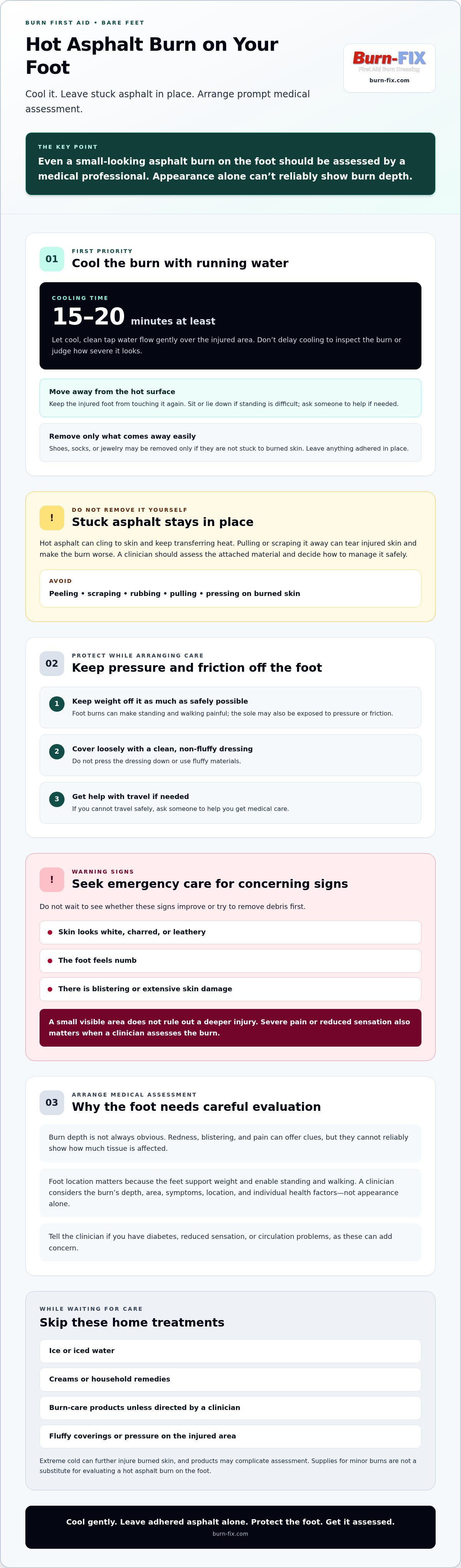
Step-by-step first aid while arranging care for a burned foot
Keep the next steps simple. First aid can limit further irritation while you arrange medical assessment, but it can’t show how deep a burn is or replace care from a clinician.
- 1. Get safe. Move away from the hot asphalt and sit or lie down somewhere clean. Ask someone to help rather than walking on a painful or burned foot.
- 2. Cool the area. Gently run cool, clean water over the burn for at least 15 to 20 minutes. Don’t use ice or iced water, and don’t delay care to inspect the injury or remove stuck asphalt.
- 3. Protect the foot. Once cooled, loosely cover it with a clean, non-fluffy dressing. Keep dirt and accidental contact away without pressing or tightly wrapping the injured area.
- 4. Arrange assessment. Contact a medical professional promptly. If symptoms are severe or the person can’t be transported safely, call 911.
How to cover and protect the injured foot
Choose a clean covering that won’t shed fibers, and lay it gently over the injury. Don’t wrap tightly, use fluffy materials, or put weight or pressure on burned skin. If asphalt or clothing is stuck, leave it in place. Keep the foot protected from dirt and further contact while arranging care, and follow any instructions from a clinician.
During transport, keep weight off the injured foot as much as safely possible. Ask someone to assist, use a mobility aid if one is readily available and safe, or arrange transport rather than forcing the injured person to walk. Pain while bearing weight is a reason to avoid unnecessary steps, not a measure of how serious the burn is.
What not to put on a fresh asphalt burn
Skip butter, oils, toothpaste, and other household remedies. Don’t pop blisters, apply creams or burn products before medical assessment, or try to remove adhered asphalt. Avoid ice, too. These actions can irritate or further damage injured skin, interfere with assessment, or make the wound harder to manage safely.
Pain relief after cooling doesn’t prove the burn is minor. A hot asphalt burn on bare feet still needs prompt medical advice. Use burn-care products only if a clinician considers home care appropriate and explains what to use.
For future preparedness, consider the Burn-Fix Burn Kit. It isn’t a substitute for prompt assessment or emergency care after an asphalt burn.
After medical assessment: protect healing skin and choose burn supplies carefully
Once a clinician has assessed the burn, use their care plan as your guide. Follow instructions for changing or keeping a dressing in place, protecting the foot during activity, and attending follow-up. Ask before changing the dressing or adding a product, especially if asphalt or damaged skin remains in the wound.
Follow the care plan and watch for changes
Keep the foot protected as directed, and avoid activities that put pressure on the injured area unless your clinician says they’re safe. Contact a medical professional for worsening pain, spreading redness, drainage, fever, or any new concern. If symptoms become severe or the person seems seriously unwell, seek urgent help. Recovery and follow-up needs vary, so don’t rely on a predicted healing timeline.
When burn-care products may be relevant
Burn-care products are an option only after a clinician has assessed the injury and considers home care appropriate. Products intended for minor first- or second-degree burns don’t replace evaluation of a foot burn and aren’t suitable for every injury. Follow the clinician’s advice and the product’s current directions rather than applying a spray, gel, or dressing on your own.
Burn-Fix offers hydrogel burn spray, burn gel, and gel dressings. These may be relevant only for clinician-approved home care of appropriate minor burns. They aren’t a substitute for urgent assessment or treatment, and shouldn’t be used to manage a deep or severe injury without professional guidance.
For general product education, review Burn-Fix’s burn relief spray guide and confirm any intended use with the treating clinician.
Take recovery one step at a time: follow the care plan, protect the foot, and get advice if anything changes. For future preparedness, consider keeping a BurnFix Burn Kit available, but remember that a kit doesn’t replace medical evaluation after a hot asphalt burn on bare feet.
Take the next safe step for your foot
A hot asphalt burn on bare feet needs more than a quick look. Move away from the hot surface, cool the injury with cool running water, and don’t pull off asphalt stuck to the skin. Because burns on the feet can affect standing and walking, seek prompt medical assessment, even if the visible area seems small. Call 911 if symptoms are severe or the person can’t be safely transported.
After assessment, follow the clinician’s directions for protecting the skin, changing dressings, and returning to everyday activity. Watch for worsening pain, spreading redness, drainage, fever, or other new concerns, and ask a medical professional what to do. Burn-Fix offers hydrogel spray, gel, dressings, and a burn kit intended for first- and second-degree burns. Use these only when a clinician considers home care appropriate, never as a substitute for medical assessment.
For future preparedness, explore Burn-Fix burn-care supplies for an appropriate home first-aid kit. Taking calm, careful steps can help protect the injured foot while you arrange the right care.
Frequently Asked Questions
What should I do first for a hot asphalt burn on bare feet?
Move away from the hot surface, then cool the affected foot with cool, clean running water for at least 15 to 20 minutes. Don’t use ice or delay care to examine the injury. Leave asphalt stuck to the skin in place, loosely cover the burn with a clean, non-fluffy dressing, and seek prompt medical assessment. If symptoms are severe or the person can’t be transported safely, call 911.
Should I peel hot asphalt off my burned foot?
No. Don’t peel, scrape, rub, or pull asphalt that’s stuck to the skin. Removing it yourself can tear or further damage burned tissue. Cool the area with running water, then loosely cover it with a clean, non-fluffy dressing while arranging medical care. A clinician should assess the injury and adhered material before deciding how to remove it safely. Don’t wait to see if the asphalt comes away on its own before seeking advice.
Can I put ice on an asphalt burn?
No, don’t put ice or iced water on a burn. Extreme cold can cause additional tissue damage. Instead, use cool, clean running water over the affected area for at least 15 to 20 minutes. Cooling is a first-aid step, not a substitute for medical assessment. Because asphalt can stick to skin and foot burns need careful evaluation, arrange prompt medical advice after cooling, even if the pain eases.
When should I go to the emergency room for a foot burn?
Seek emergency care for a burn that looks deep, white, charred, or leathery, or if the area is numb or extensive, or symptoms are severe. Call 911 if the person is seriously unwell, shows signs such as confusion or fainting, or can’t be transported safely. Blisters, open skin, significant pain, and difficulty walking also need prompt medical advice. A clinician should assess hot asphalt burns on the feet, even if they seem small.
Can I walk on a burn on the sole of my foot?
Avoid putting weight on the burned foot as much as you safely can, especially if walking causes pain. The sole bears weight during standing and movement, so walking may press on or rub the injured area. Sit or lie down and ask someone to help arrange care rather than walking unnecessarily. If the person can’t be transported safely, call 911. Don’t use the ability to walk, or pain relief, to decide that the burn is minor.
Should I cover a hot asphalt burn before getting medical care?
Yes. After cooling, loosely place a clean, non-fluffy dressing over the burn to help protect it from dirt and accidental contact. Don’t wrap it tightly or press on the injured area. If asphalt, clothing, or another item is stuck to the skin, leave it there and cover loosely around it without pulling. Keep weight off the foot as much as possible, and follow any instructions from emergency responders or a clinician.
Can burn gel treat a hot asphalt burn on bare feet?
Don’t apply burn gel before medical assessment unless a clinician advises you to. A foot burn from hot asphalt needs prompt evaluation, and products intended for minor first- or second-degree burns aren’t a substitute for that care. If a clinician determines that home care is appropriate, ask which product to use and follow its current directions. Burn-Fix offers burn gel and other burn-care supplies for appropriate clinician-approved use, not as a replacement for assessment or emergency care.


