


A small mark from a pyrography pen can sting sharply, and its size doesn’t always show how serious the burn is. If you’re looking for pyrogravure wood burning tool burn treatment, move away from the hot tip and cool the injured skin under cool running water for about 10 minutes, or until the pain eases. Skip ice, which can further damage the skin.
It’s understandable to feel unsure in the moment, especially if a blister appears or the burn is on your hand. Gentle first aid can help protect a minor burn, but some injuries need prompt medical attention even when they look small. The burn’s depth and location, swelling, and changes in the skin all matter.
This guide covers immediate first-aid steps, how to cover and monitor a minor burn, and warning signs that mean you should seek medical care. You’ll also learn what not to put on the injury and why blisters should be left intact. First, cool the contact burn, then assess its severity before deciding on aftercare.
Key Takeaways
- For pyrogravure wood burning tool burn treatment, stop working and cool the skin promptly before choosing aftercare.
- Assess the burn’s depth, location, and changes. A small-looking mark may still need medical attention.
- After cooling a minor burn, protect it with a clean, non-adherent covering and follow its care instructions.
- Watch for worsening pain, swelling, or other concerning changes, and seek medical care if warning signs appear.
- Reduce workshop risks with a stable work surface, safe tool placement, and suitable first-aid supplies within reach.
Pyrography Wood-Burning Tool Burn Treatment Starts with a Calm First Response
A heated pyrography tip can leave a small, sharply painful mark. Act calmly and promptly: stop working, move away from the heat, and cool the affected skin. A small contact area isn’t automatically a minor injury, particularly if the burn is on a finger or over a joint, where swelling or discomfort may affect movement. The first steps in pyrogravure wood burning tool burn treatment are to end contact with the heat and cool the skin, not to judge the injury by its size alone.
What happens when a hot wood-burning pen touches skin?
The hot tip transfers concentrated heat to a small patch of skin. The mark may look limited, but appearance alone can’t reliably show how deeply the skin is injured. Burn depth can also be difficult to assess at first. For general information on burns, see this overview of burn types and injury processes. It isn’t a substitute for medical assessment. If you’re unsure about the burn’s depth or severity, contact a qualified medical professional.
What should you do in the first moments?
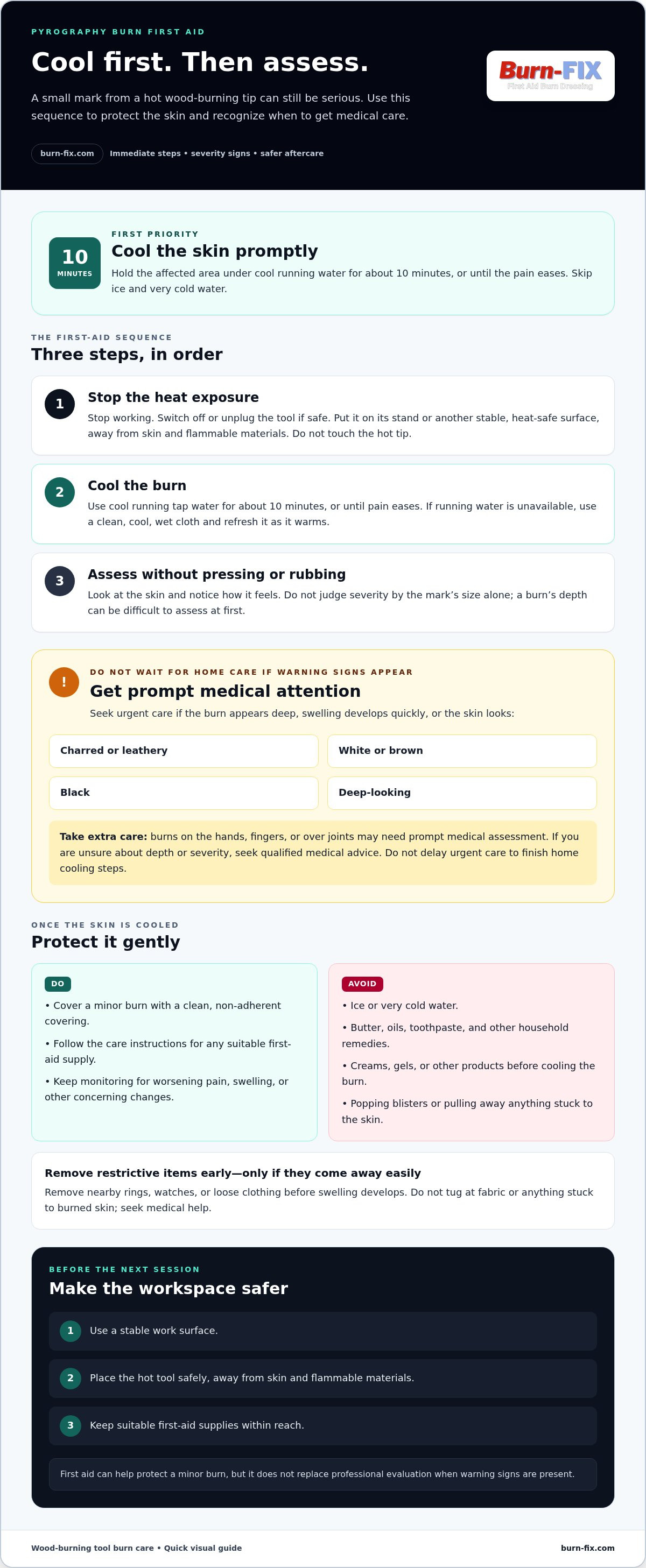
Take these steps in order:
- Stop the heat exposure. Put the pen on its stand or another stable, heat-safe surface, away from your skin and flammable materials. Don’t touch its hot metal tip.
- Cool the skin. Hold the affected area under cool running tap water for about 10 minutes, or until the pain eases. Don’t use ice or very cold water, which can further damage the skin.
- Remove restrictive items. Take off nearby rings, watches, or other tight items before swelling develops, if they aren’t stuck to the skin. Don’t pull away anything stuck to the burn. Seek medical help.
After cooling, keep paying attention to the site and how it feels. Burns on the hands, fingers, or over joints deserve particular care and may need prompt medical assessment. Seek urgent care if the skin looks charred, leathery, white, brown, or black, if the burn appears deep, or if swelling develops quickly. If you can’t confidently tell whether it’s minor, get qualified medical advice instead of relying on your first impression.
How to Cool and Protect a Wood-Burning Tool Burn Step by Step
Follow the first-aid sequence in order: stop the heat exposure, cool the skin, then assess what you can see and feel. For a fresh contact burn, cool the affected skin under cool running water for about 10 minutes, or until the pain eases. Don’t use ice. Prompt cooling ends continued heat exposure, but it can’t show how deep the burn is or replace medical care when the injury is serious.
1. Stop the heat exposure. Switch off or unplug the wood-burning tool if you can do so safely. Rest it on its stand or another stable, heat-safe surface away from skin and flammable materials. Don’t touch the hot tip.
2. Cool the skin. Hold the burn under cool tap water. If running water isn’t available, use a clean, cool, wet cloth and refresh it as it warms. Avoid very cold water, ice, butter, oils, toothpaste, and other household remedies. They can irritate the injury or interfere with safe care.
3. Assess the injury. After cooling, look for concerning changes without pressing or rubbing the area. Don’t decide the burn is minor based on the size of the mark alone. For guidance on caring for minor burns and recognizing burns that need medical attention, consult MedlinePlus.
How long should you cool a pyrography burn?
Cool the area for about 10 minutes, or until the pain eases. This allows time under cool water after contact with the hot tip, but it doesn’t guarantee a particular healing result. If the burn looks deep, is on a sensitive area, or is otherwise alarming, get urgent medical help. Don’t delay that care to complete home cooling steps.
What should you remove, and what should you leave alone?
Remove rings, watches, or nearby loose clothing if they come away easily, since swelling may make them harder to remove. Never tug at fabric or other material stuck to burned skin. Don’t pop blisters, and avoid applying creams, gels, or other products before cooling the burn. Once the skin is cooled and you’ve assessed the injury, follow appropriate aftercare guidance and the instructions for any suitable first-aid supply.
For minor-burn preparedness, you can review first-aid burn-care supplies. Supplies are for first aid, not a substitute for professional evaluation or emergency care when warning signs are present.
Is a Pyrography Tool Burn Minor? Signs That Need Medical Care
A small contact mark isn’t automatically a minor burn. A heated pyrography tip concentrates heat in one spot, and the visible area alone can’t reliably show how deeply the skin is injured. When considering pyrogravure wood burning tool burn treatment, focus on the burn’s appearance, location, symptoms, and whether they’re changing. The guidance below can help you decide when to seek assessment, but it can’t diagnose an injury.
Which burn symptoms should prompt urgent medical advice?
Seek prompt medical assessment if the burn looks deep or leathery, is charred, or has white, brown, or black patches. A burn larger than 3 inches, one that’s swelling quickly, or one on the face, hand, foot, groin, buttocks, or over a major joint also warrants medical attention. Significant blistering, worsening pain, numbness, or trouble moving the affected area are reasons to contact a healthcare professional, especially if you’re uncertain about the severity.
Signs of infection also need attention. Watch for increasing redness or swelling, worsening pain, oozing, or fever. MedlinePlus offers further guidance on first aid for minor burns, including symptoms that call for medical care. Don’t wait for every warning sign to appear before asking for help.
When is home care not enough?
Home care isn’t appropriate for a suspected deep burn or an injury with serious symptoms. If the person is in immediate danger or the injury appears severe, contact local emergency services. Don’t rely on a burn-care product or continue home treatment instead of getting help. For burns that aren’t clearly an emergency but still concern you, contact a qualified healthcare professional promptly.
Even a small burn on a finger can matter if pain, swelling, or blistering interferes with movement. If symptoms worsen or you can’t tell whether the skin is deeply injured, get medical advice. This article offers general first-aid information, not a diagnosis or personalized medical consultation. A professional can assess the injury and advise on appropriate care.
After Cooling a Wood-Burning Tool Burn: Cover and Monitor It Safely
After cooling and assessing a minor burn, a clean, non-stick covering can help protect the skin from friction and dirt. Keep the dressing loose. A tight wrap or pressure can add discomfort, especially on a finger or near a joint. If the burn looks deep, is worsening, or you’re unsure about its severity, seek medical advice instead of relying on home aftercare.
How should you cover a small burn after cooling?
Use a clean, non-adherent dressing if appropriate, and follow the product’s instructions for application and removal. Don’t press the dressing onto the injury or wrap it tightly. Hydrogel products may be considered for suitable minor burns only when their labeling supports that use. They aren’t a substitute for professional care. Keep blisters intact, and get medical advice before applying products to a burn that may be serious.
For readers comparing aftercare approaches, the guide How to Treat Second-Degree Burns at Home (2026) offers broader context. A burn from a wood-burning pen can’t be classified reliably from appearance alone. The safest pyrogravure wood burning tool burn treatment starts with cooling the skin and assessing whether the injury needs medical attention.
What changes mean the burn needs reassessment?
Check the area regularly as it heals. Seek medical advice if pain or swelling increases, redness spreads, fluid drains from the wound, or you develop a fever. A burn that changes in appearance, interferes with movement, or doesn’t seem to be progressing toward healing also deserves professional assessment. These signs don’t prove infection or a serious burn, but they’re reasons not to simply continue home care.
If the dressing becomes wet or dirty, follow its instructions for changing it and handle the area gently. Don’t peel away material stuck to the skin or pop a blister. If you’re unsure whether the burn is minor, contact a healthcare professional rather than waiting for symptoms to worsen.
After cooling and assessing the injury, suitable first-aid supplies can help protect a minor burn when used as directed. Explore burn-care products for minor burns, and follow each product’s label. Don’t use a burn gel or dressing to delay care for a deep, worsening, or uncertain injury.
Prepare for Future Pyrography Burns with a Practical First-Aid Plan
A little preparation can make a workshop safer and help you respond steadily if a burn happens. Before switching on your tool, check that the work area is stable, the hot pen has a secure place to rest, and you can reach cool running water without searching for it. Keep suitable first-aid supplies accessible, but remember that preparation doesn’t replace medical assessment when an injury looks serious.
How can you reduce accidental contact with a hot tool?
Follow the manufacturer’s safety instructions and use the pen only on a stable, uncluttered work surface. Keep the heated tip pointed away from your skin, children, pets, and flammable materials. When you pause, return the tool to its stand instead of setting it down casually. Switch it off and unplug it when finished, then let it cool safely before handling or storing it.
- Keep the tool’s stand and a clear space for the hot pen within easy reach.
- Know where you can cool a burn under running water and how long to do so.
- Keep the work area free of clutter that could knock the tool or bring skin into contact with its tip.
For help planning household supplies, see Emergency Burn Kit for Home: The Essential 2026 Safety Checklist. A planned setup can save time, but it doesn’t mean every burn is suitable for home care.
Which burn-care supplies belong in a home first-aid kit?
Keep clean, non-stick coverings and appropriate burn-care products together, and check their labels before use. Burn-Fix Hydrogel Burn Spray - 120ml and burn gel dressings are first-aid supplies for appropriate minor burns. Use them only as directed, after cooling the skin and assessing the injury. They aren’t for severe or deep burns and don’t replace professional or emergency care.
For pyrogravure wood burning tool burn treatment, preparation means knowing the immediate cooling steps, keeping suitable supplies nearby, and recognizing when to get medical help. A burn kit is a preparedness option, not a substitute for evaluation if symptoms are concerning or you’re unsure about the injury.
Explore Burn-Fix burn-care supplies to review options for stocking a first-aid kit for appropriate minor burns.
Be Ready to Respond Calmly to a Pyrography Burn
Remember the first steps: stop using the hot tool, cool the skin under cool running water, then assess the injury. A small mark can still need medical attention, especially if it looks deep, worsens, or affects a sensitive area. Once a minor burn is cooled, protect it with a suitable clean covering and watch for changes as it heals.
Good pyrogravure wood burning tool burn treatment also means knowing when home care isn’t enough. If you’re unsure about the burn’s severity or notice concerning symptoms, seek qualified medical advice rather than relying on a first-aid product.
For appropriate minor-burn preparedness, Burn-Fix offers supplies including BurnFix Hydrogel Burn Spray - 120ml, Burn-FIX 4x4 First Aid Burn Gel Dressing, and BurnFix Burn Kit. Follow product instructions, and remember that supplies don’t replace professional or emergency care. Explore Burn-Fix burn-care supplies to see options for your first-aid kit.
With a safer workspace and a clear response plan, you can return to your craft with greater confidence.
Frequently Asked Questions
What should I do immediately after touching a pyrography pen?
Stop working, place the tool safely on its stand away from skin and flammable materials, and cool the burned skin under cool running water. Remove nearby rings or other tight items before swelling begins, if they aren’t stuck. The first steps in pyrogravure wood burning tool burn treatment are to end heat exposure and cool the area, then assess the injury. Don’t use ice or judge severity by the mark’s size alone.
How long should you run water on a wood-burning tool burn?
Hold the affected skin under cool running tap water for about 10 minutes, or until the pain eases. Use cool water, not ice-cold water, and don’t delay emergency help for a serious-looking injury. Cooling promptly helps end continued heat exposure, but it doesn’t establish the burn’s depth or guarantee a particular outcome. After cooling, check for concerning signs and seek medical advice if you’re unsure.
Can I put ice or burn gel on a fresh pyrography burn?
Don’t put ice on a fresh burn, as extreme cold can further damage the skin. Cool the area with running tap water first, and avoid butter, oils, toothpaste, or other unverified household remedies. After cooling, a burn-care product may be considered only if the injury is an appropriate minor burn and the product label supports that use. Don’t use products in place of medical assessment for a serious or uncertain burn.
How do I know if a wood-burning pen burn is serious?
A small mark isn’t always a minor burn. Seek prompt medical advice if the skin looks deep or leathery, is charred, or has white, brown, or black patches; if swelling develops quickly; or if pain worsens or the area feels numb. Burns on the face, hands, feet, groin, buttocks, or over a major joint need assessment. Significant blistering is another reason to contact a healthcare professional.
Should I cover a burn from a pyrography tool?
After cooling, a minor burn can be protected with a clean, non-stick covering if appropriate. Keep it loose rather than pressing or wrapping tightly around the injured area, and follow the dressing’s instructions. Don’t let covering the burn delay care if it appears deep or is getting worse. If you’re uncertain whether it’s minor, ask a healthcare professional how to protect it safely.
Can I treat a blister from a wood-burning tool at home?
Don’t pop a burn blister. If the burn seems minor, protect it with a clean, non-stick dressing and watch for increasing pain, redness, swelling, drainage, or fever. A large or concerning blister, a blister over a joint, or one that affects movement should be assessed by a healthcare professional. If a blister breaks, gently clean the area with water and seek advice if signs of infection or worsening symptoms develop.
When should I get medical help for a pyrography burn?
Get prompt medical care for a burn that appears deep, is larger than 3 inches, swells quickly, or affects the face, hands, feet, groin, buttocks, or a major joint. Seek help for worsening pain, numbness, spreading redness, drainage, or fever, too. If you can’t tell how serious the injury is, contact a qualified healthcare professional. For an emergency or a severe-looking burn, call local emergency services instead of relying on home treatment.


