


What should you do first when a hot cast iron handle leaves your palm burning? Cool it promptly. A cast iron handle burn on palm can be intensely painful, and it’s understandable to worry about blisters, healing, or whether you’ll be able to grip comfortably. Hold the burn under cool, gently running water for up to 20 minutes, and remove rings before swelling begins if they come off easily.
Because the palm is important for everyday movement, don’t judge the injury by appearance alone. This guide explains what to do right away, which signs call for urgent medical attention, and why a palm burn deserves careful assessment. You’ll also learn how to cover and protect the area while arranging care, and which common home remedies to avoid.
Blisters, changes in skin color, worsening pain, or reduced movement can make the situation feel alarming. A calm first-aid response can help protect the injured skin, but it shouldn’t delay medical assessment when a burn involves the hand.
Key Takeaways
- A cast iron handle burn on palm can affect grip and movement, so monitor how the injury changes as well as how it looks.
- Know which skin changes, blisters, or symptoms call for urgent medical care, and when to seek timely clinician advice.
- Protect the palm from friction and note changes in pain, swelling, sensation, and movement while arranging or following medical guidance.
- Use burn-care supplies only as directed on the label and in line with clinician advice. They don’t replace assessment of a hand burn.
First Aid for a Cast Iron Handle Burn on Your Palm
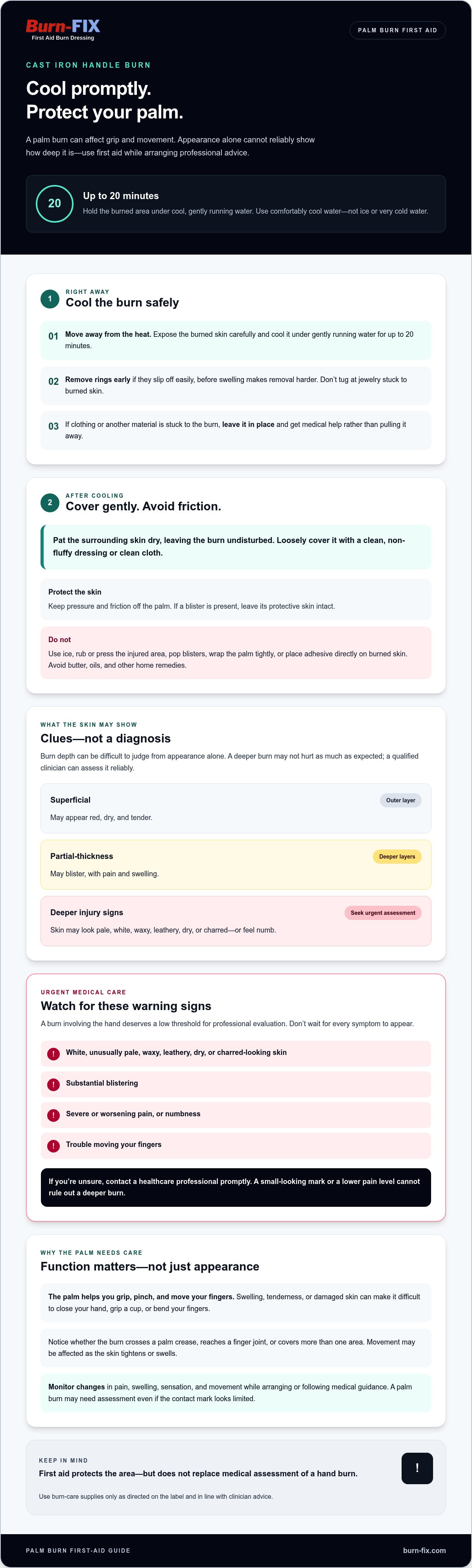
Move away from the hot pan and cool the burn promptly. If a cast iron handle burn on palm has just happened, hold the affected area under cool, gently running water for up to 20 minutes. The water should feel comfortably cool, not icy. Cooling helps remove heat from the skin and may limit further injury.
First, move away from the heat and cool the palm under running water for up to 20 minutes. Remove loose jewelry, then cover the area gently. Don’t use ice or pop blisters.
How to cool a fresh palm burn safely
Expose the burned skin carefully. Remove a ring or nearby jewelry early if it slips off easily, since swelling can make it harder to remove. Don’t tug at jewelry stuck to burned skin. If clothing or another material is stuck to the burn, leave it in place and get medical help rather than pulling it away.
Use cool running water, not ice or very cold water. Avoid butter, oils, and other home remedies, which can harm the skin or interfere with care. If you can’t hold your palm under a tap, gently pour cool water over it. Don’t press or rub the injured area while cooling.
What to do after cooling the burned palm
Gently pat the surrounding skin dry, leaving the burn undisturbed. Cover it loosely with a clean, non-fluffy dressing or clean cloth to protect it from contact and friction. Don’t wrap the palm tightly, pop blisters, or place adhesive directly on burned skin. If a blister is present, leave its protective skin intact.
A hot, heavy pan can cause a significant injury in a small contact area, and a palm burn may need medical assessment even if it looks limited. Burn depth can be difficult to judge from appearance alone. For background on burn classification, remember that a general description can’t tell you how serious your particular injury is. Because the hand is essential for grip and movement, arrange professional advice for a burn involving the palm. Seek urgent care if the skin looks white, waxy, or charred, there’s substantial blistering, or you notice worsening pain, numbness, or trouble moving your fingers.
Why a Cast Iron Burn on the Palm Deserves Careful Assessment
A cast iron pan can hold intense heat, so brief contact may injure a small patch of skin. The mark might look limited, but size and pain alone can’t reliably show how deep the burn is. A cast iron handle burn on palm also affects an area needed for gripping, pinching, and moving the fingers. That makes hand function an important part of the assessment.
What burn depth can look and feel like
A superficial burn affects the outer layer of skin and may appear red, dry, and tender. A partial-thickness burn extends further and may blister, with pain and swelling. Deeper burns can damage more layers of skin and may look pale, waxy, leathery, or charred. Appearance offers clues, not a diagnosis, and a deeper burn may not hurt as much as expected.
Color, blisters, and pain can suggest burn depth, but only a qualified clinician can assess the injury reliably. Don’t pop blisters; intact skin helps protect the area. Seek urgent assessment if skin looks unusually pale, waxy, charred, leathery, dry, or numb.
Why palm location changes the decision
The palm’s skin helps you hold objects and move your hand comfortably. Swelling, tenderness, or damaged skin can make it difficult to close your hand, grip a cup, or bend your fingers. Note whether the burn crosses a palm crease, reaches a finger joint, or covers more than one area, since movement may be affected as the skin tightens or swells.
Because the burn involves the hand, use a low threshold for professional advice, even if the contact mark seems small. Mayo Clinic explains when to get emergency help for a burn, including burns affecting sensitive areas such as the hands. Seek urgent care for concerning skin changes, numbness, severe or worsening pain, or difficulty moving your fingers. If you’re unsure, contact a healthcare professional promptly rather than relying on pain level alone.
While arranging assessment, keep the palm protected and avoid putting pressure on the injured area. Having appropriate burn-care supplies available can help with first-aid preparedness, but follow product directions and clinician advice. Supplies don’t replace medical evaluation of a hand burn.
How to Tell Whether a Palm Burn Needs Urgent Medical Care
A burn on the palm deserves a low threshold for professional evaluation. The hand’s small structures and essential role in grip mean that even a localized injury can affect movement or healing. Warning signs can help you act, but they can’t reliably rule out a deeper burn. Don’t wait for every symptom to appear before seeking advice.
When to seek urgent or emergency help
Get urgent medical care if the burned skin looks white, charred, leathery, unusually dry, or numb, or if the injury is rapidly worsening. Severe pain, increasing swelling, restricted finger movement, or a burn that encircles a finger also needs prompt attention. A burn around a finger can swell and interfere with circulation, so don’t delay assessment.
Call your local emergency number for a severe injury or signs of a broader emergency, such as collapse, confusion, or difficulty breathing. The American Burn Association’s First aid for minor burns guidance can help explain initial care, but a hand burn with concerning signs needs medical evaluation. This list isn’t a test for deciding that a burn is safe to manage at home.
When to contact a clinician promptly
Contact a healthcare professional promptly if the palm has blisters or open skin, you’re unsure how deep the injury is, or pain or swelling affects your grip or finger movement. Even a small-looking cast iron handle burn on palm may warrant advice because location matters, not just the size of the mark. If you’re uncertain, ask for guidance rather than waiting to see whether it worsens.
Seek advice earlier for a child or for someone with health factors that may complicate healing, such as diabetes or a weakened immune system. If a clinician has already assessed the burn, follow their care instructions and return precautions. Pain easing does not prove the burn is minor. Some deeper injuries may feel less painful if nerves are damaged, so rely on professional assessment when the appearance, sensation, or hand function concerns you.
How to Protect and Monitor Your Palm After the Burn
Protect the injured skin while you arrange or follow medical advice. Keep any covering clean, loose, and non-adherent, and use a dressing recommended by a clinician if the burn has been assessed. Avoid pressure and friction, such as gripping tools or carrying bags, if they increase pain or pull at the skin. Don’t peel away loose skin or break blisters. Avoid household substances or creams unless a clinician advises you to use them.
Protect the skin without disrupting healing
A dressing should shield the palm without squeezing it or sticking to the burn. If it becomes wet, dirty, or uncomfortable, follow clinician instructions for changing it rather than pulling adhered material from injured skin. A cast iron handle burn on palm that looks concerning or affects movement needs professional assessment. Don’t use hydrogel or another burn-care product in place of getting that care. Use products only as directed on the label and in line with clinician advice.
For general background on caring for a burn with blisters, read this guide to at-home first aid for second-degree burns. It’s not a substitute for assessment of a burn on the hand, particularly if the depth is uncertain or function is affected.
Watch for changes and preserve useful function
Check the palm and fingers regularly without repeatedly handling or disturbing the wound. Notice whether redness or swelling is increasing, whether there’s new drainage or fever, and whether discomfort is worsening rather than settling. Also pay attention to sensation and movement. Can you bend and straighten your fingers comfortably? Can you hold a light everyday object without increased pain? These observations can help you describe changes to a clinician, but they can’t determine burn depth.
Seek medical advice promptly if symptoms worsen, the skin becomes numb, finger movement becomes restricted, or the wound shows signs of infection. Contact a clinician if healing doesn’t progress as expected or you’re unsure how to care for the area. Don’t assume the injury is minor just because pain eases; follow any return precautions you’ve been given.
Once assessment and care needs are clear, suitable supplies can support burn first-aid preparedness. Explore burn-care supplies, and follow product directions and clinician guidance for any hand burn that needs evaluation.
Next Steps for a Cast Iron Handle Burn: Medical Care and First-Aid Supplies
Once the palm is cooled and protected, decide promptly whether it needs medical attention. A cast iron handle burn on palm can be small yet affect grip or finger movement, so don’t let a first-aid product delay assessment. If you’ve been advised to seek care, follow through and keep the area protected while you arrange it.
What to tell a clinician about the injury
Clear details can help a clinician assess the burn and advise you on care. Be ready to explain when contact happened, how long your hand touched the handle, and what first aid you’ve already given. Describe any blisters, changes in skin color, pain, swelling, altered sensation, or difficulty moving your fingers. Mention relevant health conditions, medicines, and previous injuries to that hand.
Follow the clinician’s directions for evaluation, dressing changes, and follow-up. Ask what changes should prompt a return for care, especially if pain increases, the area becomes more swollen, sensation changes, or hand movement worsens. If you’re unsure how to protect the burn or whether a product is appropriate, ask before applying it.
How burn-care supplies fit into preparedness
For home first-aid preparedness, Burn-Fix sells hydrogel burn spray, gel packets, burn gel dressings, and a home burn kit. These supplies don’t replace professional assessment of a hand burn. Before using any product on an injured palm, read its label and follow clinician advice, particularly if the burn is blistered, open, deep-looking, or affecting function.
A checklist can help you review what to keep together before an injury occurs. See the home emergency burn kit checklist as part of planning your household supplies. If a burn has already happened, prioritize appropriate care over shopping or applying products.
After immediate first-aid and medical needs are addressed, consider preparing a kit so basic supplies are easier to find in a future emergency. Explore Burn-Fix burn-care supplies for home preparedness, and use each item only as directed.
Take the Next Safe Step for Your Palm
A cast iron handle burn on palm calls for prompt, careful attention. Cool the area under running water, remove rings if they come off easily, then protect the skin without popping blisters or applying unadvised remedies. Because the burn involves your hand, seek professional advice if you’re unsure about its depth or if pain, swelling, sensation, or movement is concerning.
Keep following clinician guidance for assessment, wound care, and signs that need follow-up. Burn-care supplies can support home preparedness, but they aren’t a substitute for medical evaluation of a palm burn. Burn-Fix offers hydrogel spray, gel packets, dressings, and a home burn kit. Use products according to their labels and clinician advice.
Once immediate care is addressed, prepare supplies so they’re easier to find if another burn occurs. Explore Burn-Fix burn-care supplies for your home first-aid kit. With prompt cooling, thoughtful protection, and appropriate medical guidance, you can take the next step with greater confidence.
Frequently Asked Questions
What should I do first for a cast iron handle burn on my palm?
Move away from the hot pan and cool your palm under cool, gently running water for up to 20 minutes. Remove rings or jewelry if they slide off easily, but don’t pull anything stuck to the skin. Avoid ice, butter, and oils. After cooling, cover the area loosely with a clean, non-fluffy dressing. Because this burn is on your hand, seek medical advice if it blisters, looks deep, worsens, or affects movement or sensation.
Should I put ice on a burn from a cast iron pan?
No. Don’t put ice or very cold water on a burn, as they can further injure the skin. Use cool running water for up to 20 minutes instead. After cooling, avoid household remedies and don’t pop any blisters. A burn on the palm may need professional assessment, especially if the skin is blistered, discolored, numb, or difficult to move.
Can a palm burn from a hot handle cause blisters later?
Yes, blisters can develop, and a burn’s appearance may change after the initial contact. Don’t pop a blister or peel away skin, as this can damage the area and increase infection risk. Keep the palm protected with a clean, loose covering. Contact a clinician for advice about a blistering palm burn, particularly if pain or swelling increases or sensation or movement is affected.
When should I go to the ER for a palm burn?
Seek emergency care for a deep-looking, charred, pale, leathery, or numb burn, rapidly worsening symptoms, severe pain, or major difficulty moving your hand. Call your local emergency number if the injury is severe or you have signs of a broader emergency, such as collapse or difficulty breathing. A palm burn deserves careful attention even if the mark looks small. If you’re unsure, contact a clinician promptly rather than judging by appearance alone.
Should I cover a burn on my palm or leave it open?
After cooling, cover the burn loosely with a clean, non-fluffy dressing that won’t stick to the injured skin. Don’t wrap it tightly, apply adhesive directly to the burn, or pop blisters. If a clinician has assessed the injury, follow their instructions for dressings and wound care. The right approach can depend on the burn’s depth and location, so covering it shouldn’t replace medical advice when the hand is affected.
Can I use burn gel or spray on a cast iron handle burn?
Some burn-care products are intended for certain minor burns, but a palm injury may need professional assessment. Don’t use gel, spray, or a dressing to delay care if the burn is blistered, deep-looking, numb, or affecting hand function. Follow the product label, and ask a clinician whether it’s appropriate for your injury. Burn-care supplies don’t replace medical evaluation of a concerning hand burn.
What happens if my palm still hurts after cooling the burn?
Pain can continue after cooling, but worsening pain, swelling, numbness, blistering, or difficulty moving your fingers calls for medical advice. Don’t use pain level alone to judge burn depth; a more serious injury may not hurt as much as expected. Keep the area protected and avoid irritating remedies. Contact a clinician if symptoms persist, worsen, or interfere with normal hand use, and follow any care instructions you receive.


