


A hair removal wax burn on upper lip can feel alarming: the skin may be tender, red, and hard to hide. Act promptly but gently. Cool the area with cool running water or a clean, cool, wet cloth for 10 to 20 minutes. Don’t put ice directly on delicate facial skin.
Waxing can irritate skin, burn it, or lift its surface along with the wax. It can be difficult to tell which has happened just by looking. Because the upper lip is on the face, seek medical advice if the skin is blistered, open, worsening, or looks deep.
This guide covers what to do immediately, how to care for the area as it heals, and which warning signs need professional assessment. You’ll also learn what to avoid and how to reduce the chance of further irritation. Prompt cooling and gentle aftercare can help you protect the skin while you decide whether it needs medical attention.
Key Takeaways
- Stop waxing. Don’t rub or pull at the skin, as this can cause further irritation.
- For a hair removal wax burn on upper lip, use cool running water or a clean, cool, wet cloth. Avoid direct ice.
- Don’t pick blisters or peel loose skin. Broken or blistered skin on the face warrants prompt medical guidance.
- Seek urgent care if redness or swelling spreads, pus appears, you develop a fever, or you feel unwell.
- Keep harsh skincare products away from the area while it heals. Ask a clinician if medicines or treatments may be affecting your skin’s sensitivity.
Hair removal wax burn on the upper lip: what to do first
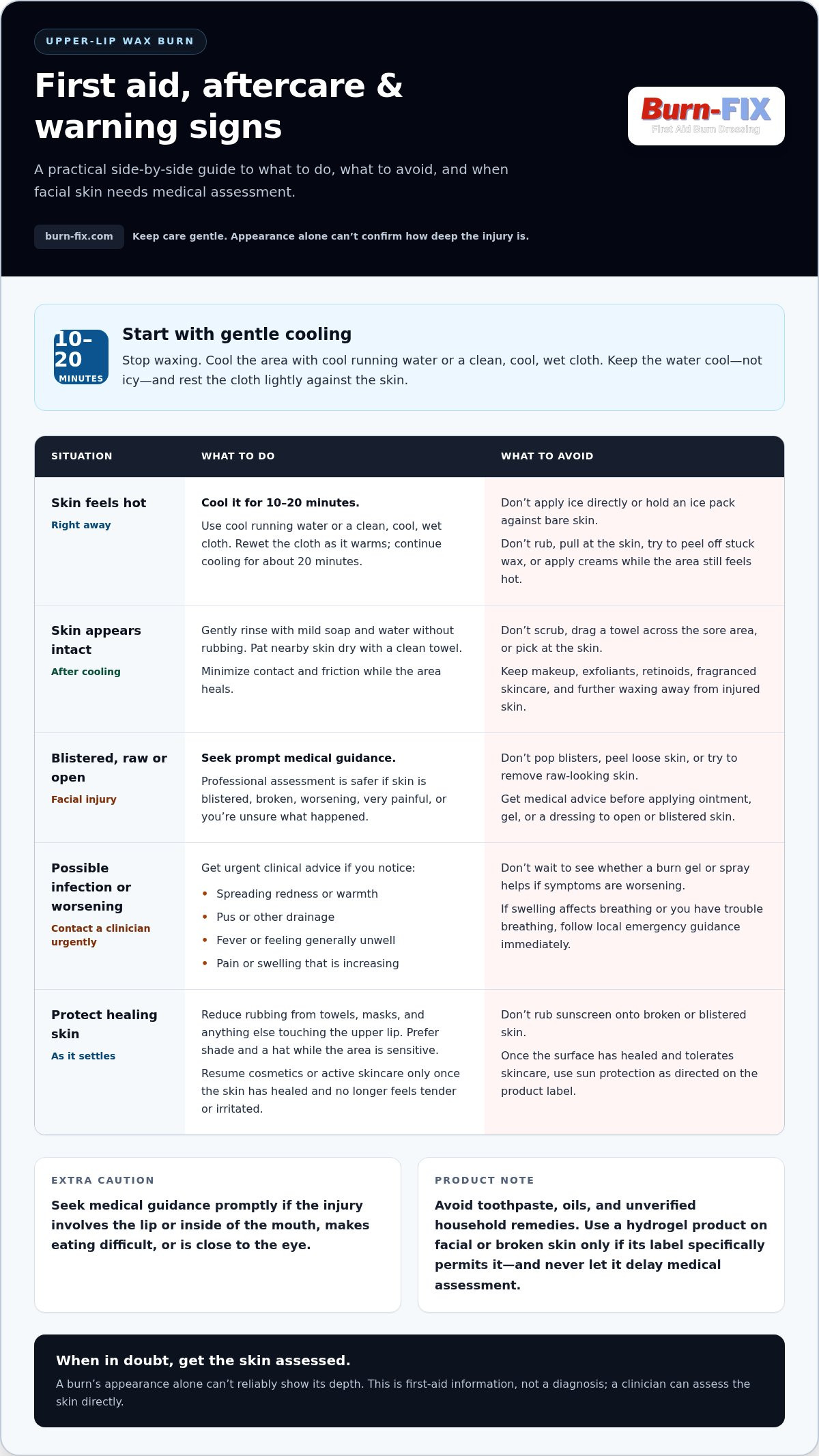
Stop waxing immediately and move the source of heat away. Don’t rub the area, pull at the skin, or try to peel off wax that’s stuck. Cool the skin under cool running water or with a clean, cool, wet cloth for about 20 minutes. Burn-care guidance commonly recommends cooling for 10 to 20 minutes. Keep the water cool, not icy.
Don’t apply ice directly or hold an ice pack against bare skin. Avoid creams and other products while the area still feels hot. Extreme cold can further injure sensitive skin, and rubbing or applying products too soon may aggravate it. If you’re unsure whether the skin is burned or lifted, keep the first step simple: cool it gently and avoid handling it.
How to cool a wax burn on the upper lip safely
A clean, cool, damp cloth is practical for this small facial area. Rest it lightly against the skin without pressing, and rewet it with cool water as it warms. Cool running water is another option if it’s comfortable and practical. Don’t scrub the skin or place an ice pack directly on it. Continue cooling for about 20 minutes.
Burn, irritation, or skin lifted by waxing?
Redness, warmth, and tenderness can follow waxing, but appearance alone can’t confirm what kind of injury you have. Burns can affect different skin layers, as outlined in these classifications of burns. Skin that looks raw, shiny, or broken may have been lifted with the wax or injured more deeply. Don’t touch or peel it to find out.
If you can’t tell what happened, the pain is significant, or you notice blistering or broken skin, seek medical assessment promptly. Because the upper lip is on the face, professional guidance is safer than trying to diagnose the injury yourself. Once the area has cooled, handle it as little as possible and follow medical advice about further care.
How to care for an upper-lip wax burn as it heals
Once the area has cooled, keep care simple. If the skin is intact, gently rinse it and use mild soap and water without rubbing. Pat nearby skin dry with a clean towel, taking care not to drag fabric across the sore area. Don’t pick blisters, peel loose skin, or try to remove skin that looks raw. These actions can worsen the injury and raise the risk of infection.
Broken or blistered skin on the face deserves prompt professional guidance. If the injury is open, blistering, worsening, or very painful, get medical advice before putting ointment, gel, or a dressing on it. For general guidance on first aid for a minor burn, the American Academy of Dermatology outlines basic care, but facial injuries may need individual assessment. This guide to treating second-degree burns at home provides broader burn-care context.
What should you put on a wax burn on your upper lip?
There’s no topical product that’s right for every hair removal wax burn on upper lip. Avoid toothpaste, oils, and other household remedies, as well as unverified treatments. Hydrogel products may be used as part of burn first aid, but apply one to facial or broken skin only if its label specifically permits it, and follow the directions. Don’t let a product delay medical assessment when the injury is open or blistered.
Protect healing skin from friction and sunlight
Reduce contact with the area while it heals. Avoid makeup, exfoliants, retinoids, fragranced skincare, and further waxing over injured skin. Wash gently and minimize rubbing from towels, masks, or anything else that touches the upper lip. Wait until the skin has healed and no longer feels tender or irritated before resuming cosmetics or active skincare.
Sun can aggravate healing skin and contribute to lingering discoloration. Prefer shade and a hat while the area is sensitive. Don’t rub sunscreen onto broken or blistered skin. Once the surface has healed and tolerates skincare, use sun protection as directed on the product label. Burn-Fix sells burn-care supplies for first-aid kits, including hydrogel spray, gel, and dressings. Check each product’s directions and facial-use labeling before applying it to the upper lip.
When does an upper-lip wax burn need medical attention?
A blistering, open, worsening, or particularly painful burn on the upper lip should be assessed by a medical professional. Facial skin is delicate, and a burn’s appearance alone can’t reliably show how deep it is. A photo or symptom list can’t replace an examination. If you’re unsure about a hair removal wax burn on upper lip, seek prompt clinical advice rather than waiting to see whether a product helps.
Signs that the injury may be more than mild irritation
Redness and tenderness can occur after waxing, but pay close attention to changes. Blisters, raw or broken skin, severe pain, or increasing swelling are reasons to contact a clinician promptly. The American Academy of Dermatology provides general guidance on How to treat a first-degree, minor burn. Don’t assume that a facial injury is minor based only on its appearance.
Seek medical guidance promptly if the injury involves the lip or inside of the mouth, makes eating difficult, or is close to the eye. If symptoms are worsening or you can’t judge the severity, get assessed rather than waiting.
When to seek urgent help for swelling or infection concerns
Some symptoms call for emergency help; others need prompt clinical advice. If swelling affects your breathing or you have trouble breathing, follow local emergency guidance immediately. Don’t wait for a burn gel or spray to work.
Contact a clinician urgently if you notice signs that may indicate infection or a worsening injury, including:
- Redness or warmth that is spreading
- Pus or other drainage from the area
- Fever or feeling generally unwell
- Pain or swelling that is increasing instead of settling
This is first-aid information, not a diagnosis. A clinician can assess the skin directly and advise what care is appropriate, especially if it’s blistered or broken. Burn-care products should never delay assessment when warning signs are present.
What to avoid after waxing burns the upper lip
Injured skin needs a break from heat, friction, and strong skincare ingredients. A familiar home remedy or makeup may seem like a quick fix, but some products and actions can worsen irritation, especially on the delicate upper lip. Keep contact with the area to a minimum while it heals.
Why ice and home remedies are not a safe shortcut
Skip direct ice and ice packs against bare skin. Very cold temperatures can injure skin further, so use cool rather than freezing water when cooling is needed. Toothpaste, butter, oils, and harsh antiseptics aren’t reliable burn treatments and may irritate the area. Don’t scrub, pop blisters, or stick adhesive directly onto injured facial skin.
Pause products that can sting or inflame the skin, including exfoliating acids such as AHAs and BHAs, retinoids, alcohol-based toners, and fragranced skincare. Avoid makeup over raw, blistered, or open skin. If the burn is broken or blistered, get medical guidance before applying topical products. Don’t rely on a spray or gel instead of an assessment. For general context on using burn relief sprays, read this burn relief spray first-aid guidance. Follow product directions, and use a product on facial skin only if its label permits it.
When to restart skincare, makeup, or hair removal
Wait until the skin is closed, comfortable, and no longer actively irritated before returning to makeup, active skincare, waxing, or depilatory creams. Restart one product at a time, and stop if stinging, redness, or tenderness returns. If you’ve had repeated reactions or burns, seek qualified medical advice before waxing again.
For a hair removal wax burn on upper lip, patience is safer than trying to disguise or smooth the area too soon. Minimize rubbing from towels and anything else that rests against the upper lip, and don’t peel loose skin. If the injury worsens or you’re uncertain about its severity, contact a medical professional rather than experimenting with new products.
Burn-Fix sells burn-care supplies for home first-aid kits. See Burn-Fix burn first-aid products and check the label for directions and facial-skin suitability. These supplies support first aid, not medical assessment.
Prevent another upper-lip wax burn and prepare for next steps
Give delicate upper-lip skin time to recover before considering another hair-removal session. Preparation can lower the chance of repeating a hair removal wax burn on upper lip, but no method can eliminate every risk. If you’ve had a burn or repeated skin reactions, take that history seriously before waxing again.
How to reduce the chance of another waxing injury
Follow the wax product’s instructions for heating and application, and check the temperature safely as directed before it touches your face. If the wax feels too hot, don’t use it. Never apply wax over skin that’s irritated, damaged, or unusually sensitive. Some medicines and skincare treatments can affect skin sensitivity, so ask a healthcare professional if you’re unsure whether waxing is appropriate for you.
Wait until the skin is fully healed before trying again. If reactions recur or your skin remains unusually sensitive, get qualified medical guidance rather than testing another wax or depilatory cream on the area.
Where burn-care supplies fit into a home first-aid plan
A prepared first-aid kit makes it easier to find appropriate supplies after you’ve cooled an injury and assessed whether medical care is needed. Burn-Fix sells hydrogel spray, gel, and dressings for burn first aid. Use them according to the product directions, and apply anything to the face or broken skin only if the label specifically allows it.
Keep the order clear: first cool the burn, then follow suitable product directions if appropriate. Supplies don’t replace professional assessment, particularly for a blistering, open, worsening, or very painful facial injury. A product should never delay care when warning signs appear.
When choosing supplies for your home kit, explore Burn-Fix first-aid products and review the product directions before use.
Give your skin time and care to recover
For a hair removal wax burn on upper lip, prompt cooling followed by gentle, low-friction care can help protect delicate skin while it heals. Avoid picking, harsh skincare, and waxing over the area until it’s fully recovered. If the injury is blistered, open, worsening, or especially painful, seek medical advice. Spreading redness, pus, fever, or breathing difficulty needs urgent attention.
Burn-Fix sells hydrogel burn spray, gel packets, and burn dressings for a home first-aid kit. Follow the product directions, and use any product on facial or broken skin only if its label allows. Supplies support first aid but don’t replace medical assessment when warning signs appear.
Explore Burn-Fix burn-care supplies for your home first-aid kit, and keep your next steps gentle. With careful attention and appropriate guidance, you can give healing skin the protection it needs.
Frequently Asked Questions
What should I do immediately after a wax burn on my upper lip?
Stop waxing and cool the area with cool running water or a clean, cool, wet cloth for about 20 minutes. Hold the cloth gently against the skin and rewet it as it warms. Don’t rub, pull at the skin, or apply creams while it still feels hot. If the skin is open, blistered, very painful, or getting worse, seek medical advice promptly.
Should I put ice on a hair removal wax burn?
No. Don’t put ice or an ice pack directly on a hair removal wax burn. Extreme cold can further injure sensitive skin. Use cool, not freezing, running water or a clean, cool, damp cloth instead. Hold it gently against the upper lip without pressing or scrubbing, and rewet it as needed during the cooling period.
How long does an upper-lip wax burn take to heal?
Healing time depends on how deeply the skin is injured, and it can’t be reliably estimated from appearance alone. First- or second-degree burns commonly heal within 2 to 3 weeks, but an upper-lip injury that is open, blistered, worsening, or unusually painful should be assessed by a medical professional. Seek advice if healing doesn’t progress or you’re concerned about the skin.
Can I put aloe vera or burn gel on a wax burn on my face?
Don’t assume aloe vera or burn gel is suitable for every facial burn, especially if the skin is broken or blistered. Check the product label and use it on the face or open skin only if the directions specifically permit it. Otherwise, ask a healthcare professional for guidance. Prioritize cooling and, when needed, medical assessment over applying a topical product.
When should I see a doctor for a wax burn on my upper lip?
Seek medical advice for blistering, open skin, severe pain, or an injury that is worsening, particularly because it’s on the face. Contact a clinician urgently if redness or warmth spreads, pus appears, you develop a fever, or you feel unwell. If swelling affects breathing or breathing becomes difficult, follow local emergency guidance immediately. Don’t wait for a burn product to work.
Can waxing cause skin to peel or lift on the upper lip?
Yes. Waxing can irritate the skin or lift its surface, so raw, shiny, peeling, or broken areas may occur. These signs don’t show how deep the injury is, and it may not be possible to tell skin lifting from a burn by appearance alone. Don’t peel loose skin or pick blisters. Get medical guidance if the area is open, blistered, very painful, or you’re unsure what happened.
Can I wear makeup after burning my upper lip with wax?
Wait until the skin has healed, is closed, and no longer feels sore or irritated before applying makeup. Cosmetics can rub against tender skin, and some ingredients may sting or aggravate an injury. Avoid makeup over raw, broken, or blistered areas. When you resume your routine, start gently and stop if redness, stinging, or tenderness returns. Seek medical advice if the injury worsens.


