


Is that red, netlike mark an electric blanket burn on elderly skin, or a skin change linked to repeated low-level heat? The difference can be hard to judge, especially when skin is fragile or less able to sense temperature. A mark that looks mild may still deserve attention, and continuing to use the blanket could expose the skin to more heat.
It’s understandable to feel unsure about what to do next. This guide explains how repeated heat exposure can differ from an acute burn, what to do if you suspect an injury, and which symptoms call for prompt medical care. You’ll also learn how to reduce further exposure while keeping an older adult comfortable and protecting delicate skin.
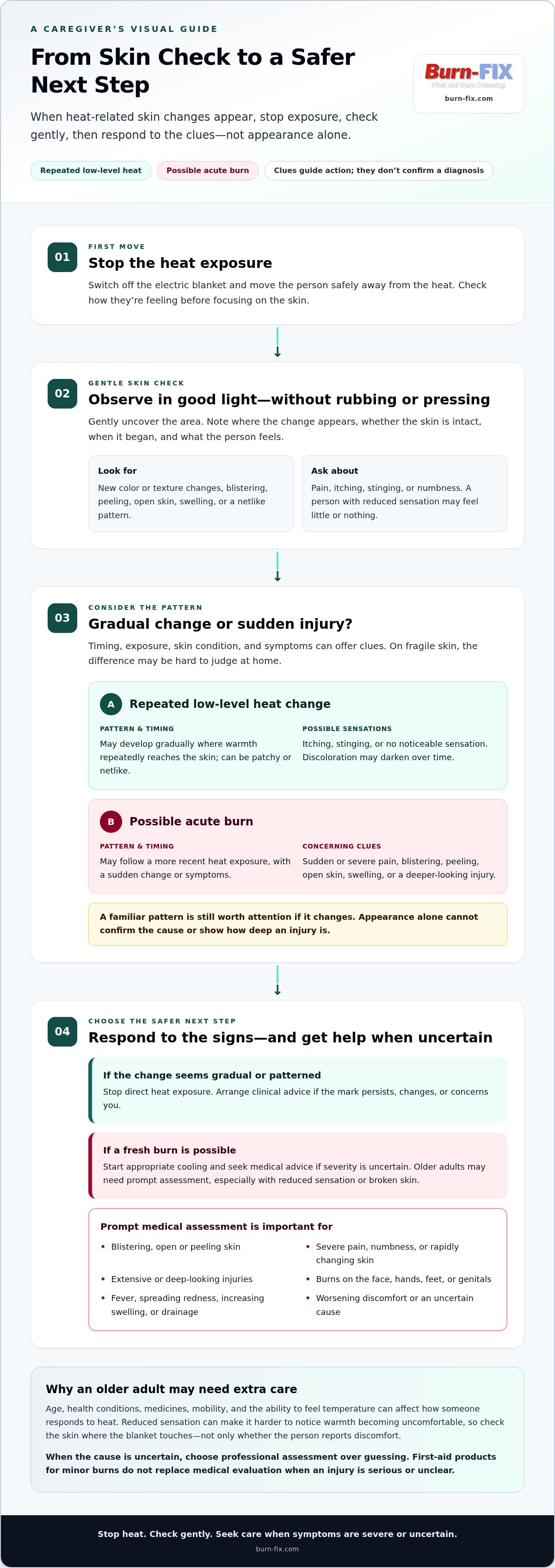
Start by switching off the suspected heat source and gently checking the skin. Note whether it is intact, whether the change is new or has developed gradually, and whether the person reports pain, itching, stinging, or numbness. The steps ahead can help you decide what to do next, but when an injury is severe or the cause is uncertain, professional assessment is safer than guessing.
Key Takeaways
- An electric blanket burn on elderly skin may look different from a gradual, patterned change linked to repeated low-level heat, but appearance alone can’t confirm the cause.
- Learn the first steps for a suspected fresh burn and why older adults may need prompt assessment when an injury is serious or uncertain.
- Follow the blanket manufacturer’s instructions, use cautious heat settings, and check the skin regularly to help reduce repeat exposure.
- Know which changes need medical attention, including signs of a severe injury or symptoms that suggest immediate danger.
- Burn-care products may support first aid for minor burns when used as directed, but they don’t replace medical evaluation when needed.
Electric Blanket Burn on Elderly Skin: What Changes Should You Notice?
First, switch off the blanket and stop direct heat exposure. Gently uncover the area and inspect it in good light without rubbing or pressing the skin. Note where the change appears, whether the skin is intact, and what the person feels. Sudden pain, blistering, or broken skin could indicate an acute burn, so don’t assume it’s only a rash.
Quick distinction: Toasted skin syndrome, also called erythema ab igne, is a skin change associated with repeated low-level heat exposure over time. An acute burn is an injury that can happen after damaging heat exposure and may cause sudden pain, blisters, or skin breakdown. These clues can guide your next step, but appearance alone can’t confirm the cause or show how deep an injury is.
What does toasted skin syndrome from an electric blanket look like?
The change may appear as localized, patchy, or netlike discoloration where warmth repeatedly reaches the skin. It can look pink or reddish at first and become darker over time. Some people notice itching, stinging, or a change in skin texture; others may feel little or nothing. This gradual pattern differs from an obvious sudden injury, but it isn’t a diagnosis. Stop the heat exposure and seek clinical advice if the area worsens or doesn’t resolve.
Why can heat exposure deserve extra care in older adults?
Risk varies from person to person. Age, health conditions, medicines, mobility, and the ability to feel temperature can all affect how someone responds to heat. A person with reduced sensation may not notice warmth becoming uncomfortable, so the skin can be exposed longer than intended. Electric blankets can pose a burn risk for people who may not react to heat promptly; the overview of electric blanket safety features also describes this concern.
Caregivers can help by checking the skin where the blanket touches, rather than relying only on whether the person reports discomfort. Ask about pain, itching, stinging, or numbness, and look for new color or texture changes. A familiar patterned mark still deserves attention if it changes. Sudden pain, blistering, or broken skin calls for prompt assessment. When the cause is uncertain, don’t try to judge burn depth from appearance alone.
Low-Heat Rash or a True Electric Blanket Burn: How Can You Tell?
Consider when the change appeared and the condition of the skin, but don’t rely on appearance alone. Repeated low-level warmth may be associated with gradual, patterned discoloration where the blanket touches the body. A thermal burn may appear suddenly, with pain, blisters, or damaged skin. On fragile skin, the two can be difficult to tell apart at home, and a clinician may need to assess the area.
| What to compare | Repeated low-level heat change | Possible acute burn |
|---|---|---|
| Exposure pattern | Repeated warmth in the same area, sometimes without one obvious overheating event. | A more recent heat exposure, followed by a sudden change or symptoms. |
| Appearance | Gradual, patchy or netlike discoloration may develop where heat repeatedly reaches the skin. | Redness may worsen or occur with blistering, peeling, open skin, swelling, or a deeper-looking injury. |
| Sensations | There may be itching, stinging, or no noticeable sensation. | Pain can be sudden or severe. Numbness can also be concerning, especially if sensation is reduced. |
| Next step | Stop direct heat exposure and arrange clinical advice if the mark persists, changes, or concerns you. | Seek prompt medical assessment, particularly for severe, extensive, or worsening symptoms. |
Which signs suggest repeated low-level heat exposure?
Ask whether the discoloration appeared gradually and follows the area that rests against the blanket. A netlike or patchy pattern can fit repeated heat exposure, even if no single episode felt unusually hot. The pattern is a clue, not a diagnosis. Stop direct heat exposure and seek clinical advice if the mark persists, changes, or remains concerning.
Which signs call for prompt medical assessment?
Seek advice promptly for blistering, open or peeling skin, severe pain, numbness, or rapidly changing skin. Extensive or deep-looking injuries, and burns affecting sensitive areas such as the face, hands, feet, or genitals, need prompt assessment. Fever, spreading redness, increasing swelling, drainage, or worsening discomfort may also signal a problem. For an older adult, the burn risks for the elderly deserve particular care, since reduced sensation can make an injury harder to recognize.
If you’re unsure whether an electric blanket burn on elderly skin is a rash or an acute injury, choose assessment over guesswork. For minor burns, appropriate first-aid supplies such as burn gel and dressings may support care when used as directed, but they don’t replace evaluation of a serious or uncertain injury.
First Aid for Suspected Blanket Burns in Seniors
Act calmly and in order. Turn off the electric blanket, move the person safely away from the heat, and check how they’re feeling before focusing on the skin. If the injury may be a fresh burn, start appropriate cooling and seek medical advice if its severity is uncertain. Older adults may need prompt assessment, especially when sensation is reduced or the skin is broken.
What should a caregiver do in the first few minutes?
- Stop the heat. Switch off and remove the blanket without dragging it across the affected area. If the person is unresponsive, seriously unwell, or in immediate danger, call emergency services.
- Check the person and the skin. Ask about pain, numbness, or discomfort, and look for redness, blisters, open skin, or swelling. Remove rings, watches, or loose clothing near the burn before swelling develops, but don’t pull off anything stuck to the skin.
- Cool a suspected fresh burn. Place the affected area under cool or lukewarm running water for 20 minutes, following NHS burn first-aid guidance. Keep the rest of the person warm, particularly if cooling a large area, and get medical help if the injury looks serious or you’re unsure.
For a practical overview of at-home first aid for second-degree burns, see the linked guide. Fairfax County also outlines useful electric blanket safety precautions, including what to do if a blanket appears damaged.
What should you avoid putting on damaged skin?
Skip ice and very cold items directly on the skin. Don’t rub the area, pop blisters, or peel away attached skin. Avoid butter, oils, and other home remedies, which can irritate the injury or complicate assessment. Don’t apply a gel or dressing before the burn has been cooled and its seriousness considered.
If the burn appears minor after cooling, burn-care supplies may support first aid when used according to their label directions. Burn-Fix hydrogel spray, gel, and dressings are intended for first- and second-degree burns, but they aren’t a substitute for medical evaluation when the injury is serious or uncertain. Explore Burn-Fix burn first-aid supplies for home preparedness.
Seek prompt medical advice for a large, deep-looking, blistered, or open injury, or if pain is severe. If you’re unsure whether an electric blanket burn on elderly skin needs care, err on the side of getting it assessed.
How to Prevent Electric Blanket Heat Injury on Older Skin
Make warmth safer by limiting prolonged heat exposure and checking the skin routinely. A caregiver’s simple routine can help catch irritation early, especially if the person has reduced sensation or difficulty adjusting the blanket independently. Ordinary bedding may be a comfortable alternative when practical, rather than leaving direct heat on for extended periods.
How can caregivers make blanket use safer?
Use this checklist, and follow the specific manufacturer’s instructions for operation, inspection, settings, and shutdown:
- Choose a conservative setting. Use only enough warmth for comfort, and avoid prolonged direct heat against the body.
- Check the blanket before use. Don’t use it if the fabric, cord, or controls look damaged, or if it gives off an unusual odor or feels unexpectedly hot. Stop using it if you suspect a malfunction.
- Use it as directed. Keep the blanket positioned and operated according to its instructions. Don’t assume a setting or use pattern is safe just because it felt comfortable before.
- Consider regular bedding. Add blankets or warm clothing when appropriate, so continuous direct heat isn’t the only way to stay comfortable.
- Make skin checks part of the routine. Look at the areas beneath or touching the blanket after use, especially where sensation may be reduced.
These steps can reduce repeated exposure, but they can’t guarantee that a burn won’t occur. If a person cannot feel or communicate heat discomfort reliably, a caregiver should take an active role in checking the blanket and the skin.
What skin checks can help catch a problem early?
After blanket use, inspect the contact areas in good light. Look for new redness, mottling, tenderness, blisters, or changes in texture. Ask directly about warmth, pain, itching, stinging, or numbness; a person may feel a problem before it becomes obvious to someone else. Don’t rub the area while checking it.
If you notice a change, stop using the heat source and note when it began, where it appears, and whether it improves after exposure stops. A brief written note or photo, taken with the person’s consent, may help track changes and explain them during a clinical assessment. Seek medical advice if the area is painful, blistered, worsening, or not resolving. For a possible electric blanket burn on elderly skin, don’t restart blanket use over the affected area while you’re uncertain about the cause.
Prevention and preparedness go together. Use this essential home burn kit checklist to think through what to keep available for a burn first-aid situation. To prepare with burn-care supplies for minor burns, explore Burn-Fix burn first-aid products, and follow each product’s directions.
When to Seek Care, and Where Burn-Fix Products Fit
Consider how the skin is changing and the person’s overall condition. A persistent or changing mark after repeated heat exposure needs clinical advice, particularly if it doesn’t improve after the heat source is stopped. A fresh injury with blisters, broken skin, severe pain, or numbness needs prompt assessment. If you can’t tell whether it’s a rash or a burn, don’t rely on appearance alone.
When should an older adult get medical help?
Seek prompt professional advice for blistering, open skin, severe pain, numbness, or worsening skin changes. Arrange urgent care for burns that are large, deep-looking, or on sensitive areas such as the face, hands, feet, or genitals. Fever, spreading redness, increasing swelling, drainage, or worsening discomfort can signal a complication. Call emergency services for a severe or widespread burn, serious symptoms, or immediate danger.
Even without a fresh injury, arrange an evaluation if a mark persists or changes after direct heat stops. Older adults may have reduced sensation, so a concerning injury might not hurt as much as expected. If you’re uncertain about an electric blanket burn on elderly skin, getting professional guidance is safer than treating an unexplained change at home.
When are burn-care products appropriate?
Burn-Fix hydrogel spray, gel, and dressings are first-aid options for appropriate minor first- or second-degree burns. Use them only as directed on the product label, and only after the injury has been appropriately cooled and assessed. Don’t apply burn products to an unexplained rash or use them to delay care for a potentially serious injury. Burn-Fix products don’t replace professional assessment and aren’t intended to treat third-degree burns.
If you’re comparing first-aid formats for a minor burn, read this guide to burn relief spray. It can help you understand where spray fits alongside other burn-care supplies, while the label remains the guide for use.
For minor-burn preparedness, explore Burn-Fix burn-care supplies. Keep first aid secondary to the right care: severe, worsening, or uncertain injuries need professional assessment.
Keep Older Skin Warm, Comfortable, and Protected
A gradual, patterned mark after repeated warmth can differ from a fresh burn, but it’s not always possible to tell at home. Stop direct heat exposure, check the skin gently, and watch for changes. Sudden pain, blisters, broken skin, numbness, or worsening redness deserve prompt medical advice. If the injury is severe, widespread, or uncertain, prioritize professional assessment.
To lower the chance of repeat exposure, follow the blanket’s instructions, use cautious settings, and check the skin where it touches, especially if sensation is reduced. If you’re preparing for minor burns, Burn-Fix offers hydrogel spray, gel, dressings, and burn kits. Its products are described as doctor-recommended and designed to provide cooling and help retain moisture, but they’re for appropriate minor-burn first aid when used as directed, not a substitute for medical assessment.
Explore Burn-Fix burn-care supplies for minor-burn preparedness. With careful checks and a clear plan for seeking help, you can support comfort while protecting delicate skin.
Frequently Asked Questions
Can an electric blanket burn an older person without them noticing?
Yes. Prolonged heat exposure may change the skin, and reduced sensation or difficulty moving can make uncomfortable warmth harder to notice or move away from. Check the skin regularly, especially where it touches the blanket, and follow the manufacturer’s instructions. If you notice blisters, broken skin, severe pain, numbness, or a worsening area, stop the heat exposure and seek prompt medical advice instead of trying to diagnose the injury at home.
What does an electric blanket burn look like on elderly skin?
Repeated low-level heat may cause patchy or netlike discoloration where the blanket contacts the skin, sometimes with itching or stinging. A sudden painful area, blister, or broken skin may suggest a more acute injury. The phrase electric blanket burn on elderly skin can describe different kinds of skin changes, so appearance alone can’t confirm the cause or injury depth. Stop direct heat and seek advice for persistent, worsening, or uncertain changes.
Is a netlike rash from an electric blanket a burn?
A netlike rash after repeated low heat may be toasted skin syndrome, also called erythema ab igne. It’s a heat-related skin change and isn’t necessarily the same as a sudden thermal burn. Stop direct heat exposure and monitor the area without rubbing it. Arrange clinical advice if the mark persists, changes, becomes painful, or develops blisters or open skin. A clinician can assess the cause when it’s unclear.
What should I do first if an electric blanket burns an older adult?
Switch off the blanket and move the person safely away from the heat source. Check their responsiveness, comfort, and the affected skin, and loosen nearby constricting jewelry or clothing if it comes away easily. For a suspected fresh burn, follow current first-aid guidance, including appropriate cooling. Don’t use ice, rub the skin, or pop blisters. Seek prompt assessment if the injury looks serious, affects a sensitive area, or its severity is uncertain.
Can I put burn gel on a rash caused by an electric blanket?
Don’t assume an unexplained rash is a burn or apply burn gel without confirming it’s appropriate for the injury and following its label directions. Burn-care products can support first aid for appropriate minor burns, but they can’t identify the cause of a rash or replace medical assessment. Stop direct heat exposure and seek clinical advice if the skin change persists, worsens, becomes painful, or develops blisters or broken skin, especially if you’re concerned about the person’s vulnerability.
When should an older adult see a doctor for a blanket-related skin mark?
Seek prompt medical advice for blisters, broken skin, severe pain, numbness, spreading redness, worsening swelling, or drainage. A large or deep-looking injury, a burn on a sensitive area, or signs of infection need urgent assessment; get emergency help for severe symptoms or immediate danger. Arrange evaluation for a persistent or changing netlike mark too, particularly if it doesn’t improve after the heat source is removed or the cause is uncertain.
How can caregivers prevent electric blanket burns on elderly skin?
Follow the manufacturer’s directions, use cautious settings, and avoid prolonged direct heat against the skin. Check the skin regularly for new discoloration, tenderness, or blisters, and ask about warmth, discomfort, itching, or numbness rather than relying only on visible signs. Stop using the blanket if it appears damaged or the skin changes. If reduced sensation or a health condition raises concern, discuss safer ways to stay warm with a healthcare professional.


