


A lighter flares, your thumb catches the heat, and the sting is immediate. It’s natural to wonder whether a small burn will blister or get worse. Start by cooling it under cool running water as soon as possible. Knowing the right lighter burn on thumb first aid can ease discomfort and help protect the skin.
Even a small burn deserves attention because your thumb is important for everyday movement. After cooling the area, avoid ice and home remedies such as butter or toothpaste, and don’t pop any blisters. These steps help protect the skin while you assess how the burn looks and feels.
This guide explains how to cool, cover, and care for a burned thumb, what to avoid, and which warning signs call for prompt medical assessment. You’ll also learn when a burn on the hand needs urgent care, so you can act calmly without guessing.
Key Takeaways
- For lighter burn on thumb first aid, move away from the heat and cool the area under cool running water for about 20 minutes.
- A burn’s appearance can’t reliably show its depth. Observe changes without trying to diagnose the injury yourself.
- Cover the cooled burn loosely and keep the thumb comfortable and free to move.
- Monitor pain, swelling, skin changes, and thumb function as the area heals.
- Know the warning signs that mean home care may not be enough and professional assessment is needed.
Lighter Burn on Thumb: What to Do Immediately
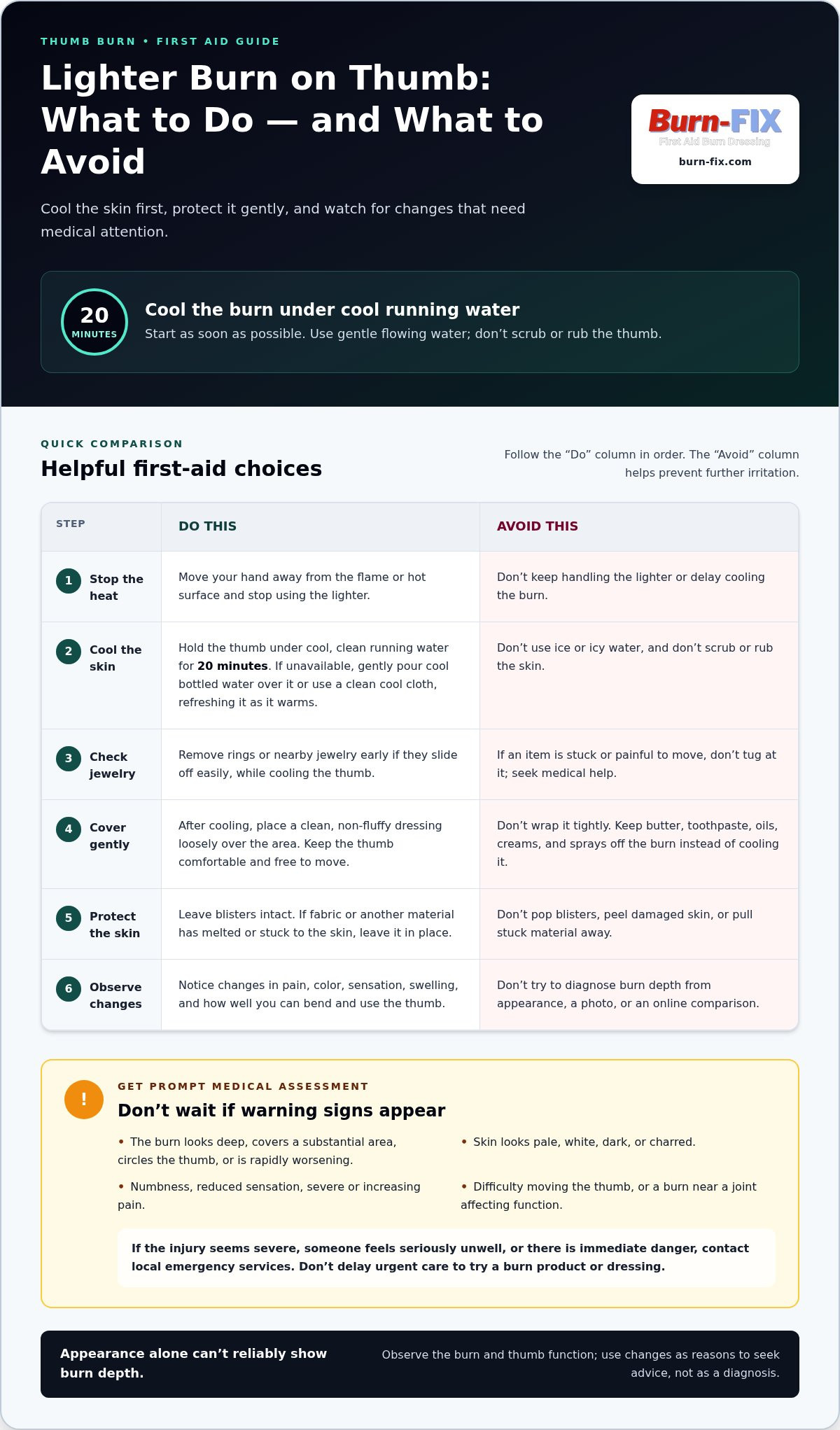
Stop using the lighter and move your hand away from the flame or hot surface. Act promptly, but stay calm. The first step in lighter burn on thumb first aid is to cool the skin, which helps ease pain and limit ongoing heat damage. If you’re wearing a ring or other tight jewelry on the affected thumb, remove it early if it comes off easily, before swelling makes it harder to take off.
Cool the burn with cool running water for 20 minutes, then protect the skin and assess whether medical care is needed.
How to cool a thumb burned by a lighter
Hold the burned area under cool, clean running water. Position your hand so water flows gently over the thumb without force, and don’t scrub or rub the skin. Keep cooling for 20 minutes if you can. If running water isn’t available, gently pour clean, cool bottled water over the burn or use a clean cloth soaked in cool water, refreshing it as it warms. Don’t use ice or icy water.
Cool the burn before applying a dressing or burn-care product. A burn can look minor at first, and appearance alone can’t reliably show its depth. For general background on how burns are described, you can learn about burn classifications, but don’t use an online description to diagnose your injury.
What to remove and what not to put on the burn
Take off rings or nearby jewelry while cooling the thumb, but only if they slide off without force. Swelling can develop around a burn, making tight items difficult to remove later. If jewelry is stuck or painful to move, don’t tug at it; seek medical help.
Keep ice, butter, toothpaste, oils, and other home remedies off the burn. Ice can further injure the skin, while greasy substances may hold heat against it and make the area harder to clean. Don’t apply creams or sprays instead of cooling the burn. If fabric or another material has melted or stuck to the skin, leave it in place rather than pulling it away. Once the thumb has been cooled, cover the area gently with a clean, non-fluffy dressing and avoid wrapping it tightly.
How to Assess a Lighter Burn on the Thumb Safely
After cooling the burn, look at the thumb without pressing, rubbing, or peeling the skin. Redness and tenderness can occur with a superficial burn, and blisters may develop, but a blister doesn’t prove the injury is minor or safe to manage at home. Burns can change in appearance over time, and the surface alone can’t reliably show how deeply the skin is injured.
Observe the burn and how the thumb works; don’t treat those observations as a medical diagnosis. MedlinePlus offers practical guidance on first aid for minor burns, including when medical care may be needed. For lighter burn on thumb first aid, treat changes in sensation, color, pain, or movement as reasons to seek advice, not as a way to assign a burn degree.
What a minor burn may look and feel like
A small, superficial burn may look red and feel tender or sore. A blister can appear later and should be left intact. Don’t rely on a photo, symptom checklist, or online comparison to estimate burn depth. Instead, note whether discomfort is easing or worsening, whether the color looks unusual, and whether you can bend and use the thumb normally.
When a thumb burn needs urgent medical attention
Get prompt medical assessment if the burn looks deep, covers a substantial area, circles the thumb, or is rapidly worsening. Concerning signs include pale, white, dark, or charred-looking skin; numbness or reduced sensation; severe or increasing pain; and difficulty moving the thumb. A burn on the hand or near a joint may need medical advice based on its appearance and effect on function. Seek urgent help rather than waiting to see whether it improves.
If the injury seems severe, the person feels seriously unwell, or you’re worried about immediate danger, contact your local emergency services. Don’t delay urgent care to try a burn product or dressing. A first-aid kit can help keep suitable supplies ready for minor injuries. Explore burn first-aid supplies for kit options, and follow product-label directions. Seek professional assessment when warning signs are present.
After Cooling: How to Cover and Protect the Burned Thumb
Once the thumb has been cooled, a clean, loose covering can shield the burn from rubbing, dirt, and accidental knocks. If the skin is broken or blistered, avoid touching the area more than necessary. A clean, non-adherent dressing is a practical option. MedlinePlus guidance on first aid for minor burns also explains basic covering and aftercare.
Choosing a simple protective covering
Place the dressing gently over the burn without pressing on it. Secure it lightly, leaving the thumb comfortable and free to move. Don’t wrap tape or gauze tightly around the thumb, since swelling can make a snug covering restrictive. If you don’t have a non-adherent dressing, use a clean, non-fluffy covering that won’t shed fibers onto the skin.
Leave blisters intact and don’t peel away loose or damaged skin. This can expose tender tissue and increase the chance of irritation or infection. Avoid putting creams, antiseptics, or medication under the dressing unless a healthcare professional advises you to do so. Hydrogel burn-care supplies can be an optional first-aid item, but use them only as directed on the product label. They should never delay medical assessment when warning signs are present.
Protecting thumb movement and avoiding further irritation
Keep the covered thumb from rubbing against clothing, tools, or other objects, but don’t immobilize it unnecessarily. Gentle, comfortable movement can help you notice whether swelling or pain is affecting function. Don’t force movement if it hurts or feels restricted. If the burn is near a joint or movement is difficult, seek medical advice.
Check the covering periodically. Replace it if it becomes wet, dirty, tight, or painful, and handle the burn gently while changing it. If the dressing sticks, don’t pull it away. Moisten it with clean water to help loosen it, and stop if removal causes pain or bleeding. Increasing redness, swelling, pain, or discharge needs medical assessment.
For a minor burn, a suitable dressing and careful protection can help keep the area clean while it heals. If you’re preparing a first-aid kit, explore burn-care supplies and follow each item’s label directions. These products are for first-aid use, not a substitute for urgent care or professional assessment.
Thumb Burn Aftercare: What to Watch for as It Heals
Check the thumb regularly as it heals, paying attention to changes rather than trying to predict a recovery timeline. Notice whether pain and swelling are easing, staying the same, or getting worse. Check the skin around the burn and whether you can comfortably bend and use the thumb for ordinary tasks. These observations can help you recognize when home care may no longer be enough.
Wash your hands before touching the area or changing its covering. Replace the dressing if it becomes wet, dirty, loose, tight, or painful. Handle the burn gently, and keep it clean without scrubbing or picking at blisters or damaged skin.
Signs the burn may be getting worse
Seek medical advice if pain increases instead of easing, redness spreads, swelling worsens, or fluid or pus drains from the burn. A fever is also a reason to get medical advice promptly. These signs can have different causes, and this article can’t diagnose an infection or determine burn depth. If symptoms are severe or worsening quickly, seek urgent care rather than waiting for the next dressing change.
Keeping everyday thumb use comfortable
Reduce friction while the skin is tender. Avoid tasks that repeatedly rub the burn against tools, clothing, or surfaces, and keep the dressing clean and secure without restricting circulation. Use the thumb gently, as comfort allows. Don’t force movement or repeatedly test the injured area.
If you notice new numbness, unusual color changes, or difficulty moving the thumb, get it assessed. Changes in sensation or function deserve attention, especially when the burn affects a joint or makes ordinary hand use difficult. For lighter burn on thumb first aid, monitoring the area is useful, but it can’t replace professional assessment when warning signs appear.
Keep appropriate first-aid supplies on hand for minor burns. Explore burn-care supplies for options to include in a first-aid kit, and follow product-label directions. Supplies can support basic care, but they aren’t a substitute for medical assessment if the burn worsens or you’re concerned.
When Home First Aid Is Not Enough, and What to Keep Ready
Don’t let a first-aid product delay care for a concerning burn. Seek urgent medical assessment if the burn looks deep, is larger than the palm of your hand or about 3 inches across, circles the thumb, or affects movement or sensation. Burns on the hand or near a joint may need professional advice, even when the affected area looks small.
Deciding whether to get medical help
Get medical advice promptly if pain or swelling is worsening, redness is spreading, fluid or pus appears, or fever develops. A thumb that becomes numb, changes color, or is difficult to move also needs assessment. If symptoms are severe or there’s immediate danger, call 911 in the United States. Continue monitoring only when the burn appears minor, symptoms aren’t worsening, and thumb movement and sensation remain comfortable.
This guide can’t determine burn depth or replace an assessment by a healthcare professional. If you’re unsure about the severity, choose medical advice rather than relying on appearance alone. For lighter burn on thumb first aid, cooling and protecting the area are first steps, not a way to rule out a more serious injury.
Preparing a practical home burn-care kit
Keep clean, non-adherent dressings and basic burn-care supplies accessible, and know where they are before an injury happens. A burn kit can help organize supplies for minor incidents at home or in the kitchen. For more preparation tips, explore this home burn-kit guide and kitchen first-aid guide.
Burn-Fix offers hydrogel burn spray and burn gel dressings as first-aid options for minor burns. Follow the product label, and remember that supplies don’t replace urgent care or professional assessment when warning signs are present. Cool the burn first and seek care when needed.
To prepare your first-aid kit, explore Burn-Fix burn-care supplies.
Be Ready to Protect Your Thumb
Quick, careful action can make a lighter burn easier to manage: cool the skin promptly, cover it gently, and watch for changes in pain, color, sensation, swelling, or movement. A blister or small-looking mark doesn’t confirm that a burn is minor, so seek medical advice if symptoms worsen or you’re unsure. This guide offers general lighter burn on thumb first aid, but it can’t determine burn depth or replace professional assessment.
For minor burn-care preparation, Burn-Fix offers hydrogel burn spray, gel dressings, individual burn gel packets, and a burn kit. These products are doctor-recommended and moisture-retaining. Follow each product’s label directions, and don’t use supplies in place of urgent care when warning signs appear.
Explore Burn-Fix burn-care supplies to prepare your first-aid kit. With the right first steps and a clear sense of when to seek help, you can respond calmly and protect your hand.
Frequently Asked Questions
How long should I run cool water over a lighter burn on my thumb?
Cool the burn under cool, clean running water for 20 minutes. Start as soon as possible, letting the water flow gently over the skin without scrubbing. If you can’t use a tap, pour clean, cool water over the area or use a clean cloth soaked in cool water, refreshing it as it warms. Remove nearby rings if they come off easily, since swelling may make them harder to remove.
Should I put ice on a lighter burn on my thumb?
No. Don’t put ice or icy water on the burn, as extreme cold can further damage injured skin. Use cool, clean running water instead, and avoid home remedies such as butter, toothpaste, or oils. These don’t replace cooling and may irritate the skin or hold heat against it. After cooling, protect the area with a clean, loose covering and seek medical advice if you’re concerned about its severity.
Can a lighter burn on the thumb blister later?
Yes, a blister can appear after the initial injury, so keep watching the area even if it first looks like a small red patch. Don’t pop, squeeze, or peel the blister. It doesn’t prove the burn is minor, and appearance alone can’t reliably establish burn depth. Protect it from rubbing with a clean, non-adherent dressing, and seek medical advice if pain, redness, or swelling worsens.
When should I seek medical care for a thumb burn?
Seek prompt medical advice if the burn looks deep, is large, circles the thumb, or affects a joint, movement, or sensation. Worsening pain, spreading redness, increasing swelling, discharge, fever, numbness, or unusual skin color are also warning signs. Because a thumb burn involves the hand, get advice if you’re uncertain about its severity. Call 911 for severe symptoms or immediate danger.
Should I cover a blister from a lighter burn?
Yes. Cover the blister gently with a clean, non-adherent dressing to protect it from dirt and friction. Don’t break the blister or wrap the thumb tightly; the covering should stay comfortable and allow normal circulation. Change it if it becomes wet or dirty, or feels tight or painful. If the blister breaks on its own, clean the area gently and cover it, then watch for worsening redness, pain, swelling, or discharge.
What should I put on a lighter burn after cooling it?
After cooling, protect the area with a clean, non-fluffy, preferably non-adherent dressing. For a minor burn, a thin layer of petroleum jelly may help keep the skin moist, but avoid butter, toothpaste, oils, and other folk remedies. Don’t apply creams or medications if you’re unsure they’re appropriate. Keep blisters intact, and seek medical assessment for concerning symptoms or any doubt about the burn’s severity.
Can I use hydrogel spray on a lighter burn on my thumb?
Hydrogel spray may be an option for first-aid care, but cool the burn first and follow the spray’s product-label directions. Don’t assume a product is suitable for every burn, and don’t use it to delay care if the thumb looks deep, symptoms are worsening, or movement or sensation is affected. Burn-Fix offers hydrogel burn spray, but burn-care products aren’t a substitute for professional assessment or urgent medical care.


