


A toaster oven burn on knuckles deserves prompt attention: the skin sits over a joint, where swelling or a blister can make bending your fingers uncomfortable. Start by holding the area under cool, not cold, running water for 20 minutes. Skip ice, butter, and other home remedies.
It’s understandable to worry about pain, a forming blister, or whether the burn could affect hand movement. This guide explains how to cool and protect the burn, what to do if a blister appears, and which warning signs call for medical care. You’ll also learn why burns on the hand or over a joint need a lower threshold for professional assessment, so you can act calmly without disturbing the area as it heals.
Key Takeaways
- For a toaster oven burn on knuckles, move away from the heat and cool the area under cool running water for 20 minutes. Avoid ice and iced water.
- Redness, tenderness, and mild swelling can occur, but a burn’s appearance may change and can’t reliably show how deep it is.
- A small burn on a hand or over a joint may still need medical assessment, especially if it blisters or limits finger movement.
- If home monitoring is appropriate, protect the area with a clean, non-fluffy dressing and avoid wrapping it tightly.
- Keep a clean dressing and burn-care supplies ready. Use gel or hydrogel only after cooling, and never as a substitute for medical assessment.
Toaster oven burn on knuckles: first 20 minutes
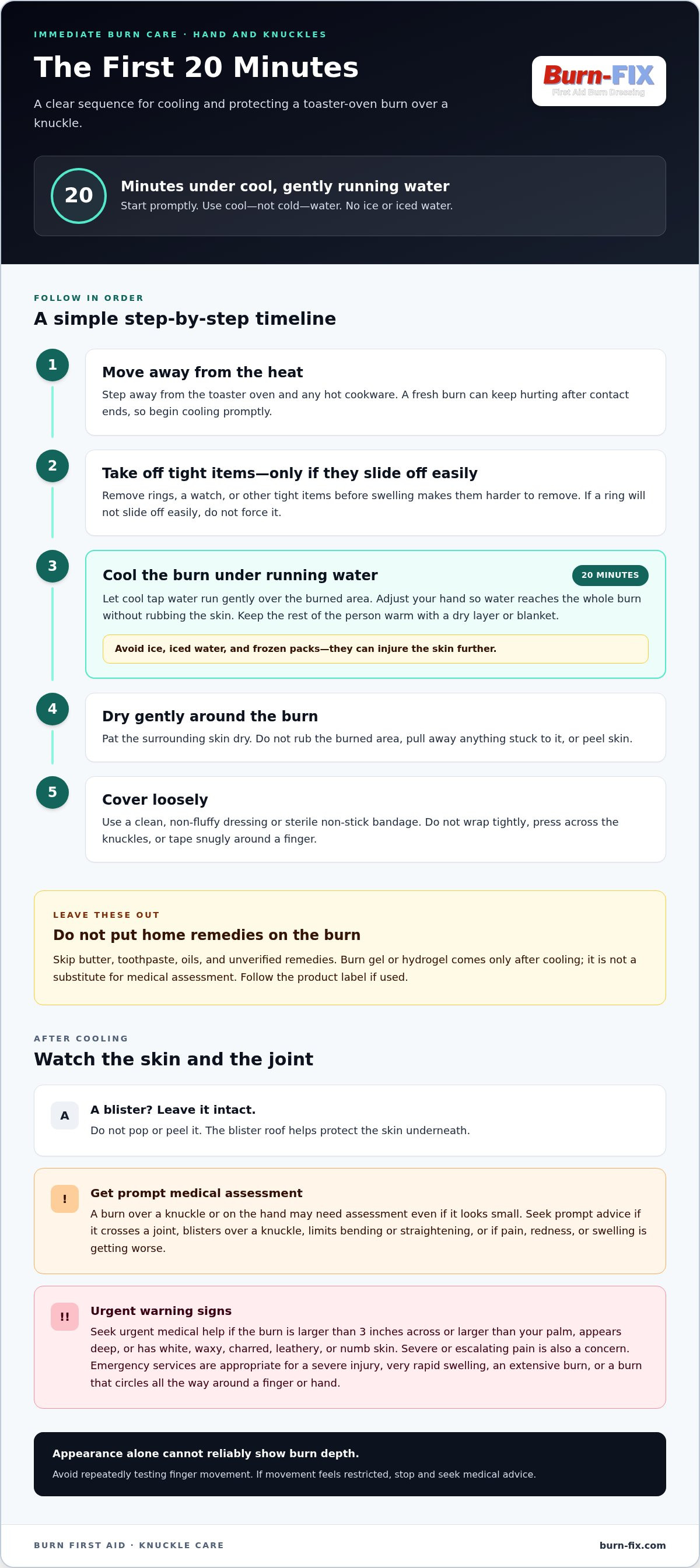
Move away from the hot oven and start cooling the injured hand promptly. A fresh burn can keep hurting after contact ends, so don’t pause to look for a cream, spray, or dressing. Hold the knuckles under cool, gently running water for 20 minutes. Cool water helps ease the heat; ice, iced water, and frozen packs can injure the skin further.
How to cool a fresh toaster-oven burn safely
Let cool tap water run over the burned area, keeping the flow gentle. If the burn is on the back of the hand or crosses a knuckle, adjust the hand so water reaches the whole area without rubbing the skin. Keep the rest of the person warm with a dry layer or blanket while the hand is under the water. For broader general information on burns, see how burns are classified and affect skin.
First-aid sequence:
- Move away from the toaster oven and any hot cookware.
- Remove rings, a watch, or other tight items if they slide off easily.
- Cool the burn under cool running water for 20 minutes.
- Pat the surrounding skin dry gently, without rubbing the burn.
- Cover loosely with a clean, non-fluffy dressing or sterile non-stick bandage. Don’t wrap tightly or press across the knuckles.
What to remove and what to leave alone
Take off rings and watches early, before swelling makes them difficult to remove. If a ring won’t slide off easily, don’t force it against swollen or injured skin. Never pull away clothing or other material stuck to the burn. Leave it in place and get medical help rather than risking more damage.
Skip butter, toothpaste, oils, and unverified home remedies. They don’t replace water cooling and may irritate the area or make it harder to assess. Burn gel or hydrogel products come after cooling, not instead of it. Follow the product label if you use one.
Once the skin has cooled, keep the hand comfortable and avoid pressure or friction over the knuckles. A loose covering can shield the burn, but don’t tape tightly around a finger or bend the joint under a snug wrap. These steps are for immediate care, not a diagnosis. A toaster oven burn on knuckles may need prompt medical assessment, particularly if movement becomes limited or the injury appears more than minor.
How knuckle burns affect skin, swelling, and hand movement
A burn can look different as the skin reacts, so its first appearance doesn’t reliably show how deep the injury is. A minor, superficial burn may cause redness, tenderness, and mild swelling. A blister can signal a deeper injury. Don’t pop or peel it: the blister roof helps protect the skin underneath.
How to recognize possible burn depth without self-diagnosing
Watch for changes rather than trying to assign a burn degree yourself. Redness and soreness can occur with a more superficial injury, but appearance alone can’t confirm severity. Pale, waxy, charred, or leathery skin, or an area that feels numb, is concerning and needs prompt medical attention. Pain level isn’t a reliable guide either. A severe burn may not hurt as much as expected if nerves are damaged.
For a minor burn, the American Academy of Dermatology outlines practical first-aid steps. Don’t rely on home care if the injury has concerning features or you’re unsure how serious it is.
Why a burn over a knuckle needs extra attention
Knuckles bend whenever you make a fist, grip a handle, or use your fingers. Swelling or a blister over the joint can make movement uncomfortable and may limit how easily you use your hand. A small-looking toaster oven burn on knuckles still deserves careful attention because it’s on the hand and may cross a joint.
Without forcing the injured area, notice whether you can gently bend and straighten the finger. Stop if movement causes sharp pain, pulls on a blister, or feels restricted. Don’t repeatedly test the joint or stretch the skin to see what it can tolerate. If the burn crosses a knuckle, movement becomes difficult, or swelling increases, seek prompt medical advice. A clinician can assess the wound and hand function more reliably than appearance alone.
Keep observing the skin and movement as the injury evolves. If you’re assembling a home first-aid kit, burn-care supplies can be a useful addition, but they don’t replace medical assessment when warning signs are present.
Does a knuckle burn need medical care? Warning signs to check
Yes, sometimes, even if the burn looks small. A burn on the hand or over a major joint can need medical assessment because swelling or blistering may affect finger movement. A toaster oven burn on knuckles that crosses a joint, forms a blister, or makes bending or straightening difficult should be assessed promptly. If you’re unsure about the burn’s depth or severity, contact a qualified medical professional for guidance.
When to seek prompt medical assessment for a knuckle burn
Arrange prompt assessment if a blister forms over a knuckle, the burn extends across the joint, or hand movement becomes limited. Also seek advice if pain, redness, or swelling is getting worse rather than settling. These changes can be difficult to judge at home, and a small surface area doesn’t rule out a more serious injury. MedlinePlus provides additional guidance on When to Get Help for a Burn.
Get urgent medical help if the burn is larger than 3 inches across or larger than your palm, or if it appears deep. Warning signs include skin that looks white, waxy, charred, or leathery, as well as numbness. Severe or escalating pain also deserves urgent attention, though pain alone can’t show how deep a burn is.
When a burn may be an emergency
Use emergency services for a severe injury or immediate danger. Don’t wait for a routine appointment if swelling is very rapid, the injury is extensive, or the burn circles all the way around a finger or hand. A circumferential burn can become especially concerning as swelling increases and may restrict circulation.
- Call emergency services for difficulty breathing, smoke inhalation, or another serious symptom.
- Seek urgent medical care for a deep-looking or numb burn, rapid swelling, or a burn caused by electricity or chemicals.
- Get prompt professional assessment for a blister, a burn crossing a knuckle, reduced movement, or worsening redness, pain, or swelling.
If a burn looks minor but symptoms are changing, don’t rely on appearance alone. Keep the hand protected while arranging appropriate care, and don’t apply burn gel or hydrogel as a substitute for medical assessment when warning signs are present.
How to protect a knuckle burn and monitor it at home
Home monitoring is appropriate only for a minor burn without concerning symptoms. A burn that blisters, crosses a knuckle, limits movement, or worsens should be assessed by a medical professional rather than managed at home alone. If the injury is suitable for home care, gentle protection and regular checks can help you notice changes without disturbing the healing skin.
How to cover the burn without restricting the joint
Cover the area loosely with a sterile, non-stick dressing or a clean, non-fluffy cloth. Keep adhesive on healthy surrounding skin, not on the burn or blister. Avoid tight wrapping around a finger or hand, where swelling could make a snug bandage restrictive. The dressing should stay in place without pressing on the knuckle, and the finger should remain comfortable to move gently.
If a blister forms, leave it intact. Don’t pop, squeeze, or peel it, since its surface helps protect the skin underneath. If a dressing sticks, don’t tug it away from the injured area. If dressing the burn causes significant pain, won’t stay in place, or restricts movement, seek professional advice for a safer way to protect it.
What to watch for during recovery
Check the burn and hand periodically, and pay attention to whether symptoms are settling or getting worse. Look for increasing pain, redness that spreads, growing swelling, or drainage from the wound. Fever or spreading redness can be signs of infection and warrant prompt medical care. Also seek help if movement becomes harder, the dressing feels tight, or the skin’s appearance changes in a concerning way.
- Keep it protected: Replace a soiled or loose covering with a clean one, handling the skin gently.
- Leave blisters alone: Don’t puncture them or apply adhesive directly to burned skin.
- Escalate if symptoms worsen: Don’t wait for a scheduled check if pain, redness, swelling, or drainage increases.
A toaster oven burn on knuckles can be awkward to cover because the skin moves with every bend. If you can’t protect it without pressure, or you’re uncertain whether home monitoring is suitable, get medical advice. For home readiness, keep a clean dressing with your first-aid supplies. Burn gel or hydrogel products are optional additions and don’t replace cooling or medical assessment. Explore burn-care supplies for your first-aid kit to help prepare for minor burns.
Preparing for a toaster-oven burn: first-aid supplies and next steps
A little preparation makes it easier to respond calmly if a hot rack or tray catches your hand. Keep basic supplies where they’re easy to find, but remember the order: cool the burn with running water first, then protect it and decide whether medical assessment is needed. Gel and hydrogel products are optional first-aid supplies, not substitutes for cooling or care for a concerning injury.
What to keep in a kitchen burn first-aid kit
Set aside a small kit that’s easy for household members to locate. Check supplies occasionally so dressings remain clean and usable, and keep emergency contact information accessible.
- A clear route to cool running water, such as an accessible sink.
- Sterile non-stick dressings or clean, non-fluffy cloths to protect a burn loosely.
- Basic first-aid supplies, such as disposable gloves and scissors for cutting a dressing to size.
- Emergency contacts and a reminder to seek medical assessment for burns involving the hand or a joint, blistering, or restricted movement.
- Optional burn-care items, such as hydrogel spray or gel dressings, stored with their product directions.
A checklist can help you review your household supplies and next steps. If you use an emergency burn kit checklist, make sure it includes access to running water and a clean covering, not just products to apply to the skin.
How burn-care products fit into first aid
If a burn happens, don’t reach for gel before cooling the area. Hold the injured skin under cool running water for 20 minutes, then assess how it looks and whether it affects hand movement. A toaster oven burn on knuckles that blisters, crosses a joint, or limits bending needs medical assessment, even if burn-care supplies are close at hand.
Burn-Fix hydrogel burn spray and gel dressings are first-aid supplies designed for appropriate first- and second-degree burns, sunburns, and scalds. Follow the product label for directions, and don’t use these products as a replacement for cooling or professional assessment when symptoms are concerning. They aren’t a solution for deep-looking, numb, or otherwise serious burns.
For a more prepared kitchen first-aid kit, add Burn-Fix hydrogel supplies alongside clean dressings and keep the product directions within reach. The most useful next step is still knowing when to cool, when to cover, and when a hand burn needs medical attention.
Be ready to respond calmly to a knuckle burn
For a toaster oven burn on knuckles, act promptly: cool the area under cool running water, protect it with a loose clean dressing, and leave any blister intact. Because a burn over a hand joint can affect movement, seek medical assessment if it blisters, crosses the knuckle, limits bending, or shows other warning signs.
Keep clean dressings and emergency contacts easy to find. Burn-care products can be useful first-aid-kit supplies for appropriate minor burns, but they come after cooling and don’t replace medical care when it’s needed. Burn-Fix’s hydrogel products are doctor-recommended, and its range includes burn spray, gel dressings, gel packets, and a burn kit. Follow product directions and use them only as directed.
Explore Burn-Fix burn-care supplies for your first-aid kit and prepare the essentials before a kitchen mishap happens. With a clear first-aid plan, you can take the next step with greater confidence.
Frequently Asked Questions
What should I do immediately for a toaster-oven burn on my knuckles?
Move away from the heat and cool the burn under cool running water for 20 minutes. Remove rings or other tight items if they slide off easily, but don’t pull anything stuck to the skin. Avoid ice, butter, toothpaste, and oils. Since the burn is on a hand joint, seek medical advice if it blisters, crosses the knuckle, or makes bending or straightening difficult.
Should I put ice on a toaster-oven burn?
No. Ice, frozen packs, and very cold water can further injure burned skin. Use cool running water to cool the area for 20 minutes, and keep the rest of the person warm while cooling the hand. Don’t delay first aid to find a burn product. After cooling, you may consider an appropriate dressing or gel, following its label. Seek medical advice if the burn affects a knuckle joint or movement.
Can a small burn on a knuckle need medical attention?
Yes. A burn may look small but still involve a joint, and swelling or blistering can interfere with finger movement. Seek prompt medical advice if it crosses a knuckle, forms a blister, worsens, or limits bending or straightening. Deep-looking, pale, charred, leathery, or numb areas need urgent assessment. If you’re unsure about the severity, have a qualified medical professional assess the hand rather than relying on appearance alone.
What happens if a toaster-oven burn blisters?
Don’t pop, puncture, or peel the blister. Cool the burn first, then protect it loosely with a clean, non-fluffy dressing that won’t stick to the injured skin. Blistering can indicate a deeper burn, and a blister over a knuckle may make movement uncomfortable. Arrange medical advice, especially if the burn crosses the joint, limits finger movement, or pain, redness, or swelling gets worse.
How long should I run cool water over a burn?
Cool a fresh burn under cool running water for 20 minutes. Avoid ice, frozen packs, and very cold water, which can further damage the skin. Remove rings early if they slide off easily, since swelling may make them harder to remove. After cooling, cover the area loosely. Seek medical advice if the burn blisters, crosses a knuckle, limits movement, or develops other concerning changes.
When should I go to the emergency room for a hand burn?
Seek urgent medical care for a burn that looks deep, white, charred, or leathery, or feels numb. Extensive burns and burns that circle around a finger or hand also need urgent assessment. Use emergency services for severe injury, rapidly worsening symptoms, or other serious symptoms. Even if the area seems small, a blister over a knuckle or difficulty moving the hand warrants prompt medical assessment.


