


That familiar golden tube of antibiotic ointment in your medicine cabinet might actually be the wrong tool for a fresh, stinging burn. While Neosporin is a household staple for minor cuts and scrapes, applying it to a new heat injury can sometimes trap the very heat you need to release. It's a common mistake born from the desire to protect your skin; yet, the choice between Neosporin for burns vs gel often determines how quickly you find relief and whether a painful blister develops.
Immediate pain relief and faster recovery start with the right choice of topical treatment. We understand the panic that sets in when a kitchen mishap turns into a throbbing, red mark on your hand. Since 73% of burns occur in the home, you need a reliable plan to stop the pain and prevent permanent scarring. This article reveals why professional hydrogels are the superior choice for immediate burn care by cooling the injury instantly and creating the perfect environment for recovery. You'll learn the specific differences between these treatments, the science of moist wound healing, and a clear path to choosing the right first aid for your family.
Key Takeaways
- Learn why immediate cooling is the priority for fresh burns, as coating an injury too early can trap heat and cause deeper tissue damage.
- Understand the functional differences of Neosporin for burns vs gel, specifically how hydrogels promote breathability while antibiotic ointments act as a thick barrier.
- Discover how moist wound healing technology prevents bandages from sticking to raw skin and accelerates the recovery of the dermis.
- Identify the visual cues for first and second-degree burns to ensure you use the most effective cooling response for your specific injury.
- Find out why a standard first aid kit is incomplete without specialized hydrogel dressings designed to neutralize heat on contact.
The Immediate Needs of a Fresh Burn: Cooling vs. Coating
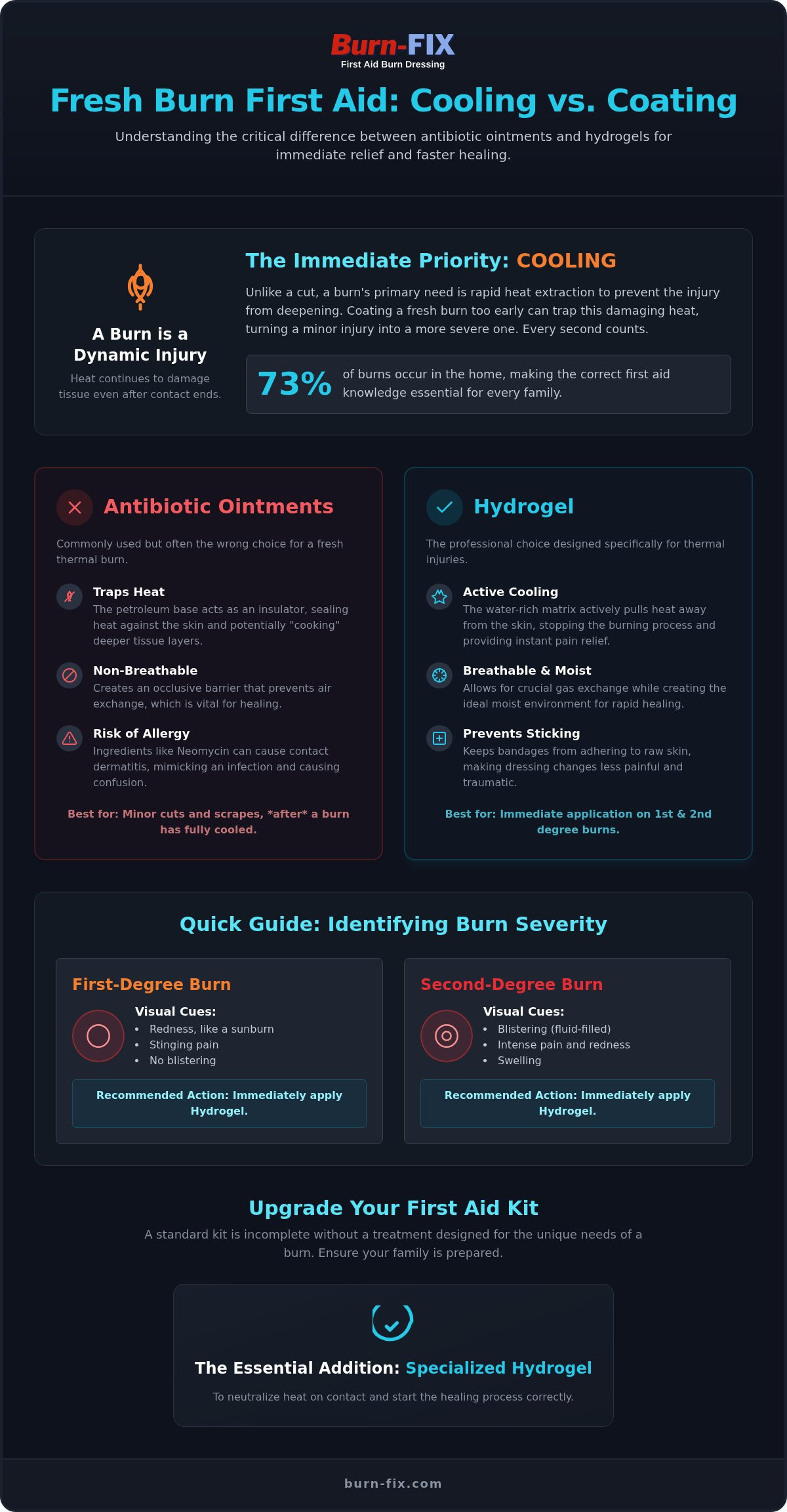
When you touch a hot stove or a steaming kettle, the injury doesn't stop the moment you pull your hand away. Thermal energy continues to radiate through your skin layers, causing damage even after the heat source is gone. This critical window is where the choice of Neosporin for burns vs gel matters most. Unlike a simple cut, which only needs a barrier to keep dirt out, a burn requires active heat extraction to prevent the injury from deepening.
Responding with "calm urgency" means recognizing that every second the skin remains hot, the trauma can worsen. A thermal injury is a dynamic process. While a cut is a static break in the skin, a burn is a progressive event that can penetrate deeper into the dermis if the temperature isn't lowered immediately. The primary goal of first aid here isn't just protection; it's cooling. You must neutralize the heat before you worry about anything else.
The Danger of Trapping Heat with Ointments
Many households reach for antibiotic ointments because they're a familiar staple. However, most of these products rely on a petroleum jelly base. Petroleum is a highly effective insulator. If you apply a grease-based coating to a fresh burn too early, you're essentially sealing the heat inside. This can lead to deeper tissue damage, effectively "cooking" the lower layers of the skin long after the initial accident. Professional medical protocols, such as those detailed in this comprehensive guide to burns, advise against using grease-based products in the first 24 hours. You need to let the heat escape, not trap it against the raw tissue.
Why Water-Based Gels are the Gold Standard
Water-based hydrogels are the professional choice because they are engineered specifically for heat transfer. A hydrogel is a water-rich matrix that uses conduction to pull heat away from the injury site and into the gel itself. As the water in the gel absorbs the thermal energy, it stabilizes the skin temperature and stops the burning process. This provides an instant cooling sensation that a thick ointment cannot replicate.
Hydrogels offer several physiological benefits for fresh burns:
- Active Cooling: They reduce the temperature of the skin layers quickly to stop tissue destruction.
- Breathability: Unlike thick ointments, gels allow the wound to breathe while maintaining a moist environment.
- Pain Management: The cooling effect provides immediate relief from the intense stinging associated with first and second-degree burns.
Choosing a gel over an ointment in those first few minutes can mean the difference between a minor redness and a painful, fluid-filled blister. Heat is the primary enemy. If you don't remove it, it keeps working against you.
Neosporin vs. Hydrogel: A Comparative Analysis for Healing
The fundamental difference in the debate of Neosporin for burns vs gel lies in the base of the product. Neosporin relies on a triple antibiotic formula: Neomycin, Polymyxin B, and Bacitracin. These ingredients target bacteria, not the heat of the injury. Hydrogels are formulated with a high percentage of purified water held in a thickening agent. This creates a breathable, water-rich environment that supports the skin's natural recovery process rather than just acting as a stagnant shield.
Breathability is a critical factor in wound care. Neosporin's petroleum base creates a heavy, occlusive seal. While this is great for a dry scrape, it's often too heavy for a fresh burn that needs to release heat. Hydrogels allow for gas exchange, which is vital for tissue regeneration. Additionally, many users find that the Neomycin in antibiotic ointments triggers contact dermatitis. This allergic reaction often mimics the symptoms of an infection, causing unnecessary worry during the healing process. Gels avoid this risk by using simple, soothing ingredients that focus on thermal regulation.
Pain relief mechanisms also differ significantly between the two. Some antibiotic ointments include chemical numbing agents like Lidocaine or Pramoxine to dull the nerves. While effective for temporary relief, they don't address the underlying cause of the discomfort. Hydrogels provide relief through physical cooling. By extracting the heat from the tissue, the gel addresses the source of the pain. This cooling sensation is immediate and transformative, providing a sense of comfort that chemical numbing can't quite match.
When to Reach for Hydrogel
Hydrogel is your primary response tool. Use it immediately for first-degree burns, characterized by redness and stinging, and second-degree burns that involve blistering. It's the ideal choice for steam scalds from the stove or painful sunburns after a day at the beach. Since it's water-based, it's safe for situations where the skin is intact but feels hot and throbbing. Keeping a few packets of burn gel in your kitchen drawer ensures you can stop the burning process the moment an accident happens.
The Role of Neosporin in Burn Recovery
Neosporin has a place in your first aid kit, but it's usually 24 to 48 hours after the initial injury. Once the burn has completely cooled and the risk of heat-trapping has passed, infection prevention becomes the priority. If a blister accidentally pops or the skin is broken, an antibiotic ointment can help keep germs at bay. It's also useful for minor scrapes that might occur alongside a burn, provided the heat has already been extracted from the tissue. Think of it as the "Phase 2" of your recovery plan.
Why Hydrogel is the Professional Choice for Fresh Burns
Medical professionals in emergency rooms and burn centers prioritize one specific environment for skin recovery: moist wound healing. This clinical standard is why the choice of Neosporin for burns vs gel usually leans toward hydrogel for fresh injuries. While dry air and traditional bandages lead to hard scabs, a moist environment allows skin cells to migrate across the wound bed more efficiently. This fluid movement accelerates tissue regeneration and prevents the formation of a thick, restrictive crust that often leads to permanent scarring.
Choosing a hydrogel over an antibiotic ointment in the first 72 hours ensures that the dressing doesn't fuse with the raw dermis. When you use a dry gauze or a thin layer of ointment, the healing tissue can grow into the fibers of the bandage. Removing that bandage becomes a secondary trauma, often stripping away the new skin your body worked so hard to build. Hydrogel creates a sterile, non-stick cushion that protects the injury without sticking to it. For a deeper look at managing these specific recovery stages, you can explore our guide on How to Treat Second-Degree Burns at Home (2026).
The Science of Skin Cooling
The primary reason hydrogel outperforms room air or ointments is its high specific heat capacity. Hydrogel is a moisture-retaining barrier that mimics the skin's natural protective functions. Because it's composed mostly of purified water, it acts as a heat sink, drawing thermal energy out of the skin and into the gel matrix. This process stabilizes the skin temperature rapidly; it stops the "burn progression" where heat continues to damage deeper tissue long after the initial contact. By extracting this energy, the gel provides a level of comfort and physiological stability that room air alone cannot achieve.
Preventing Blisters and Tissue Loss
Blisters are the body's natural defense mechanism, a pocket of fluid designed to cool and protect damaged skin. However, if you can provide that cooling and protection externally with a gel, you often reduce the severity of blister formation. Keeping the skin deeply hydrated prevents the surface from becoming brittle and prone to fluid buildup. Using professional solutions like the Burn-FIX 4x4 First Aid Burn Gel Dressing provides a consistent, sterile environment that shields the nerves. This non-adhesive protection is vital during the first three days, as it maintains a barrier against bacteria while ensuring the skin remains supple and ready to heal without the interruption of painful tissue loss.
How to Choose Your Treatment Based on Burn Severity
Effective recovery depends on your ability to quickly categorize the injury. Most home accidents fall into two categories: first-degree and second-degree burns. A first-degree burn affects only the outer layer of skin, appearing red and painful like a typical sunburn. A second-degree burn goes deeper, causing intense pain and the formation of fluid-filled blisters. While the choice of Neosporin for burns vs gel might seem like a toss-up, the severity of the damage dictates which one provides the safest path to healing.
First-Aid for First-Degree Burns
Minor "oops" moments in the kitchen or a day at the beach without enough sunscreen usually result in first-degree damage. Your first move is always to run the area under cool water for at least 20 minutes to stop the heat from traveling deeper. Once the skin is cooled, a hydrogel spray is often the most convenient solution. It provides a "no-touch" application that won't irritate sensitive, inflamed skin. As the heat dissipates over the next 24 hours, you can transition from active cooling to a gentle moisturizer to prevent peeling and keep the skin supple.
Managing Second-Degree Burns and Blisters
When blisters appear, the risk of infection and long-term scarring increases. This is where the debate of Neosporin for burns vs gel becomes critical. Applying a thick ointment to a blistered area can trap heat and potentially cause the blister to rupture prematurely. You should never pop a blister; it acts as a sterile, natural bandage for the raw skin underneath. Instead, use a sterile hydrogel dressing to cushion the area and keep it hydrated. This protects the "natural bandage" while providing a non-stick barrier that won't pull on the skin during bandage changes.
If you notice the skin looks charred, white, or leathery, or if the area feels numb, you are likely dealing with a third-degree burn. These require immediate emergency medical attention and cannot be treated at home with over-the-counter products. For parents, managing these injuries in little ones requires extra care and a softer touch. Be sure to review our Burn Care for Children guide for age-specific advice on providing relief. To ensure you're always prepared for any level of home injury, keeping a comprehensive BurnFix Burn Kit in your pantry can save precious seconds during a crisis.
Building the Ultimate First Aid Kit with Burn-Fix Solutions
Most home first aid kits are designed for cuts, scrapes, and bruises. They often lack the specialized tools needed to manage a thermal injury effectively. Relying solely on a tube of antibiotic ointment means you're prepared for the infection risk, but not the immediate pain and tissue damage caused by heat. When you compare Neosporin for burns vs gel, it's clear that a truly comprehensive Emergency Burn Kit requires medical-grade hydrogel to bridge the gap between the initial accident and long-term recovery.
Preparation is the difference between a controlled situation and a minor crisis. Having BurnFix Burn Gel packets in your car or camping gear provides portable, sterile relief that doesn't require a nearby sink. These packets allow you to apply a cooling barrier the moment a campfire spark or a hot engine component touches your skin. Our final recommendation for any household is simple: cool the injury first with Burn-Fix hydrogel to extract the residual heat, and then transition to antibiotic ointments 24 to 48 hours later if the skin is broken or infection is a concern.
The Burn-Fix Advantage
Professional results require specialized tools. The BurnFix Hydrogel Burn Spray - 120ml offers a "no-rub" application that's essential for sensitive, first-degree burns where even a light touch causes distress. For more significant accidents, the Burn-FIX 4x4 First Aid Burn Gel Dressing is a vital component. It covers a larger surface area than a standard bandage and provides a thick, cooling reservoir of gel that stays in place for extended relief. These products act as the "Reliable Specialist" in your medicine cabinet, providing the expert response you need when seconds count.
Preparation for Home Chefs
The kitchen is the most common site for thermal injuries in the home. Integrating professional burn care into your Kitchen Safety First Aid Kits ensures you aren't scrambling for a solution while the pain is peaking. To get the maximum cooling effect, store your hydrogel products in a cool, dry place. While they're designed to work at room temperature, keeping them away from direct sunlight preserves the integrity of the water-rich matrix. Don't wait for an accident to realize your kit is missing the most important tool for heat injuries. Being prepared before the stove is even turned on is the best way to protect your family.
Secure Your Home with the Right Burn Response
Understanding the difference between Neosporin for burns vs gel ensures you're ready to act when a minor crisis hits your kitchen or backyard. While antibiotic ointments have a place in your medicine cabinet, they shouldn't be the first thing you reach for when the skin is still hot and stinging. By prioritizing immediate heat extraction with hydrogel, you protect the skin layers and prevent the deep tissue damage that leads to painful blisters. This simple shift in your first aid strategy can significantly reduce recovery time and minimize long-term scarring.
Don't wait for an accident to realize your kit is incomplete. Our doctor-recommended formulas provide fast pain relief through sterile, moisture-retaining dressings that are trusted by home chefs and parents nationwide. You can upgrade your first aid kit with Burn-Fix Hydrogel Solutions today to ensure your family is shielded from the heat. Recovery starts with the right first move; make sure you have the tools to make it count. Stay safe, stay prepared, and take comfort in knowing you have a professional solution within reach.
Common Questions About Burn Care
Is Neosporin good for a fresh burn?
Neosporin is not recommended for the immediate treatment of a fresh burn because its petroleum base acts as a heavy insulator. This can trap heat against the skin and potentially worsen the tissue damage by allowing the burn to progress deeper into the dermis. While it's excellent for preventing infection in minor cuts later, the priority for a new burn is cooling. Start with a specialized hydrogel to extract the thermal energy before considering any antibiotic ointment.
Can I put burn gel on a blistered burn?
You can and should use hydrogel on a blistered burn to provide a sterile, protective environment. Blisters are the body's natural defense, and keeping them hydrated with a product like the Burn-FIX 4x4 Dressing prevents them from drying out and cracking. This moisture-retaining technology cushions the area and reduces the risk of the blister popping prematurely. This helps prevent infection and promotes much faster healing of the underlying tissue.
What happens if I put ointment on a burn too soon?
Applying a thick ointment too soon can cause the burn to progress deeper into the skin layers. Because petroleum-based products seal the surface, the residual heat from the injury has nowhere to go but down. This insulation effect can turn a minor first-degree burn into a more serious second-degree injury. Always ensure the skin has been thoroughly cooled with water or hydrogel for at least 20 minutes before applying any heavy coatings.
Should I use Neosporin or Bacitracin for a burn?
The choice between Neosporin or Bacitracin depends on the stage of healing and individual skin sensitivity. Both are antibiotic ointments designed to prevent infection rather than cool the injury. Many professionals prefer Bacitracin or hydrogel because the Neomycin in Neosporin is a common allergen that can cause redness and itching. In the debate of Neosporin for burns vs gel, the gel remains the superior choice for the first 48 hours of care.
How long should I leave a hydrogel dressing on a burn?
You should typically leave a professional hydrogel dressing in place for up to 24 hours, though you should check the area periodically. If the dressing begins to dry out or if the pain returns, it's time to replace it with a fresh one. These dressings are designed to maintain a moist environment for extended periods. This provides a consistent cooling effect that stabilizes the skin temperature and shields the raw dermis from external irritants.
Is hydrogel safe for children and toddlers?
Hydrogel is extremely safe for children and toddlers because it uses a gentle, water-based formula that is free from harsh chemicals. It provides immediate, soothing relief for the common accidents that happen in busy households. Since it's non-toxic and focuses on physical cooling rather than chemical numbing, it's a staple for parents who want a doctor-recommended solution that won't irritate a child's sensitive skin or cause an allergic reaction.
Can I use Neosporin after the burn has stopped hurting?
You can use Neosporin once the burn has completely cooled and the initial stinging has subsided. This usually occurs 24 to 48 hours after the accident. At this stage, the risk of trapping heat is gone, and the focus shifts to protecting the new skin from bacteria. If the skin is broken or a blister has popped, a thin layer of antibiotic ointment can provide a helpful barrier while the final stages of healing take place.
What is the best way to prevent a burn from scarring?
The most effective way to prevent scarring is to maintain a moist wound environment and avoid the formation of a hard scab. Scabs act as a physical barrier that slows down skin cell migration and increases the likelihood of a permanent mark. By using moisture-retaining hydrogel dressings, you allow the skin to heal from the bottom up without interruption. This scab-free process is the clinical standard for minimizing long-term tissue changes.


