


Would you reach for the butter, the ice, or a bag of frozen peas if you splashed boiling grease on your hand right now? Most home chefs rely on outdated myths that actually trap heat and worsen tissue damage, while their standard office-style boxes lack the specialized tools for high-heat injuries. With over 200,000 kitchen accidents leading to emergency room visits every year in the U.S., a generic bandage simply isn't enough. Building a professional kitchen safety first aid kit is the most effective way to protect your family from the lasting impact of a split-second mistake.
It's completely normal to feel a surge of panic when a knife slips or a pot boils over, but you don't have to face that moment unprepared. You deserve the confidence that comes with having medical-grade cooling agents and moisture-retaining dressings within arm's reach. This guide will show you how to assemble a kit that prioritizes rapid relief and proper healing over temporary fixes. We will cover the essential supply checklist, the science of hydrogel, and the exact steps you need to take to treat a burn with expert precision within the first 60 seconds.
Key Takeaways
- Standard kits often lack the specialized tools needed for steam and grease injuries; you'll learn how a dedicated kitchen safety first aid kit provides the professional-grade protection your family needs.
- Switch from dry bandages to hydrogel dressings to neutralize heat on contact, which stops the burning process and shields the wound from external stressors.
- Gain the confidence to differentiate between minor and severe injuries while following a clear, three-step response protocol for immediate relief.
- Position your safety supplies for maximum speed and visibility, ensuring that the transition from pain to comfort begins the moment an accident occurs.
- Maintain your kitchen readiness with a routine six-month audit to verify the integrity of sterile seals and the effectiveness of your cooling sprays.
Why Your Standard First Aid Kit Isn't Enough for Kitchen Safety
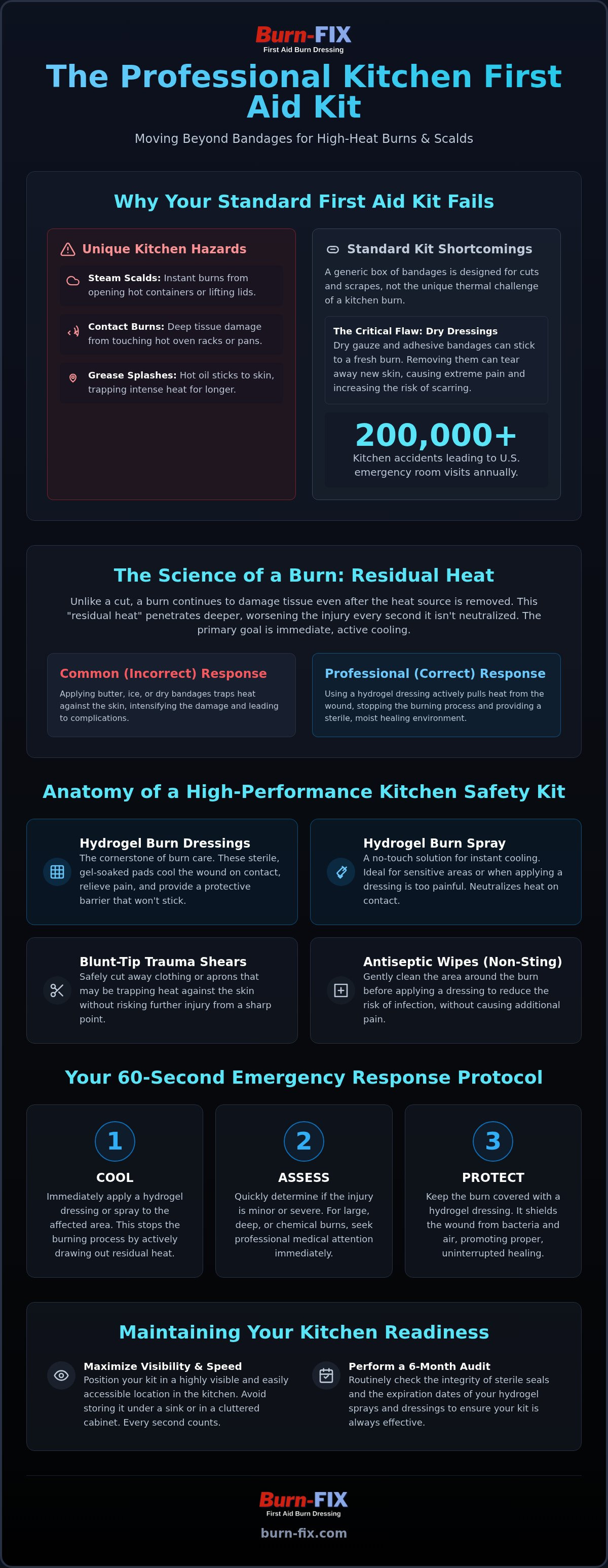
Most households rely on a standard first aid kit tucked away in a bathroom cabinet. While these are useful for playground scrapes or minor splinters, they are fundamentally ill-equipped for the high-intensity environment of a home kitchen. The kitchen is a unique risk zone where thermal, steam, and chemical injuries occur with startling speed. A box filled primarily with adhesive bandages won't provide the relief you need when boiling pasta water splashes across your forearm. You need a specialized kitchen safety first aid kit designed to prioritize heat neutralization over simple wound coverage.
Standard kits are often light on burn relief and heavy on dry dressings. Using dry gauze on a fresh thermal injury is a common mistake that can lead to unnecessary complications. When dry fibers touch a weeping burn, they often bond with the damaged skin as it attempts to heal. Removing that bandage later can tear away newly forming tissue, which causes significant pain and increases the risk of permanent scarring. A professional-grade kit replaces these risky materials with non-adherent, moisture-rich solutions that shield the skin without sticking to it.
The Thermal Challenge: Burns vs. Cuts
Kitchen injuries differ from typical office accidents because of the role of heat retention. When you suffer a small cut, the physical damage stops the moment the blade is removed. Burns are different. The skin continues to "cook" even after you move away from the stove because the tissue holds onto the thermal energy. This residual heat penetrates deeper into the dermis every second it remains untreated. Your kit must focus on active cooling to stop this progression immediately. It's the difference between merely covering a wound and actively intervening to preserve your skin's health.
Common Kitchen Hazards Your Kit Must Address
A robust safety strategy prepares you for several distinct types of trauma that occur during meal preparation. Your kitchen safety first aid kit should be stocked to handle these specific scenarios:
- Steam Scalds: These occur instantly when you open a microwave dish or lift a heavy pot lid without caution.
- Contact Burns: Touching a 450-degree oven rack or the handle of a preheated cast-iron skillet creates immediate, deep tissue damage.
- Grease Splashes: Hot oil has a high boiling point and a "sticky" property that keeps intense heat trapped against your skin longer than water-based liquids.
Each of these hazards requires a specific, moisture-based response to neutralize the heat and provide the "calm after the storm" your body needs to begin the recovery process.
The Anatomy of a High-Performance Kitchen First Aid Kit
Precision matters when you're managing a crisis. A professional kitchen safety first aid kit is organized for speed, ensuring you don't waste precious seconds digging through clutter while in pain. It moves beyond the basics by including specialized sterile dressings that won't bond with raw skin. These medical-grade components are the foundation of a safer cooking environment, shifting the focus from simply covering a wound to actively promoting recovery.
The Burn Care Core: Hydrogels and Sprays
Moisture is your primary weapon against residual heat. Hydrogel dressings are vastly superior to traditional gauze because they provide an immediate cooling sensation while maintaining a sterile, moist environment for the wound. Keeping a multi-pack of Burn-FIX 4x4 First Aid Burn Gel Dressings allows you to cover larger surface areas, such as a forearm scalded by steam or a thigh splashed with hot oil. For smaller, sensitive areas where touching the skin is too painful, a BurnFix Hydrogel Burn Spray offers a hands-off cooling solution that begins neutralizing the heat on contact. Following American Burn Association cooking safety tips ensures you're using these tools as part of a validated medical response that prioritizes skin health.
Tools for Trauma and Wound Management
Preparation involves more than just gels. You need blunt-tip trauma shears to safely cut away clothing or aprons that might be trapping heat against the body without risking accidental nicks. Adding antiseptic wipes that don't sting helps clean the area without causing further distress during an already painful moment. For active cooks, blue "detectable" bandages are the professional choice because they are easy to spot if they accidentally fall into food prep areas. Nitrile gloves provide a sterile barrier against infection while remaining durable enough for the kitchen, and medical tape ensures your dressings stay secure even as you move around the house.
Building this resource from scratch takes time and careful selection. You can find these professional-grade essentials pre-assembled in a BurnFix Burn Kit to ensure your pantry is always ready for a crisis with the right tools in one place.
Beyond Bandages: Why Hydrogel is the Gold Standard for Kitchen Burns
Running a burn under cool tap water is a common first step, but water evaporates quickly and loses its effectiveness the moment you pull your hand away. A professional kitchen safety first aid kit solves this problem by utilizing hydrogel, a technology that provides sustained cooling for hours rather than seconds. While water merely rinses the surface, hydrogel mimics the body's natural cooling process through controlled evaporation. It acts as a heat sink, drawing the residual thermal energy out of the tissue to stop the "cooking" process that continues long after the initial accident.
Relief arrives with a sense of calm urgency. Hydrogel works by shielding exposed nerve endings from the air, which immediately reduces the intense stinging sensation associated with kitchen scalds. By creating a physical bacterial barrier, it protects the vulnerable area from contaminants without the need for harsh chemicals. This specialized approach ensures that the transition from a high-stress injury to a managed recovery happens as quickly as possible. Unlike traditional dressings, hydrogel won't stick to the wound, making future bandage changes painless and safe for delicate, regenerating skin.
It is vital to avoid the common kitchen myth of applying ice to a burn. Ice is too aggressive; it constricts blood vessels so severely that it can cause frostbite or further tissue death in an already damaged area. Using a kitchen safety first aid kit equipped with medical-grade gels provides the "goldilocks" temperature needed to soothe without causing secondary trauma. You want to cool the skin, not freeze it.
Moisture Retention and the Healing Process
Proper healing requires a precise balance of moisture. Hydrogel is a water-based matrix that absorbs heat from the skin. This moisture-rich environment is essential for preventing burn blisters from drying out and popping prematurely, which is the leading cause of infection in home kitchen injuries. By maintaining this hydration, you prevent the "scab-and-crack" cycle where a wound repeatedly re-opens during movement. Instead, the skin remains flexible and protected, which significantly reduces the likelihood of permanent scarring.
Hydrogel vs. Ointments: When to Use Which
Old-fashioned remedies like butter or heavy oil-based ointments are dangerous on fresh burns because they act as insulators. They trap the heat inside the skin, effectively prolonging the burn and driving the damage deeper into the tissue. Hydrogel is most effective during the critical first 24 to 48 hours when heat neutralization is the priority. Burn-Fix products are designed for this exact professional standard, providing a water-soluble solution that cools the site while allowing the skin to breathe. Once the heat has been fully dissipated and the skin has begun to close, you can transition to traditional ointments if necessary, but the initial recovery phase belongs to hydrogel.
How to Respond to Common Kitchen Injuries Using Your Safety Kit
Action is the antidote to panic. When an accident occurs, your kitchen safety first aid kit allows you to transition from a moment of crisis to a structured path of recovery. The first step is always assessment. A first-degree burn looks like a typical sunburn with redness and minor pain, while a second-degree burn involves deeper redness and the formation of blisters. If the skin appears charred, white, or leathery, or if the area is strangely painless despite the visible damage, you are likely facing a third-degree burn. In these cases, stop home treatment immediately and seek professional medical consultation, as these injuries require specialized clinical care.
For manageable home injuries, follow the "Cool, Cover, Comfort" protocol. Start by cooling the site to stop the heat from penetrating deeper into your tissue. Once the temperature is neutralized, cover the wound with a sterile barrier to prevent infection. Finally, provide comfort by securing the dressing and monitoring the site for changes. Using a hydrogel dressing correctly involves applying it directly to the cleaned wound, ensuring the gel makes full contact with the skin, and then securing it with a light layer of medical tape.
Treating Scalds and Steam Burns
Steam and boiling water can travel under clothing and jewelry, trapping intense heat against your body. Immediately remove any rings, watches, or bracelets near the injury site before swelling begins. For large surface areas like the chest or thighs, using a burn relief spray provides rapid, hands-off cooling that covers the entire affected zone without the need for painful rubbing. Wrap the area loosely with a non-adherent dressing to allow for natural swelling while maintaining a protective bacterial barrier.
Managing Grease Splashes and Oven Burns
Grease burns are particularly dangerous because oil clings to the skin and continues to burn at extremely high temperatures. You must neutralize the oil by cooling it instantly before applying any dressings. Once the heat is under control, apply a 4x4 sterile dressing to protect the delicate skin on your hands or forearms. It's vital that you don't pop any blisters that form. These blisters act as a natural, sterile "bandage" created by your body to protect the raw tissue underneath. Breaking them increases the risk of infection and slows the healing process significantly.
Preparation is the key to maintaining a calm environment during a minor emergency. You can ensure your pantry is fully stocked with these essential medical-grade tools by choosing a complete BurnFix Burn Kit today.
Maintaining Your Kitchen Readiness: Storage and Refill Strategies
Readiness is a state of mind backed by a well-organized plan. Owning a kitchen safety first aid kit only protects your family if those supplies are functional and reachable the moment a crisis occurs. Most people instinctively tuck medical supplies under the sink, but this is a strategic error. In the high-stress seconds following a scald, you shouldn't be crouched down digging through cleaning chemicals; you need your tools at eye level and ready for deployment. True safety requires a proactive approach to storage and maintenance that ensures your intervention is as fast as it is effective.
Optimizing Kit Placement for Speed
Success in first aid often depends on the "Golden Minute," which is the critical window where immediate cooling can prevent a first-degree burn from progressing into a more serious injury. Your kit must be reachable within 10 seconds of any workstation in your kitchen. Store your supplies in a pantry or a dedicated "safety station" at chest height. Avoid cabinets directly above the stove or oven, as the constant heat and steam can degrade medical adhesives and cause hydrogels to lose their cooling properties prematurely. Use bright, clear labels so that guests or children can identify the kit instantly without needing to ask for directions during an emergency.
Maintaining your readiness involves a simple safety audit every six months. Set a recurring reminder on your phone to check the expiration dates on all gels and sterile pads. Sterile dressings eventually lose their seal, and hydrogels can dry out over time, which renders them useless when you need them most. If you use a packet of gel or a dressing, replace it immediately. A partially empty kit is a liability that creates unnecessary stress when the next accident happens.
Consider the "buy two" strategy for total home protection. Kitchen accidents aren't limited to the indoor stove; outdoor grills and camping gear present the same high-heat risks. Keeping a secondary kit with your barbecue tools ensures that you're never running back into the house with an injury. It's also vital to train everyone in the household on the location and contents of the emergency burn kit so that help is always a collective effort.
Building Your Professional Kitchen First Aid Kit
You can achieve professional-grade protection by starting with a comprehensive base like the BurnFix Burn Kit. This provides the essential framework of hydrogels and sterile dressings you need to manage common injuries. High-volume home chefs should customize their kits with extra hydrogel packets to account for more frequent use. Taking these steps provides the lasting peace of mind that comes from being the "Reliable Specialist" in your own home. You'll move from a place of fear to a place of prepared confidence, knowing you have the professional precision to handle whatever happens at the heart of your home.
Secure Your Kitchen with Professional Precision
Preparing a meal should be a joy, not a source of anxiety. By moving beyond the limitations of a generic medical box and investing in a specialized kitchen safety first aid kit, you're choosing to prioritize your family's comfort and long-term skin health. You now understand that moisture is the key to neutralizing heat and that having medical-grade hydrogel within a ten-second reach can make the difference between a minor incident and a permanent scar. This readiness transforms you from a bystander into a reliable specialist in your own home.
Don't wait for a grease splash or a steam scald to realize your pantry is unprepared. Equip your home with the professional BurnFix Burn Kit today to access the same instant cooling technology trusted by families for emergency burn care. These doctor-recommended formulas provide fast pain relief and safe recovery for all ages. You've done the work to learn the protocols; now it's time to put the right tools in your hands. Cook with the peace of mind that comes from being truly prepared for the unexpected.
Frequently Asked Questions
What is the most important item in a kitchen first aid kit?
Hydrogel is the most critical component because it stops the burning process by absorbing residual heat. While standard bandages only cover a wound, a professional-grade kitchen safety first aid kit relies on hydrogel to neutralize thermal energy immediately. This prevents the heat from penetrating deeper into your skin tissue. Having a Burn-FIX 4x4 dressing ready ensures you can manage grease splashes or steam scalds with the speed required to minimize damage.
Can I use ice on a kitchen burn if I don't have a kit ready?
You should never use ice on a kitchen burn because extreme cold constricts blood vessels and can cause secondary tissue damage or frostbite. If you don't have a kit ready, use cool running tap water for twenty minutes to gently lower the skin temperature. Once the initial heat is reduced, apply a moisture-retaining dressing to protect the area. Avoiding ice is a professional standard that prevents you from turning a heat injury into a cold injury.
How often should I replace the items in my kitchen safety kit?
Conduct a safety audit of your kitchen safety first aid kit every six months to ensure all sterile seals are intact and gels haven't dried out. Most medical-grade hydrogels and sterile pads have specific expiration dates printed on the packaging. Replacing used or expired items immediately ensures that your response is effective during a real emergency. A regular check-up on your supplies gives you the confidence that your tools will perform exactly when they are needed most.
Is hydrogel safe to use on children who get burned in the kitchen?
Yes, hydrogel is safe and highly recommended for children because it provides instant, soothing relief without the use of harsh chemicals. The doctor-recommended formulas found in the BurnFix Burn Kit are designed to be moisture-retaining and gentle on sensitive skin across all age groups. It creates a protective bacterial barrier that shields the wound while the child recovers. This makes it an essential resource for families who want to manage household accidents with professional precision and care.
What is the difference between a first-degree and second-degree burn?
A first-degree burn typically presents as red, painful skin similar to a mild sunburn, while a second-degree burn involves deeper redness and the formation of blisters. Second-degree injuries are more serious because they affect both the outer layer of skin and the underlying dermis. Identifying this difference helps you decide when to use a specialized dressing and when the injury might require further observation. Remember that charred or white skin indicates a more severe injury requiring clinical attention.
Should I include fire extinguishers in my kitchen first aid kit?
Fire extinguishers are essential safety hardware for any home, but they are not part of a first aid kit. Your medical supplies should focus exclusively on treating physical injuries like burns and lacerations. Keep your fire extinguisher in a visible, reachable location near the exit of your kitchen, separate from your medical kit. This organization ensures that you can fight a fire and treat an injury without confusing your tools in a crisis.
Why shouldn't I use butter or flour on a fresh burn?
You must avoid using butter, flour, or oils on a fresh burn because these substances act as insulators that trap heat against the skin. This trapped thermal energy continues to damage your tissue even after you've moved away from the heat source. Additionally, food products are not sterile and can introduce bacteria into the wound, leading to painful infections. Professional hydrogels are water-soluble and designed to draw heat away from the body rather than sealing it in.
Can I use hydrogel dressings on a cut or scrape as well?
Hydrogel dressings are excellent for cuts and scrapes because their non-adherent properties prevent the bandage from sticking to the healing tissue. This is particularly useful for weeping wounds or "road rash" where traditional gauze might bond with the skin and cause pain during removal. Using a hydrogel dressing from your kit provides a moist environment that supports faster healing and reduces the risk of scabbing and cracking. It's a versatile tool for any minor trauma.


