


You’re lifting the lid on a steaming pot when a cloud of vapor hits your forearm. The pain is instant, sharp, and feels like it’s burrowing deep into your skin. It’s a common kitchen crisis; in fact, scalds account for roughly 33% of all burn-related hospitalizations. Because steam carries latent heat, it often causes more significant tissue damage than boiling water alone. You’re likely feeling that familiar sting and worrying about whether a painful blister will form on a visible area.
We understand that initial panic, but the right response can stop the injury in its tracks. This guide outlines the essential first aid for steam burns to help you neutralize the heat, prevent the burn from progressing deeper, and find immediate relief. It’s about moving from distress to comfort with professional techniques that actually work. We’ll cover the updated "Cool, Cover, Call" sequence, explain why reaching for ice is a mistake that can worsen the wound, and show you how moisture-rich hydrogels can accelerate your recovery. You’ll also learn exactly how to tell when a minor kitchen accident requires a trip to the doctor.
Key Takeaways
- Apply immediate first aid for steam burns by cooling the injury under running water for twenty minutes to stop the heat from traveling deeper into your skin.
- Learn why vapor injuries are deceptively deep and how to effectively neutralize the intense energy that steam transfers upon contact.
- Explore the benefits of hydrogel dressings and sprays; these tools provide a protective, moisture-rich barrier that mimics the body's natural healing environment.
- Identify which common home remedies actually cause more harm, including why ice and greasy ointments should never be used on fresh scalds.
- Recognize the specific warning signs, such as burns on the face or joints, that signal it's time to seek a professional medical evaluation.
Understanding Steam Burns: Why Scalds Are Deeper Than They Look
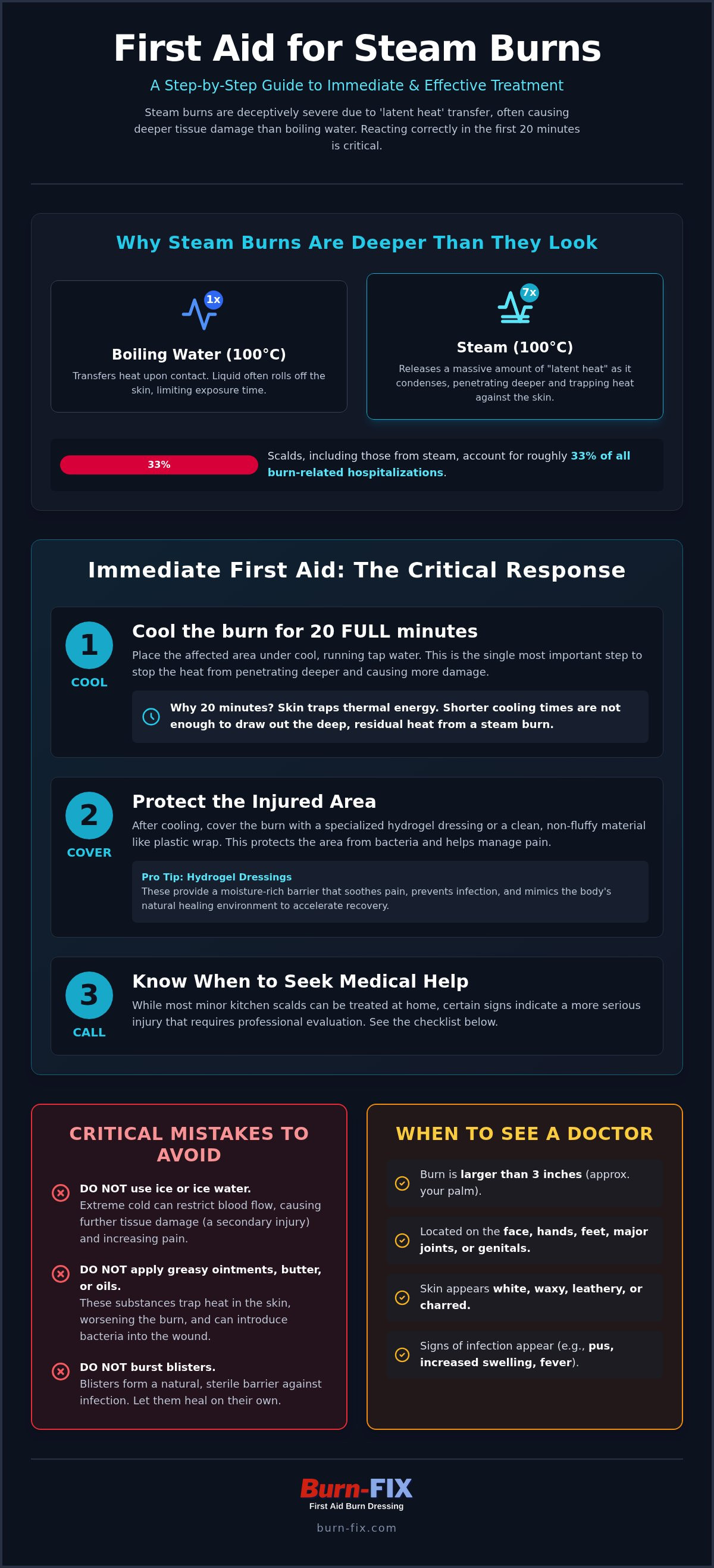
Stopping the pain of a vapor injury requires knowing exactly what happened to your skin. While many people treat steam like a simple splash of hot water, it’s actually a severe form of Scalding that carries much higher energy. Steam at 100°C holds significantly more thermal energy than boiling water at the same temperature. This is due to latent heat, which is the extra energy absorbed when water turns into a gas. When that vapor touches your cooler skin, it releases this massive energy load all at once as it condenses back into liquid, often causing damage that reaches far deeper than a surface burn.
Learning the proper first aid for steam burns is essential because these injuries are deceptive. Unlike a liquid splash that might roll off your arm, vapor penetrates. It seeps through the weave of your clothing and gets trapped against the skin, creating a high-pressure environment that forces heat into the deeper dermis. This is why steam often results in second-degree burns, characterized by intense pain and fluid-filled blisters, rather than the simple redness of a first-degree burn. If the area looks moist, white, or develops immediate blisters, the heat has likely progressed past the top layer of your skin.
Common Causes of Steam Scalds in the Kitchen
Most steam injuries happen during routine tasks when you’re least expecting them. You’re likely to encounter these dangerous vapor clouds in several ways:
- Lifting Lids: Pulling a lid off a boiling pot toward your body instead of away, allowing a concentrated burst of steam to hit your face or arms.
- Pressure Cookers: Opening a vent or a lid before the pressure has fully dissipated, which releases high-velocity vapor.
- Microwave Bags: Tearing open steam-in-bag vegetables too quickly, letting the trapped heat escape directly onto your hands.
- Household Tools: Using garment steamers or clothing irons where the steam can bypass the fabric and strike the skin directly.
How Steam Vapor Affects Skin Tissue
The rapid transition from gas to liquid releases heat deep into your dermis, causing immediate cellular damage. Once the vapor condenses on your skin, the trapped thermal energy continues to destroy healthy cells even after you’ve moved away from the stove. This is why immediate first aid for steam burns is more critical than for dry heat; the moisture effectively traps the temperature against your body. Neutralizing this heat quickly is the only way to stop the "cooking" process and protect your skin’s ability to heal without significant scarring.
Immediate First Aid for Steam Burns: The Critical 20 Minutes
Immediate action saves tissue. Step away from the steam source the moment you feel the sting to prevent further exposure. This is the first, most vital step in first aid for steam burns. Once you're clear, place the affected area under cool running water for at least 20 minutes. Don't use ice; it restricts blood flow and can cause secondary damage. While you cool the site, gently remove any rings, watches, or restrictive clothing near the injury. Swelling often happens quickly, and these items can become painful tourniquets if left in place. Finally, assess the site's size. If the burn is larger than three inches or covers a sensitive area like the face, it requires professional attention.
The Importance of Prolonged Cooling
A quick splash won't stop the damage. Skin is a remarkably effective insulator, meaning it continues to hold onto thermal energy long after you've left the kitchen. Because of how steam penetrates the skin, the heat often lingers in the dermis, continuing to "cook" healthy cells. Cooling for a full 20 minutes draws this latent heat out, lowering the internal temperature and halting the progression of cellular death. If you stop too early, the burn can actually get worse over the next hour as the trapped heat travels deeper into your tissue.
What to Do if Running Water is Unavailable
You might not always be near a sink when an accident occurs. If running water isn't an option, use cool bottled water or a clean, saturated cloth to start the cooling process immediately. Avoid stagnant water from ponds or buckets, as these can introduce bacteria into the compromised skin. A specialized burn relief spray provides a portable, sterile alternative that begins neutralizing heat on contact. These sprays are particularly useful for hard-to-reach areas where submerging the limb isn't practical. For those who spend a lot of time in the kitchen, keeping a BurnFix Burn Kit nearby ensures you're never without the tools needed to stop a scald from progressing.
Beyond Running Water: The Role of Hydrogel in Burn Recovery
Running water is your first line of defense, but it doesn't offer long-term protection. Hydrogel dressings have revolutionized first aid for steam burns by providing a portable, consistent cooling solution that stays on the wound. Unlike dry gauze, which can adhere to damaged tissue and cause trauma during removal, hydrogel is a non-stick medium. It keeps the area moist, which is essential for preventing the skin from drying out and cracking. For home chefs, the Burn-FIX 4x4 First Aid Burn Gel Dressing is a primary tool. It covers larger scalds from pressure cookers or boiling pots, ensuring the cooling process continues even after you leave the sink.
The transition from pain to comfort begins the moment the gel touches the skin. While traditional bandages simply cover a wound, hydrogel actively interacts with it to pull heat out. This is particularly important for steam injuries because the moisture in the vapor can trap heat against the skin longer than dry sources. Using a professional-grade gel ensures that the cooling is deep and sustained, rather than just a surface-level chill.
How Hydrogel Technology Works
These dressings consist of high water content suspended in a polymer matrix. This structure allows the gel to draw heat away from the skin through a process of evaporation and conduction. It creates a protective barrier that shields the wound from bacteria while still allowing the skin to breathe. Perhaps most importantly, the gel stabilizes exposed nerve endings. This provides nearly instant pain relief, shifting your experience from sharp agony to a manageable, cooling sensation. By neutralizing the heat quickly, you reduce the risk of the burn progressing into deeper tissue layers.
Integrating Hydrogel into Your Kitchen Safety Kit
Every kitchen safety first aid kit should be equipped with dedicated burn supplies. Small accidents, like a finger singed by a microwave steam bag, are easily handled with individual BurnFix Burn Gel packets. When applying a dressing, lay it gently over the site. Don't wrap it tightly. You want to avoid putting pressure on any potential blisters, as keeping the skin intact is vital for preventing infection. Knowing When to get emergency help for a burn is still necessary, but having hydrogel on hand ensures that minor to moderate scalds are treated with professional care from the start.
Common First Aid Myths: What to Avoid on a Steam Burn
Panic often leads to poor decisions in the kitchen. When the stinging pain of a vapor scald hits, your first instinct might be to reach for whatever is in the pantry. However, applying household items like butter, flour, or toothpaste to the site is one of the most dangerous mistakes you can make. These substances are not sterile and can easily introduce bacteria into compromised skin, leading to painful infections. Effective first aid for steam burns relies on medical science, not old wives' tales that can turn a manageable injury into a surgical complication.
Another common mistake is popping the blisters that often form after a steam injury. While they may look unsightly or feel tight, that fluid-filled bubble is your body's best natural bandage. It keeps the raw dermis underneath sterile and moist while new skin cells begin to regenerate. Breaking the seal of a blister exposes the wound to the air and increases the risk of scarring. If a blister is large or in an area that makes movement difficult, it's a sign that you need professional evaluation rather than a needle from your sewing kit.
Why Ice Is Not the Answer
Extreme cold is just as damaging as extreme heat. While ice might feel like it's numbing the pain, it actually causes rapid vasoconstriction. This process narrows your blood vessels and severely restricts the blood flow your skin needs to begin the repair process. In some cases, applying ice directly to a scald can lead to "ice burn," which is a secondary frostbite-like injury on top of the original burn. You can read more about the physiological risks in our guide on Hydrogel vs Ice for Burns. Cooling should be gentle and sustained, not freezing and traumatic.
The Problem with Heavy Ointments on Fresh Burns
Greasy salves act as insulators. Applying butter, oils, or even heavy antibiotic ointments like Neosporin within the first 24 hours of a steam injury can be disastrous. Because steam releases so much latent heat deep into the tissue, these greasy barriers effectively trap that energy inside your skin. Instead of the heat dissipating, it continues to cook the surrounding cells. You should only transition to creams or ointments once the skin has completely cooled and the initial inflammatory phase has passed. For immediate protection that won't trap heat, keep a BurnFix Burn Gel packet in your kitchen drawer to provide a breathable, cooling barrier the moment an accident happens.
When to Seek Medical Help: Identifying Severe Scalds
Professional care is necessary when a kitchen accident exceeds the limits of home treatment. While first aid for steam burns is effective for minor injuries, you must seek medical help if the burn is larger than the palm of the victim's hand. Size is a primary indicator of severity, but location is equally critical. Any vapor injury to the face, hands, genitals, or over a major joint requires an immediate evaluation. Burns on joints are particularly concerning; the resulting scar tissue can tighten and permanently restrict your range of motion if not managed by a specialist.
Appearance can be deceptive with steam. Because vapor carries intense latent heat, it can cause third-degree damage that doesn't look like a typical "burn." Look for skin that appears waxy, white, charred, or leathery in texture. If the area feels numb or has a dull ache instead of a sharp sting, the heat may have destroyed the local nerve endings. This lack of pain is a signal of deep tissue damage, not a sign of recovery. Additionally, monitor the site for infection over the next few days. Increased swelling, red streaks spreading from the wound, or the presence of pus are clear indicators that you need professional intervention.
Special Considerations for Children and Seniors
Thinner skin makes steam burns significantly more dangerous for toddlers and the elderly. In these age groups, the same amount of vapor can penetrate much deeper into the dermis than it would for a healthy adult. You should have a lower threshold for seeking advice if a child or senior is scalded, even if the injury looks minor at first glance. Preparedness is your best defense against these accidents. Keeping an emergency burn kit for home ensures you have the medical-grade supplies needed to stabilize the injury before you reach a clinic.
The Recovery Phase: What to Expect
Healing takes time and consistent care. A first-degree steam burn usually resolves within a week, while second-degree burns involving blisters may take two to three weeks to fully close. During this time, protect the new, pink skin from sun exposure; UV rays can cause permanent dark spots or "hyperpigmentation" on the scarred area. If you're using a hydrogel dressing, replace it whenever the gel begins to dry out or if the outer bandage becomes soiled. Maintaining a moist environment is the most effective way to support cellular regeneration and minimize the final appearance of the scar.
Securing Your Kitchen Against the Deceptive Danger of Steam
Steam burns happen in a split second, but their impact on your skin can last for weeks if you aren't prepared. By prioritizing the 20-minute cooling rule and reaching for professional-grade hydrogel instead of dangerous kitchen myths, you're giving your body the best chance to heal without deep tissue damage. This knowledge transforms a moment of sharp pain into a controlled, effective response. Remember that vapor carries significantly more energy than boiling water, making proper first aid for steam burns a vital skill for every home cook.
Don't wait for the next lid-lifting accident to realize your first aid kit is missing essential supplies. Equip your kitchen with professional Burn-Fix hydrogel supplies today to ensure you have moisture-retaining technology ready when it matters most. Our doctor-recommended formulas provide instant cooling and pain relief while remaining safe for the whole family. Having these tools in your pantry means you can handle any minor kitchen crisis with the calm authority of a seasoned specialist. You’ve got the knowledge to treat scalds effectively; now make sure you have the professional tools to match.
Frequently Asked Questions
Is a steam burn worse than a hot water burn?
Yes, steam burns are often more severe than hot water scalds, making immediate first aid for steam burns essential. This happens because of the latent heat involved in the transition from gas to liquid. When vapor hits your skin, it releases massive amounts of energy as it condenses, often driving the heat deeper into the dermis than boiling water would. This high energy transfer frequently leads to second-degree burns even with very brief exposure.
Can I put ice on a steam burn if it really hurts?
You should never apply ice or ice water directly to a steam burn. Extreme cold causes vasoconstriction, which narrows the blood vessels and restricts the oxygen-rich blood flow your skin needs to heal. This can actually lead to secondary tissue damage known as an ice burn. Instead, use cool running water or a specialized hydrogel spray to safely lower the skin temperature without causing further trauma to the already damaged cells.
How long should I keep a steam burn under water?
You must keep the affected area under cool running water for a minimum of 20 minutes to achieve effective first aid for steam burns. This duration is necessary because the skin holds onto heat long after the initial contact. Shorter cooling periods often fail to stop the cooking process in the deeper layers of the dermis. Consistency during these first 20 minutes is the most critical factor in preventing the burn from progressing into a more serious injury.
What should I do if a steam burn starts to blister?
Leave the blister intact and do not attempt to pop it. The fluid-filled bubble acts as a sterile, natural barrier that protects the sensitive raw skin underneath from infection. If the blister breaks on its own, gently clean the area with mild soap and water before applying a non-stick hydrogel dressing. If the blistering is extensive or covers a large area, you should seek professional evaluation to ensure proper wound management and prevent long-term scarring.
Is it safe to use hydrogel on a child’s steam burn?
Yes, our doctor-recommended hydrogel products are safe and effective for children and adults alike. Because children have thinner skin, they are more susceptible to deep tissue damage from vapor. Applying a hydrogel dressing provides immediate cooling and pain relief without the risk of hypothermia associated with ice. It creates a moisture-rich environment that stabilizes nerve endings and supports the natural healing process for delicate young skin without using harsh chemicals or greasy ointments.
Why does my steam burn feel like it is still burning an hour later?
Your skin continues to feel like it is burning because the latent heat from the steam has been trapped in the deeper tissue layers. This lingering thermal energy continues to damage cells even after the visible vapor is gone. If you didn't cool the area for the full 20 minutes, the internal temperature may still be high enough to cause pain. Applying a moisture-retaining hydrogel can help draw out this remaining heat and provide lasting comfort.
When can I stop cooling a steam burn?
You can stop the active cooling process once the 20-minute water treatment is complete and the intense, stinging heat has dissipated. However, you should transition to a protective barrier immediately after. Using a hydrogel spray or dressing ensures that the area stays cool and hydrated for several hours. If the pain returns sharply once you stop cooling, it is a sign that the deeper tissue still holds significant thermal energy and requires more attention or a fresh dressing.
Should I cover a steam burn or let it breathe?
You should cover the injury with a non-stick dressing rather than letting it breathe in the open air. Leaving a steam burn exposed can cause the tissue to dry out, which increases pain and slows down cellular regeneration. A hydrogel dressing is the ideal choice because it provides a barrier against bacteria while maintaining the moisture levels needed for healing. This protection is especially important if you have blisters that could accidentally rupture and expose raw skin.


