


Imagine it is 2 a.m. and your skin feels like a thousand fire ants are dancing just beneath the surface. You've tried every lotion in the bathroom cabinet, yet the "Hell's Itch" remains relentless, making sleep a distant memory. Finding effective itchy sunburn relief isn't just about comfort; it's about stopping a physiological emergency before it leads to permanent skin damage. With a 2026 Skin Cancer Foundation poll showing that 63 percent of nearly 3,000 respondents have suffered five or more sunburns in their lifetime, the risk of long-term damage is a reality we must address with professional urgency.
You shouldn't have to suffer through the heat. This guide provides the science-backed, professional-grade cooling techniques you need to neutralize the itch and drop your skin's surface temperature immediately. We'll show you how to move beyond basic moisturizers to actually remove trapped heat from deep tissue. You will walk away with a clear, 48-hour recovery plan that stops the itching sensation, protects your skin's integrity, and helps you finally get the rest you deserve. From hydrogel technology to precise hydration strategies, your path to relief starts right now.
Key Takeaways
- Identify the biological triggers of "Hell's Itch" to understand why your nerve endings are overreacting to UV damage.
- Master the physics of deep-tissue cooling to safely lower skin temperature without the risks associated with applying ice directly to a burn.
- Avoid the "Heat Trap" by choosing professional-grade hydrogels over petroleum-based ointments that seal in thermal energy and prolong discomfort.
- Follow a precise protocol for immediate itchy sunburn relief using targeted hydrogel sprays to calm sensitized nerves on contact.
- Implement a 48-hour recovery plan that transitions from emergency cooling to moisture retention to minimize peeling and permanent skin damage.
Understanding the 'Sunburn Itch': Why Your Skin is Reacting
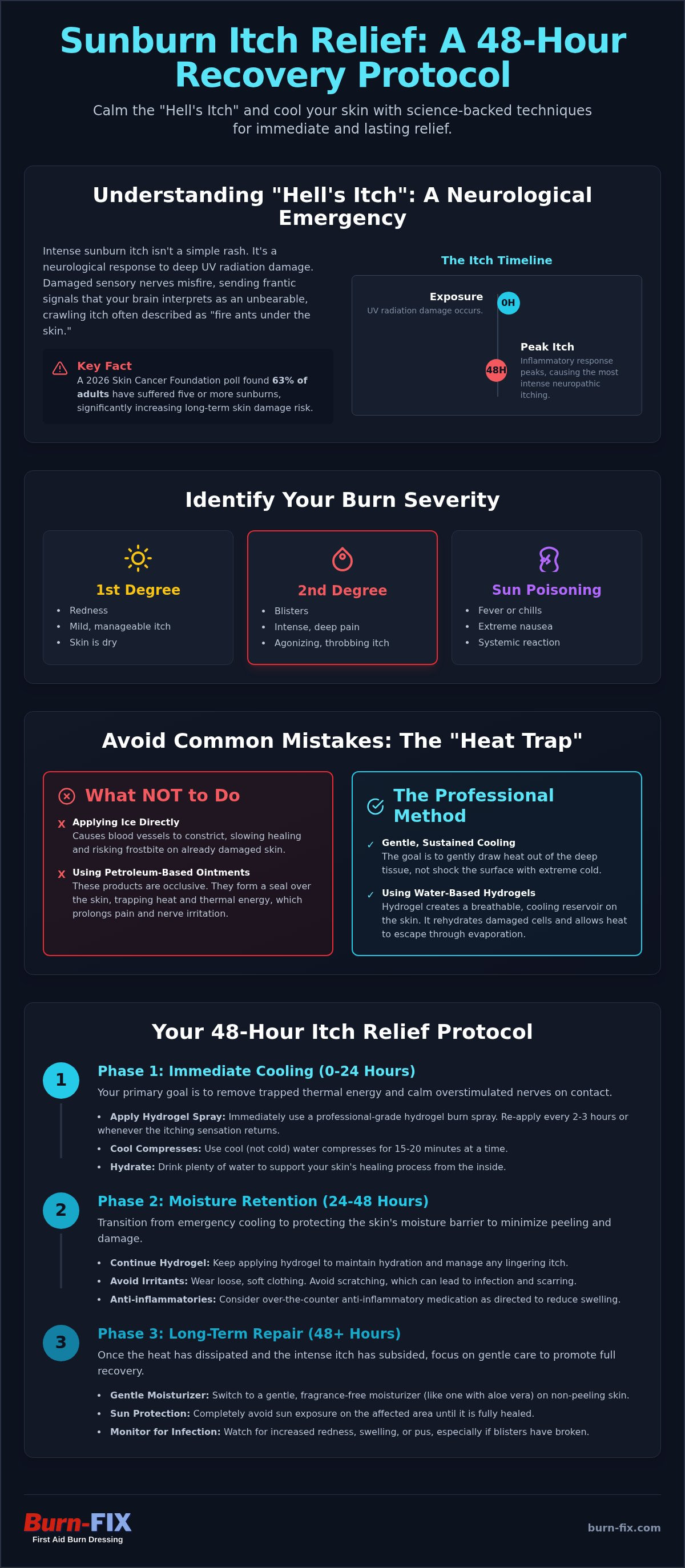
Sunburn is more than a temporary red tint on your skin. It is a radiation burn. UV radiation penetrates the epidermis and destroys cellular DNA, creating a cascade of cellular destruction. This damage excites sensory nerve endings, which send frantic signals to your brain. For those seeking itchy sunburn relief, understanding that this is a neurological event, not just a skin surface issue, is the first step toward effective treatment. When your nerves are overstimulated, your body's natural defense mechanism is to trigger an itch-scratch cycle that can quickly spiral out of control.
Most people mistake intense itching for a simple allergic reaction. It's more complex than that. While histamine release causes a standard "tickle," deeper UV damage leads to neuropathic itching. This feels like "fire ants" crawling under the skin because the nerves themselves are misfiring due to the injury. This sensation often follows a specific timeline, peaking between 48 and 72 hours after the initial exposure as the body's inflammatory response reaches its height. A comprehensive overview of sunburn shows that this delay is common as the immune system works to clear away damaged cells and repair the moisture barrier.
Hell's Itch is a form of neuropathic pain caused by damaged deep-tissue nerves.
The Inflammatory Response Explained
Your body uses cytokines as "healing" signals during the repair process. While these proteins are necessary for recovery, they also cause intense irritation and localized swelling. As the top layer of skin begins to die and dry out, the peeling phase adds a mechanical itch to the mix. It's vital to distinguish between a standard surface itch and the more serious requirements for at-home first aid for second degree burns, which involve deeper tissue damage and potential infection risks.
Identifying Your Burn Severity
Knowing your burn type dictates your recovery path. First-degree burns typically present with redness and a mild, manageable itch. Second-degree burns are more aggressive; they feature blisters, intense pain, and that deep-seated, agonizing itch that makes sleep impossible. If your itching is accompanied by fever, chills, or extreme nausea, you might be experiencing "sun poisoning" or heat exhaustion. These systemic reactions require immediate cooling and hydration to ensure your safety and prevent further physiological distress.
Immediate Cooling: The First Step to Stopping the Scratch
Stopping the itch starts with a fundamental shift in how you think about temperature. When you have a sunburn, your skin is literally holding onto thermal energy that continues to cook the tissue long after you've left the sun. Effective itchy sunburn relief requires drawing that heat out of the deep layers, not just chilling the surface for a few seconds. If you only focus on the surface, the underlying heat continues to stimulate those damaged nerve endings, leading to a persistent, throbbing discomfort.
Many people reach for ice cubes or frozen packs, but this is a dangerous mistake. Extreme cold causes blood vessels to constrict, which significantly slows the healing process and can even lead to frostbite on top of your existing burn. According to professional guidelines for sunburn diagnosis and treatment, the goal should be gentle, sustained temperature reduction. This burn relief spray uses evaporative cooling to lower skin temperature without shock, providing a safer alternative to extreme cold.
Hydrogel: The Professional Choice for Sunburn
Hydrogel technology is the gold standard for managing radiation burns because it mimics the skin's natural moisture barrier. BurnFix Hydrogel Burn Spray provides instant, sustained relief by creating a cooling reservoir on the skin's surface. This water-based formula doesn't just sit on top; it helps rehydrate damaged skin cells that have been stripped of their natural oils. It's particularly useful when managing burn care for children, as the application is painless and the cooling effect lasts much longer than traditional water-based compresses. For immediate coverage on large areas, utilizing a burn relief spray ensures even application and rapid nerve calming.
The Dangers of Extreme Cold
While a freezing shower might feel good for a moment, it often leads to a 'rebound effect.' As your body tries to warm itself back up after the shock of cold water, blood flow rushes back to the skin, often making the itching sensation return even stronger than before. You should aim for cool to tepid water. This temperature is low enough to draw out heat but high enough to avoid triggering a defensive inflammatory response. Proper temperature control is the most reliable way to achieve itchy sunburn relief without causing further trauma to the epidermis.
Hydrogel vs. Ointments: Avoiding the 'Heat Trap'
The "Heat Trap" is a common mistake that turns a manageable burn into a sleepless night. When you apply petroleum-based ointments or heavy, oil-rich lotions to a fresh sunburn, you create an airtight seal over the damaged skin. This occlusive layer prevents thermal energy from escaping, effectively "cooking" the tissue from the inside out. For those desperate for itchy sunburn relief, this trapped heat keeps nerve endings in a state of high alert, prolonging the agonizing stinging and itching sensations.
While many reach for grocery-store aloe, these products often contain high concentrations of alcohol and artificial fragrances that further dehydrate the epidermis. Medical-grade hydrogel is different. It provides a sterile, breathable barrier that allows heat to dissipate while maintaining a moist healing environment. Professional sunburn treatment options prioritize these water-based solutions because they stabilize skin temperature without suffocating the pores. By keeping the area hydrated and cool, you stop the mechanical triggers of the itch before they start.
Why Water-Based Solutions Win
Choosing the right topical application is a decision between immediate comfort and prolonged irritation. When comparing Neosporin for burns vs gel for rapid itch relief, the gel's non-occlusive nature is the clear winner for early-stage recovery. Ointments like Neosporin are designed for infection prevention in small cuts, but their thick base can trap heat in a broad-area sunburn. A water-based hydrogel allows the skin to "breathe," facilitating natural gas exchange and moisture balance. Always check labels to avoid ingredients that can worsen a burn:
- Denatured or isopropyl alcohol, which strips essential moisture.
- Synthetic fragrances that trigger inflammatory responses.
- Heavy oils like mineral oil or petrolatum during the first 24 hours.
The Problem with 'Caine' Products
It's tempting to reach for sprays containing lidocaine or benzocaine to numb the pain. However, these "caine" products carry a significant risk of contact dermatitis, especially on sun-damaged skin where the barrier is already compromised. Numbing the surface is a temporary mask that doesn't address the underlying thermal injury. Instead of risking a secondary allergic reaction that could intensify the itching, focus on cooling the tissue. Safe, hydrogel-based alternatives provide long-lasting comfort by neutralizing the heat source rather than just deadening the nerves. This approach ensures your path to itchy sunburn relief is steady and free from additional complications.
Step-by-Step Guide: How to Soothe an Itchy Sunburn at Home
When the itch becomes unbearable, you need a protocol that works in minutes, not hours. Achieving lasting itchy sunburn relief requires a systematic approach that addresses both the skin surface and the underlying heat. Follow this professional five-step recovery plan to regain control of your comfort.
- Step 1: Assess and Cleanse. Rinse the affected area with tepid water. You must remove residual salt, sand, or chlorine, as these particulates act as abrasive irritants on sensitized skin.
- Step 2: Instant Cooling. Apply BurnFix Hydrogel Burn Spray immediately. This water-based formula neutralizes the sting on contact and begins the process of nerve calming without the shock of ice.
- Step 3: Deep Hydration. Use Burn-FIX 4x4 dressings for high-intensity zones like the back or shoulders. These provide a reservoir of moisture that standard lotions cannot match.
- Step 4: Internal Support. Drink extra fluids to combat the dehydration caused by the burn. Consider over-the-counter anti-inflammatories to reduce the internal swelling that triggers the itch.
- Step 5: Environmental Control. Wear loose, breathable clothing. Air circulation is vital for preventing heat buildup against the skin.
For a complete solution to these "fire ant" sensations, you can find everything you need in the BurnFix Burn Kit to manage recovery from start to finish.
Applying a Hydrogel Dressing
Apply the Burn-FIX 4x4 First Aid Burn Gel Dressing directly to the area where the itch is most intense. These dressings are engineered with a non-stick medical grade material, which is critical for itchy sunburn relief because it won't tear at delicate, peeling skin during removal. Leave the dressing in place for 30 to 60 minutes. This extended contact allows the hydrogel to penetrate deeper than a quick spray, effectively drawing out the thermal energy trapped in your tissue.
Managing the Nighttime Itch
Create a "cool zone" in your bedroom to prevent sleep deprivation. Lower the thermostat and use a fan to keep air moving across your body. You should only use 100 percent cotton sheets; synthetic fabrics trap heat and can spike your skin temperature during the night. Above all, follow the "Hands-Off" rule. Scratching damaged skin can lead to permanent scarring or secondary infections, so rely on your hydrogel spray to neutralize the sensation instead of your fingernails.
Long-term Recovery: Preventing Peeling and Future Damage
The final stage of healing often brings a new challenge: the peeling phase. As your body sheds cells with damaged DNA, the mechanical lifting of skin flakes can trigger renewed irritation. You must resist the urge to peel or pick at these areas. Doing so exposes raw, immature skin to the air and bacteria, which increases the risk of scarring or secondary infection. For continued itchy sunburn relief, keep the area saturated with hydrogel until the underlying tissue feels stable and the "fire" has completely left the skin.
Transitioning your care routine is a matter of timing. Once the localized heat has fully dissipated, usually after the first 72 hours, you can move from hydrogel to gentle, fragrance-free moisturizers. These help rebuild the lipid barrier and keep the peeling skin supple. Preparation is your best defense against a minor burn becoming a crisis. An emergency burn kit for home should always be stocked before beach season begins. Having professional supplies on hand ensures you aren't scrambling for ineffective home remedies when you're in physical distress.
You should monitor your recovery for specific red flags. Seek medical attention if you notice yellow discharge, increasing swelling, or if blisters cover a large percentage of your body. Systemic symptoms like high fever, chills, or extreme confusion are signs of sun poisoning. These conditions require professional intervention beyond at-home cooling techniques to ensure your safety and systemic hydration.
Building Your Sun Safety Kit
Many of the items found in a professional kitchen safety first aid kit, such as hydrogel dressings, are equally effective for radiation burns from the sun. Travel-size hydrogel packets are a vacation must-have for hiking or beach trips because they provide a "first responder" solution before you can return to your full supply kit. Relying on doctor-recommended supplies rather than unproven home remedies like butter or vinegar ensures you don't accidentally trap heat or cause chemical irritation on an already compromised skin barrier.
The Science of Skin Regeneration
Full skin barrier recovery is a slow physiological process. It typically takes about 28 to 30 days for the epidermis to fully regenerate and regain its strength. During this window, your "new" skin is incredibly thin and lacks the protective melanin of the surrounding tissue. You must protect these healing areas from secondary UV exposure using physical barriers like UPF-rated clothing or high-SPF mineral sunscreens. This final phase of itchy sunburn relief is about shielding your body while it completes the quiet work of cellular repair. The journey from intense pain to lasting comfort is possible when you prioritize deep-tissue cooling and consistent moisture retention.
Take Control of Your Skin's Recovery
Regaining control over your skin's health requires more than just waiting for the clock to run down. You've learned that true itchy sunburn relief comes from drawing heat out of the deep tissue and avoiding the petroleum-based "Heat Trap" that prolongs the agony. By choosing professional-grade hydrogels over heavy ointments, you provide your damaged nerves with the sterile, moisture-retaining environment they need to stop misfiring and start healing.
This transition from pain to comfort is a physiological process that you can accelerate with the right tools. Whether you're managing a mild surface burn or the intense "fire ant" sensation of a more severe injury, professional cooling techniques ensure a safer, faster recovery without the risk of secondary irritation. Don't let a sunburn dictate your comfort or your sleep. Our doctor-recommended formula provides instant cooling for 1st and 2nd-degree burns, acting as a safe, moisture-retaining shield for your sensitive skin.
Stop the itch instantly with Burn-FIX Hydrogel Relief. You have the plan and the professional knowledge; now it's time to let your skin finally rest and heal.
Frequently Asked Questions
Why does my sunburn itch more at night?
Your sunburn feels more intense at night because your body's natural cortisol levels drop, allowing inflammatory signals to become more noticeable. Without the distractions of the day, your brain focuses entirely on the nerve pain and heat. Friction from bedding can also physically irritate the damaged epidermis, making itchy sunburn relief harder to achieve. Lowering your bedroom temperature and using a cooling hydrogel before bed can help stabilize these nighttime sensations.
Can I use Benadryl for a sunburn itch?
Oral antihistamines like Benadryl can provide temporary relief by blocking the histamines your body releases during the inflammatory response. While these are helpful for surface-level tickling, they often don't address the deep-tissue neuropathic pain associated with severe burns. For a more comprehensive approach, combine oral medication with a topical hydrogel spray to neutralize the thermal energy at the source, providing a multi-layered defense against the agonizing itch.
Is it okay to put vinegar on an itchy sunburn?
You should avoid applying vinegar to sun-damaged skin because its high acidity can cause chemical irritation and further dehydrate the already compromised barrier. While some home remedies suggest it for pH balance, vinegar often leads to stinging and increased inflammation. Professional first-aid protocols prioritize sterile, moisture-retaining solutions like hydrogel. These doctor-recommended products cool the skin safely without the risk of the "Heat Trap" or chemical sensitivity common with household acids.
How long does the 'Hell's Itch' phase usually last?
The acute phase of "Hell's Itch" typically lasts between 48 and 72 hours after the initial exposure. This intense neuropathic reaction occurs as the deep-tissue nerves begin to misfire during the peak of the inflammatory cycle. While the most agonizing sensations usually subside within three days, your skin remains highly sensitive for weeks. Consistent application of a sterile hydrogel dressing during these first 72 hours is vital for managing the transition from pain to comfort.
What happens if I scratch my sunburn blisters?
Scratching or popping sunburn blisters creates an open wound that is highly susceptible to bacterial infection. These blisters act as a natural, sterile bandage for the raw skin underneath, and premature breaking slows down the regeneration process. If you accidentally rupture a blister, you should clean the area with tepid water and apply a non-stick Burn-FIX 4x4 dressing. This protects the area while maintaining the moist environment necessary for cellular repair and scarring prevention.
Can I use hydrogel spray on my face for sunburn relief?
Yes, BurnFix Hydrogel Burn Spray is safe for facial use and provides instant itchy sunburn relief for sensitive areas. When applying to the face, it's best to spray the gel into clean hands first and then gently pat it onto the forehead, nose, and cheeks. Avoid direct contact with your eyes and mouth. Because the formula is fragrance-free and water-based, it won't clog pores or cause the secondary breakouts often associated with heavy, oil-based sun lotions.
Should I peel the skin once it starts to itch?
You must let the skin shed naturally to avoid damaging the immature tissue underneath. Forcing the peeling process creates microscopic tears in the epidermis, which can lead to increased itching and potential scarring. If the peeling skin is catching on your clothes, you can use a sterile hydrogel to keep the area supple. This reduces the mechanical irritation and keeps the dead skin hydrated until it is ready to detach without causing trauma to the new barrier.
Is an itchy sunburn a sign of healing or more damage?
Itching is a sign that your immune system is actively working to repair the DNA damage caused by UV radiation. While it indicates the healing process is underway, the sensation itself is triggered by the inflammation and nerve irritation that follows a physical injury. It isn't a sign of new damage, but rather your body's response to the initial burn. Managing this phase with professional-grade cooling techniques helps ensure the healing continues without the complications of secondary infection or scratching.


