


What if the redness and heat after a tanning bed session are more than temporary irritation? A tanning bed burn is a UV burn. The first steps for tanning bed burn relief are to gently cool the skin, stop further UV exposure, and check for signs that the injury needs medical attention.
Burning, tenderness, redness, or swelling can be uncomfortable and worrying, especially when you’re unsure what’s safe to put on your skin or whether blisters need medical attention. Take these symptoms seriously. Calm, careful first aid may help ease discomfort while your skin begins to recover.
In this guide, you’ll learn how to cool a tanning bed burn, soothe the skin without aggravating it, and protect the area from further UV exposure. You’ll also find out which common remedies to avoid, what warning signs call for professional care, and how to support your skin as sensitivity and redness settle. If symptoms are severe or getting worse, don’t wait for home care to work before seeking medical help.
Key Takeaways
- For tanning bed burn relief, start with gentle cooling and avoid anything that adds heat or friction to sensitive skin.
- Redness and tenderness can follow UV exposure, but they can’t tell you the burn’s depth on their own.
- Blisters or worsening symptoms are reasons to seek professional medical assessment rather than relying on home care alone.
- Compare gentle comfort options, and follow the label directions for any burn-care product you use.
- Keep burned skin away from tanning beds while it heals, and use protective clothing, shade, and sunscreen outdoors.
Tanning Bed Burn Relief: What to Do First
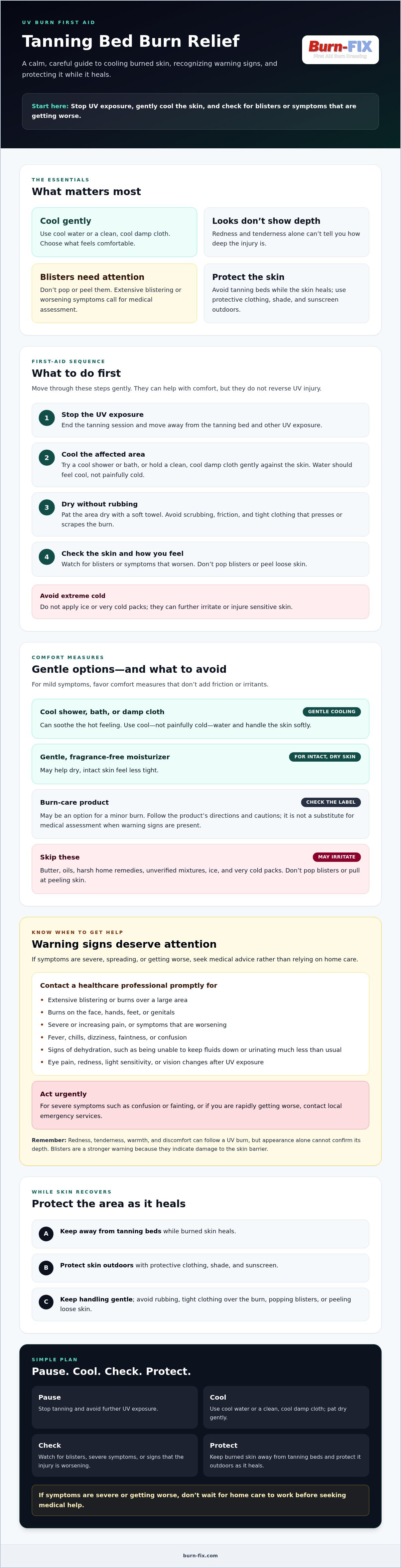
Take a breath, then act gently. A tanning bed exposes skin to ultraviolet (UV) radiation, which can injure the skin and cause a UV burn. If your skin is burning, stop the session and move away from the tanning bed and other UV exposure. Cool the affected area with cool water or a clean, cool damp cloth. Then handle the skin softly and check for blisters or symptoms that are getting worse.
- Stop tanning and get out of the UV exposure.
- Cool the skin with a cool shower, bath, or damp cloth, whichever feels comfortable.
- Pat dry without rubbing, and avoid tight clothing that presses or scrapes the area.
- Check the skin and how you feel. Don’t pop blisters or peel loose skin.
These steps are a practical starting point for mild symptoms, not a way to reverse UV injury. A tanning bed burn is a form of sunburn. Read more about what happens when you get a sunburn. Redness and tenderness may appear after UV exposure, but appearance alone can’t confirm how deep a burn is. Take blistering seriously, especially if it affects an extensive area. Seek medical advice if symptoms worsen or you’re unsure what to do.
How to cool a tanning bed burn safely
Choose a cool shower or bath, or hold a clean, cool damp cloth gently against the skin. Let comfort guide you: the water should feel cool, not painfully cold. Don’t apply ice or very cold packs, since extreme cold can further irritate or injure sensitive skin. After cooling, pat the area dry with a soft towel. Avoid scrubbing, friction, and tight clothing over the burn.
What not to put on freshly burned skin
Skip butter, oils, harsh home remedies, and unverified mixtures. They may irritate the area or make it harder to care for the skin. Don’t pop blisters or pull at peeling skin. Leave the area undisturbed. If you’re considering a burn-care product, read its label and follow its directions and cautions. Seek medical advice if blisters develop, symptoms worsen, or you’re uncertain whether home care is appropriate.
How to Tell Whether a Tanning Bed Burn Needs Medical Attention
Red, tender, warm skin can follow UV exposure, but how it looks or feels can’t show how deep the injury is. A mild-looking area may still be painful, so don’t use appearance as your only guide. For basic care and guidance on when to seek help, review the Mayo Clinic’s sunburn treatment options. If symptoms are severe, spreading, or getting worse, get medical advice rather than relying on tanning bed burn relief at home.
Redness, pain, and blistering: what symptoms can indicate
Redness, tenderness, warmth, and discomfort are common after a UV burn. Blisters are a stronger warning because they indicate damage to the skin barrier. Don’t puncture or peel them. Contact a healthcare professional if blisters cover a broad area, worsen, or occur with other concerning symptoms. Don’t try to manage extensive blistering on your own.
Seek prompt medical advice for extensive blistering or burns, severe or increasing pain, fever, chills, dizziness or faintness, confusion, or signs of dehydration. Dehydration concerns may include being unable to keep fluids down or urinating much less than usual. Eye pain, redness, light sensitivity, or vision changes after UV exposure also call for prompt assessment.
When to contact a healthcare professional urgently
Arrange prompt evaluation for burns over a large area or on sensitive parts of the body, such as the face, hands, feet, or genitals. If symptoms are severe, you feel faint or confused, or you’re rapidly getting worse, contact local emergency services. When you’re unsure how serious the injury is, it’s safer to ask a healthcare professional than to wait and see.
- Monitor mild symptoms: Keep watching for worsening pain, new blisters, or changes in how you feel.
- Get assessed: Seek professional advice for extensive blistering, sensitive-area burns, or symptoms that are worsening.
- Act urgently: Use local emergency services for severe symptoms such as confusion or fainting.
Once urgent concerns are addressed, a first-aid burn-care item may be an option for a minor burn. Follow its label, and don’t use it in place of medical assessment. You can explore first-aid burn care supplies as one way to prepare, while keeping professional care first when warning signs are present.
Tanning Bed Burn Relief Options: Compare Gentle Comfort Measures
For mild symptoms, start with comfort measures that don’t add friction or irritants. A cool shower or compress can soothe the hot feeling. A gentle, fragrance-free moisturizer may help dry, intact skin feel less tight. A burn-care product is another possible first-aid option, but use it only if the label says it’s suitable for your situation. These steps may ease discomfort, but they can’t undo UV damage or guarantee faster healing.
Cool compresses and gentle moisturizers
Hold a clean, cool, damp cloth gently against the area, or take a cool shower. Avoid ice and very cold packs. If skin is intact, try a small amount of fragrance-free moisturizer if it feels comfortable. Stop using it if you notice stinging, a rash, or worsening irritation. Don’t rub it into blisters or broken skin.
| Option | Purpose and suitable use | Key cautions |
|---|---|---|
| Cool shower or compress | Temporarily eases heat and discomfort on the affected skin. | Use cool, not icy, water; avoid rubbing or scrubbing. |
| Fragrance-free moisturizer | May soothe tightness on intact, dry skin if it feels comfortable. | Stop if it stings or irritates; don’t apply to blisters unless advised. |
| Label-directed burn-care product | May be considered for a minor burn only when the label supports that use. | Check directions, cautions, and suitability; it isn’t a substitute for medical assessment. |
When a hydrogel burn product may be considered
A hydrogel spray or dressing may be an optional first-aid choice for a minor injury, not a way to diagnose its severity. Burn-Fix offers hydrogel burn products, including Burn-Fix Hydrogel Burn Spray and burn gel dressings. Before using one on a tanning bed burn, check the specific product label for intended use and cautions. If the skin is blistered, the area is extensive, or you’re unsure whether the product is appropriate, seek medical advice first.
Whichever option you choose, stop if irritation worsens and get professional help if concerning symptoms appear. For more information on using a spray as part of first aid, see the guide to burn relief spray. Comfort measures support the skin while it heals; they don’t remove the effects of UV exposure.
Tanning Bed Burn Recovery: Protect Skin While It Heals
Give irritated skin a break from ultraviolet (UV) exposure. Avoid tanning beds and limit direct sunlight until the skin has healed. More UV can aggravate sensitive, damaged skin. There’s no need to guess at a fixed recovery timeline. Watch how the area changes, and seek medical advice if symptoms worsen, fail to improve, or new warning signs appear.
Everyday aftercare for irritated skin
Keep the area clean and handle it gently. Don’t scrub, exfoliate, peel loose skin, or rub at blisters. Loose, soft clothing can reduce friction, especially where fabric would otherwise press against tender skin. Drink fluids regularly, particularly if you’ve been sweating or feel unwell. These steps can support comfort, but they don’t undo UV injury or guarantee a particular healing speed.
For more general guidance on burn care at home, read at-home first aid for second-degree burns. A tanning bed burn may need professional assessment, especially if it blisters extensively or comes with severe pain, fever, dizziness, or other concerning symptoms.
Avoid another UV exposure while skin is healing
Don’t return to a tanning bed while your skin is recovering. Outdoors, choose shade and cover the affected area with protective clothing. Use broad-spectrum sunscreen on exposed skin as directed by its label, if it’s comfortable for your skin. Sunscreen helps limit further exposure; it doesn’t make tanning safe, and it shouldn’t replace shade or clothing.
Once the burn has healed, continue protecting your skin from UV rays rather than exposing it again to develop a tan. These precautions can help avoid adding irritation while the skin is vulnerable.
As part of your tanning bed burn relief plan, prioritize gentle aftercare and medical assessment when symptoms call for it. Burn-Fix offers burn-care products as first-aid resources. Check each product’s directions and cautions, and don’t use one instead of professional care when needed. Explore Burn-Fix first-aid burn-care products.
A Simple Plan for Tanning Bed Burn Relief and Next Steps
Keep your response simple: stop UV exposure, cool the skin gently, check for warning signs, and protect the area as it heals. For mild symptoms, careful home care may help with comfort. Blisters, extensive burns, eye involvement, or severe or worsening symptoms call for professional assessment. A first-aid product should never delay that care.
A quick checklist to follow after leaving the tanning bed
- Stop exposure. Leave the tanning bed and avoid additional UV while the skin is irritated.
- Cool gently. Use cool water or a clean, cool damp cloth. Avoid ice, rubbing, and aggressive home remedies.
- Assess the injury. Look for blisters or a large affected area, and notice symptoms such as severe pain, dizziness, fever, or eye discomfort.
- Protect the skin. Choose soft, loose clothing and keep the area shielded from further UV exposure.
- Get help when needed. Contact a healthcare professional about blisters or concerning symptoms. For severe symptoms, use local emergency services.
This sequence gives you a clear starting point without assuming the burn is minor based on appearance alone. If you’re uncertain about the injury or symptoms are getting worse, seek medical advice rather than waiting for a home remedy to help.
Choosing a first-aid product without delaying care
If you’re considering a burn-care product for a minor injury, read the exact label first. Check its intended use, directions, warnings, and whether it’s suitable for the affected skin. Don’t apply a product to a severe or uncertain injury instead of arranging medical assessment. Keeping appropriate first-aid supplies at home can help you prepare, but supplies aren’t a substitute for professional or emergency care.
For help planning what to keep on hand, see the essential home burn kit checklist. When you’re ready to consider first-aid options, explore Burn-Fix burn care products, and follow each product’s label directions and cautions. That’s a practical way to make tanning bed burn relief decisions while keeping appropriate medical care first.
Take the Next Step Toward Skin Recovery
Good tanning bed burn relief starts with a calm, careful response: stop UV exposure, cool the skin gently, and avoid irritating or peeling the affected area. Just as important, don’t try to judge burn depth by redness alone. Blisters, extensive burns, eye symptoms, or severe or worsening discomfort deserve professional assessment.
As your skin heals, protect it from more UV exposure and choose any first-aid product only after checking its label for intended use and cautions. Burn-Fix offers hydrogel spray, gel packets, and burn gel dressings for first-aid supplies. The business describes its products as designed for first- and second-degree burns, but check the current label to confirm suitability. Don’t let a product delay needed medical care.
Explore Burn-Fix burn-care products for your first-aid supplies. Keep your next steps simple: protect the skin, monitor symptoms, and get help if concerns arise. Thoughtful care can help you focus on comfort while your skin recovers.
Frequently Asked Questions
How do you get relief from a tanning bed burn?
For mild symptoms, stop UV exposure and cool the skin with a cool shower or clean, cool damp cloth. Pat the area dry gently, avoid ice and irritating home remedies, and wear loose clothing that won’t rub. These steps can ease discomfort but don’t reverse UV damage. Tanning bed burn relief at home is not a substitute for medical assessment if blisters, severe pain, or other warning signs appear.
Is a tanning bed burn the same as a sunburn?
Both are UV-related skin injuries, though one follows exposure to a tanning bed and the other usually follows time outdoors. Tanning beds expose skin to ultraviolet radiation, which can cause redness, tenderness, warmth, or blistering. Symptoms alone can’t reveal how deep the injury is. Treat the affected skin gently, avoid further UV exposure, and seek medical advice if symptoms are severe or worsening.
Can I put ice on a tanning bed burn?
No. Don’t place ice or a very cold pack directly on burned skin, as extreme cold can further irritate or injure sensitive tissue. Choose a cool shower, bath, or clean, cool damp cloth instead, guided by what feels comfortable. Pat the skin dry rather than rubbing it. If cooling increases discomfort or the burn looks extensive, stop and seek medical advice.
How long does a tanning bed burn take to heal?
There isn’t one healing timeline that applies to every tanning bed burn. Recovery can vary with the extent of the injury and how the skin responds, and appearance alone can’t confirm burn depth. Protect the area from more UV exposure and handle it gently as it recovers. If symptoms worsen, don’t begin to improve, or new warning signs develop, contact a healthcare professional.
Can I use burn gel or hydrogel on a tanning bed burn?
A burn gel or hydrogel may be an option for a minor injury if the exact product label says it’s suitable. Check its intended use, directions, and warnings before applying it, and stop if irritation worsens. Burn-Fix describes its products as designed for first- and second-degree burns, but a label can’t replace medical assessment. Don’t use a product instead of care for extensive, blistered, or uncertain injuries.
Should I pop blisters from a tanning bed burn?
No. Leave blisters intact and don’t peel loose skin. Blistering means the skin barrier is injured, and puncturing a blister can expose the area to further harm. If blisters cover an extensive area, worsen, or occur with severe pain, fever, chills, dizziness, or other concerning symptoms, seek medical advice promptly. Avoid applying products unless their labels indicate they’re suitable for the affected skin.
When should I seek medical care for a tanning bed burn?
Seek prompt medical advice for extensive blistering, a large affected area, burns involving the eyes or sensitive body areas, or symptoms that are severe or getting worse. Fever, chills, dizziness or faintness, confusion, and signs of dehydration also warrant attention. Don’t try to manage a serious or uncertain burn with home care alone. For severe symptoms, contact your local emergency services.


