


The pitcher slips, steam flashes across your hand, and the café rush doesn’t pause. In that painful moment, this espresso machine steam wand burn barista guide gives you a clear first move: cool the area under cool, running water for at least 20 minutes. Don’t reach for ice, butter, or oil, as they can worsen the injury.
Even a burn that looks small can leave you unsure whether it’s safe to keep working or whether you need medical help. That uncertainty is understandable, especially when your skin is stinging and the next order is waiting. Burns on the hands, large areas, or areas with severe pain, numbness, or extensive blistering need prompt medical attention. This guide explains immediate first aid, warning signs that call for urgent advice, and steam-wand habits that can help reduce the risk of another injury. It also covers how to prepare café burn-care supplies for use after initial cooling, while keeping them in their proper role: support, not a replacement for professional care.
Key Takeaways
- If an espresso machine steam wand burn happens, step away from the machine and stop the task. Both steam exposure and contact with the hot wand can injure skin.
- Don’t judge a burn’s severity by appearance alone. Know which warning signs call for medical advice, and seek help if you’re unsure.
- For a steam wand burn, avoid common first-aid myths and follow a clear response instead of improvising.
- Use the machine’s manual to build a before, during, and after steaming routine that can help reduce burn risks during busy shifts.
- Prepare a simple workplace plan for cooling, assessment, covering, reporting, and decisions about further care.
Espresso machine steam wand burn barista first aid: what to do first
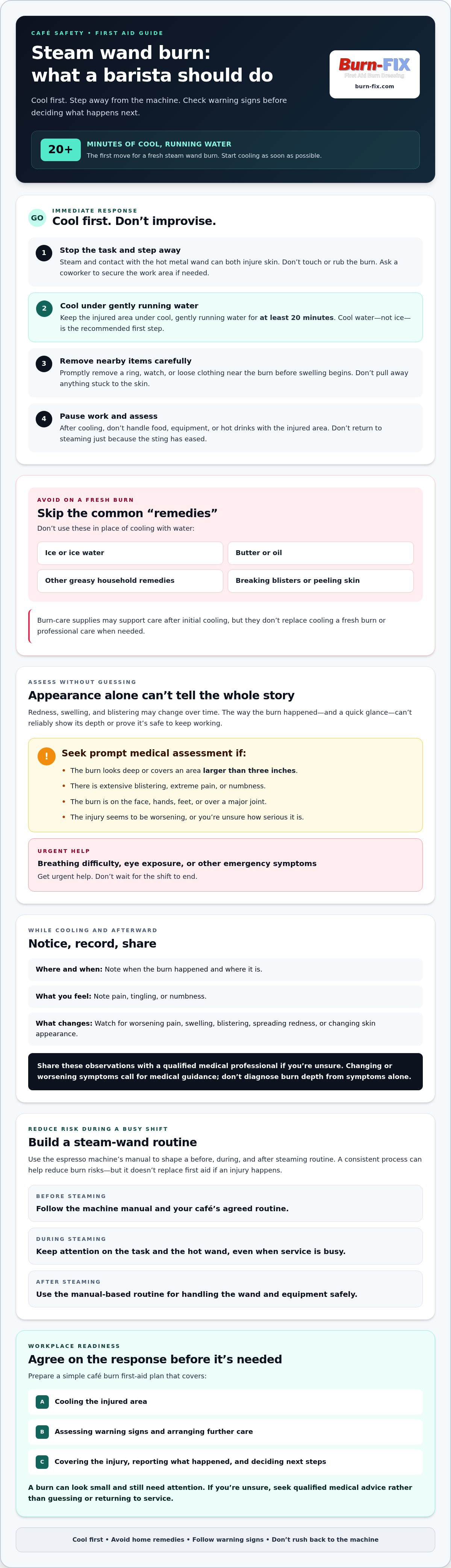
Stop the task and step away from the machine. Don’t touch or rub the injured skin. If needed, ask a coworker to secure the work area. A steam wand burn is a skin injury caused by heat from escaping steam or contact with the hot metal wand. Either exposure can hurt, and the way the burn happened doesn’t reliably show how serious it is.
What to do immediately after a steam wand burn
Start cooling the area as soon as possible. Hold it under cool, gently running water for at least 20 minutes. Cool water, not ice, is the recommended first step. If a ring, watch, or loose clothing is near the burn, remove it promptly before swelling begins. Don’t pull away anything stuck to the skin.
- Keep the injured area under cool running water for at least 20 minutes.
- Don’t apply ice, ice water, butter, oil, or other greasy household remedies.
- Don’t break blisters or peel skin.
After cooling, avoid handling food, equipment, or hot drinks with the injured area. Don’t return to steaming just because the sting has eased. Assess the injury and arrange appropriate care before deciding what to do next. The following sections explain warning signs and when to seek medical advice.
Steam exposure or hot wand contact: why the distinction matters
Steam transfers heat through moisture, while a hot wand injures through direct contact. Both can damage skin, and neither exposure alone tells you the burn’s depth. For background on the different types of burns and how heat can affect tissue, see this general overview, but don’t use it to diagnose an injury.
While the area is cooling, note where the burn is, what it looks like, and what you feel, such as pain, tingling, or numbness. Share those observations with a qualified medical professional if you’re unsure about the injury. The goal of an espresso machine steam wand burn barista response is to cool first, move away from the hazard, and get appropriate help, not to guess based on appearance. Don’t return to the machine until it’s safe to do so.
How to assess a barista’s steam wand burn without guessing
A burn’s appearance can offer clues, but it can’t reliably show how deep the injury is or rule out a more serious problem. Redness, swelling, or blistering may change over time. Don’t rely on a quick glance or a coworker’s guess to decide that it’s safe to carry on. If you’re uncertain, get advice from a qualified medical professional.
Signs that need prompt medical attention
Seek prompt medical assessment if the burn looks deep, covers an area larger than three inches, has extensive blistering, or causes extreme pain or numbness. Burns on the face, hands, feet, or over a major joint also warrant professional advice, since these areas can be especially important to function. For general guidance on first-aid for burns, refer to Mayo Clinic, but don’t use an online guide to diagnose your injury.
Get urgent help for breathing difficulty, eye exposure, or other emergency symptoms. If the injury seems to be worsening or you can’t judge its seriousness, contact a medical professional rather than waiting for the shift to end.
What to monitor after the first response
Write down when the burn happened, where it is, and what you notice. Keep track of whether pain, swelling, or skin changes improve or worsen, and share those details if you seek care. Blistering, spreading redness, or increasing discomfort calls for medical guidance, especially if symptoms change after the initial response.
Worsening pain or changing skin appearance merits reassessment because the injury may need professional evaluation. Don’t diagnose burn depth from symptoms alone, and don’t use a topical product to decide whether care is needed. A second-degree burn care guide offers related at-home information, but it can’t replace individualized medical advice.
For an espresso machine steam wand burn, a barista’s safest next step is to follow warning signs and qualified guidance, not pressure to return to service. Once immediate care needs are addressed, consider what burn-care supplies belong in the workplace kit. You can explore burn-care products as possible additions, and follow each product’s label. Supplies don’t replace cooling a fresh burn or professional care when it’s needed.
Steam wand burn myths: what not to put on injured skin
In a busy café, it’s tempting to grab whatever seems soothing. Resist that urge. A fresh burn needs appropriate cooling first, not kitchen ingredients or a product applied in place of water. For an espresso machine steam wand burn barista response, keep the first steps simple and avoid experimenting on injured skin.
Why ice, butter, and improvised remedies are poor first responses
Ice and ice water aren’t substitutes for cool running water. Extreme cold can damage injured tissue, while recommended first aid uses cool water to draw heat away more gently. Butter, oils, and other greasy remedies can hold heat against the skin and make the area harder to assess. Don’t apply them to a fresh burn.
Skip toothpaste, coffee grounds, and other unverified kitchen fixes, too. They don’t replace cooling or medical assessment, and removing them may irritate the area. Don’t break blisters, since the skin helps protect the tissue underneath. If a blister breaks on its own or the burn seems worse than expected, seek qualified medical advice.
Cool the burn first. Consider a dressing or other product only afterward, when appropriate and according to its label.
When a burn dressing or gel may fit into first aid
After initial cooling, a suitable burn dressing or gel may be considered for an injury that appears appropriate for on-site first aid. Check the product’s intended use and directions before applying it, and follow workplace procedures. A dressing can support a first-aid plan, but it can’t establish how serious a burn is or replace professional care for a severe or uncertain injury.
For more context on dressing choices, read the workplace hydrogel dressing guide. Keep supplies accessible in the café’s first-aid setup, but don’t let finding or applying a product delay cooling or medical help when warning signs are present. Follow the label, and don’t use a product to decide whether the barista can safely return to work.
Burn-care products, such as hydrogel spray or a burn gel dressing, may be considered as additions to a prepared workplace kit after cooling, subject to their labels. Review burn-care supplies for a first-aid setup, not as a substitute for cooling or professional care.
Prevent espresso steam wand burns during a busy café shift
Safer steaming depends on repeatable habits, not speed alone. A clear routine helps staff keep the wand, the barista, and nearby coworkers in mind when orders stack up. For an espresso machine steam wand burn barista prevention plan, follow the machine manufacturer’s manual and workplace procedures. Controls and cleaning steps can differ by equipment.
Safer habits before and during milk steaming
Before steaming, check that the area around the machine is clear and that the pitcher and other needed items are within easy reach. Know the operating and cleaning instructions before touching the wand. During use, keep hands clear of the steam outlet, aim steam away from people, and move deliberately rather than reaching across the wand. If coworkers crowd the station or the workflow becomes rushed, pause and reset your space.
After steaming, follow the manufacturer’s instructions for purging or cleaning the wand. Don’t improvise a shortcut based on another machine’s controls. If a task changes hands, make the handoff clear. Tell the next barista whether the wand is in use or has just been operated, and keep others clear until it’s safe to continue.
Make burn response part of café readiness
Training should cover safe wand handling and what to do if someone is injured. Staff should know where burn-care supplies are kept, how to access them without searching, and who to notify. Keep supplies identifiable and check them according to workplace procedures. Follow product labels, and don’t treat supplies as a substitute for cooling a fresh burn or seeking medical care when needed.
- Before: Review the manual, workplace procedure, and station setup.
- During: Keep the outlet directed away from people, move deliberately, and pause if the area gets crowded.
- After: Follow the machine’s instructions and communicate clearly when another staff member takes over.
If an injury occurs, use the established response plan and make sure someone knows how to contact a manager or seek medical help. Afterwards, review what could be improved in the setup or handoff. Focus on fixing the workflow, not blaming the person who was hurt.
For broader kitchen preparation ideas, see this kitchen safety first-aid guide. To help stock a café’s burn-care supplies, explore burn-care products as possible additions to a workplace first-aid setup.
Build a practical barista burn first-aid plan
A short, rehearsed plan can help steady the response during a busy shift. This espresso machine steam wand burn barista checklist gives staff a sequence to follow, but it doesn’t replace workplace protocols or professional care. Keep the plan visible near the first-aid supplies, and make sure every team member knows where to find it.
What to include in a café burn-response checklist
Prepare the essentials: access to clean, cool running water, suitable dressings, a way to contact a manager or medical help, and a clear plan for keeping others away from the machine. Assign roles in advance. One person can assist the injured worker while another contacts the appropriate help and keeps the service area safe.
- Cool: Use cool running water on the burn for at least 20 minutes.
- Assess: Note the injury’s location, appearance, and symptoms without trying to diagnose it.
- Cover: Once cooled, protect the area with an appropriate sterile, non-stick dressing if suitable.
- Report: Follow workplace procedures and record what happened.
- Seek care: Get medical advice when warning signs are present or the injury’s seriousness is uncertain. Seek urgent help for emergency symptoms.
Review the home emergency burn kit checklist for general preparation ideas, then adapt your workplace plan to your café’s procedures. Check supplies as directed by your workplace, and make sure staff know how to reach help without leaving an injured coworker unsupported.
How Burn-Fix products can support preparedness
A café may choose to include burn-care products in its first-aid setup. Burn-Fix offers a Burn-Fix Burn Kit, Burn-Fix Hydrogel Burn Spray - 120ml, burn gel, and Burn-FIX 4x4 First Aid Burn Gel Dressings as possible kit components. These supplies don’t replace cooling a fresh burn, determine its severity, or substitute for professional care. Check each product’s label for its intended use and directions, and follow workplace procedures.
Preparation isn’t about predicting every incident. It’s about making the next safe step clear, keeping useful supplies accessible, and giving staff permission to stop work and seek help when needed. For an espresso machine steam wand burn, a barista should never feel pressured to improvise treatment or return to the machine before it’s appropriate.
If you’re preparing a café first-aid setup, explore Burn-Fix burn-care supplies as possible additions, while keeping cooling and professional care the priority when indicated.
Make your next shift safer with a clear plan
A steam wand injury can be startling, but a steady response plan helps you act without guesswork. If an espresso machine steam wand burn happens, step away from the machine and cool the area under cool running water. Then note symptoms, follow workplace procedures, and seek medical advice when warning signs appear or you’re unsure about the injury. Don’t let a product or a busy service determine whether care is needed.
Prevention matters, too. Follow your machine’s instructions, keep the steaming area clear, and make sure coworkers know how to respond and where supplies are kept. A café first-aid setup may include options such as BurnFix Hydrogel Burn Spray - 120ml, Burn-FIX 4x4 First Aid Burn Gel Dressing, or the BurnFix Burn Kit. Check product labels, and remember that supplies support preparedness, not cooling a fresh burn or professional medical care.
Explore Burn-Fix burn-care supplies as possible additions to your workplace kit. Review your response plan with staff so everyone knows how to put safety first and where to find supplies.
Frequently Asked Questions
What should a barista do immediately after a steam wand burn?
Move away from the machine, stop steaming, and cool the affected skin under cool running water for at least 20 minutes. This espresso machine steam wand burn barista guide recommends focusing on the injury, not restarting service. Remove nearby jewelry or loose clothing only if it comes away easily. Don’t pull anything stuck to the skin. Avoid ice, butter, and oils. Seek medical advice if the burn seems serious, affects a sensitive area, or concerns you.
Can an espresso machine steam wand cause a serious burn?
Yes. Steam and contact with a hot wand can both cause a serious skin burn. The visible size alone doesn’t reliably show the injury’s depth or overall severity, so don’t try to diagnose it by appearance. Cool the area, observe any changes, and seek qualified medical advice if the burn is large, deep-looking, worsening, or uncertain. Prompt assessment is especially important for burns on sensitive areas or with severe symptoms.
Should you put ice on a steam wand burn?
No. Ice isn’t interchangeable with cool running water and may further stress injured skin. Use cool running water for at least 20 minutes as immediate first aid, and avoid butter, oils, or other kitchen remedies. Don’t let home care delay help if the injury looks severe, worsens, or involves a sensitive area. If you’re unsure how serious it is, contact a qualified medical professional rather than relying on ice or a home remedy.
How do you know if a barista’s steam wand burn needs medical attention?
Seek prompt professional advice if the burn looks deep, is large or worsening, causes severe pain, or affects the face, hands, feet, or a major joint. Breathing difficulty, eye exposure, or other emergency symptoms require urgent help. A burn’s appearance can’t confirm its depth, so don’t wait for a definitive visual sign. If you’re unsure about severity, contacting a medical professional is safer than guessing or continuing the shift.
Should you pop a blister from an espresso steam burn?
No. Don’t deliberately pop or peel a blister, since this can damage the skin and complicate care. Protect the area from friction and follow appropriate first-aid guidance. Seek medical advice if blistering is extensive, the burn is getting worse, or you’re unsure how to care for it. If you use a dressing, follow its label and any professional advice, and don’t let it delay assessment when warning signs are present.
Can burn gel or a hydrogel dressing treat a steam wand burn?
A burn gel or hydrogel dressing may be one component of a first-aid kit, but it doesn’t replace immediate cooling or medical assessment when needed. Use a product only if it’s appropriate for the injury, and follow its label directions. Don’t rely on gel or a dressing to assess or treat a serious, deep-looking, or uncertain burn. If warning signs appear, seek qualified medical advice rather than depending on a product.
How can baristas prevent steam wand burns at work?
Follow the espresso machine manufacturer’s instructions and your café’s safety procedures. Keep hands and other people clear of the steam outlet, use deliberate movements, and pause if the station is crowded or rushed. Make sure staff know where first-aid supplies are and how to report an injury or contact a manager. After an incident, review the workflow and training for improvements without blaming the injured worker.


