


The first priority after an air fryer burn on hands isn’t finding a cream. It’s cooling the skin. If you’ve just touched a hot basket or tray, pain and uncertainty can make it hard to know what to do next, especially if a blister appears or your fingers feel stiff.
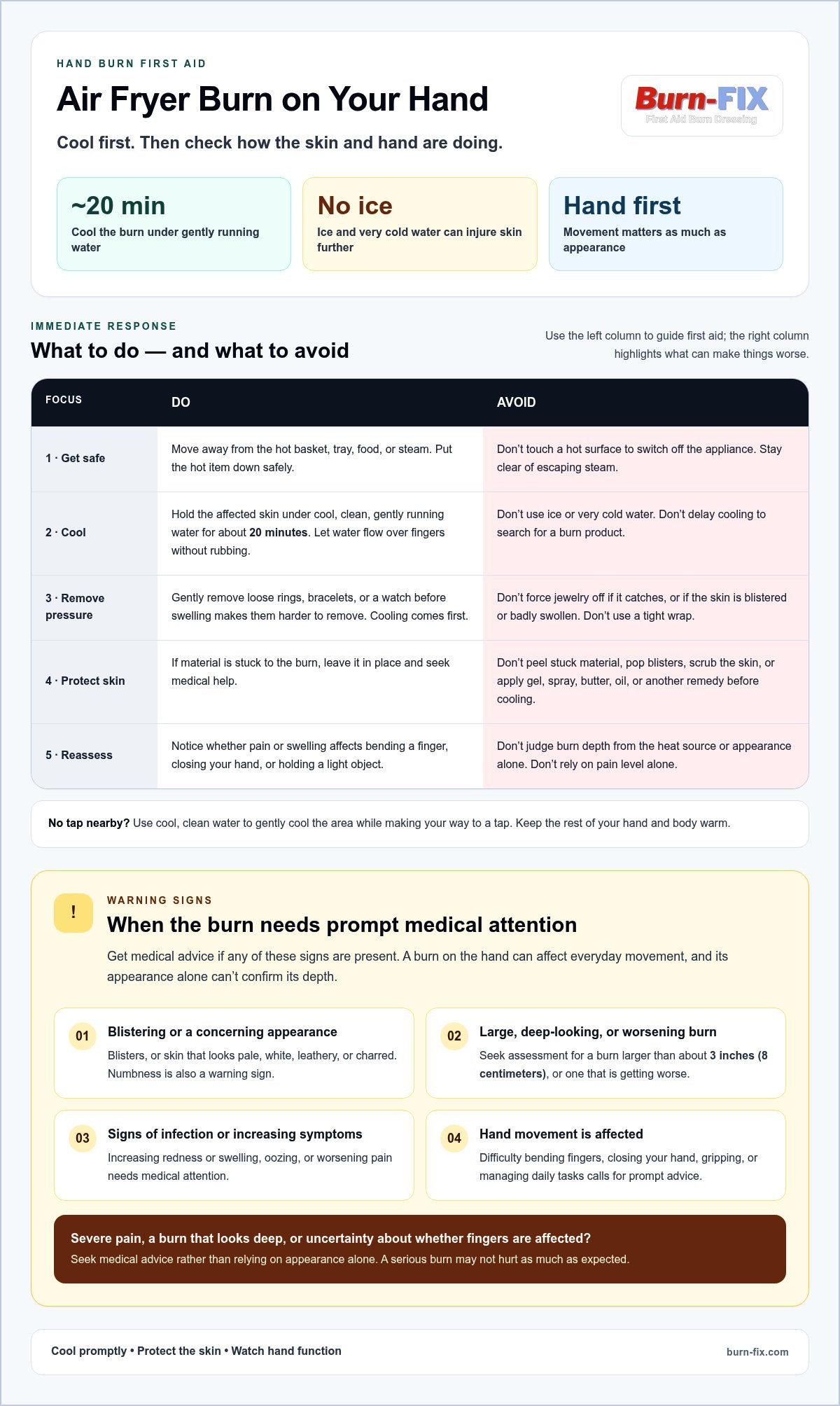
Hold the burned area under cool, gently running water for about 20 minutes. Don’t use ice, and remove rings or other tight items before swelling begins. These steps help cool the injury while you assess how the skin looks and how well your hand moves.
This guide explains how to protect a minor burn, what to avoid, and when to seek medical care. Signs such as blistering, a larger or unusually pale or charred area, worsening pain, infection symptoms, or difficulty moving your fingers need prompt attention. Use these steps to care for your hand calmly and decide whether the burn needs professional assessment.
Key Takeaways
- For an air fryer burn on hands, act promptly and use cool, clean running water rather than ice or very cold water.
- How the burn happened offers context, but appearance alone can’t confirm its depth.
- Blisters, a large or deep burn, worsening symptoms, or trouble moving your hand are reasons to seek medical advice.
- After cooling, protect a minor burn with a loose, clean, non-fluffy dressing and avoid unverified home remedies.
- Hydrogel first-aid products may support care for suitable burns, but they don’t replace medical assessment when warning signs are present.
Air fryer burn on your hand: what to do immediately
Move away from the heat and start cooling the burn. Put down the hot basket or tray safely. Switch off the appliance only if you can do so without touching a hot surface, and stay clear of escaping steam. A hot metal basket, heated food, or a brief blast of steam can all burn skin. Don’t spend time looking for a burn product before cooling the area.
A simple first-aid sequence for a fresh hand burn
- Stop contact with the hot surface, food, or steam, and move to a safe place.
- Hold the affected skin under cool, clean running water for about 20 minutes. Cool water helps draw heat away; ice and very cold water can injure skin further.
- Keep the rest of your hand and body warm while cooling the burned area. If the injury involves your fingers, let water flow gently over them rather than rubbing or scrubbing the skin.
Start cooling promptly, even if the burn seems small. About 20 minutes is a practical first-aid target; use a sink tap if the water is comfortably cool. If running water isn’t immediately available, use cool, clean water to gently cool the area while you make your way to a tap. Don’t apply gel, spray, butter, oil, or another remedy before cooling.
What to do with rings and nearby skin
Remove rings, bracelets, and a watch as soon as you can do so gently, since swelling may make them difficult to take off. If jewelry catches, or the skin is blistered or badly swollen, don’t pull or force it. Don’t peel away clothing or other material stuck to the burn. Leave it in place and seek medical help.
Removing jewelry shouldn’t delay cooling. If someone is with you, they can help slide off a loose ring while you keep the burn under running water. If you’re alone, start cooling first, then try only items that come off easily without pressing or tugging on injured skin. Don’t rub the surrounding skin or use a tight band or wrap that could press on the area as it swells.
Burns vary in depth and appearance, and an early look doesn’t always show how serious an injury is. The overview of burn types in Burn (injury) provides general background, but it can’t assess your hand. If pain is severe, the burn looks deep, or you’re unsure whether your fingers are affected, get medical advice instead of relying on appearance alone. Cooling is the first step for an air fryer burn on hands. Next, protect the skin and assess whether your hand needs professional attention.
How air fryer burns affect the skin and hand
An air fryer can expose your hand to heat in several ways. Touching a hot basket or tray may hold heat against a small area of skin, while hot food can burn a fingertip during handling. A quick brush with hot air or escaping steam is a different exposure, but it can still hurt. The heat source alone can’t show how deep the injury is. Contact time, temperature, and the skin affected all matter. A clinician may need to assess a concerning burn.
Hot metal, hot food, and steam: how air fryer injuries happen
The basket handle, tray edges, and food just removed from the appliance are common points of contact. Steam may escape when a drawer opens, and hot air can reach exposed skin. A brief exposure doesn’t automatically mean a serious injury, just as touching metal doesn’t reveal a burn’s depth. Note where the skin was affected and whether it changes, but don’t use the heat source to diagnose the injury.
Skin may look red and feel tender after a more superficial burn. Blisters can occur with a deeper injury and deserve careful attention, especially on the hand, where a burn may interfere with bending fingers or gripping everyday objects. Don’t pop blisters or press on them to judge what’s underneath.
Redness, pain, blisters, and changes in sensation
“A partial-thickness burn damages the outer skin and some of the layer beneath it, and it may blister.” This plain-language description explains the term, but it can’t identify the depth of your injury. Blistering, redness, and pain vary, and the skin’s appearance or your ability to use your hand may change over time.
Pay attention to function as well as appearance. Is swelling or pain making it hard to bend a finger, close your hand, or hold a light object? Is the affected area getting worse? These observations are more useful than trying to assign the burn a degree yourself. Because your hand is involved in many daily tasks, even a small injury is worth watching closely.
Seek urgent medical assessment if the skin looks pale, white, leathery, or charred, or if the area feels numb. A serious burn may not always hurt as much as expected, so limited pain shouldn’t reassure you when other warning signs are present. Blistering, a large or worsening burn, or difficulty moving your fingers also calls for prompt medical advice. An air fryer burn on hands can range from mild redness to a more serious injury, and appearance alone can’t settle that question.
Continue to monitor the area and how comfortably your hand moves. For minor burns where first-aid products are appropriate, explore Burn-Fix burn care supplies. These products don’t replace medical assessment when a burn may be serious.
When an air fryer burn on the hand needs medical care
Hand burns deserve careful attention because pain, swelling, or damaged skin can make it harder to bend your fingers, grip objects, or manage daily tasks. A small-looking injury may still matter if it crosses a joint or affects fingertip movement. If you’re unsure about the burn’s depth or your hand isn’t working normally, seek prompt medical advice rather than judging the injury by appearance alone.
Seek prompt medical assessment for a blistered, large, deep-looking, worsening, or function-limiting burn. A burn larger than about 3 inches (8 centimeters), or one that becomes increasingly red or swollen or starts oozing, also needs medical attention. Fever, severe pain that isn’t eased by over-the-counter pain relief, or a wound that isn’t beginning to improve after a few days are further reasons to get assessed.
Warning signs that should not wait
Get urgent help for skin that appears white, charred, or leathery, or for numbness in the injured area. These can be signs of a serious burn, even if pain seems limited. Act quickly if swelling is severe, skin color looks unusual, or you notice concerning changes in circulation, such as fingers becoming unusually pale or blue and cold. A burn that wraps around a finger or hand, or worsens rapidly, needs urgent assessment. Call emergency services if the injury is life-threatening or another immediate danger is present.
“A deep-looking burn, numb or unusually colored skin, rapid worsening, or loss of normal finger movement calls for urgent medical assessment.” Use this as a reminder to act, not as a home test for burn severity. When warning signs are present, don’t delay care to try a gel or dressing.
Blisters and burns near joints or fingertips
Blisters can indicate a deeper injury, and their location matters: even a small blister over a knuckle or fingertip may affect bending, touch, or grip. Don’t pop blisters or peel away loose skin, since this can expose the area and increase the risk of infection. If a blistered burn is on your hand, seek medical advice about appropriate care and protection.
While arranging assessment, note when the burn happened, what caused it, and whether symptoms or hand movement have changed. These details can help a healthcare professional understand the injury. If medical advice confirms that home care is appropriate, follow the instructions and keep monitoring for worsening pain, redness, swelling, discharge, or fever. A guide to treating second-degree burns at home offers additional general information, but it doesn’t replace assessment for a hand burn that is blistered, deep, or affecting function.
How to protect and monitor a minor hand burn
After cooling the burn and considering whether it needs medical attention, protect the area from rubbing and dirt. For a minor burn, use a clean, non-fluffy dressing that won’t stick to the skin, and lay it over the area loosely. The aim is to shield the skin without pressing on it or restricting your fingers.
Covering the burn without adding pressure
Choose a clean, non-stick covering and secure it gently. Don’t wrap tape or a bandage tightly around a finger or across the hand. Swelling can increase, and a tight covering may interfere with circulation. If the burn looks deep, is blistered and concerning, or affects movement, don’t let dressing it delay medical assessment.
Keep the area clean and avoid applying butter, oils, toothpaste, ice, or unverified remedies to a fresh burn. These can irritate injured skin or interfere with appropriate care. If the covering becomes wet or dirty, replace it carefully with a clean one. Avoid pulling at skin that sticks to the dressing, and don’t pop blisters or peel loose skin.
Watching for changes during recovery
Check the burn regularly. Notice whether pain, swelling, redness, or drainage is getting worse rather than settling. Pay attention to how your hand works: you should be able to move your fingers, and sensation should remain normal. If a dressing hides the area, check gently when changing it instead of repeatedly disturbing the skin.
Seek medical advice if the burn worsens, shows signs of infection such as increasing redness, swelling, oozing, or an unpleasant odor, or isn’t showing signs of healing after a few days. Get help sooner if you develop a fever, severe pain, numbness, unusual skin color, or difficulty moving your fingers. A burn can change over time, so don’t rely only on how it looked at first.
Hand burns can make everyday tasks awkward, so protect the area from friction while cooking, washing dishes, or handling objects. If a task causes pain or pulls at the dressing, pause and avoid stressing the injured skin. For broader preparation around hot appliances and kitchen mishaps, this kitchen safety first aid guide offers prevention context.
For a minor air fryer burn on hands that’s suitable for first-aid supplies after cooling and checking for warning signs, Burn-Fix offers hydrogel spray, gel dressings, and gel packets designed for first- and second-degree burns. Explore Burn-Fix burn first-aid supplies, but don’t use a product in place of medical assessment when symptoms are concerning.
Choosing first-aid support after an air fryer hand burn
First decide whether the injury needs medical attention. Cooling, checking for warning signs, and protecting the skin come before choosing a product. If the burn looks deep, is extensive, worsens, causes numbness, or makes it hard to move your fingers, seek medical care promptly. First-aid supplies are for suitable minor burns, not a reason to delay assessment.
When a hydrogel product may fit into first aid
After immediate care and triage, Burn-Fix hydrogel spray, burn gel dressings, and gel packets provide first-aid support for burns they’re designed for: first- and second-degree burns. Follow the directions on the specific product label. Don’t apply a product instead of seeking professional assessment if the burn is severe, deep-looking, or affecting hand function. These supplies aren’t intended as treatment for third-degree burns.
A product can be one part of a first-aid plan, but it can’t determine burn depth or decide whether a hand injury needs evaluation. If you’re uncertain about the injury, prioritize medical advice. Don’t wait to see whether a spray or dressing helps if the skin looks pale, charred, or leathery, or if sensation or circulation seems affected. For an air fryer burn on hands, choosing supplies comes after deciding that home first aid is appropriate.
Keep the packaging available so you can follow the directions and check any cautions before use. If a dressing or gel is uncomfortable, or symptoms worsen after applying it, stop and seek appropriate medical advice. Avoid layering products or improvising with items that aren’t intended for burn first aid.
Keep kitchen first-aid supplies ready
In a kitchen, looking for supplies can feel stressful when every second matters. Keep burn first-aid items in a clean, accessible place, and check them periodically for intact packaging and expiration dates. Make sure household members know where they’re stored, especially anyone who cooks or helps prepare food. A simple home emergency burn kit checklist can help you decide what to keep ready.
Preparation doesn’t change the first step: move away from the heat and cool the injury. Keep supplies easy to find, but don’t let searching for them delay cooling or urgent assessment. If you’re putting together a kitchen first-aid setup, explore Burn-Fix burn-care supplies, including hydrogel spray, gel dressings, and gel packets. Used according to their labels, these products support first aid for suitable burns, while medical care remains essential when warning signs appear.
Make your next step a calm, prepared one
A painful kitchen mishap can leave you second-guessing what to do. If an air fryer burn on hands happens, pause, protect the injured skin, and get medical help when something doesn’t seem right. A sensible first-aid plan isn’t about reaching for a product at any cost. It’s about keeping appropriate supplies ready while knowing when professional care is needed.
For home preparedness, Burn-Fix offers hydrogel spray, gel dressings, gel packets, and a burn kit, with products designed for first- and second-degree burns. Keep suitable supplies accessible and follow their labels when using them. They support first aid, but aren’t a substitute for urgent assessment when warning signs appear.
Prepare your kitchen first-aid setup with Burn-Fix burn-care supplies. Keep the products accessible and follow their labels, and seek medical assessment when warning signs appear.
Frequently Asked Questions
Can an air fryer burn on the hand get worse after it first happens?
Yes. A burn’s appearance and symptoms can change after the initial injury. Redness, pain, or swelling may become more noticeable, and blisters may develop. Monitor whether the area is worsening and whether you can use your hand normally. Increasing redness or swelling, drainage, fever, severe pain, numbness, or reduced finger movement warrants medical advice rather than continued home monitoring.
How long should I cool an air fryer burn on my hand?
Cool it under gently running, cool water for about 20 minutes. A kitchen tap is usually practical; don’t use ice or very cold water, which can further injure skin. If you stopped cooling early, resume as soon as you can. Keep the rest of your body warm, and don’t delay cooling to find a gel, spray, or dressing.
Should I put aloe vera or burn gel on a fresh air fryer burn?
Not before cooling the burn. First let cool running water carry heat away. Don’t use aloe, gel, oils, or other products as a substitute for cooling. Afterward, follow product directions and use burn-care supplies only when home first aid is appropriate. Burn-Fix hydrogel products are designed for first- and second-degree burns, but they don’t replace medical assessment for a concerning injury.
Can I pop a blister from an air fryer burn on my hand?
No. Leave the blister intact, even if it catches on clothing or makes gripping awkward. The skin over it helps protect the injured area, while popping it can expose the skin and raise infection concerns. Don’t cut away loose skin either. If a blister is on a finger joint, fingertip, or a broad area of the hand, seek medical advice about care and movement.
Can a child get an air fryer burn on their hand treated at home?
Only a minor burn with no concerning signs may be suitable for home first aid, and an adult should supervise care and watch for changes. Because a child’s hand burn can affect finger movement and daily activities, seek prompt medical advice for blistering, a large or deep-looking area, significant pain, or difficulty moving fingers. Get urgent help for numb, pale, charred, or leathery skin.
How long does an air fryer burn on the hand take to heal?
Healing time varies with the burn’s depth, size, and location, so there isn’t one reliable timeline for every hand injury. A small, superficial area may settle sooner than a blistered or deeper burn, which can take longer and may need professional care. If it worsens, shows signs of infection, or isn’t beginning to improve after a few days, get medical advice.


