


You’ve just brushed your leg against a hot motorcycle exhaust, and the sharp sting makes it hard to tell how serious the burn is. Move away from the pipe and cool the area under cool running water for about 10 minutes, not with ice. Prompt cooling can help limit further skin damage while you assess what to do next. This first step is central to safe motorcycle exhaust pipe leg burn care.
Pain and redness may seem manageable, but a burn can be more serious than it looks, especially if it’s deep, large, or over a joint. This guide explains how to cool and protect the area, what to do if blisters appear, and which warning signs call for urgent medical assessment. It also covers burn-care supplies, including burn gel, hydrogel spray, dressings, and a burn kit. These products can support minor-burn first aid, but they don’t replace medical care for a serious burn.
Key Takeaways
- Exhaust contact burns can look small while affecting deeper skin, so appearance alone may not tell the whole story.
- Running water, burn-care products, and protective dressings serve different purposes and aren’t interchangeable.
- Use a calm, practical sequence for motorcycle exhaust pipe leg burn care, from stopping contact to protecting the affected area.
- Recognize changes that call for urgent medical assessment, and choose minor-burn supplies without letting them delay care.
- A burn kit can help keep first-aid supplies accessible at home or on riding trips.
Motorcycle Exhaust Pipe Burn: Why a Small Contact Mark Deserves Attention
Move away from the hot pipe first. Then cool the affected skin with cool, gently running water for about 10 minutes. A motorcycle exhaust contact burn happens when skin touches a heated motorcycle part, transferring heat directly into the tissue. Unlike a sunburn, which develops after ultraviolet exposure, or a scald caused by hot liquid or steam, this injury comes from direct contact with a hot surface.
Even brief contact can injure skin. The result depends on factors such as the metal’s temperature, how long it touches the skin, whether clothing is between the pipe and the leg, and individual differences. A small contact mark shows the burn’s surface area, not how deeply heat has affected the skin. Pain alone isn’t a reliable way to judge depth, and the appearance and sensation can change over time. For an overview of burn classifications and first aid, see the general burn reference.
What makes an exhaust-pipe burn different?
Hot metal can deliver concentrated heat to one spot, leaving a distinct mark rather than the broader area often associated with sun exposure. Contact may last only a moment, but that doesn’t guarantee the injury is superficial. Pants may reduce direct exposure, yet fabric can also hold heat against the skin. Because the contact pattern and burn depth vary, don’t assume a narrow red patch is harmless.
Look at the skin without pressing or rubbing it. Redness, tenderness, or a developing blister can occur, but the first appearance may not show the full injury. Notice how the area changes as you cool it. If it looks pale, charred, or unusually leathery, or feels numb, take that seriously and seek prompt medical assessment.
What to do in the first moments
Act calmly and protect the skin from more heat. If you’re helping someone else, guide them away from the motorcycle and help them get settled. Make sure the injured leg won’t brush against the exhaust again.
- Stop the exposure. Move the leg clear of the pipe. Switch off or move away from the heat source only if it’s safe to do so.
- Cool the area. Hold it under cool, gently running water for about 10 minutes. Don’t use ice or ice water, which can cause further tissue damage.
- Remove nearby constrictions. Take off jewelry or loose clothing close to the burn before swelling develops. Don’t pull away fabric stuck to the skin. Leave it in place and get medical help.
- Leave the skin undisturbed. Avoid pressure, rubbing, and greasy home remedies such as butter or oil. They don’t replace cooling and can make the area harder to assess.
These steps begin motorcycle exhaust pipe leg burn care, but they don’t determine the injury’s severity. Once cooling is underway, assess the skin and consider whether medical attention is needed before applying a burn-care product or dressing.
How to Tell Whether a Motorcycle Exhaust Burn Needs Urgent Care
A small mark isn’t a reliable measure of a burn’s depth. Skin may look less alarming at first, and pain can’t tell you exactly how much tissue is affected. As you cool the area, notice changes in color, sensation, swelling, and movement. If you’re unsure, it’s safer to get medical guidance than to rely on appearance or a first-aid product alone.
Signs that call for prompt medical assessment
Seek prompt assessment if the skin looks pale, white, charred, or leathery; feels numb; or the injury is worsening. Severe or increasing pain also deserves attention, especially if swelling or redness spreads. A burn crossing a major joint may interfere with movement, while one that circles the leg can tighten as tissue swells. Burns larger than 3 inches, or those on the feet, hands, face, groin, or major joints, need medical attention.
Seek urgent medical assessment for a deep-looking, numb, extensive, or function-limiting burn, and emergency help for a severe burn or signs of shock.
When home first aid may not be enough
First aid can protect a minor burn, but it can’t establish how deep an injury is or replace professional assessment. Don’t try to manage a suspected deep burn with gel or a dressing alone. If the person has a health condition that may affect healing, or you can’t confidently judge the burn’s severity, contact a clinician for advice. The Mayo Clinic burn first aid guidelines also outline situations that call for medical care.
Call emergency services for a severe burn or possible shock. Warning signs can include fainting, confusion, marked weakness, pale or clammy skin, or rapid, shallow breathing. Keep the person safely seated or lying down while help is arranged. Don’t delay to apply burn products. For a serious burn, professional assessment takes priority over home treatment.
A burn over a joint deserves particular care, even if the affected patch seems small. Pain and swelling can make bending or walking difficult, and a burn that limits normal movement should be assessed. An injury that wraps around the leg can also become more concerning as swelling develops. Avoid tight wrapping and watch for changes rather than assuming the first appearance tells the whole story.
For more detail on at-home care for second-degree burns, review the guidance while keeping in mind that suspected deep burns need medical assessment. For minor-burn first aid after cooling, keep appropriate supplies close at hand with a burn-care kit for home or riding trips. Use products only as directed, and never let them delay needed care.
Cooling, Gel, or Dressing: Choosing Safe First Aid for an Exhaust Burn
These options have different jobs. Cool running water is the first step after an exhaust burn. Hydrogel products and a protective dressing may support care afterward, but they aren’t substitutes for cooling or medical assessment. In motorcycle exhaust pipe leg burn care, the order matters: cool the skin first, then decide whether it’s appropriate to apply a product or cover the area.
What each first-aid option can and cannot do
For a minor burn, hold the affected skin under cool, gently running water for about 10 minutes. This helps cool the area. Don’t use ice or very cold water. Once the burn has been cooled and assessed, a hydrogel product may provide a cool, moist feel. Follow its label directions, and don’t use it to judge burn depth or manage a serious injury.
A clean, loose, non-stick covering can help shield a minor burn from friction and dirt after cooling. It shouldn’t press tightly on the skin, especially if swelling is possible. Choose an option for its purpose, not because it seems like a faster replacement for water. A focused explanation of hydrogel and hydrocolloid burn dressing differences can help clarify how dressing types differ.
- Cool running water: Use first to cool the burn.
- Hydrogel: May provide a cool, moist feel when used as directed after cooling.
- Non-stick covering: Helps protect the cooled area from rubbing or contact.
What not to put on a fresh burn
Skip ice, butter, oils, toothpaste, and unverified home remedies. These don’t replace cooling, and applying substances to freshly burned skin can complicate assessment or irritate the area. Don’t rub the skin or press a dressing firmly against it. If the burn looks deep, is extensive, or is in a high-risk location, seek medical advice rather than trying to manage it with products alone.
Leave blisters intact. The skin over a blister helps protect the area, and popping it can damage that barrier and raise infection concerns. If a blister breaks on its own, avoid tearing away attached skin and seek appropriate care if the burn is worsening or concerning. For additional context on using a spray, see this guide to burn relief spray guidance. Product directions still matter.
Burn gel, hydrogel spray, and burn gel dressings can be useful first-aid supplies for minor burns when used according to their labels. Keep a burn-care kit for home or riding trips accessible, but let the burn’s appearance, location, and symptoms guide whether medical assessment is needed. No product should delay care for a potentially serious burn.
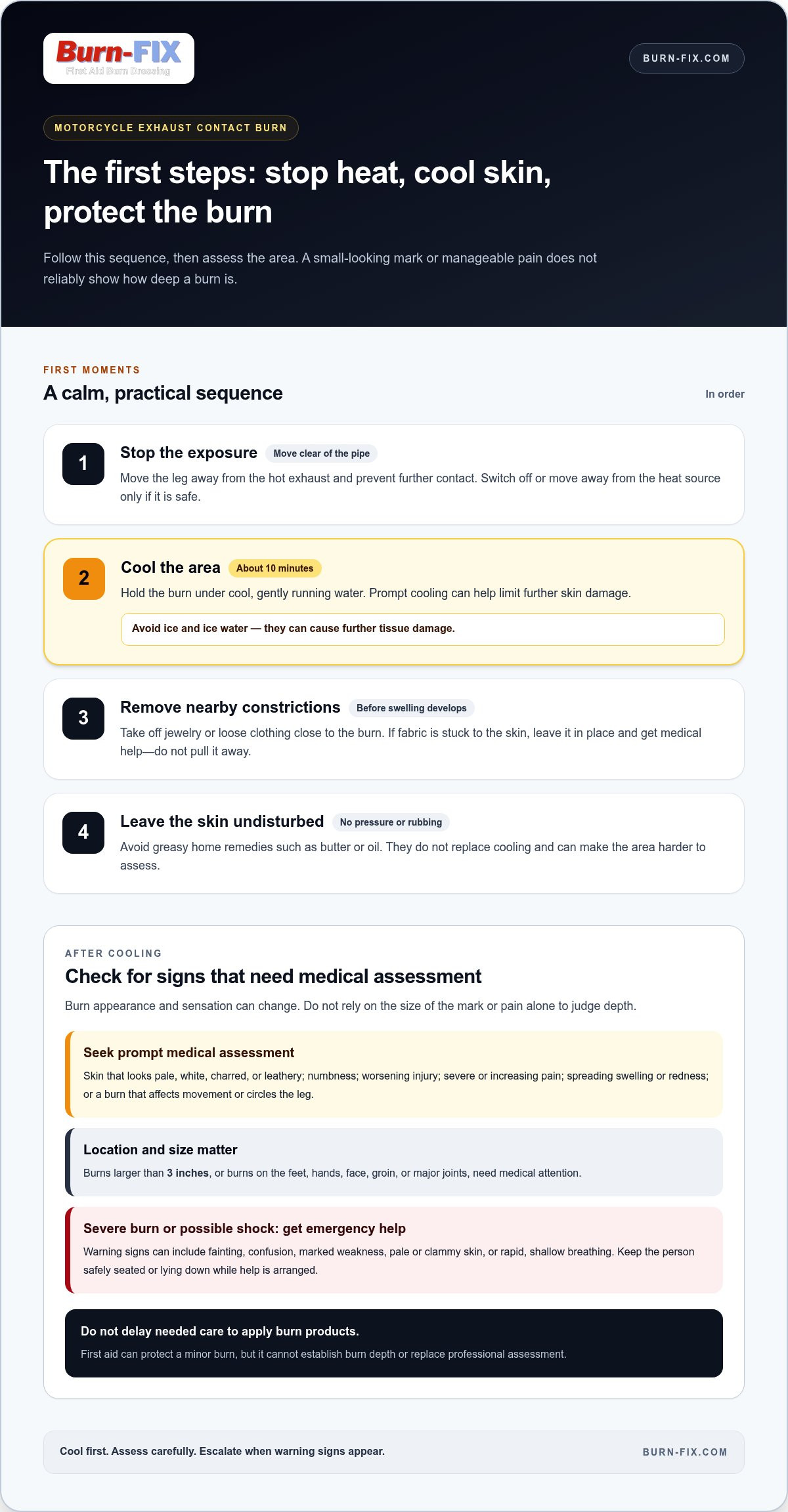
Step-by-Step Motorcycle Exhaust Pipe Leg Burn Care
Follow these steps in order, but don’t let home care delay urgent medical help. If the burn looks deep, is extensive, affects a major joint, or causes numbness, get medical assessment promptly. A helper can talk the injured rider through each step and gather supplies while keeping the leg still and comfortable.
- Stop the heat exposure. Move the leg away from the exhaust and make sure it can’t touch the hot motorcycle again. Help the person sit somewhere safe. Don’t ask them to walk if the pain or injury makes movement difficult.
- Cool the burn. Place the affected skin under cool, gently running water for about 10 minutes. Don’t use ice or very cold water. If the burn appears serious, arrange urgent care while cooling rather than postponing help to finish a home-care routine.
- Remove nearby constrictions. Gently take off jewelry and loose clothing near the burn before swelling develops, if they come away easily. Never pull off material stuck to the injured skin. Leave anything adhered in place for medical professionals to handle.
- Assess the injury. After cooling, check the area without rubbing or pressing it. Notice its size and location, the skin’s color and texture, any blisters, and whether sensation or movement is affected. If you’re unsure about the depth, seek medical advice rather than assuming a small mark is minor.
- Protect the skin. For an appropriate minor burn, loosely cover the area with a clean, non-stick dressing. Keep the covering gentle, not tight, and don’t pop blisters. Avoid applying products to a burn that needs urgent medical assessment.
Protection should reduce rubbing, not squeeze the leg. If a dressing sticks, don’t tug it away from the skin. Follow the dressing or burn-care product label, and treat supplies as support for minor-burn first aid, not a substitute for medical care. Burn gel or hydrogel products don’t change the need to have a concerning injury assessed.
Watch for changes after the initial first aid. Increasing redness, swelling, drainage, fever, or worsening pain can signal a problem and calls for medical advice. Seek urgent help if the skin looks pale, charred, or leathery, feels numb, or the burn limits movement. Don’t wait for every warning sign to appear if the injury already looks serious.
For safer motorcycle exhaust pipe leg burn care, keep a burn kit with relevant first-aid supplies accessible at home or on riding trips. Choose a burn kit for your first-aid supplies, and use its contents only as directed. If the burn may be deep or severe, prioritize professional medical assessment over applying a product or dressing.
Recovery, Red Flags, and Burn-Fix Supplies for Minor Burns
After first aid, keep observing the area rather than assuming the initial appearance tells the whole story. Minor burns may change as they recover, and healing can vary with the burn’s depth and the person. A calm routine helps: protect the skin, follow product directions, and pay attention to new or worsening symptoms. Supplies can support care for an appropriate minor burn, but they can’t determine severity or replace medical assessment.
What to monitor as the skin recovers
Check the burn for worsening pain, spreading redness, increasing swelling, drainage or pus, and fever. These changes can signal a problem and warrant medical advice. Don’t pop blisters or pick at healing skin. If the area looks worse, affects movement, or you’re unsure how serious it is, seek guidance from a clinician instead of waiting for it to settle on its own.
There isn’t one recovery timeline that fits every burn. Depth, location, and individual factors can affect how the skin changes. If symptoms are getting worse rather than improving, or the wound isn’t progressing as expected, arrange medical reassessment. For motorcycle exhaust pipe leg burn care, staying alert to warning signs is as important as choosing appropriate first-aid supplies.
Keeping suitable burn supplies within reach
For minor-burn first aid, Burn-Fix supplies include hydrogel spray, burn gel, dressings, and a burn kit. Use each only for its intended first-aid role and according to its label. Keep supplies accessible at home or on riding trips so they’re ready if needed. Remember that products don’t replace cooling or professional assessment when a burn is concerning.
- Burn-Fix Hydrogel Burn Spray - 120ml
- Burn-Fix 4x4 First Aid Burn Gel Dressing
- Burn-Fix Burn Gel - 3.5g Per Packet
- Burn-Fix Burn Kit
Choose and apply a product by following its directions, not by trying to treat a burn that may be deep or severe at home. If you notice pale, charred, or leathery skin, numbness, worsening symptoms, or another urgent warning sign, seek medical care. Don’t delay it to apply gel or a dressing. A product can support minor-burn first aid, but it can’t establish burn depth or guarantee healing.
A burn kit nearby can make suitable supplies easier to reach at home or during a ride. To explore Burn-Fix burn-care supplies, consider which first-aid items you want accessible, and keep their labels available so you can use them as directed.
Make Burn Readiness Part of Your Next Ride
A little preparation can make a stressful moment easier to manage. Before your next ride, decide where you’ll keep first-aid supplies so they’re easy to reach, and read their labels before an injury happens. A BurnFix Hydrogel Burn Spray, Burn-FIX 4x4 First Aid Burn Gel Dressing, or BurnFix Burn Kit can help you keep suitable supplies on hand for minor-burn first aid.
Supplies support care, but they don’t replace medical assessment when a burn appears serious or symptoms are concerning. Trust your judgment if the injury worsens or you’re uncertain about its severity. The right motorcycle exhaust pipe leg burn care starts with knowing what to do and being ready to act calmly.
Explore Burn-Fix burn-care supplies and choose first-aid items to keep accessible at home or on a riding trip. Preparedness won’t prevent every mishap, but it can help you respond with greater confidence. Safe riding starts with looking after yourself, too.
Frequently Asked Questions
Can a motorcycle exhaust burn be serious even if it looks small?
Yes. A small mark can conceal a deeper injury, and the skin’s appearance may change after the initial contact. Don’t use the size of the mark or how much it hurts as your only guide. Pale, charred, leathery, or numb skin, or symptoms that are getting worse, need medical attention. If you’re uncertain, getting the burn assessed is safer than relying on appearance alone.
How long should you run water over an exhaust pipe burn?
Cool it promptly under cool running water for about 10 minutes, following Mayo Clinic guidance for minor burns. The water should feel cool, not icy. If the injury seems severe, arrange emergency care without waiting to complete home first aid. Avoid ice, and don’t pull clothing or other material off if it’s stuck to the skin. Leave it for medical professionals.
Should you put burn gel on a motorcycle exhaust burn?
Cool the skin with running water first. Burn gel or hydrogel may be suitable for some minor burns if the product label supports that use, but it can’t replace medical assessment or determine how deep the injury is. Don’t use it as a substitute for urgent care if the burn looks deep or has concerning symptoms. Read and follow the specific product directions.
Should you pop a blister from an exhaust pipe burn?
No. Leave the blister intact because its skin helps protect the injured area. Avoid pressure or friction, and use a clean, non-stick covering if appropriate for the burn. If it breaks on its own, don’t pull at attached skin. Seek medical advice if the blister is large, the burn looks deep, or you notice spreading redness, drainage, fever, or increasing pain.
When should you go to the ER for a motorcycle exhaust burn?
Seek emergency care for a burn that appears deep, is large or circles the leg, affects the hands, feet, face, groin, or a major joint, or causes severe symptoms. Pale, charred, leathery, or numb skin is concerning. Call emergency services for a severe injury or signs of shock, such as fainting, confusion, or clammy skin. Don’t delay urgent care to apply a product.
Can I use Burn-Fix products on an exhaust pipe burn?
Burn-Fix offers first-aid supplies including BurnFix Hydrogel Burn Spray - 120ml, BurnFix Burn Gel - 3.5g Per Packet, Burn-FIX 4x4 First Aid Burn Gel Dressing, and BurnFix Burn Kit. Use a product only as directed on its label and when appropriate for the injury. These supplies don’t replace medical care for a serious burn. If you’re unsure about severity, seek medical assessment.


