


The fastest way to worsen a hot-glue burn may be to pull the glue away before cooling the skin. If you have a hot glue gun burn on fingers, move your hand under cool or lukewarm running water for 10 to 20 minutes, and don’t tug at adhesive that’s still stuck. The sharp sting can be frightening, especially when you can’t tell how badly your skin is burned, but cooling comes first.
It’s natural to want the glue off right away. Resist that urge: forcing it away can damage injured skin. This guide explains how to cool the burn, what to do once the glue has cooled, and how to gently clean and cover the area. It also covers warning signs, including blistering or severe pain, that mean a finger burn needs medical attention. A few careful steps can help protect your skin while you decide what to do next.
Key Takeaways
- For a hot glue gun burn on fingers, move away from the heat and cool the skin under cool running water for 10 to 20 minutes.
- Don’t pull off hot, stuck glue. Let the area cool first, and avoid cutting or forcefully removing adhesive from injured skin.
- Leave blisters intact, and watch for signs that the burn is deep, extensive, circumferential, or getting worse.
- Seek medical assessment when a finger burn’s appearance, size, pain, or progression raises concern.
- For a minor burn after cooling, gently clean and protect the skin, and follow the directions on any dressing you use.
Hot Glue Gun Burns on Fingers: What Happens and Why They Hurt
Cool the burn promptly, and don’t pull glue that’s stuck to your skin. A hot glue gun burn on fingers is a contact injury caused by heated adhesive or by touching the hot glue gun itself. The priority is to stop the heat from continuing to injure the skin. If glue is attached, leave it in place while you begin cooling. Pulling at it can tear tender, damaged skin.
Finger burns can sting sharply because the skin is sensitive and your hands are involved in gripping, touching, and everyday tasks. Even a small mark can be uncomfortable or make bending a finger difficult, especially if swelling develops or the burn is near a joint. The visible area doesn’t always show how far heat has affected the tissue, so don’t judge severity by size alone.
A superficial burn affects only the outer layer of skin, while a deeper partial-thickness burn extends into the skin beneath it and may blister. These terms describe different depths of injury, but you can’t reliably identify the depth at home from appearance alone. The overview of Burn (injury) explains burn classification. Changes in pain, appearance, or movement are reasons to keep monitoring the finger and seek medical care if you’re concerned.
How hot glue can injure finger skin
Heat moves from the glue or the gun into your skin at the point of contact. Hot adhesive can cling to a finger, holding heated material against the skin as it cools. That sticking can make the injury feel alarming and tempt you to peel the glue off, but force may damage the skin underneath. Cool the area first and avoid scraping or tugging.
Contact with the nozzle is another way to get burned: the finger touches the heated tool directly, without adhesive between the nozzle and skin. Either type of contact can hurt, and visible redness alone doesn’t reveal the injury’s depth. The safe first response is the same: stop the contact and cool the affected skin.
What the first signs may look and feel like
A burn may leave skin red, tender, or swollen. Blistering can also occur, while a more serious injury may look pale, white, leathery, or charred. Pain can range from a sharp sting to persistent soreness, and swelling may make a finger feel tight or harder to bend. These signs vary, so one symptom alone can’t confirm how severe the burn is.
Watch how the area changes rather than trying to diagnose it yourself. Worsening pain or swelling, changes in skin appearance, or difficulty moving the finger warrant attention, particularly if the burn circles the finger or affects a joint. First cool the injury, then assess it without pulling stuck glue or disturbing blisters.
How to Cool a Hot Glue Gun Burn on Fingers Safely
Act in order: stop the task, move away from the glue gun, then cool the injured finger. Prompt cooling helps reduce continued heat exposure, but it can’t undo an injury or guarantee how quickly it will heal. Don’t delay cooling to inspect the burn or remove adhesive that’s stuck to the skin.
- Stop what you’re doing. Put down the glue gun safely if you can do so without touching the hot nozzle or spilled adhesive.
- Move your hand away from the heat source. Keep the affected finger clear of the gun and any hot glue.
- Cool the burn under cool running water. Keep water flowing over the area for 20 minutes if possible. Use cool or lukewarm water, not ice water, and keep the rest of your hand comfortable.
First actions in the first few minutes
Start running water promptly. If a ring or other jewelry is close to the burn, gently remove it while it still comes off easily and isn’t painful. Fingers can swell, making jewelry difficult to remove. Don’t force anything that’s tight, stuck, or causing pain. Keep cooling rather than stopping to search for creams or supplies.
Skip ice, very cold water, butter, oils, toothpaste, and other household remedies. Ice and extreme cold can further injure skin, while butter or oil isn’t a substitute for cooling under running water. After cooling, follow appropriate care guidance for the injury rather than applying an unverified remedy.
What to do if glue is still attached
Don’t yank, scrape, or forcibly peel adhesive from the finger. Keep cool running water flowing over the area and let the glue cool. Pulling at it can tear already-injured skin. If the adhesive remains firmly attached, or the skin beneath it looks damaged, seek medical assessment instead of trying to remove it yourself.
If a ring won’t slide off easily, don’t pull hard or use tools against burned skin. Keep the hand comfortable and get medical help if swelling is increasing or the jewelry is constricting the finger. For more guidance on first aid for finger burns, prioritize cooling and protecting the skin.
Once the area has been cooled, a burn-care spray or dressing may be an optional first-aid supply for an appropriate minor burn. Follow its label directions, and don’t let a product delay medical assessment when the burn is concerning. You can explore hydrogel burn-care supplies as part of preparing a first-aid kit.
Stuck Glue, Blisters, and Finger Movement: What Not to Do
With a hot glue gun burn on fingers, protecting the injured skin matters more than getting every trace of adhesive off immediately. Forceful pulling or scraping can tear fragile skin and worsen the injury. Keep movements gentle, leave blisters intact, and avoid wrapping the finger so tightly that swelling or circulation becomes a concern.
If hot glue will not release easily
Keep cooling the finger with cool running water rather than trying to pry away firmly attached glue. Don’t use tweezers, blades, or other sharp tools, and don’t apply solvents or household substances to dissolve the adhesive. These approaches can injure or irritate burned skin, especially when you can’t see clearly beneath the glue.
If the glue remains firmly attached after cooling, or trying to move it causes pain, stop. A clinician can assess the adhesive and the skin safely. Seek prompt medical advice if the burn looks deep or is worsening. Don’t delay care while trying repeated removal methods at home.
Protecting blisters and preserving movement
An intact blister acts as a natural cover over the sensitive skin beneath it. Don’t pop, puncture, or cut it, and don’t trim loose skin yourself. If a blister breaks on its own, avoid picking at the area and keep it clean. A clean, non-stick covering can help shield the burn from rubbing, provided it doesn’t press tightly around the finger.
Cover the injured area lightly rather than binding the whole finger snugly. Check that the covering doesn’t make the finger feel increasingly tight, numb, cold, or tingly. If swelling builds under a bandage, loosen or remove it carefully. Avoid friction from gloves, tools, or repeated bending while the skin is tender, but don’t force the finger to move through pain.
Notice whether you can gently bend and straighten the finger without increasing pain or tightness. Worsening swelling, numbness, reduced movement, or a burn that circles the finger calls for medical advice. These changes may signal that the injury needs assessment, even if the affected patch looks small.
Choose cool running water for initial cooling, not ice or extreme cold. The article on hydrogel versus ice for burns explains why very cold treatments aren’t a safe substitute for gentle cooling. Once the burn has been cooled, protect it from rubbing and follow the directions on any dressing you use.
When a Hot Glue Finger Burn Needs Medical Attention
Some small, mild-looking burns can be cared for at home after prompt cooling, but don’t rely on size or redness alone to judge severity. A burn may be more concerning if it crosses a joint, wraps around the finger, or interferes with movement or sensation. If you’re unsure whether a hot glue gun burn on fingers needs care, seek professional advice rather than waiting for it to worsen.
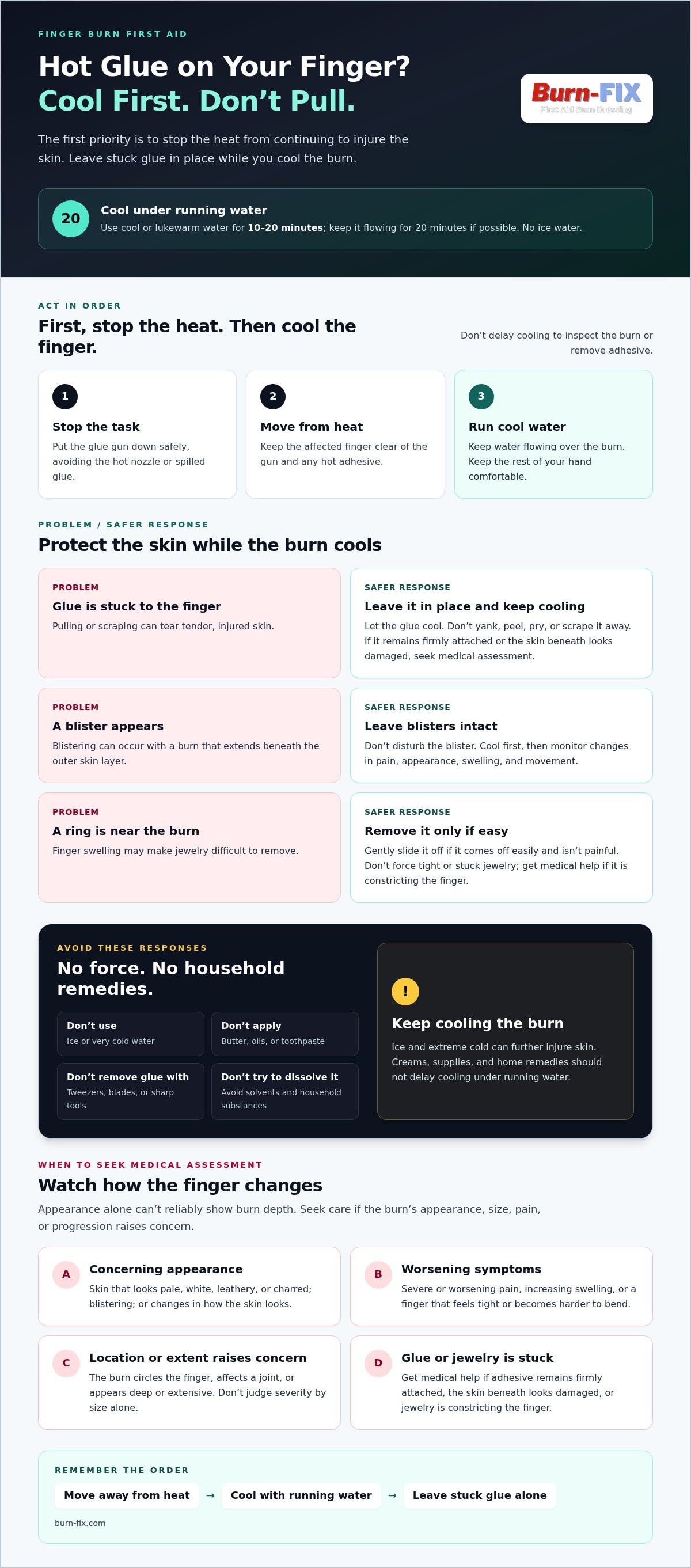
Get medical help for a deep, extensive, circumferential, worsening, blistering, or severely painful finger burn, or one that affects movement, sensation, or circulation.
Signs that should prompt medical evaluation
Arrange timely medical assessment if the skin looks white, charred, leathery, or numb, or if pain and swelling are severe or increasing. A burn that circles a finger, crosses a joint, or makes it hard to bend or straighten the finger also deserves prompt attention. A small wound can be concerning if it limits normal movement or sensation.
Watch for possible infection as the injury heals. Increasing redness or swelling, pus, or a foul odor are reasons to seek medical care. Don’t wait for every warning sign to appear. Worsening symptoms or a strong concern about the injury are enough to ask for help.
Use a lower threshold for seeking advice when the injured person is a child or may be more vulnerable to complications. Children may not describe pain or changes clearly, and a burn that seems minor at first can be difficult to assess at home. If you’re uncertain, timely professional guidance is safer than trying to make a definite diagnosis yourself.
When urgent or emergency help is appropriate
Seek urgent medical evaluation for a deep or extensive burn, a burn that encircles the finger, or one that is rapidly worsening. If the finger becomes pale or blue, feels numb or unusually cold, or movement is significantly restricted, treat the change as urgent. Call emergency services for a severe injury or signs of a serious medical emergency, such as fainting, confusion, or difficulty breathing.
Don’t delay care to loosen stubborn glue, test a home remedy, or see whether a severe burn improves on its own. Continue gentle cooling if appropriate, avoid forceful removal, and follow instructions from emergency responders or clinicians. For a minor burn that has been cooled and does not need professional care, a burn-care dressing or spray may be an optional first-aid supply when used according to its label.
Keep medical assessment the priority if warning signs are present. For optional supplies intended to support care for appropriate minor burns, explore burn first-aid products.
After Cooling: Protecting a Minor Finger Burn as It Heals
Once a minor finger burn has been cooled, gentle care can help shield it from dirt and everyday rubbing. This aftercare is for burns that don’t need professional assessment. If the injury looks deep, is worsening, or affects finger movement or sensation, seek medical advice instead of relying on home care.
Choosing a simple protective dressing
Wash your hands, then gently clean the cooled burn with mild soap and water. Pat the surrounding skin dry rather than rubbing the injured area. A clean, non-adherent dressing can protect a minor burn from friction, such as contact with clothing, tools, or nearby fingers. Keep the covering secure but loose enough that it doesn’t constrict the finger.
Burn-Fix hydrogel dressings are moisture-retaining burn-care supplies that may be used for appropriate minor burns. A hydrogel spray is another optional supply. Follow the product label for directions, and don’t apply a product to an injury that needs medical assessment. For broader guidance about treating second-degree burns at home, remember that severe or concerning burns need professional care.
Change or remove a dressing according to its instructions, and replace it if it becomes wet, dirty, or loose. If a covering sticks, don’t pull it away from the skin. Moisten it gently and seek advice if it won’t release without pain. Avoid tight tape wrapped all the way around a finger, since swelling can make a snug bandage uncomfortable or restrict circulation.
Monitoring the finger during recovery
Check the burn and the finger regularly, especially when changing the dressing. Some tenderness may remain, but worsening redness, swelling, drainage, fever, or increasing pain should prompt medical advice. Don’t respond to these changes by repeatedly trying new creams or dressings at home. If you’re unsure whether the injury is improving, ask a healthcare professional.
Notice whether the finger still bends and straightens comfortably, and whether its color and sensation seem normal. A new loss of movement or sensation, increasing tightness, or a finger that looks unusually pale or blue needs prompt assessment. Don’t keep a dressing on if it seems to be causing numbness, tingling, or pressure.
Recovery varies with burn depth, the amount of skin affected, and individual factors. Don’t assume that a small-looking mark will follow a fixed healing schedule. Continue protecting the area from rubbing, keep the dressing clean, and get advice if symptoms worsen or aren’t settling as expected. For optional burn-care supplies, explore Burn-Fix burn care products and follow the label directions for use.
Be Ready to Protect Your Fingers
A small burn can interrupt a project and leave you unsure what to do next. Before you return to crafting, know where you can reach cool running water, keep suitable first-aid supplies accessible, and seek medical care if an injury worries you. A simple plan can make it easier to respond calmly if a hot glue gun burn on fingers happens again.
For appropriate minor burns, Burn-Fix offers hydrogel burn spray, gel, and dressings described as doctor-recommended and moisture-retaining. These supplies can support aftercare when used according to their labels, but they don’t replace professional assessment when a burn appears serious or is getting worse.
Choose supplies that fit your first-aid needs and review their directions before an injury occurs. Explore Burn-Fix burn care supplies to help prepare your home first-aid kit. With a clear plan and gentle care, you can take the next step with greater confidence.
Frequently Asked Questions
Can I pull hot glue off a burned finger?
No. Don’t pull or scrape glue that’s stuck to burned skin, since forceful removal can tear or further damage the injured area. Cool the finger under cool running water and leave firmly attached adhesive alone. If the glue won’t release, removal is painful, or the skin looks seriously injured, seek medical help. Don’t use solvents or sharp tools, and don’t postpone care while trying to remove glue at home.
Should I put ice on a hot glue gun burn?
No. Use cool running water instead of ice or very cold water, which can cause additional harm to damaged skin. Keep the water flowing over the affected area for about 20 minutes if possible. Cooling is the immediate priority, not applying a cold pack. If the burn is severe, symptoms worsen, or the finger’s movement or sensation changes, seek medical care rather than continuing home treatment.
Can I put butter, toothpaste, or oil on a hot glue burn?
No. Avoid butter, toothpaste, oils, and other household remedies on a fresh burn. They don’t replace running-water cooling and may irritate the skin or make it harder to assess. First cool the affected area. If the injury appears minor and doesn’t need professional assessment, protect it with a suitable clean covering and follow the directions for any burn-care product you use.
Should I pop a blister from a glue gun burn?
No. Don’t puncture, drain, or cut a burn blister yourself. The intact skin covers the injured surface, and disturbing it can leave the area more exposed to irritation or infection. Protect the finger from rubbing, such as pressure from a tool handle or glove. Seek medical advice if the blister is large, painful, lies over a joint, or comes with worsening pain, redness, or swelling.
How long does a hot glue gun burn on a finger take to heal?
There isn’t one reliable healing timeline: recovery depends on the burn’s depth and size, as well as individual health factors. Instead of counting on a set number of days, watch for steady improvement in comfort and function. Get medical advice if pain, redness, swelling, or drainage increases, or if the injury interferes with bending, feeling, or using the finger normally.
Can I use burn gel or a hydrogel dressing on a hot glue burn?
Yes, a suitable burn-care product may be an option for a minor burn after cooling, but use it only as directed on its label. Don’t apply gel or a dressing over glue that’s firmly attached, and don’t let a product delay medical assessment. A product isn’t a substitute for care if the burn looks deep, worsens, or limits finger movement or sensation.
When should I get medical care for a finger burn from a glue gun?
Seek medical assessment if the burn looks deep, wraps around the finger, crosses a joint, worsens, or affects movement or sensation. Extensive blistering, severe pain, unusual skin color, or possible infection also call for prompt attention. For a serious injury or emergency symptoms, contact emergency services. Don’t wait to remove stubborn glue before getting help, and seek advice if you’re unsure how serious the burn is.


