


The first move after a boiling soup spill isn’t reaching for cream. If soup has soaked clothing or spread across the skin, pain and panic can make it hard to know what to do. For boiling soup spill burn care, start by cooling the affected area under cool running water for at least 20 minutes. Remove nearby clothing and jewelry unless they’re stuck to the skin.
A red, painful patch may be minor, but blisters, pale or leathery-looking skin, and burns on the face, hands, feet, genitals, or major joints can signal a need for urgent medical care. Take a hot-liquid burn seriously, especially when the affected area looks larger than it first seemed.
This guide explains what to do first, how to protect the burn after cooling, and which warning signs call for medical help. You’ll also learn how to care for a minor burn safely, what to avoid, and how to protect blisters while the skin heals.
Key Takeaways
- For boiling soup spill burn care, move away from the hot liquid and cool the affected skin under cool running water for 20 minutes.
- Cover a cooled minor scald gently, and avoid common remedies that can cause more harm.
- Redness, blisters, and signs of deeper injury can guide your response, but appearance alone can’t confirm burn depth.
- Recognize when a burn’s size, location, or symptoms call for urgent medical assessment instead of home care.
- Make a simple kitchen burn-care plan so clean coverings and first-aid supplies are easy to find.
Boiling Soup Spill Burn Care: The First Actions to Take
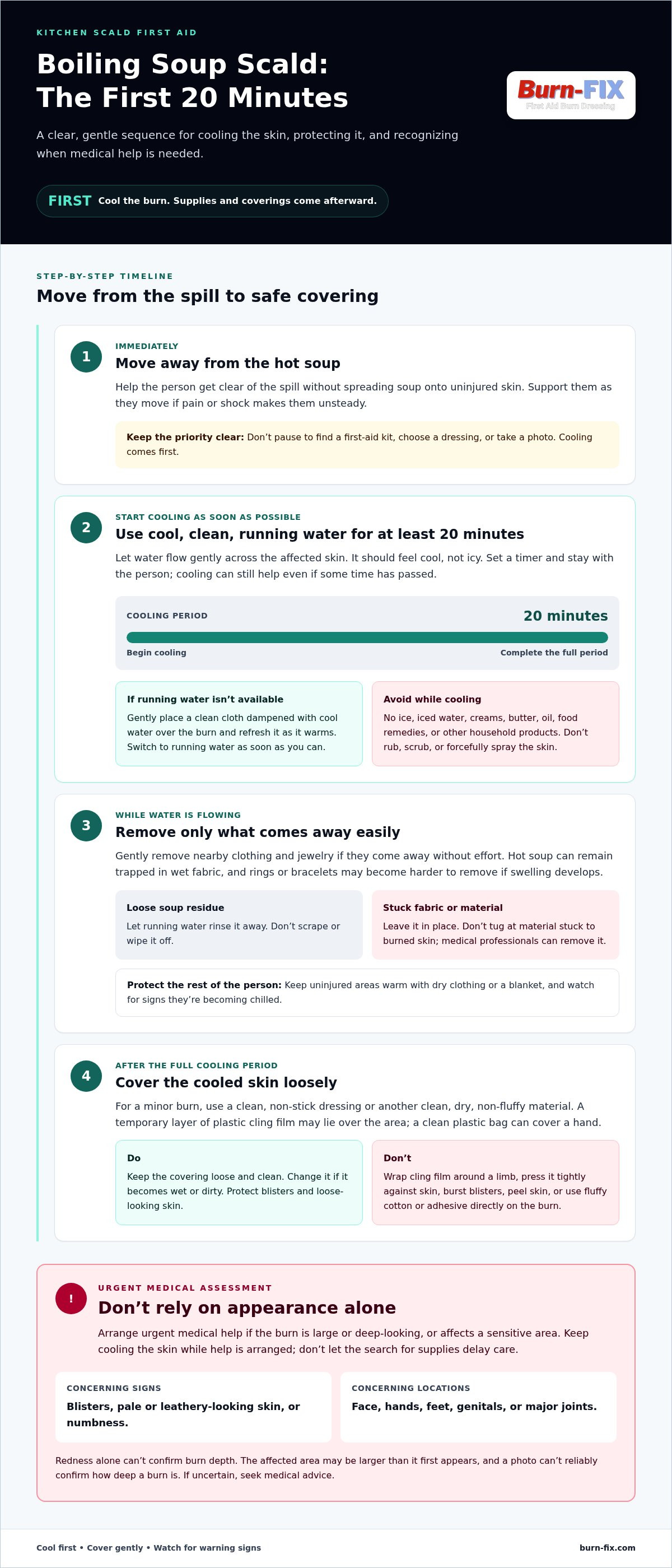
Act quickly and calmly. Help the person move away from the pot or spill without spreading hot soup onto uninjured skin. Once they’re clear of the heat, cool the affected skin under cool, clean, running water. Don’t pause to find a first-aid kit, choose a dressing, or take a photo. Cooling comes first.
A scald is a burn caused by hot liquid or steam. Boiling soup can cling to skin or soak through clothing, so the injured area may be larger than it first appears. This type of injury is a thermal burn. Prompt cooling helps stop heat from continuing to damage the skin.
What to do immediately after hot soup hits skin
Keep the person away from the spill and support them as they move, especially if pain or shock makes them unsteady. Hold the affected skin under cool running water for at least 20 minutes. The water should feel cool, not icy. Set a timer to track the full cooling period, and stay with the person.
- Let water flow gently over the burn. Don’t rub or scrub it.
- If the burn is on an arm or leg, position it so water runs across the affected area without spreading soup elsewhere.
- Keep the person’s uninjured body warm with dry clothing or a blanket, and watch for signs they’re becoming chilled.
- If someone else is available, ask them to arrange medical help if the burn looks serious while you continue cooling it.
Cooling can still help if some time has passed, so don’t skip it just because the spill didn’t happen moments ago. For boiling soup spill burn care, prioritize cool running water. Don’t apply a product or cover the skin before cooling is complete.
How to handle clothing, jewelry, and soup residue
Hot soup can stay trapped in wet fabric, and rings or bracelets may become difficult to remove if swelling develops. As the water runs, gently remove nearby clothing and jewelry if they come away easily. Don’t tug at material stuck to burned skin. Leave it in place for medical professionals to remove.
- Let running water rinse away loose soup residue. Don’t scrape or wipe it off the skin.
- Don’t use ice, iced water, butter, oil, creams, or other household remedies. They can harm the skin or interfere with proper care.
- After cooling, protect the area loosely with a clean covering while you assess next steps. Don’t wrap it tightly.
If the burn is large, deep-looking, or on a sensitive area such as the face or hand, seek urgent medical help. Keep cooling the skin while help is arranged. Don’t let the search for supplies delay care.
How to Cool and Cover a Soup Scald Without Causing More Harm
Once cooling is underway, keep care gentle and simple. Cool running water carries residual heat away from the skin and may ease discomfort. Use it for 20 minutes, as recommended in first-aid guidance. Prompt cooling limits how long heat continues to affect the skin.
Why cool running water is the priority
Choose cool tap water, not ice or ice-cold water. Ice and frozen compresses can injure already damaged skin, while butter, oils, creams, and food remedies can trap heat or contaminate the area. If running water isn’t immediately available, gently place a clean cloth dampened with cool water over the burn and refresh it as it warms. Switch to running water as soon as you can.
Keep the water flowing over the affected area without forceful pressure. If the burn covers a wide patch, help the person stay comfortable and warm everywhere else while you cool the injured skin. Don’t interrupt cooling to search for a dressing or apply a burn product. Those steps come afterward, once the full cooling time is complete.
How to protect the cooled skin
After cooling, cover a minor burn loosely with a clean, non-stick dressing or another clean, dry, non-fluffy material. A temporary layer of plastic cling film laid over the area can help protect it, but don’t wrap it around a limb or press it tightly against the skin. A clean plastic bag can cover a hand. Keep the covering clean and avoid anything that sticks to the burn.
Protect blisters and loose-looking skin rather than picking at them. A blister provides a natural barrier over tender skin, so don’t burst it or peel skin away. If clothing or another material is stuck to the burn, leave it in place instead of pulling it off. These precautions help limit further irritation while you decide whether the injury needs medical assessment.
- Do: Keep the covering loose and change it if it becomes wet or dirty.
- Don’t: Use fluffy cotton, adhesive directly on the burn, or a tight bandage that adds pressure.
- Don’t: Apply food, oils, butter, toothpaste, or unverified home remedies.
For an appropriate minor burn, you may consider a hydrogel product only after cooling and according to its label directions. It doesn’t replace medical assessment when the burn is large, deep, or in a concerning location. Keeping burn first-aid supplies together makes them easier to find after the immediate cooling step.
Boiling Soup Burn Severity: Signs That Change Care
A soup scald can look alarming, but redness alone doesn’t show how deeply the skin is injured. Blisters, pale patches, or numbness raise concern, as do the burn’s size and location. Burn depth, size, and location guide how urgently a scald needs medical care.
Use this comparison as a guide, not a diagnosis. A burn’s appearance can change, and a photo can’t reliably confirm its depth. If you’re uncertain about what you’re seeing, seek medical advice rather than relying on an image or chart.
| What you may see | What it can indicate | What to do |
|---|---|---|
| Red, tender skin with mild swelling and no blisters | A superficial burn affecting the outer skin layer | Continue appropriate minor-burn care and monitor for changes. |
| Red or swollen skin with blisters | A partial-thickness injury that reaches deeper than the outer layer | Don’t pop blisters. Seek medical advice, especially for a child or a larger burn. |
| White, charred, or leathery-looking skin, or skin that feels unusually numb | Possible deeper injury, even if pain seems limited | Get urgent medical assessment. Call 911 for serious symptoms. |
Which burn symptoms need urgent medical attention?
Don’t wait to see whether a concerning burn improves if it involves the face, hands, feet, genitals, or a major joint. Arrange urgent medical assessment if the burn is larger than the injured person’s hand. A burn more than 3 inches (about 8 cm) across also needs urgent attention. Deep-looking skin, rapid swelling, or a burn that seems extensive needs prompt evaluation.
Call 911 for breathing problems, smoke inhalation, fainting, confusion, or signs of shock such as cold, clammy skin and marked weakness. Severe pain also warrants urgent help. Keep the person safe and warm while help is arranged. Don’t delay emergency care to apply a product or try home treatment.
When children and larger burns need extra caution
A blistering or extensive soup scald on a child deserves prompt medical advice. Children may need a more cautious assessment, and the same-looking burn can call for different care depending on age, overall health, size, and location. For boiling soup spill burn care, don’t take a small red patch as reassurance if symptoms are worsening or the affected area is larger than expected.
When judging size, compare the burn with the injured person’s hand, not someone else’s. If it covers more than that, involves a sensitive area, or you’re unsure whether skin looks pale or numb, seek prompt medical advice. Serious symptoms mean call 911, not wait for an at-home assessment.
Caring for a Minor Soup Burn After the Initial Cooling
Home care is appropriate only when the burn appears minor and doesn’t meet the urgent-assessment warning signs described above. If a clinician has assessed the injury, follow their care instructions. Otherwise, keep the area clean, protect it from rubbing, and check it regularly. A burn can change after the first few hours, so don’t assume an initially small red area will stay minor.
A simple routine for a minor burn
Once the skin has been cooled, keep it loosely covered with a clean dressing that won’t stick. Follow the dressing’s directions for changing it, and wash your hands before and after handling the area. If you use a burn-care product, use it only if it’s appropriate for the injury and exactly as its label directs. Products aren’t a substitute for medical assessment when needed.
Check the burn during routine dressing changes. Notice whether pain is easing or worsening, whether redness is spreading beyond the affected area, and whether swelling or drainage is developing. If a clinician has recommended a particular dressing or follow-up plan, follow that guidance rather than adding other treatments. For more context about deeper injuries, see this guide to at-home first aid for second-degree burns. Deeper burns may need professional assessment.
- Keep it protected: Use a clean, loose covering and replace it if it becomes dirty or wet.
- Keep it gentle: Avoid friction from tight clothing, and don’t rub the skin during cleaning.
- Keep track: Pay attention to changes in pain, redness, swelling, and drainage rather than relying on appearance at a single moment.
What not to do while the skin heals
Leave blisters intact and don’t pull away peeling skin. Either can expose delicate tissue and raise the risk of infection. Avoid butter, oils, toothpaste, food, and other unverified home remedies. If a blister opens on its own, keep the area clean and loosely protected, and seek medical advice if you’re unsure how to care for it.
Get medical advice if pain gets worse, redness spreads, pus-like drainage appears, swelling increases, or a fever develops. Seek assessment if the burn isn’t improving as expected or you’re uncertain about its depth. A product intended for minor burns must never delay care for an injury that’s deep, large, or on a sensitive area.
Good preparation can make minor-burn care less stressful. Keep clean dressings and appropriate supplies together so they’re easy to locate, and follow product directions rather than improvising. If you’re building a home first-aid setup, explore the Burn-Fix Burn Kit as one option for keeping burn-care supplies organized.
Prepare for Kitchen Scalds With a Simple Burn-Care Plan
A calm response is easier when supplies are together and everyone knows where to find them. Build a small kitchen burn-care plan before an accident happens: decide who can help, keep first-aid supplies accessible, and make sure the route to cool running water is clear. The goal isn’t to diagnose a burn at home. It’s to make the first steps easier and recognize when medical care is needed.
Build a ready-to-use kitchen burn-care kit
Choose a known, dry storage spot that household members can reach, away from cooking heat and splashes. Keep clean, non-stick coverings and basic first-aid supplies together. Check them periodically so packaging is intact and supplies are ready to use. Show other household members where the kit is, especially anyone who cooks or cares for children.
- Store clean dressings or other suitable coverings with your first-aid supplies.
- Include a burn-care product only if its label describes an appropriate use for the injury.
- Keep the kit easy to locate, and make sure household members know where it is.
Use a kitchen safety first aid kit guide to think through supplies for cooking-related mishaps, or use an emergency burn kit for home checklist to review what you have and what needs replacing.
Use hydrogel products as support, not a substitute for triage
Keep the order clear: cool the affected skin with running water first, then consider an appropriate product according to its label. Burn-Fix offers hydrogel spray, gel, and dressings for suitable minor burns, along with a burn kit for home preparedness. Check product directions before use, and don’t apply a product to postpone assessment when a burn may be serious.
Products aren’t a substitute for medical care. A deep-looking or large burn, or one affecting the face, hands, feet, genitals, or a major joint, needs prompt medical assessment. If there are serious symptoms such as breathing problems, fainting, or confusion, call 911. Keep that decision at the center of any boiling soup spill burn care plan.
Preparation doesn’t remove the need to assess an injury, but it can reduce the scramble for clean supplies after a minor kitchen scald. Keep the first-aid kit in its known spot and make sure people at home can find it. To organize burn-care supplies for home use, explore the BurnFix Burn Kit.
Make Your Kitchen Burn-Care Plan Ready Before You Need It
A little preparation can make a stressful moment feel more manageable. Choose a household member who can call for help, keep first-aid supplies in a known place, and make sure everyone understands that products support care for appropriate minor burns, not serious injuries. Burn-Fix offers hydrogel spray, gel packets, burn gel dressings, and the BurnFix Burn Kit for household preparedness.
Keep the central lesson of boiling soup spill burn care easy to remember: act promptly, assess the injury, and get medical help when warning signs call for it. The right supplies can support a calm response, but they don’t replace professional care for a serious burn.
Explore Burn-Fix burn-care supplies for your home first-aid kit and take one practical step today to prepare your kitchen. You’ll feel more ready to respond if a spill happens.
Frequently Asked Questions
How long should you run water over a boiling soup burn?
Run cool tap water over the burned skin for at least 20 minutes. Start as soon as you can, and use a timer so pain and distraction don’t make the cooling period seem longer than it is. If the injured person needs medical help, someone else can arrange it while you continue cooling. Don’t use ice or icy water, which can further injure the skin.
Should you remove clothing after spilling hot soup on yourself?
Remove clothing near the burn if it’s wet with soup and comes away easily, since it may hold hot liquid against the skin. Take off nearby rings, watches, or bracelets before swelling makes them harder to remove. Don’t pull fabric that’s stuck to burned skin, and don’t cut or tug at it yourself. Keep cooling the exposed area and seek medical help if the injury looks serious.
Can a boiling soup burn blister later?
Yes. A burn may blister after the initial spill, so keep checking the area instead of assuming its first appearance tells the whole story. Don’t pop or drain a blister, even if it feels tight, because broken skin can be vulnerable to infection. Protect it from friction, such as rubbing from a sleeve, and get medical advice if the blistering is extensive, worsening, or accompanied by spreading redness or increasing pain.
When should I go to the emergency room for a soup burn?
Seek urgent medical care for a burn that’s large, deep-looking, or on the face, hands, feet, genitals, or a major joint. White, charred, leathery, or unusually numb skin can signal a serious injury. A burn larger than 3 inches (about 8 cm) across also needs urgent assessment. Call 911 for breathing trouble, fainting, confusion, or rapid swelling. Don’t delay emergency care to apply a burn product.
Is it safe to put burn gel on a soup scald?
For an appropriate minor scald, burn gel may be used after cooling if its label directions include that use. Don’t apply it instead of cooling the skin, or use it to manage a burn that may be deep, large, or in a sensitive location. In boiling soup spill burn care, products support first aid for suitable minor injuries, but they can’t replace medical assessment when warning signs are present.
How can I prevent a pot of soup from causing a scald?
Reduce spill risks while cooking: place the pot on a stable burner, turn its handle inward, and avoid carrying a full pot through a crowded area. Keep children and pets away from the stove, and use care when lifting a lid because hot steam can scald. For serving, ladle soup into smaller bowls near the cooking area rather than moving the heavy pot to the table.


